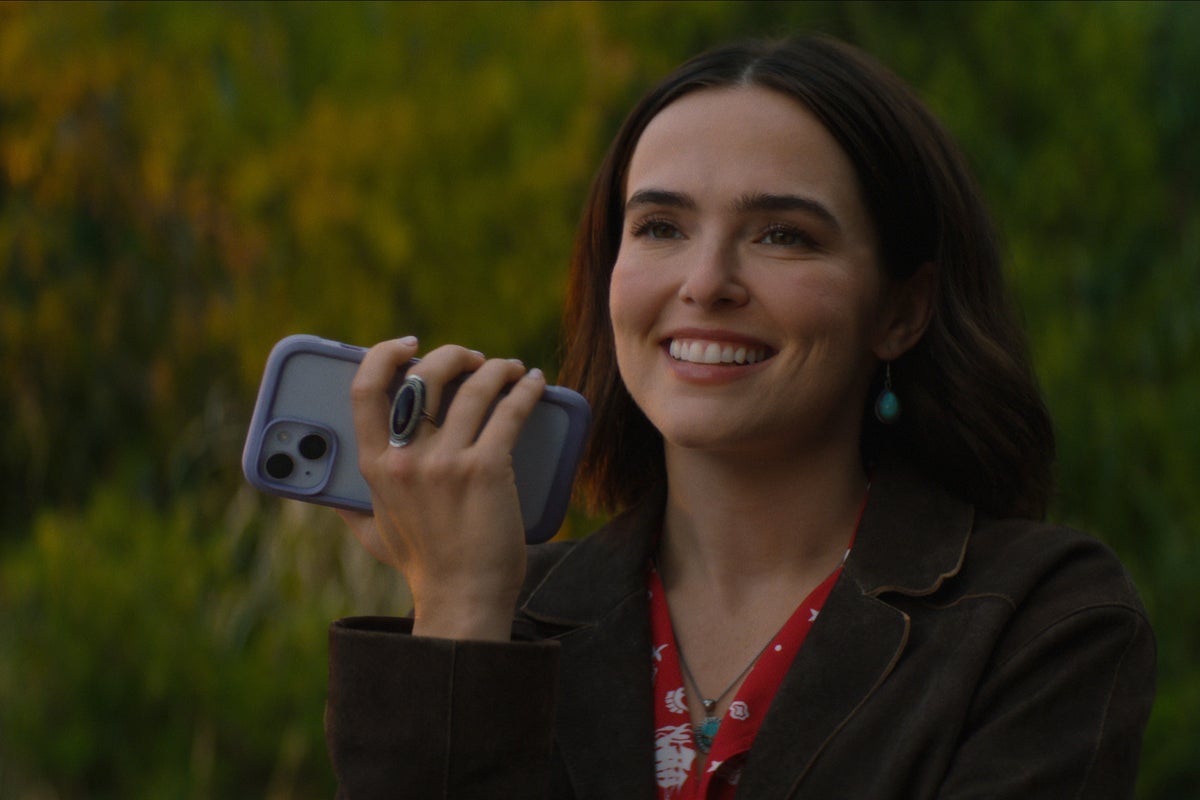

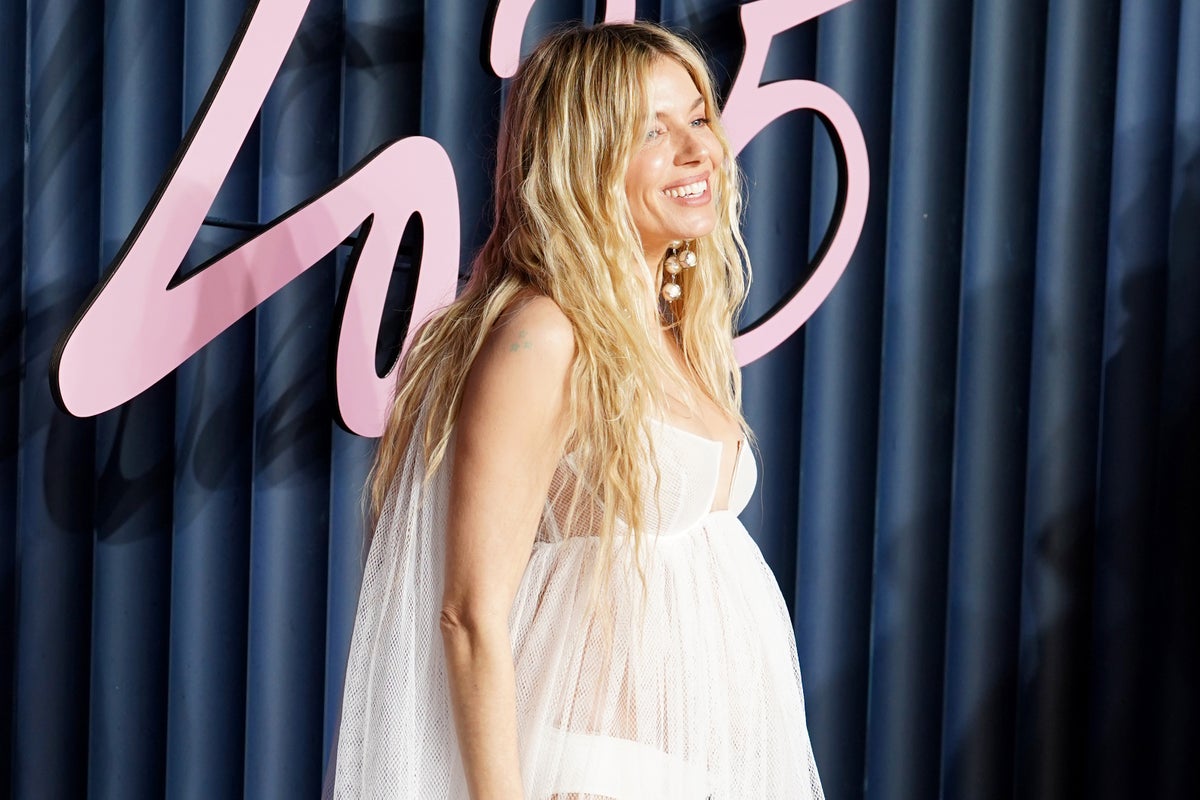
Everywhere I look, there seems to be a headline about a celebrity in her forties having a child. Aubrey Plaza is expecting her first child, aged 41, with partner Christopher Abbott, while both Sienna and Savannah Miller are expecting children in their mid-forties.
Sienna has said she counts herself as “really fortunate” to be expecting her third child at the age of 44, and says being pregnant in her forties is “the best” because her life is in a “more grounded space”.
“Having had a baby at 29, and then having a baby at 42, and now 44, it’s so much easier,” she recently told Glamour magazine – as if women’s declining fertility as they age is absolutely meaningless. “We don’t judge men who are having kids in their 80s. Why on earth is there any sort of narrative?”
Sienna froze her eggs, but she “didn’t use them” and got pregnant naturally. Likewise her fashion designer sister, Savannah, is expecting her fourth child at 47 and shared photos of her baby bump last month.
“Our longed for miracle baby is joining gang in August!” she said, referring to her pregnancy as a “profound and phenomenal gift.”
It really is, but it’s also a struggle. Celebrities make it sound easy-peasy to be older mums and have kids later in life, but that’s not always the case. For me and countless other women who leave it until our forties, it is an utter nightmare.

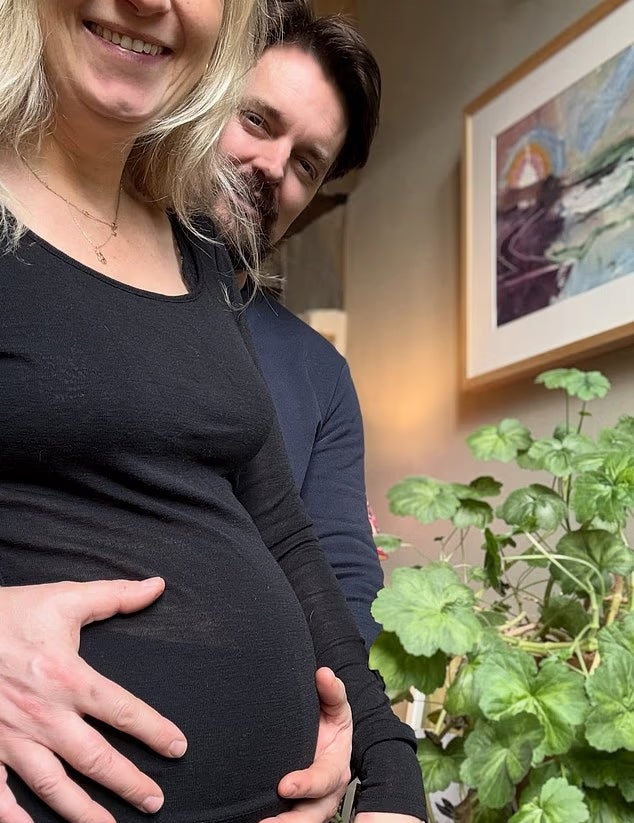
I waited for the right man to have kids, but by the time I found him and we were ready to have children, I was 38. When we embarked on an IVF journey after I was told my ovarian reserve was practically non-existent, I spent more than £80,000 on fertility treatments to welcome my “miracle babies”, first at the age of 40 and then 42. I was lucky to have equity in my flat, which I plundered in a desperate last-ditch attempt to have my longed-for children in 2016 and 2018 – but many people do not have those sorts of funds at the ready.
That’s why these celebrity “miracle” stories are selling a sometimes impossible dream of motherhood over 40. While they share about how it is “easier” to have children in their forties, they rarely talk about the challenges of getting pregnant after 40. I know the brutal truth.
By the time I ended up in a fertility expert’s office, I was told I had a 1 to 5 per cent chance of conceiving if I resorted to IVF. Although every woman’s fertility clock is different, what is missing is a reality check: having a baby over 40 is often hard. Around one in seven couples of any age may have difficulty conceiving, according to the NHS, and any pregnancy in a woman over 35 is labelled a “geriatric pregnancy” or “advanced maternal age” precisely because risks can increase with age.
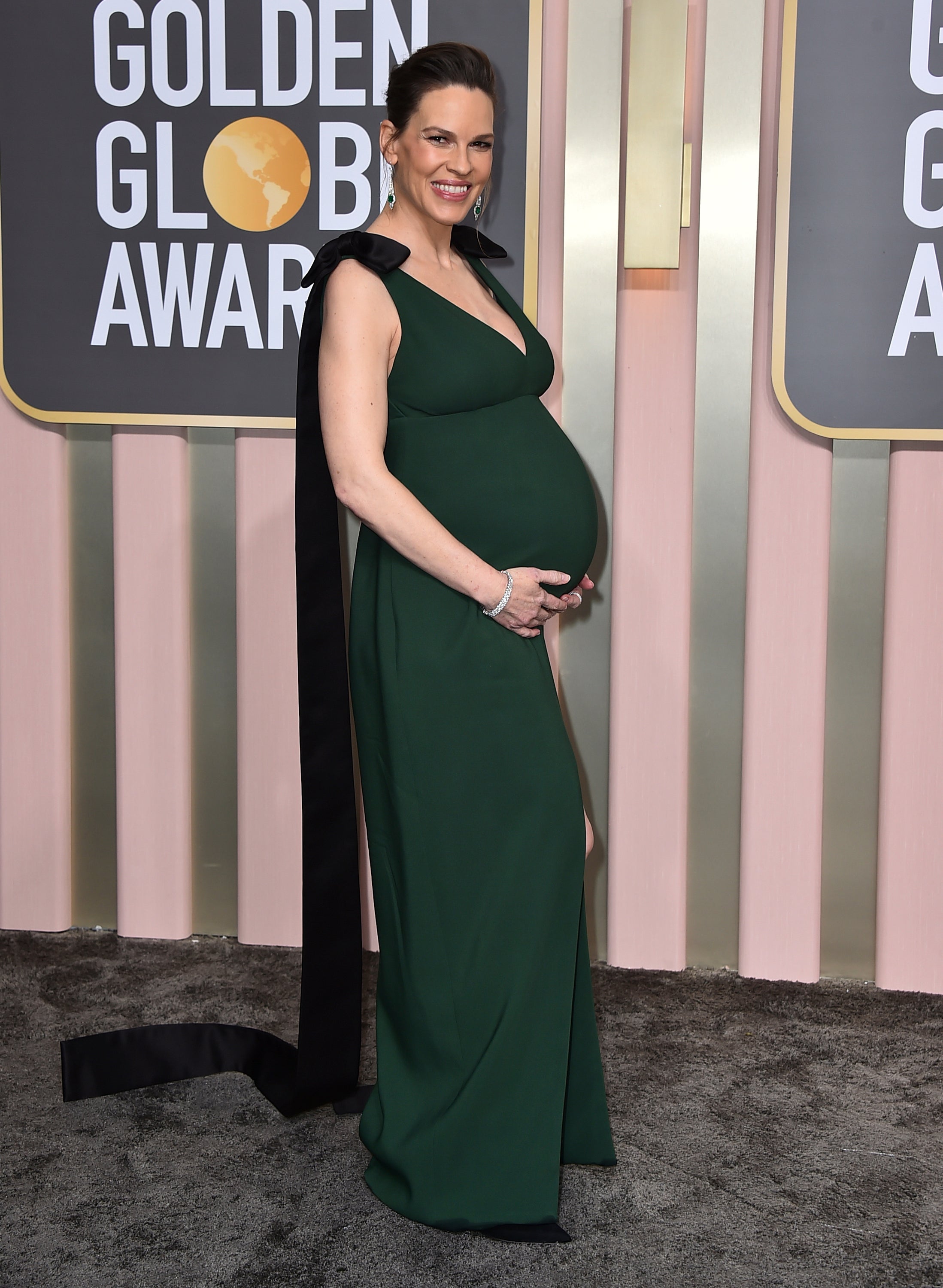
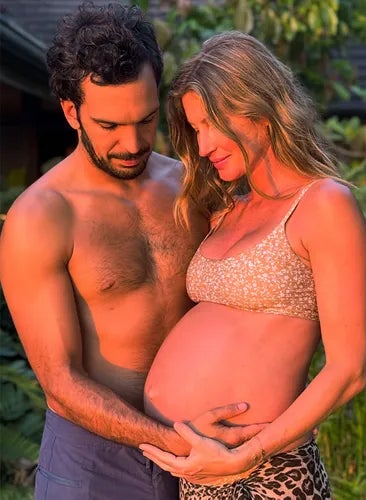
But that narrative is rarely discussed during celebrity interviews. The Millers aren’t alone in excitedly announcing their pregnancies over 40 – supermodel Gisele Bündchen welcomed her third child in early 2025 aged 44, while actor Hilary Swank welcomed twins, Aya and Ohm, at age 48 in April 2023, describing the experience as a “total miracle” having frozen her eggs at the age of 37.


Naomi Campbell famously had her first child at 50 in 2021 and a second in 2023 at 53 – saying “it’s never too late”. Chloe Sevigny gave birth to her first child aged 45, Rachel Weisz had a child aged 48 with Daniel Craig, and Halle Berry had her second child at the age of 47.
I’m happy for them all, but I also can’t help but ask how it was so easy for them while millions of women in their forties and even their thirties are crying their eyes out over yet another failed pregnancy test?
The Night Manager actor Camila Morrone, 28, has added fuel to the fire by sharing her admiration for women having babies in their forties and defying social norms in April’s issue of Porter magazine. “But I look around and the possibilities are just expanding [in Hollywood],” she said. “I love that the norm now can be first-time moms in their forties. I’m all about breaking up with what we think we know. And being pro-women at all costs – it really is that simple.”

It’s not that simple, however. This “miracle” baby narrative is driven by a fantasy that we can have kids whenever we like, and why the hell shouldn’t we do it when it suits us! The 40-plus celebrity mother typically throws fire onto that fantasy by saying it is the best era to have a baby because they are more grounded, stable, and have increased patience – all of which I can attest to.
But their proclamations of the joys and ease of a “miracle” pregnancy make out that age doesn’t matter, which is sadly not the truth, no matter how much I wish it were. And while I don’t judge any of them for wanting kids later in life as I did, it would be helpful if they could share either their own truthful fertility challenges, or warn others that it’s not the norm.
It is true that a record number of women in their forties are now having children, according to official data, as the birth rate continues to drop off in younger age groups. Data from the Centers for Disease Control and Prevention (CDC) in America shows the birth rate for women aged 40 to 44 rose 4 per cent in 2022 compared to the previous year. There was also a 12 per cent rise from 2021 to 2022 among women who were aged 45 to 49 years having babies, the first change in this rate since 2015.
However, natural fertility declines significantly after age 40. According to experts, the chances of getting pregnant naturally after 45 are very low, typically estimated at 1 per cent – and most women in their early 40s only have a five per cent chance of becoming pregnant per month of trying. While natural conception is possible, declining egg quality and quantity make it difficult.
Nearly 55 per cent of intended pregnancies in women aged 42 resulted in foetal loss, according to a large study published in the BMJ in 2020. In younger age groups, the risk of miscarriage was lower, around 10 per cent for women aged 20-24, but started to rise more sharply nearer to the age of 35, when it was over 20 per cent.
By the time I had my daughters, Lola and Liberty, it was termed a “geriatric pregnancy”, and I looked upon it like a miracle. It had taken me four years and I spent thousands on IVF.
So while Sienna calls it “easy”, I’d point out that such success stories are luring women into a false sense of security. Many women can’t afford IVF – and even if they can, it’s not a guarantee. Hopeful mums aged 40 to 42 only enjoyed a 10 per cent birth rate per embryo transferred in 2022, according to HFEA research, declining to just 5 per cent in women aged 43 to 44 in that year. For women aged 18 to 34, IVF birth rates were higher at 35 per cent per embryo transferred. This is if you are lucky to even have a viable embryo transferred – many times mine weren’t “good enough” due to my age.
For this reason, IVF isn’t usually recommended for women over 42 as the success rate is considered too low.

The reality for women in their 40s trying to conceive is that the majority of them will find it challenging – and by the time they hit their mid-forties, it’s rare.
While some of the celebrities in their forties having children are doing so naturally, others are conceiving with IVF by using their own eggs, ones they froze when they were younger, or via a donor egg. But we rarely hear about the details.
Of course, women should have kids whenever they want – as long as they are prepared for the risk of failure, or financial hardship. But the great lie that age is irrelevant for motherhood shouldn’t be glossed over. Having a baby isn’t a Hollywood film – it’s real life.