

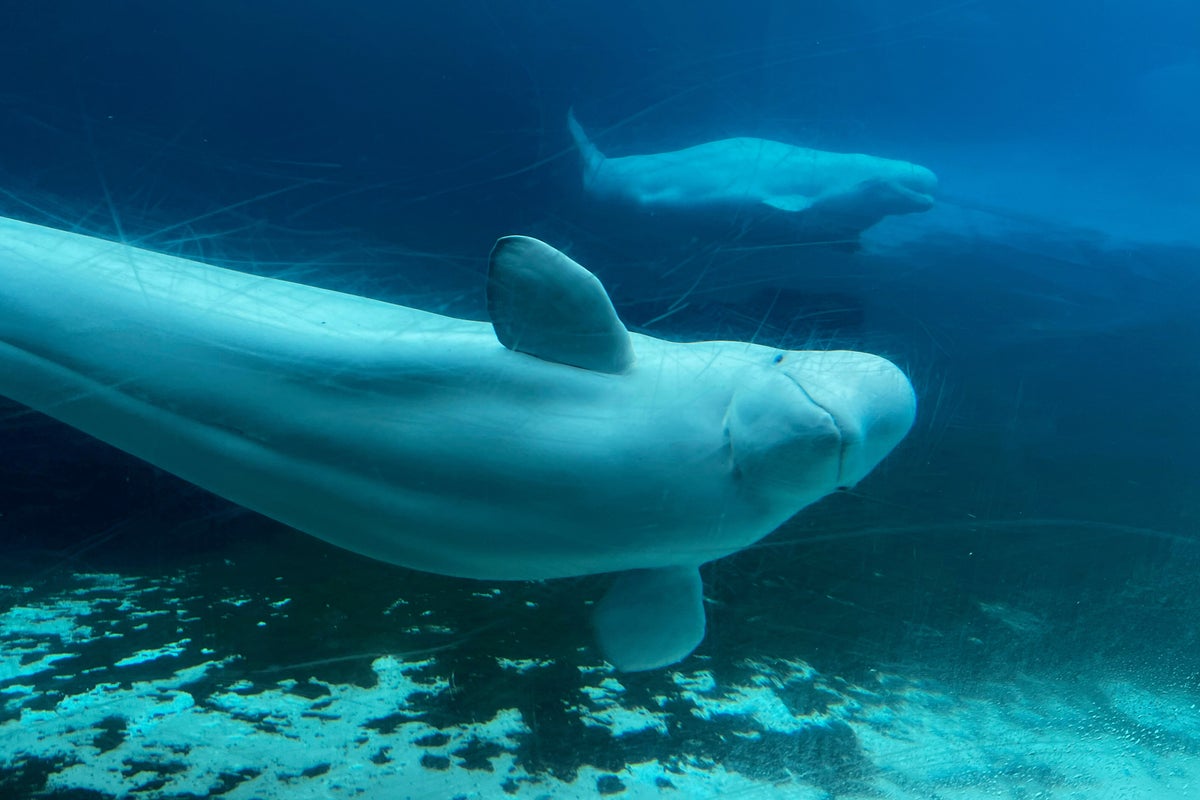
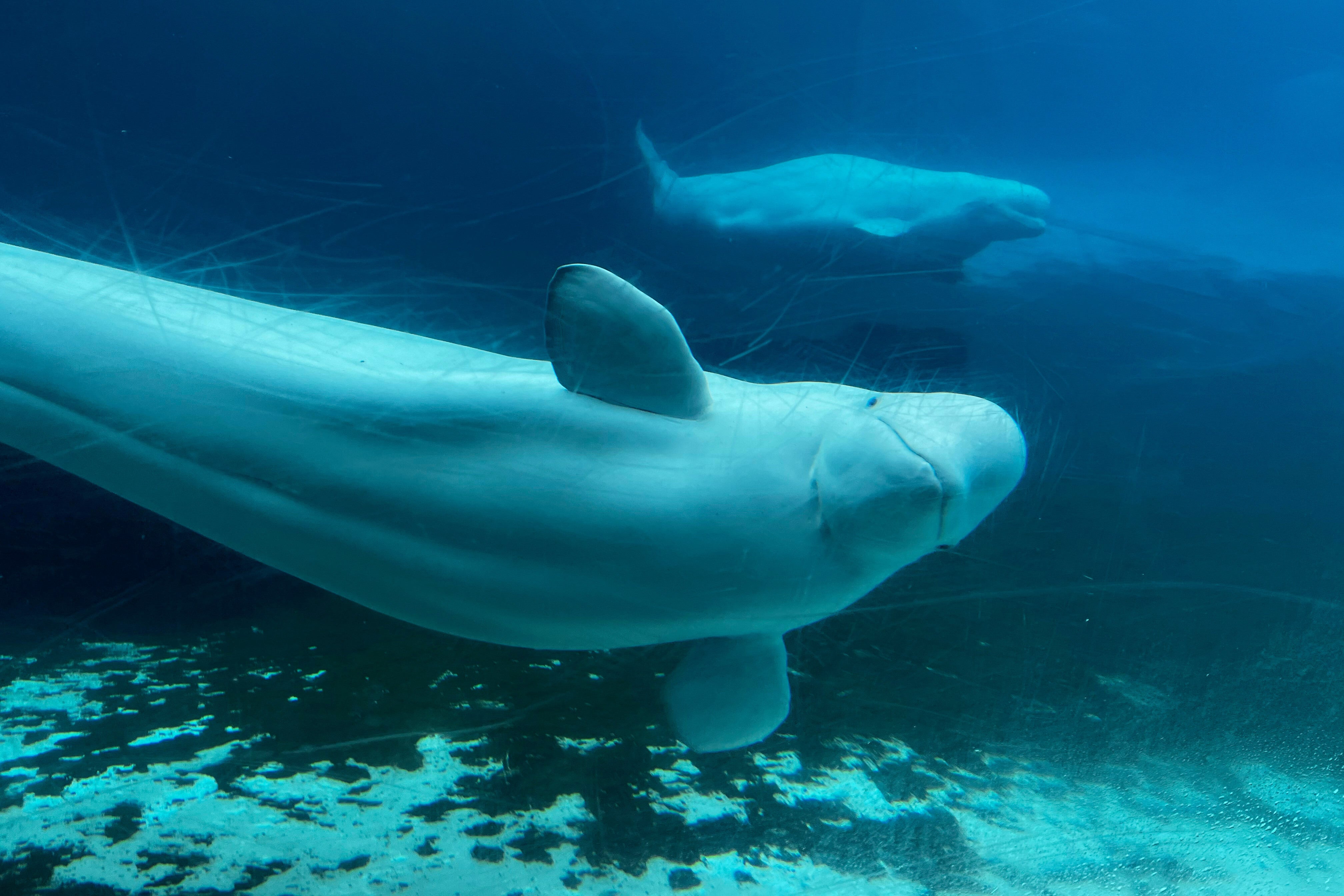
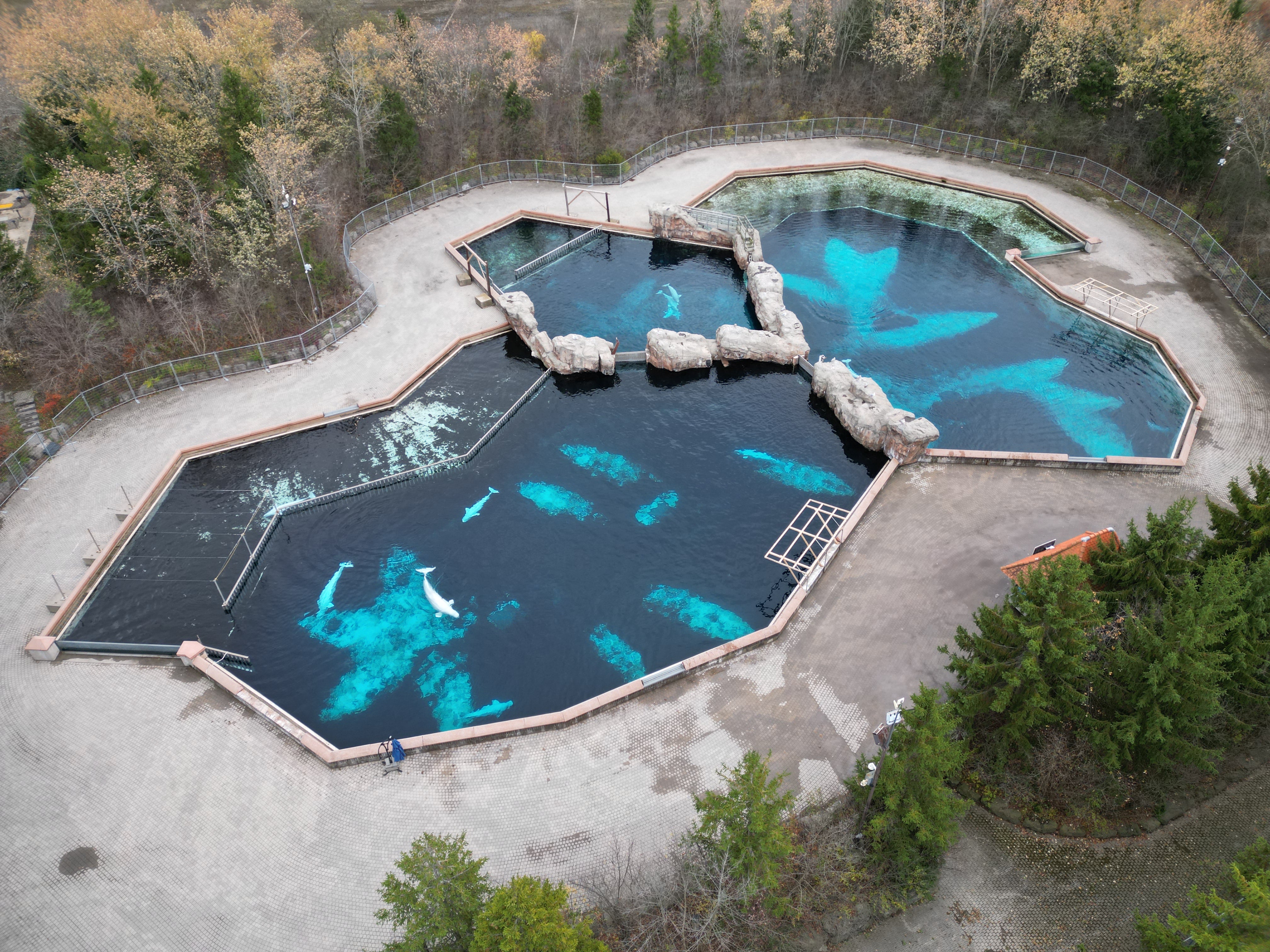
Dozens of captive beluga whales trapped in a defunct amusement park may be spared euthanasia after the Canadian federal government conditionally approved their export to the U.S.
In a Facebook post Monday, Canada’s fisheries minister Joanne Thompson said she had granted a request by the proprietors of Marineland in Niagara Falls to send the whales to four American marine parks.
It comes after the controversial business, which closed down in 2024 after years of scandals and lawsuits, reportedly renewed its threat to euthanize the animals if no deal could be reached, giving Canada no option except “export or death,” Thompson said.
Animal rights activists condemned Marineland’s “disturbing” ultimatum, accusing the company of “repeatedly refusing to engage” with proposals to build a sanctuary for captive whales off the coast of Nova Scotia.
“Today, I met with Marineland regarding their proposal to export the remaining whales to U.S. facilities. It was a constructive meeting, and I provided conditional approval for export permits,” wrote Thompson.

“I will issue the final permits once final required information is received from Marineland. My focus throughout has been the best interest of the whales, and that is what has guided this decision,” she added.
In a statement to The Independent, Marineland said: “Earlier today, Minister Joanne Thompson notified Marineland of her support for the relocation of our remaining beluga whales and dolphins to proposed facilities in the United States. We extend our gratitude to the Minister and the Canadian government for prioritizing the lives of these remarkable marine mammals.”
Up to 1.2 million visitors a year once flocked to Marineland to see choreographed aquatic shows featuring orcas, belugas, dolphins and walruses.
But the institution came under severe financial pressure as accusations mounted of inhumane conditions, with 19 belugas and one orca reportedly dying there since 2019.
In October the park threatened to euthanize its surviving 30 belugas if the federal government did not provide emergency relief after ministers refused permission to sell them off to a Chinese amusement park.


Last week Marineland renewed that threat, according to Canada’s national broadcaster CBC, reportedly giving the government an “imminent” deadline to approve new permits.
“Based on our discussion, I understand that for Marineland, the request represents the last attempt to save the lives of these animals,” Thompson told the company in a letter seen by The Canadian Press.
“In short, the options you have presented are export or death.”
Animal Justice, a Toronto-based campaign group, called the approval merely “another disappointing turn” in Marineland’s “saga of abuse and neglect”.
“Marineland made millions of dollars by keeping these whales and dolphins in tiny tanks… it’s shocking that they didn’t bother to save a cent to give the whales the happier retirement they deserve,” said executive director Camille Labchuk.

“Given Marineland’s appalling threat to execute the 30 belugas and four dolphins, the minister had little choice but to offer these conditional approvals. However, we fully expect that the Minister will require individual health assessments for each whale and dolphin to determine whether they are healthy enough to be moved.”
“It is also essential to ensure the whales will not be bred in the US—which is illegal in Canada. These animals must be the last generation to suffer in captivity,” Labchuk said.
She added that it was “heartbreaking” that the whales will now never be able to experience life in a planned whale sanctuary in Nova Scotia, which would house former amusement park whales in a 100-acre netted area. (Whales raised in captivity generally can’t be released into the wild, because they lack key skills necessary to survive.)
According to reports, Marineland now wants to send the whales to four U.S. parks: Shedd Aquarium in Chicago, Georgia Aquarium in Atlanta, Mystic Aquarium in Connecticut, and SeaWorld, which has several parks across the country.
“We extend our gratitude to the minister and the Canadian government for prioritizing the lives of these remarkable marine mammals,” a spokesperson for Marineland said Monday.