

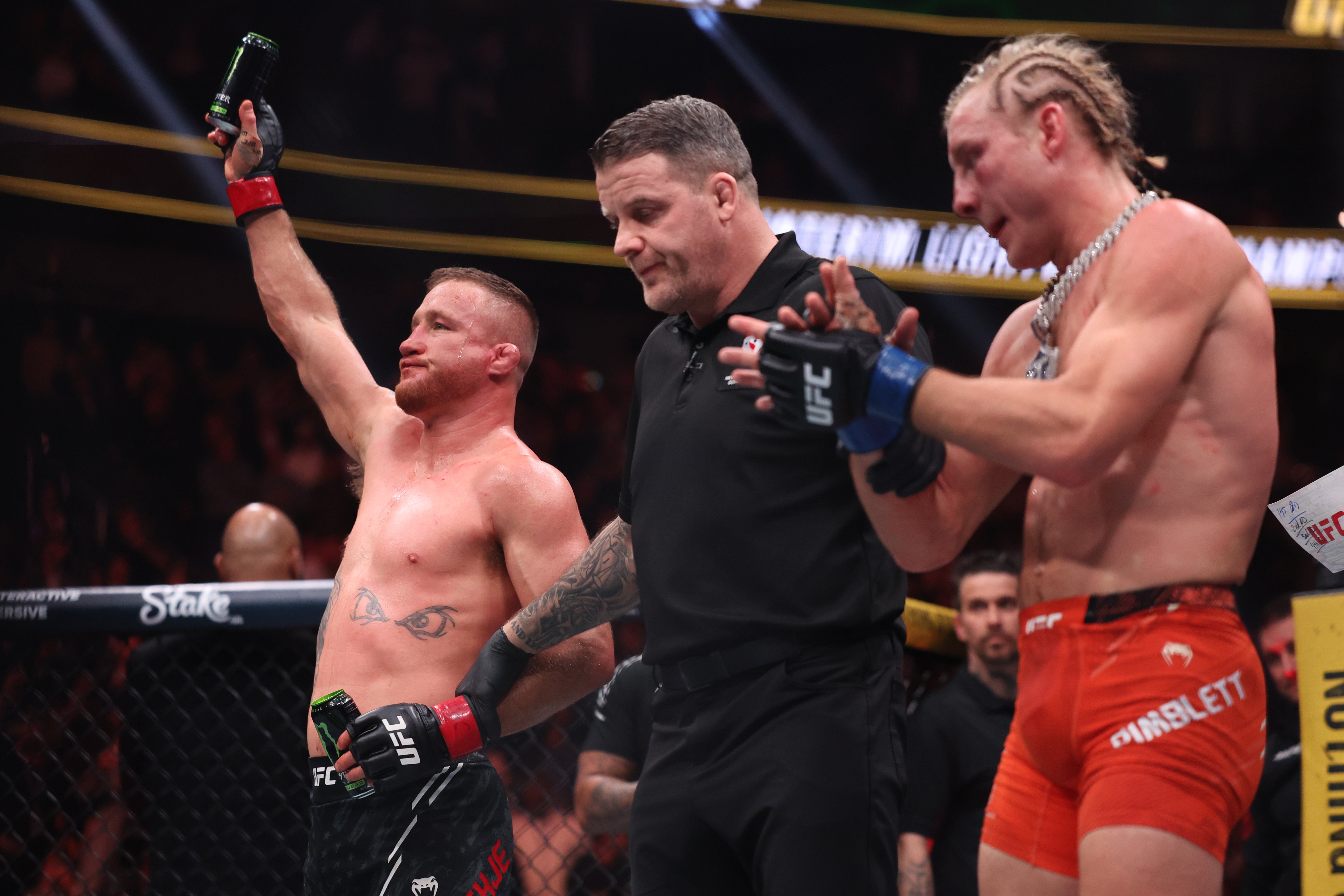
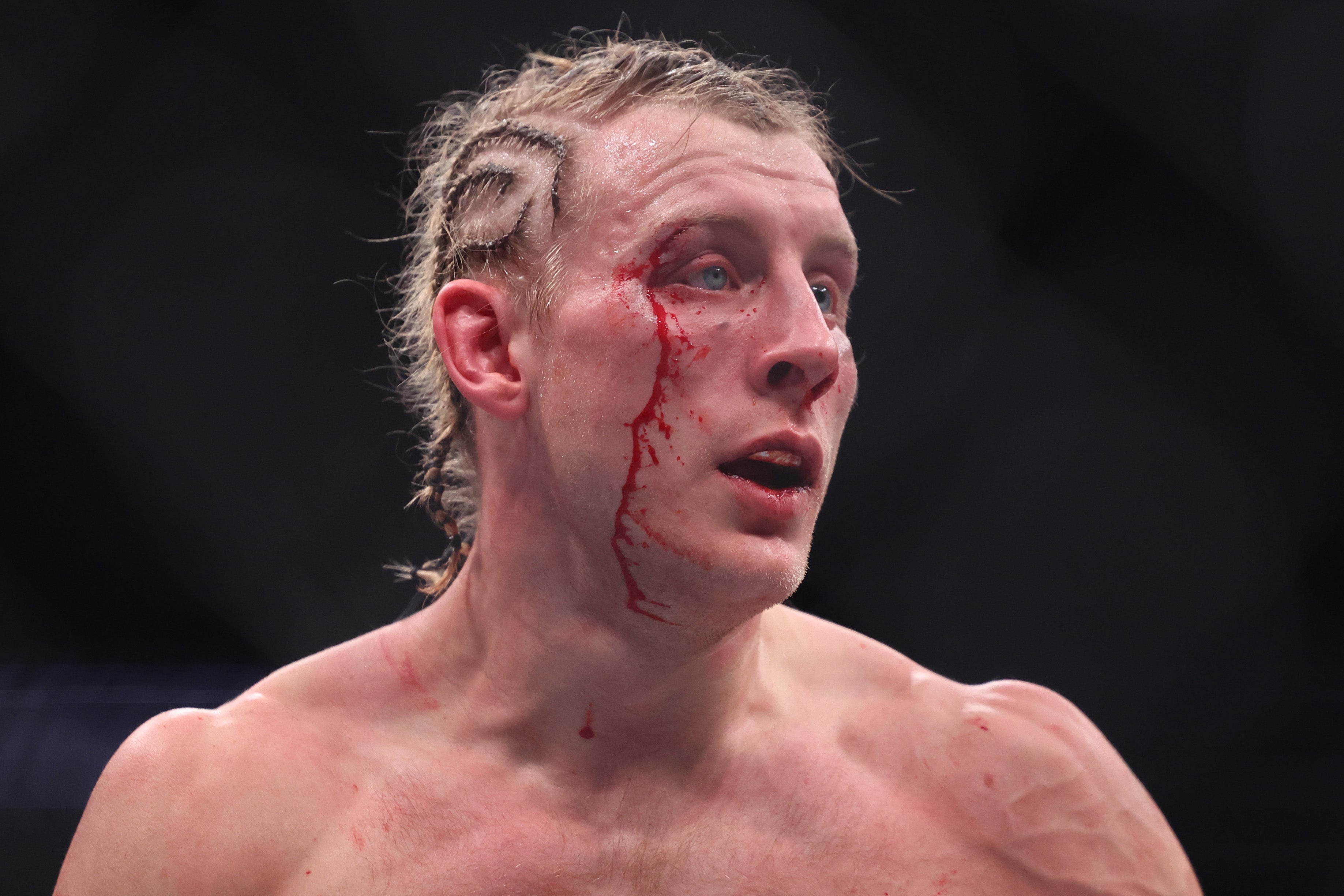
Standing in the Octagon in that now-familiar, slouched posture, Paddy Pimblett was sporting the colours of his beloved Liverpool FC. Unfortunately for the Scouser, he did not share their champion status, and the red he wore was a blotchy, bloody splash across his face.
“He won’t be physically the same after this fight,” Pimblett had vowed of opponent Justin Gaethje. “I will be exactly the same.” But after this interim UFC title fight in Las Vegas, it was Gaethje saying: “Well, look at your face motherf*****.”
Indeed, “Paddy The Baddy”’s words came back to bite him. Dropped three times and thoroughly beaten in this decision loss, the lightweight can at least take pride in his almost incomprehensible display of heart – a display that ensured an older, more-famous quote did not haunt him here.
“I’m a Scouser, we don’t get knocked out!” was his proclamation after a chaotic UFC debut in 2021, in which he flirted with disaster but ultimately tore past his opponent. On that evening and on several fight nights that followed, many fans and pundits insisted that the young Briton would never earn a title shot. Some took issue with the level of opposition presented to him en route to Saturday’s main event. But in fairness, there was a steady escalation in each opponent, and Pimblett did show improvements every time.

Furthermore, the illusion that the UFC is a meritocracy has long been shattered, and that is not intended to sound overly critical; you can’t really blame the UFC for giving its biggest stars a bit of a helping hand, and Pimblett is one of the UFC’s biggest stars. Of that, there can be no doubt anymore – not after UFC 324, even in defeat against Gaethje.
The issue for Pimblett is this: much of his pre-fight talk centred on how he is always doubted and always proves people wrong, yet against Gaethje, he was well favoured. So when he was also well beaten, he did prove people wrong again, but for the wrong reason.
Gaethje’s legacy as arguably the most-entertaining fighter in UFC history only swelled with this performance against Pimblett, but the fact remains that the American is 37 and was seen as a stylistic lay-up for Paddy The Baddy: the most-beatable big-name opponent that the UFC could give him.
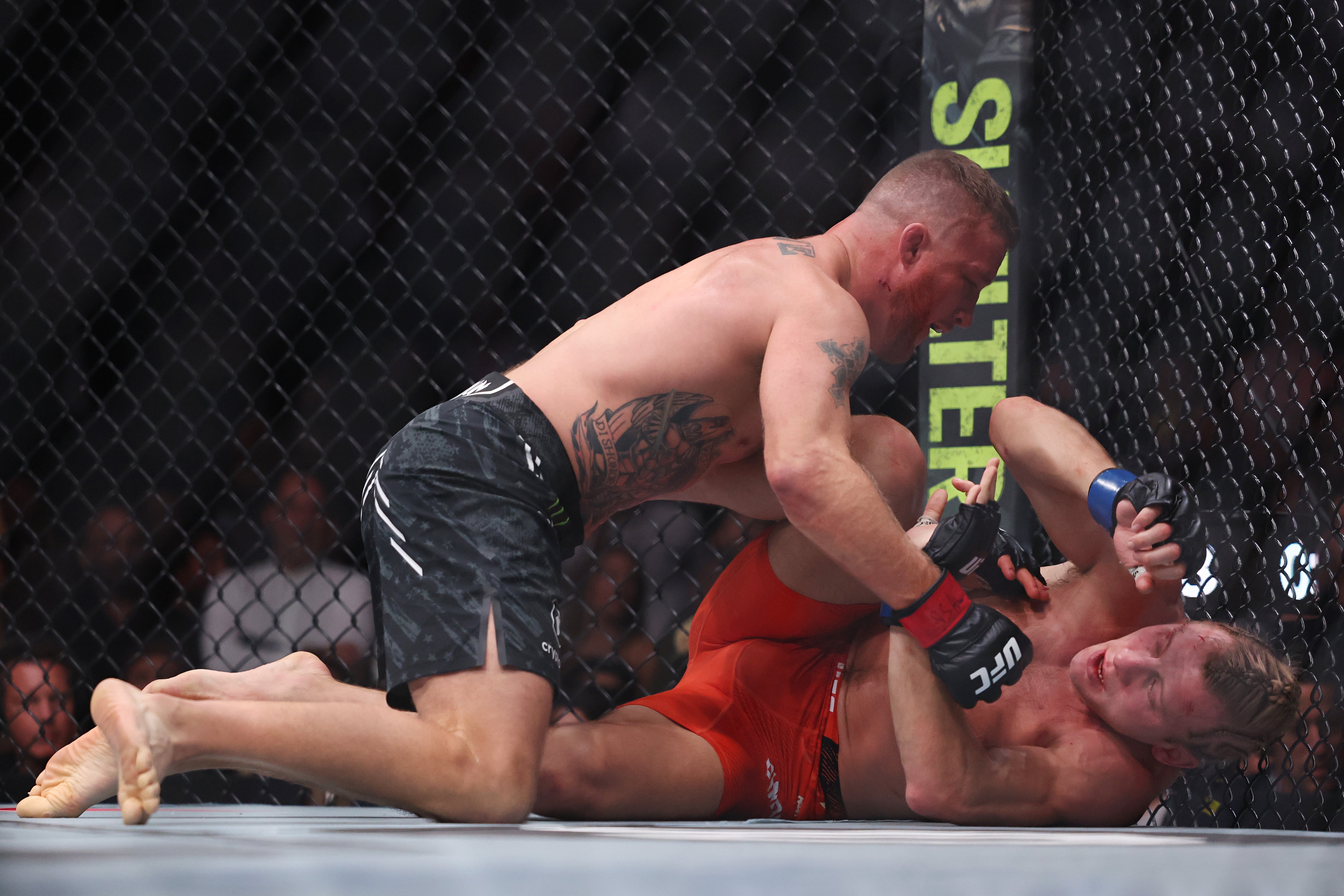
Yet for the best part of five rounds, Gaethje landed on the 31-year-old almost at will, dropping him three times before all was said and done. And yes, Pimblett deserves immense credit for his almost-superhuman resilience (he even fought through two eye pokes), as well as the fact that he, too, landed consistently throughout. Still, the power difference meant Pimblett was always under the greater threat.

Also of concern was Pimblett’s gameplan. He had told The Independent in December: “His grappling is his weakness and it’s my strong point, but I’m not coming in to grapple. People think I’m just going to try to take him down immediately, but I’m not; I’m gonna out-strike him and try and knock him out. If it comes down to it, if his chin really is that good, then I’ll take him down.”
This was a surprising rhetoric at the time. Pimblett has commendably tightened up his striking over time, but it is still his biggest weakness in offence and defence, while he has proven himself as one of the most-effective grapplers at lightweight. Furthermore, although Gaethje is a former all-American wrestler, he has generally ignored that pedigree during his UFC career in favour of a brawling, striking-centric style.
Everything was lined up for Pimblett to take down Gaethje and submit the former (and now two-time) interim champion, dealing the American the same kind of defeat that he suffered in undisputed-title fights with Khabib Nurmagomedov and Charles Oliveira. However, Pimblett, despite urgent calls from his corner team, barely tried to take down Gaethje.
That may be what Pimblett ends up rueing most of all: not that he absorbed a frightening, potentially career-altering amount of damage, but that he veered so violently from his smoothest path to victory.

The question, of course, is what comes next?
Again it is worth mentioning: many fans took issue with the at-times favourable matchmaking from which Pimblett has benefited over the last five years. But he may need a little more.
Attention will quickly turn to the contenders around him. Above him in the rankings are ex-champions Oliveira and Max Holloway, who are scheduled to clash in early March, and Arman Tsarukyan. That’s to say nothing of reigning champion Ilia Topuria, a bitter rival of Pimblett, against whom a massive fight just slipped away – for the foreseeable future, at least. Considering the danger that the other three pose, Pimblett should fight down the rankings next.
With that in mind, his closest rival is Dan Hooker, and “rival” is a fair word; Pimblett made a vulgar comment about the Kiwi’s mother this month, and Hooker responded with a vile jibe at one of Pimblett’s deceased friends. The intention here is not to endorse building a match-up on this kind of back-and-forth, but the UFC may well choose to do so. It would also be a fight that Pimblett, if he stuck to his strengths, would be heavily backed to win.
Other contenders around Pimblett offer varying levels of threat, but among all this, there is a nuclear option.


Conor McGregor is desperate for a return to the cage, with the UFC’s planned White House event firmly in his sights this June.
Pimblett versus the Irish former champion, who has not fought in five years, should represent a winnable bout for Paddy The Baddy, and it would be one of the biggest that the UFC could make. It would be a fight to further harness Pimblett’s star power, putting the focus on that instead of his fighting flaws. However, it of course means taking a risk on McGregor, who has spent more time battling legal issues than opponents in recent years.
Still, Pimblett must rest first. Dana White said the Scouser was taken to hospital on Saturday night, with the UFC president sharing a gory image of Pimblett’s post-fight face. So rest and recover, then rebuild. Pimblett was humble in defeat but made one thing clear: “You haven’t seen the last of me.”