

It’s dinner time, and the contents of the Tupperware in my fridge just don’t appeal. So I do what any lazy millennial would when faced with this kind of situation – open up an app to see what’s on offer. There are options of cuisines from all over the world – katsu curry, biryani, stacks of pancakes, burritos.
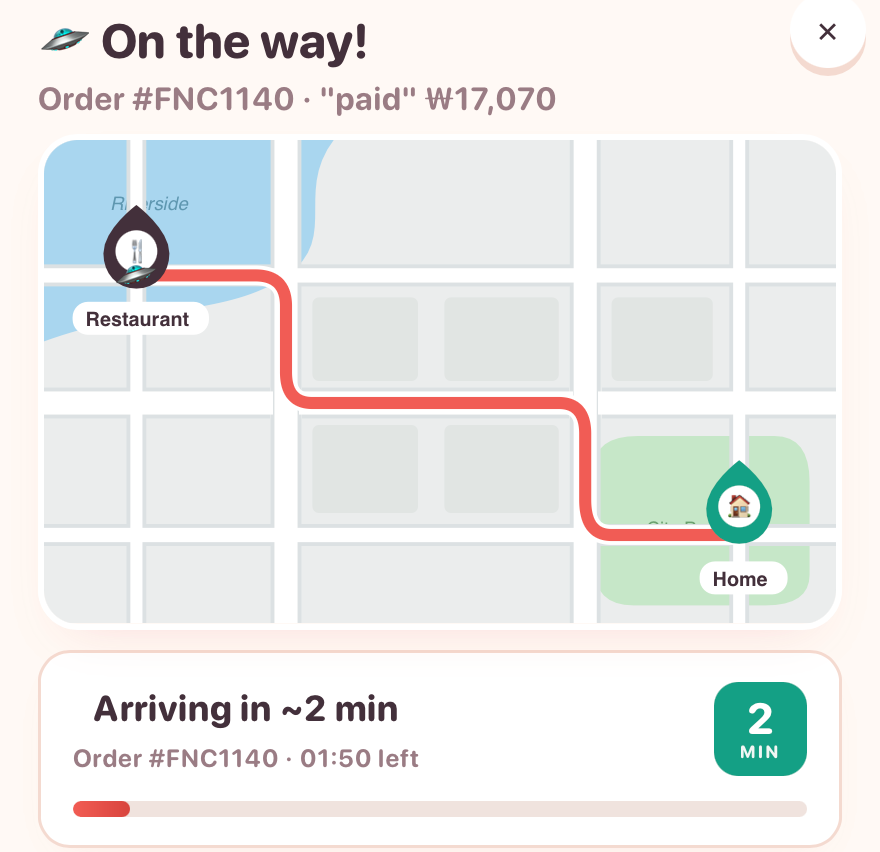
I go for the latter, chuck in some extra guacamole and watch as the app follows the courier’s journey. But I’d better get used to the idea of leftovers – because none of this food will ever turn up on my doorstep. I haven’t been scammed, and my order hasn’t been intercepted by hungry neighbours. The fact that this meal will never materialise is the whole point.
Confused yet? The app in question, which bears the Ronseal-style name Food Never Comes, is one of a clutch of platforms known as dopamine sites, originating in South Korea. It’s not just takeaway simulations either. The likes of Dopahaul and PeykMart have been designed to mimic the online shopping experience, but without any money changing hands; you can even track your imaginary deliveries once you’ve “bought” them.
Their aim is to provide that heady rush that comes with when you press “add to basket”, without any of the associated cost – or, say, the shame of having to trek to the Post Office to return some truly heinous “Scandi style” clogs that you ordered from an Instagram brand in the dead of night (definitely not speaking from experience here).
Frankly, I’m something of a Millennial doom-spender. When I’m happy, I can go weeks without opening the ASOS app. But when I’m stressed out? Sad? I often default to retail therapy, underpinned by a vague pessimism. Why not buy another silly wiggly frame to fill with a silly print? It’s not like I’m going to buy a house any time soon.
I’m far from alone in partaking in this particular coping mechanism. Recent research from Tesco Bank found that 18 per cent of adults doom-spend when they’re faced with negative headlines and dispiriting social media posts; it’s most prevalent among the younger generations, with 37 per cent of Gen Z and 25 per cent of Millennials surveyed admitting to it.
Could these sites be a good – and far cheaper – alternative to impulse shopping (with none of the associated returns admin)? Or is this just yet another step towards a Black Mirror-style dystopia where we’re all sitting around silently tapping our phones in pursuit of yet another artificial high?
Dopamine, the neurotransmitter that helps us feel pleasure as part of the brain’s reward system, is released whenever you do something enjoyable; using social media, for example, gives us regular hits, which encourage us to return again and again.
We can also “trigger dopamine through the anticipation or expectation of an event or experience, not just the actual experience of it”, explains psychotherapist and author Eloise Skinner. “When our brain predicts a pleasurable outcome, it triggers a dopamine release,” she adds, “and this is also involved in reinforcement, making us more likely to repeat a behaviour that triggers these pleasure pathways”.
These fake shopping platforms, then, “work to put this process into action without ever delivering the eventual reward”, Skinner says. And because they are “designed with no eventual consequences in mind”, we’re not necessarily disappointed when the products never arrive (if so, the dopamine rush would “fade away”).
A stint spent virtually shopping for fake products soon sends me down the existential rabbit hole. What could be next – a dating app populated with imaginary people, whom you can swipe through to receive the buzz of a match?
Instead, she adds, the feeling of no consequences might give us “a sense of freedom, autonomy and control” or escapism, “which can be welcome in generations where life feels stressful and overwhelming”.
Essentially, Skinner reckons, “it’s not too dissimilar from window shopping, which people can often do to feel a sense of excitement or novelty without having any financial consequences”. Consider it a high-tech version of adding items to your online cart and never checking out, a practice that’s been nicknamed “ghost shopping”.
Over on Food Never Comes, each item has a “price”, with a fake delivery charge and even fictitious taxes added onto the total, too, for an extra dash of verisimilitude. There’s a certain childish fun to dreaming up chaotic food combinations, but there’s also a lesson to be learned about my consumption habits hidden in there, too.
Using it shows me that often when I start thinking about a takeaway, I’ve not got any particularly burning desire to sample the delights of Uber Eats – I’m just bored and faffing around on my phone in search of a buzz. A quick scroll exercises much of the desire to actually make a real order.
It’s when I test out the shopping platforms that this experience comes undone for me. Buying tat I don’t need constitutes a far bigger spending trap for me than takeaway, so this is where I could really do with a nice free distraction.
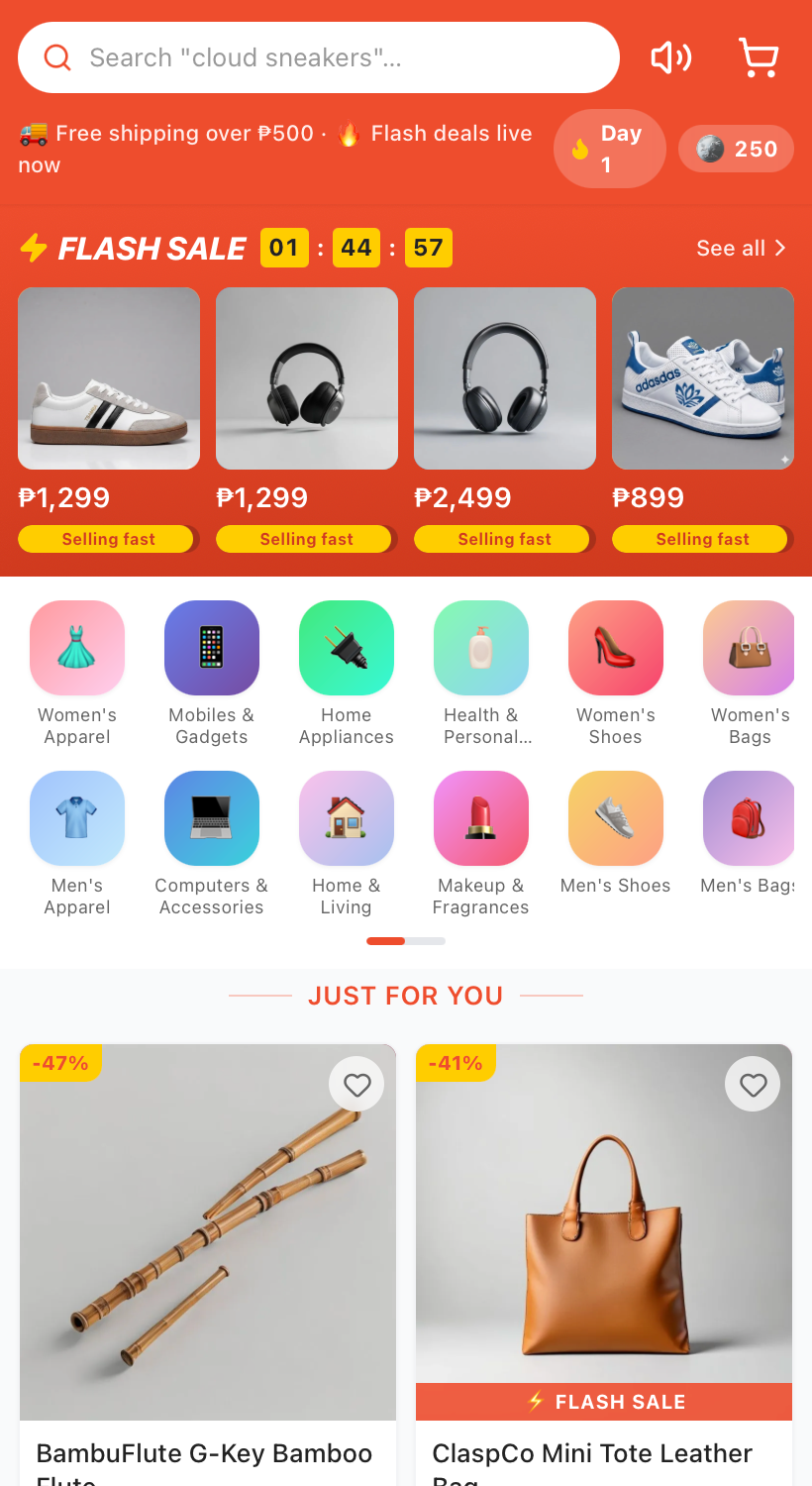
I am immediately put off, though, by how Dopahaul’s interface seems to bear a strong resemblance to mega-marketplaces like Temu and AliExpress. The sites share an orangey colour scheme, and the product photos appear as if they have been cooked up by AI. That doesn’t matter so much for the gadgets and tech, but it doesn’t work at all for the fashion offering.
Because there’s nothing here that I would ever want to add to my wardrobe – just a bunch of freaky knee-high leather boots and “Adasdas” trainers – the shopping itch goes unscratched.
The “SoftSculpt ribbed co-ord set”, available in subtle shades of cream, mocha and blush, is particularly haunting – it looks more akin to Victorian underwear than something you’d spot in the Pilates studio.
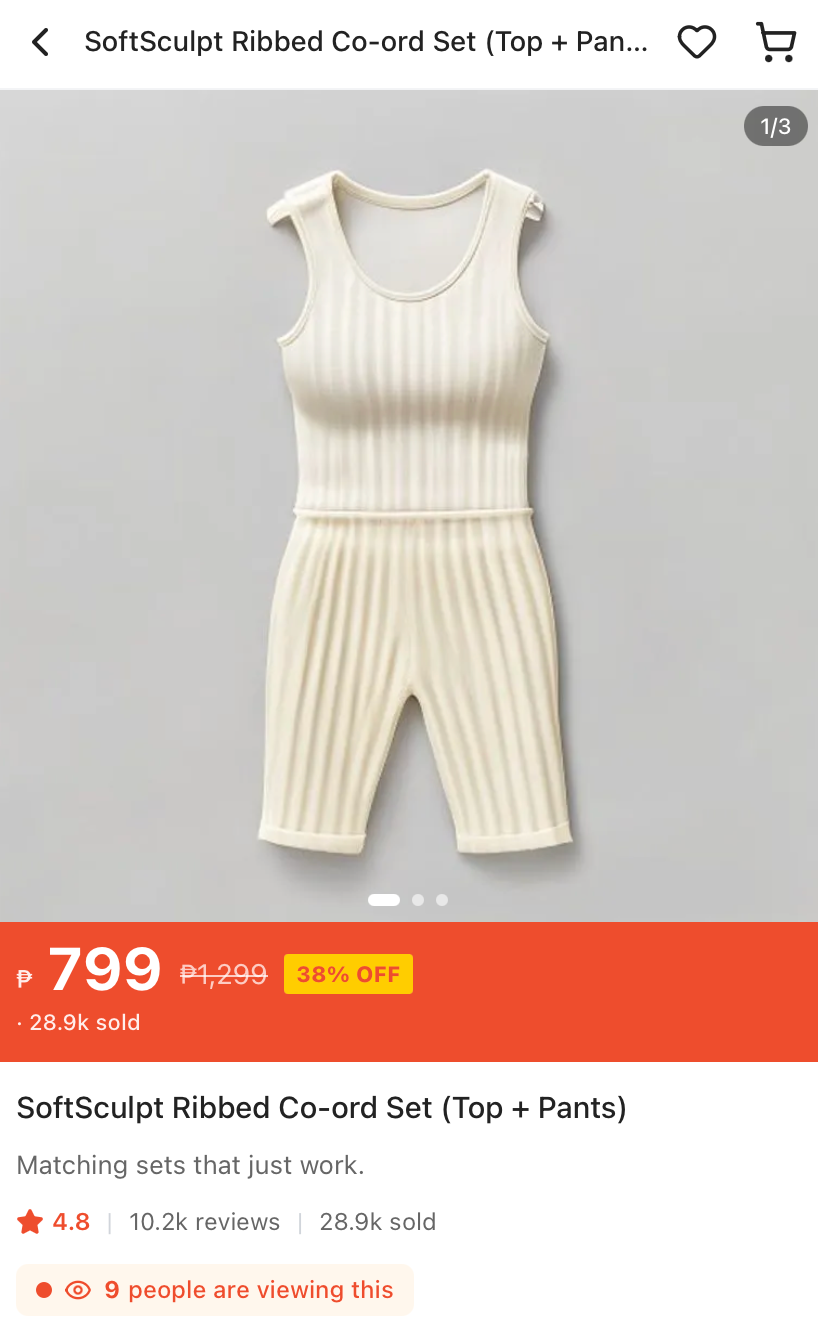
According to its listing, though, it has been “sold” 28.9k times – although in this uncanny valley, it’s not clear whether this is a completely made-up metric or an actual indicator of how many users are fake shopping. Perhaps I am just an incorrigible retail snob – I would probably happily be duped by some sort of “Dope-a-Porter” platform flogging imaginary overpriced smock dresses.
I’m not entirely convinced, then. Plus, a stint spent virtually shopping for fake products soon sends me down the existential rabbit hole. What could be next – a dating app populated with imaginary people, whom you can swipe through to receive the buzz of a match, without ever having to really connect with a human being (this actually doesn’t feel too far off)?
If someone is particularly lonely or anxious, or dealing with grief or sadness, it could become a way of distracting from that,
Lowri Walsh, psychotherapist
If someone is prone to overspending “as a way of dealing with difficult emotions”, sites like these “might be a way to reduce the consequences in the short term and help them stabilise, so they’re ready to do some work around what’s leading to that behaviour in the first place”, explains Lowri Walsh, psychotherapist and honorary lecturer at the University of Lancashire.
But the risk, she adds, is that they will just become an avoidance tactic – “if someone is particularly lonely or anxious, or dealing with grief or sadness, it could become a way of distracting from that,” she says. Essentially, unless we’re also willing to “tackle the underlying cause” of our scrolling and spending, fake shopping is just “replacing it with another kind of behaviour that may not be that helpful”.
She’d be concerned, too, that this is just another digital distraction that is “taking us away from real life – you’re just living a simulated life on your phone, and the constant reward [from apps] makes real life feel not as exciting, or make it harder to tolerate boredom”. Her comments give me pause – do I really want to spend the non-refundable minutes of my one finite existence scrolling through products that don’t exist, following a delivery driver who will never deliver? When it’s put like that, the answer is a hard “no”.