
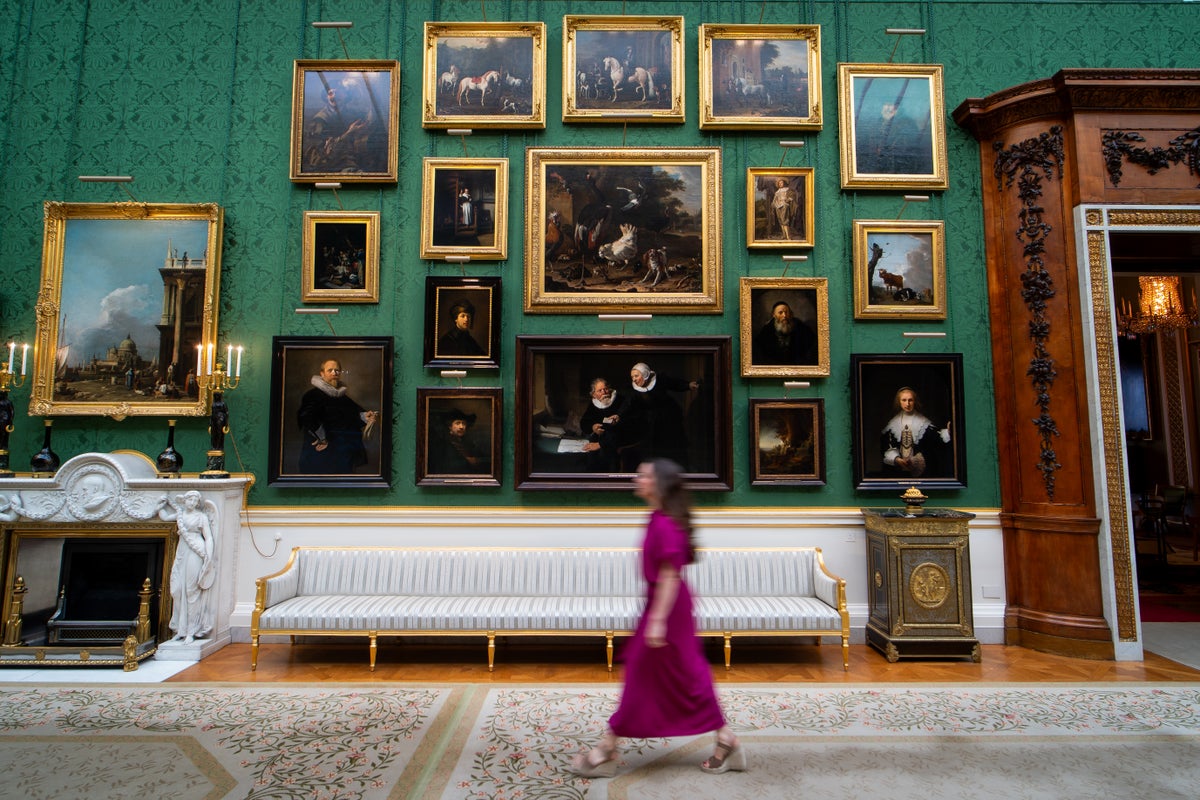
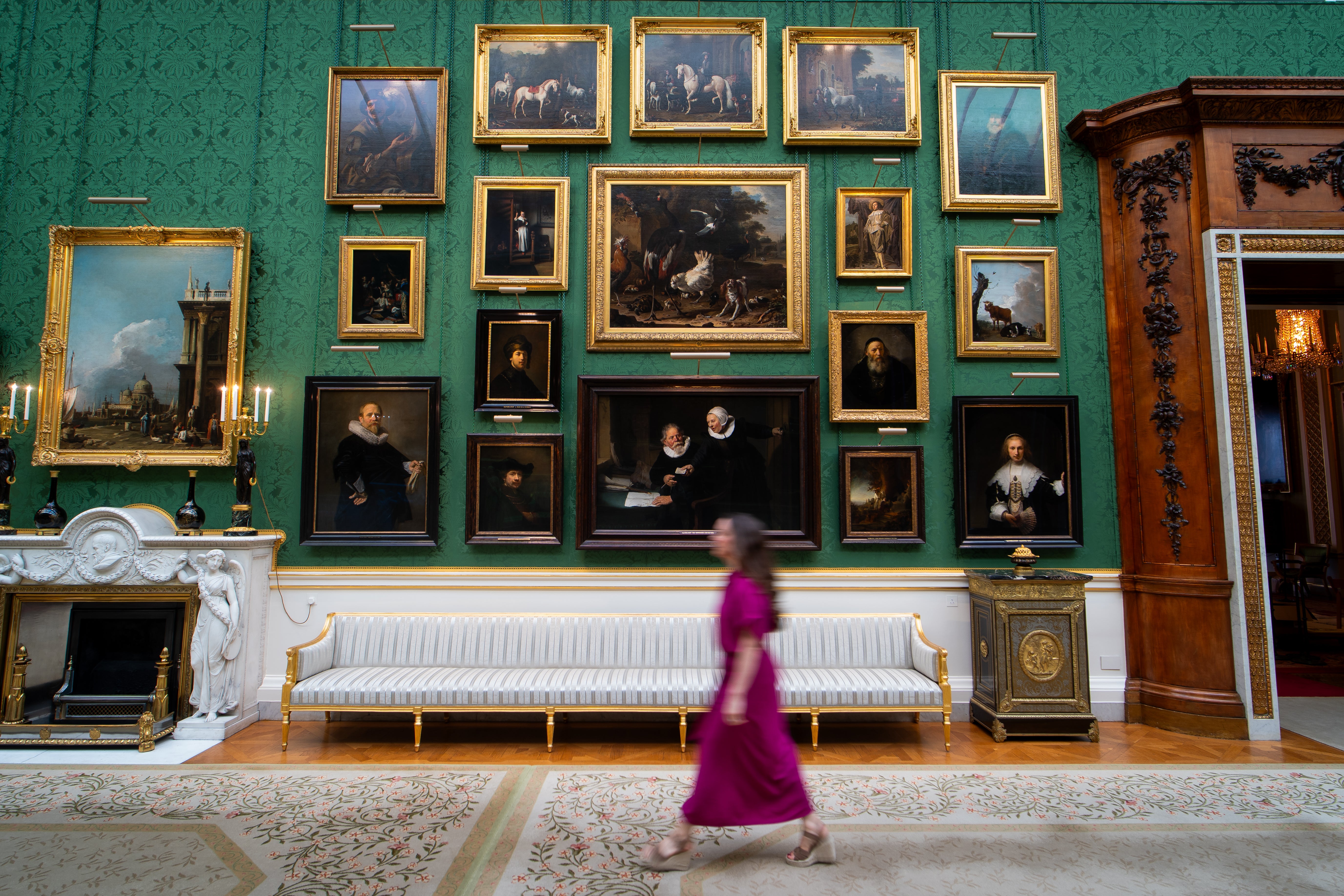
Buckingham Palace’s Picture Gallery has undergone a dramatic transformation, almost doubling its display of masterpieces to 120 works ahead of its summer opening.
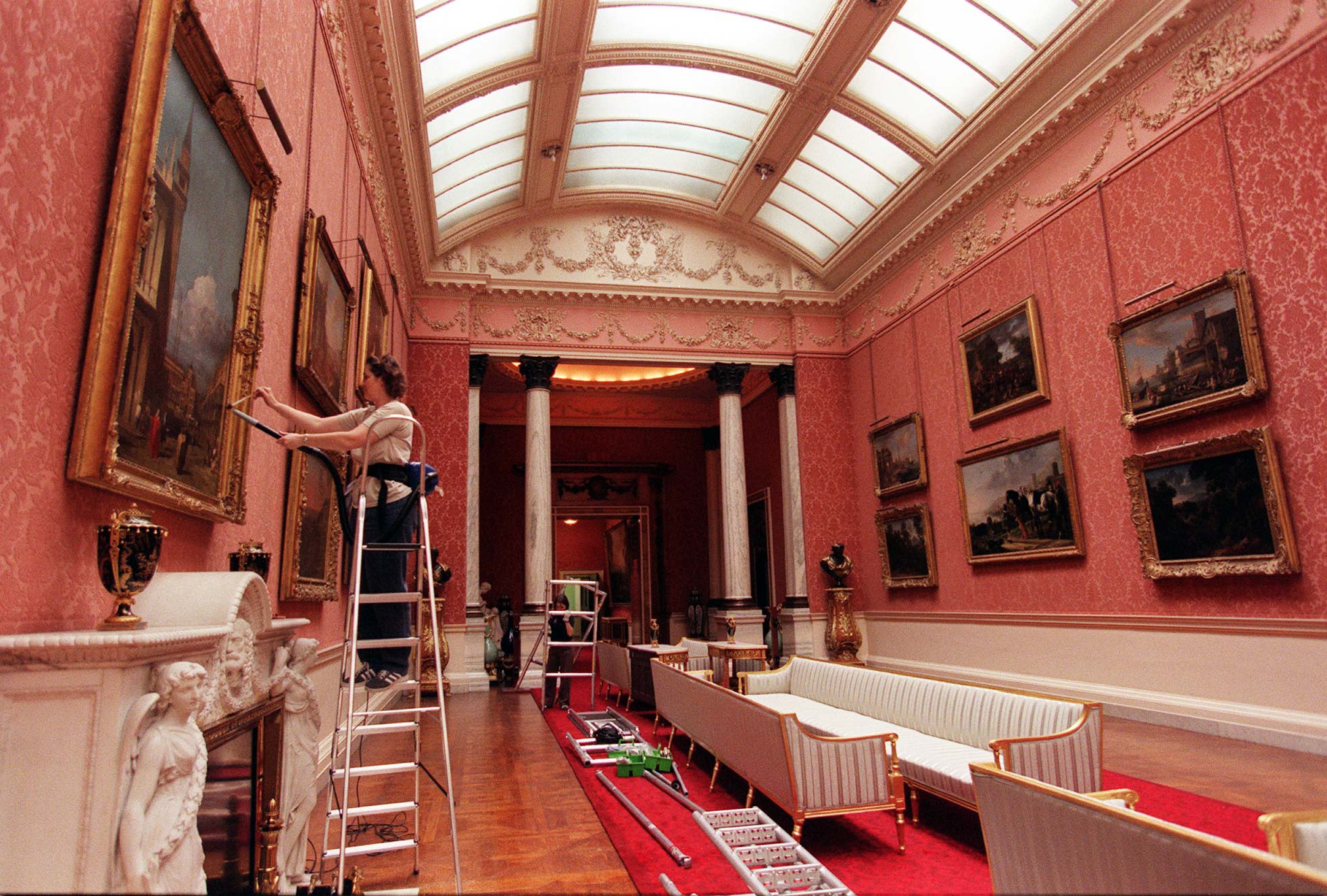
This “once-in-a-generation re-display” sees the state room’s 1976 coral pink velvet wall coverings replaced with vibrant new emerald-green silk damask.
The extensive revamp, which involved 875 hours of meticulous re-hanging, now features paintings by celebrated artists such as Rubens, Caravaggio, and Zoffany.
The collection has expanded from 63 to 120 pieces.
Among the notable additions is Zoffany’s The Tribuna of the Uffizi, a work commissioned by Queen Charlotte but never exhibited in her apartments due to her disapproval of its “crowded and unconventional composition”. It last graced the Picture Gallery in 1841.
Other highlights include George Stubbs’s A Rough Dog, thought to portray George IV’s large pet, Thomas Gainsborough’s portrait of Johann Christian Fisch, five Rembrandt paintings, and Rubens’s Self Portrait, now facing a newly added portrait of his friend and fellow artist Anthony Van Dyck.
Anna Reynolds, surveyor of the King’s pictures, said: “This re-hang is an exciting and rare opportunity to significantly increase the number of world-class paintings on display for visitors, in line with our charitable aim to share as much of the Royal Collection as possible.
“It continues the longstanding tradition of renovations and re-hangs in the Picture Gallery that have commonly taken place following a change of reign, and we are delighted to be able to share it with as many people as possible this summer.”
The 47-metre-long gallery, which was added to the palace by architect John Nash in the 19th century, has changed colour numerous times throughout history, due to shifting tastes and the natural ageing of fabric.
The room has been golden yellow, lilac which was fashionable in the Victorian period, crimson red, and then olive green which it remained for most of the 20th century.
It was switched to pink 50 years ago and now, amid the deterioration of the material, has been spruced up with a change to emerald green.
The room is used by the royal family to host guests, with presidents – including Donald Trump in 2019 – and monarchs being taken on a tour to see a special exhibition of Royal Collection items in the gallery when state visits are hosted at the palace.
The gallery is also seen by more than half a million visitors each year.
The transformation was unveiled a fortnight after it was announced the King and Queen will never live at Buckingham Palace.
Charles and Camilla will stay at nearby Clarence House instead, keeping that as their London home, despite the £369 million renovation of the palace.
The Duke of Sussex will also not be staying at the palace during his ongoing trip to the UK.
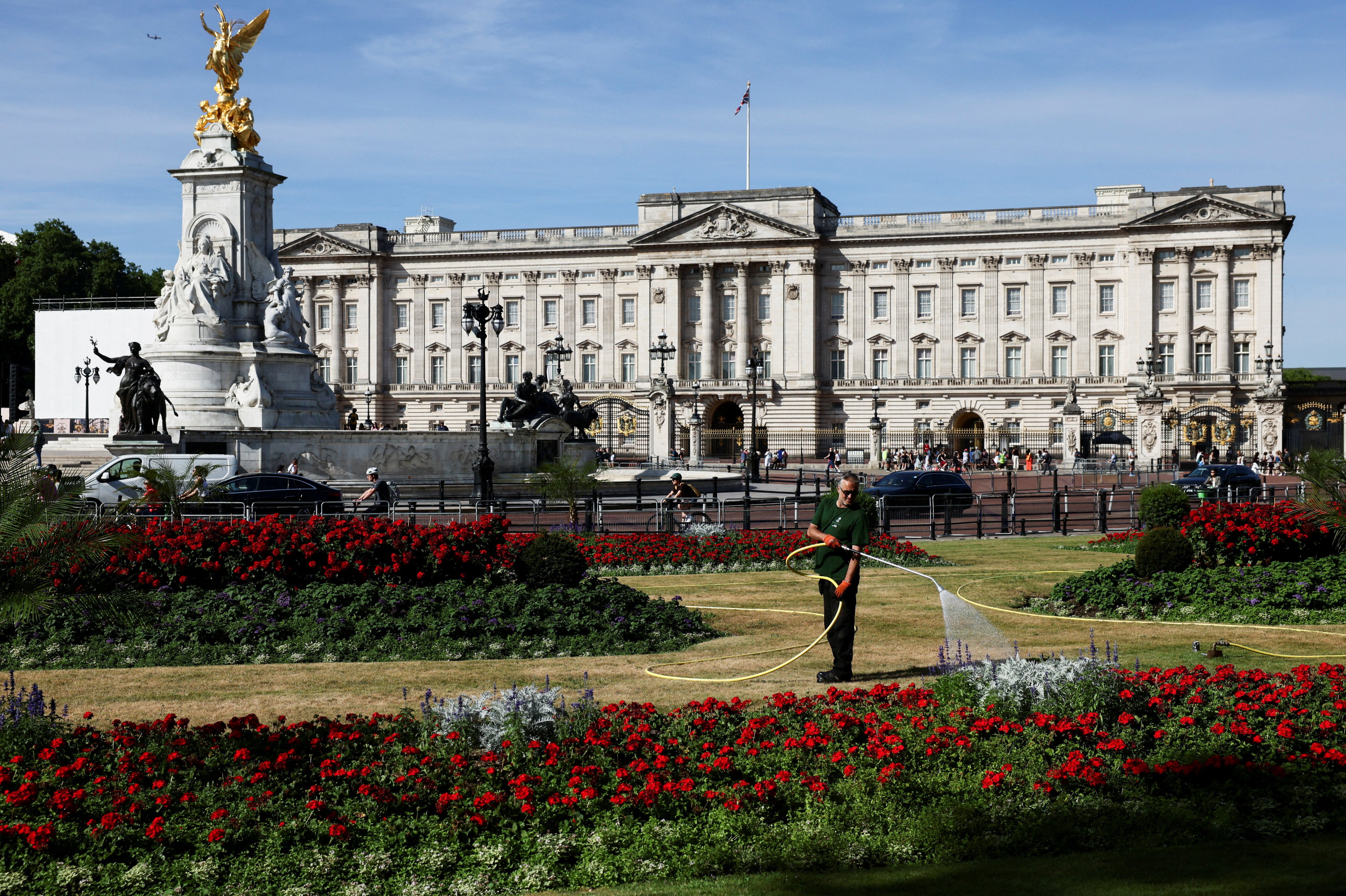
The King’s youngest son missed the opportunity to take refuge at the royal residence while back in London, after initially rejecting the offer for his family to stay, and then accepting for himself too late for arrangements to be made for a one-night sleepover in the palace, which has 775 rooms.
Buckingham Palace also believes the timing, amid judgment in Harry’s legal case against Associated Newspapers on Tuesday, could have compromised the King’s constitutional position.
The summer opening of Buckingham Palace runs from 9 July to 27 September this year.
A Rolls-Royce Phantom IV used by the royal family will be on display in the Grand Entrance Portico, and on show in the Family Pavilion on the West Terrance will be handwritten letters sent to the King by children from around the world, highlighting their shared interests with the monarch, such as the environment and sustainability.
Also new this year is a large oil study of the King by Jonathan Yeo, made in 2023 in preparation for the first official portrait of Charles after his coronation, commissioned by The Drapers’ Company.
The red-hued depiction of the King was recently gifted to the Royal Collection by Yeo and hangs in the Silk Tapestry Room adjacent to the Picture Gallery.
Tickets for the summer opening are available at www.rct.uk and +44 (0)303 123 7300.