




Human rights experts have called for the government to urgently act to end the suffering of thousands of prisoners still trapped on indefinite jail terms, warning Britain is “perpetuating serious human rights violations”.
Three United Nations special rapporteurs have demanded that Britain urgently resentences almost 2,400 people still serving Imprisonment for Public Protection (IPP) jail terms.
The controversial open-ended punishments were scrapped in 2012, but not retrospectively, leaving thousands languishing in prison without a release date for years beyond their tariff, including some for minor crimes. Once released, many find themselves trapped in a cycle of indefinite recall for minor breaches of strict licence conditions.
The architect of the flawed sentence, Lord David Blunkett, has since admitted that ushering in the draconian punishments under Tony Blair’s Labour government is his “biggest regret”.
In 2022, the cross-party justice committee inquiry found the sentences were “irredeemably flawed” and called for all IPP prisoners to be resentenced. Despite 96 people taking their own lives in custody after losing hope of release, successive governments have refused.
The Independent has repeatedly called for all IPP prisoners to have their sentences reviewed.


In a strongly-worded intervention on Wednesday, the UN’s special rapporteurs on torture, extrajudicial or summary executions and the independence of judges and lawyers, said the jail terms have left prisoners trapped in a cycle of “excessive punishment, repeated recall, deteriorating mental health, and diminishing hope”.
“These penalties involve prolonged uncertainty and cause serious psychological deterioration among prisoners, including an increased risk of self-harm and suicide. Such punishments may amount to psychological torture,” the experts said.
The latest UN intervention follows a major complaint submitted to Dr Alice Jill Edwards, the torture expert. The damning assessment by leading international lawyer, Dr Felicity Gerry KC, highlights the plight of eight prisoners – including Thomas White, who has served almost 14 years for robbing a mobile phone and set himself alight after his mental health deteriorated in prison.
The experts said concerns have been raised that his mental health condition was not properly understood at sentencing and that his illness may prevent him from ever satisfying the requirements of the Parole Board’s release test.
Other cases include Joseph Brady, who has spent 18 years in prison on a minimum tariff of four years. Released and recalled four times, he has reportedly experienced severe mental health deterioration, including incidents of self-harm linked to the uncertainty of indefinite detention.
Kerry Parish-McCann has served 17 years on a tariff of three years for robbery. She was 25 years of age at the time and has been diagnosed with bipolar disorder and epilepsy. She has repeatedly cycled between release and recall while experiencing significant trauma, instability and repeated episodes of self-harm, the experts noted.

The UN rapporteurs raised particular concern about prisoners with disabilities, neurodivergence, acquired brain injuries, severe mental health conditions and histories of childhood trauma. In a number of cases, these factors appear either not to have been properly identified at sentencing or not adequately accommodated within the prison and parole systems, they warned.
They added: “The purpose of imprisonment must be rehabilitation and reintegration. A sentence that leaves people without a realistic route to release, while causing profound psychological suffering, is fundamentally at odds with those principles.”
The experts reiterated previous recommendations that the government undertakes a comprehensive re-sentencing exercise for all remaining IPP prisoners. If a full review is considered impracticable, clear criteria should be established for an initial phase of partial re-sentencing, they said.
“The United Kingdom has a responsibility to protect both the dignity and integrity of those in its custody,” they said.
“The continued existence of this discredited sentencing regime cannot be allowed to drift indefinitely.”

This complaint, filed in February, is the second major a submission to the UN over the jail terms. A separate complaint over five other IPP prisoners is also being investigated by the UN’s working group on arbitrary detention.
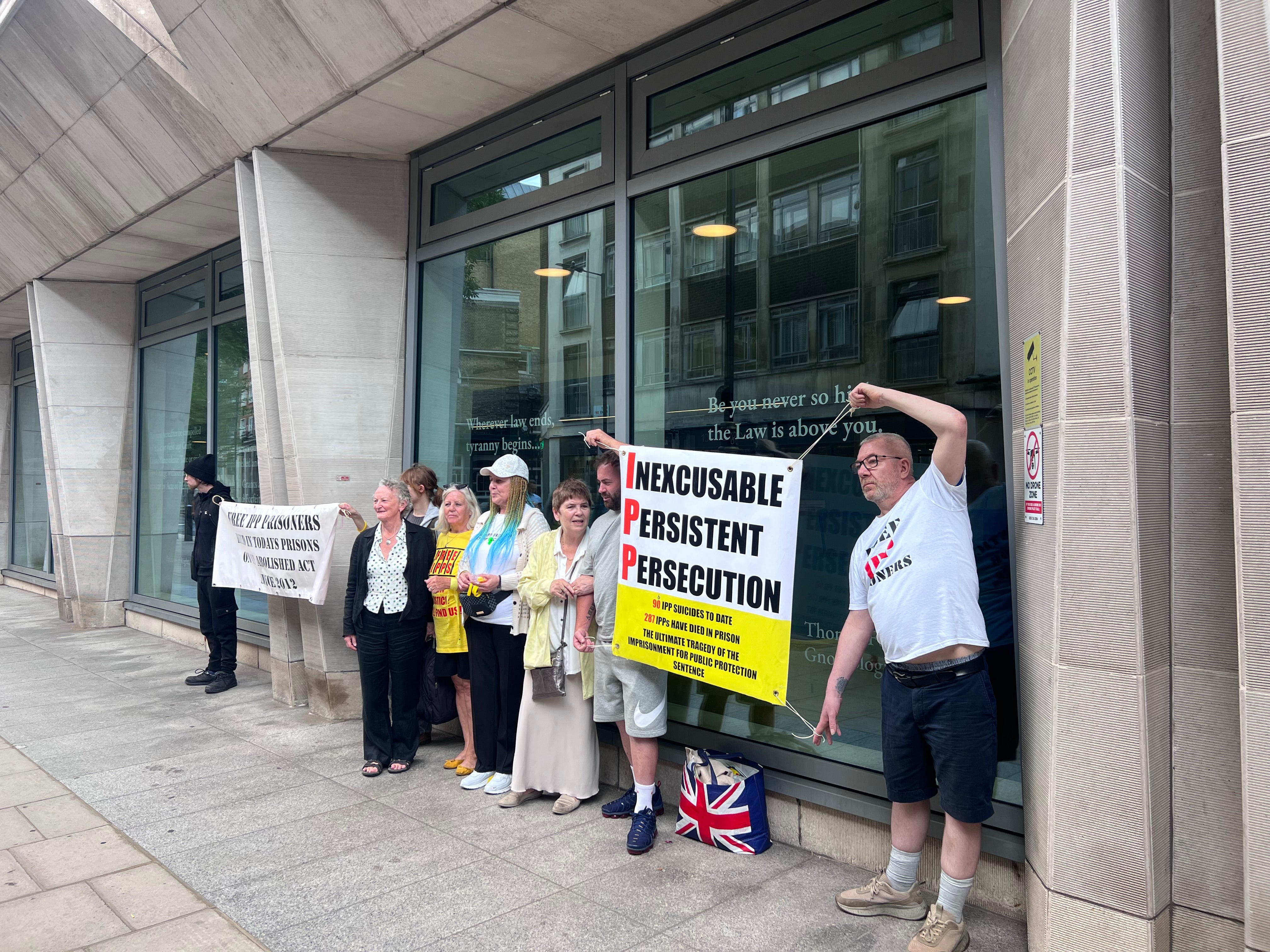
It comes after dozens of families descended on the Ministry of Justice to protest the jail terms on Wednesday. They were met by prisons minister Lord James Timpson before they marched to the House of Commons, chanting “free, free IPP”.
More follows on this developing news story…