



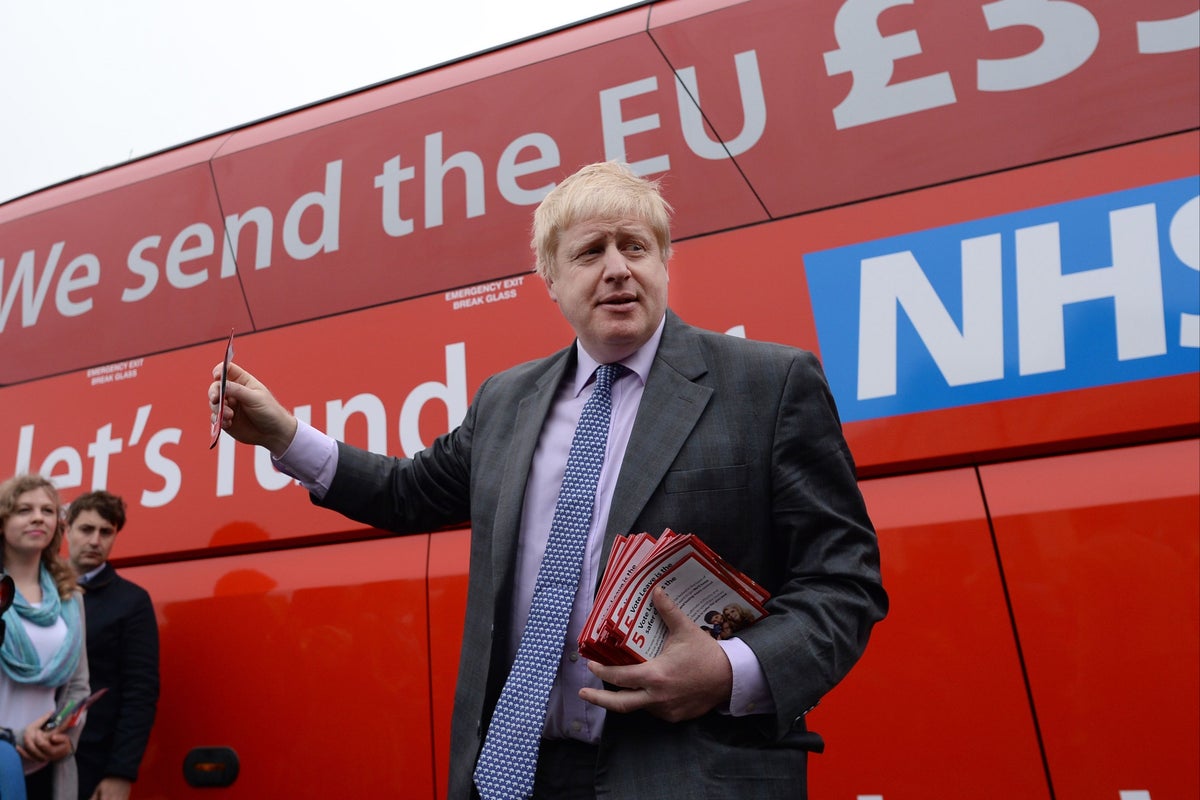
Boris Johnson has dismissed accusations that he joined the campaign to leave the European Union ten years ago in a bid for power, insisting “I would have been prime minister” regardless of which side of the Brexit debate he supported.
Mr Johnson’s startling assertion comes as he insists – in a two-part BBC documentary airing next week – that he supported Leave from principle rather than personal ambition. His decision, which was arguably pivotal in swinging the electorate towards voting to leave the European Union, came despite what he claims was a personal threat from the then-prime minister David Cameron to “f*** you up forever” if he campaigned against staying in the EU.
But while Mr Cameron says he does not recall using that language, both he and his chancellor George Osborne are dismissive of Mr Johnson’s assertion that he was acting from conviction rather than to win support for a leadership bid from the right wing of the Conservative Party.
Mr Cameron says in the programme: “I don’t think, at that point, he [Johnson] really believed in [Leave]. He believed it was going to lose.”
“It was nothing to do with the EU, Britain’s place in the world,” Mr Osborne adds, joking that Mr Johnson was playing Game of Thrones and he could “see the Iron Throne right there about to be vacated”.
Mr Johnson wins some support for his claim that he was motivated by issues of sovereignty from his ex-wife Marina Wheeler KC, who says her own worries about the encroachments of EU law had “an impact” on her husband’s thinking. This was reflected in the pro-Leave version of the two famous articles he drafted for the Daily Telegraph before deciding which way to jump.
But unlike Ms Wheeler or the former prime minister himself, his sister Rachel, who personally pleaded with him to back Remain on the eve of his fateful decision, told him that the pro-Remain version of the article was much the more powerful.
She claimed her brother’s pro-Leave draft was “all about” how in the EU “we couldn’t determine the height of wing mirrors on our trucks. I was, like, is that it?”
Among other points in the multiple award-winning documentary maker Norma Percy’s tenth anniversary programmes about the Brexit referendum, A Very British Civil War:
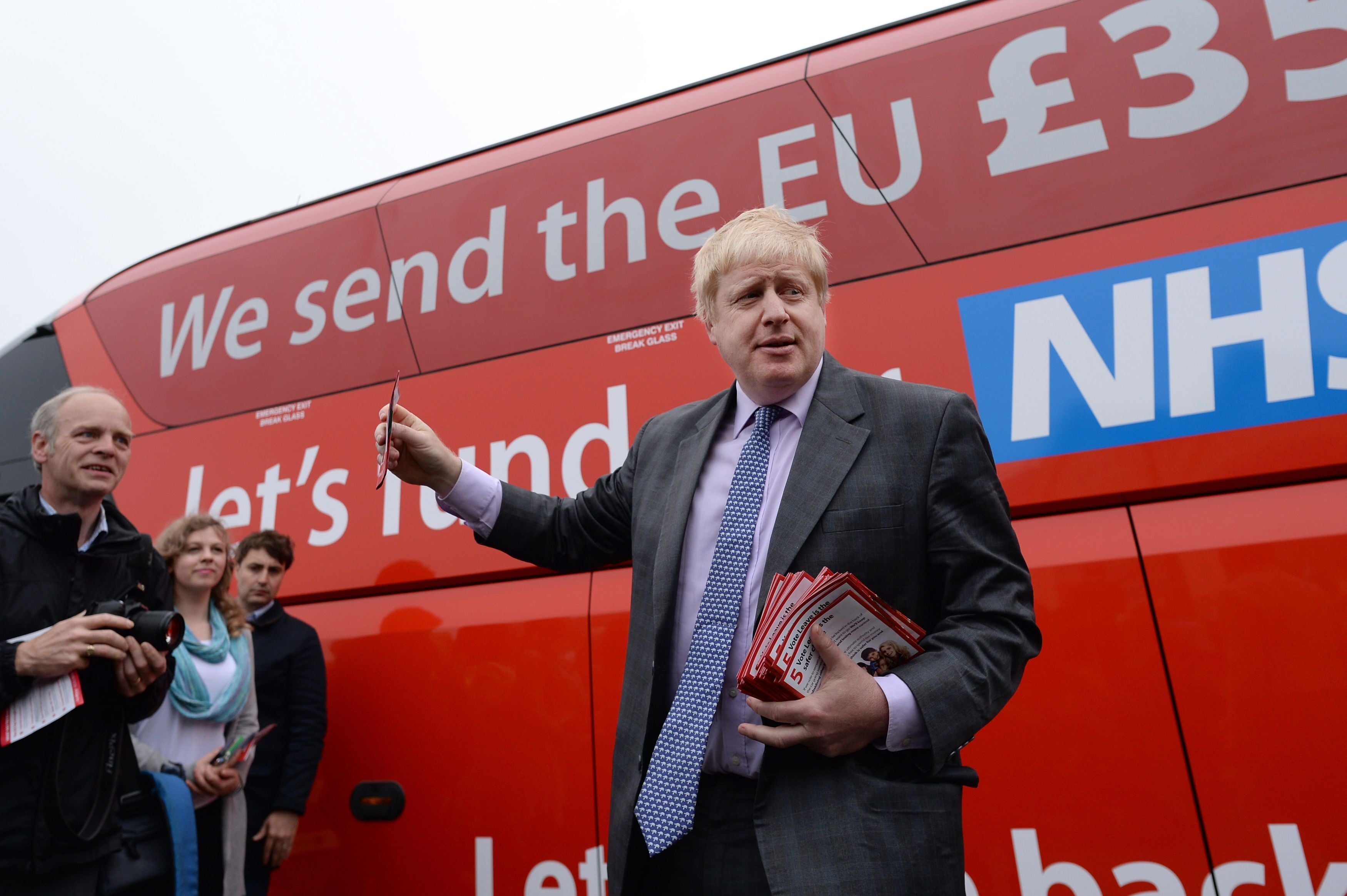
- There were serious rows between pro-Leave Tory MPs like Bernand Jenkin and Dominic Cummings over the latter’s running the Vote Leave campaign, including its repeated claim – dismissed by the Institute of Fiscal Studies as “clearly absurd” – that Brexit would release £350m per week for the NHS.
- After the June 16 murder of Labour MP Jo Cox, Gordon Brown wanted all three living ex-Labour leaders to make a joint appeal for Remain, but the then leader Jeremy Corbyn refused to share a platform with Tony Blair
- Johnson depicts himself as only overcoming his initial reluctance to make immigration a key issue because he was angry about a Sun report that unnamed members of the Remain camp had been spreading “false claims” that Marina Wheeler had been the lawyer seen in a “drunken clinch” with a male colleague the previous summer.
- Cameron and Osborne rejected advice from other senior figures in the Remain campaign – including Peter Mandelson – to confront the dominant threats of EU-driven immigration by both Vote Leave and the rival Leave.EU campaign run by Nigel Farage. They wanted instead to focus almost exclusively on allegations about how Brexit would hit individual family budgets.
The first episode of “A Very British Civil War is on BBC Two on June 8.


