

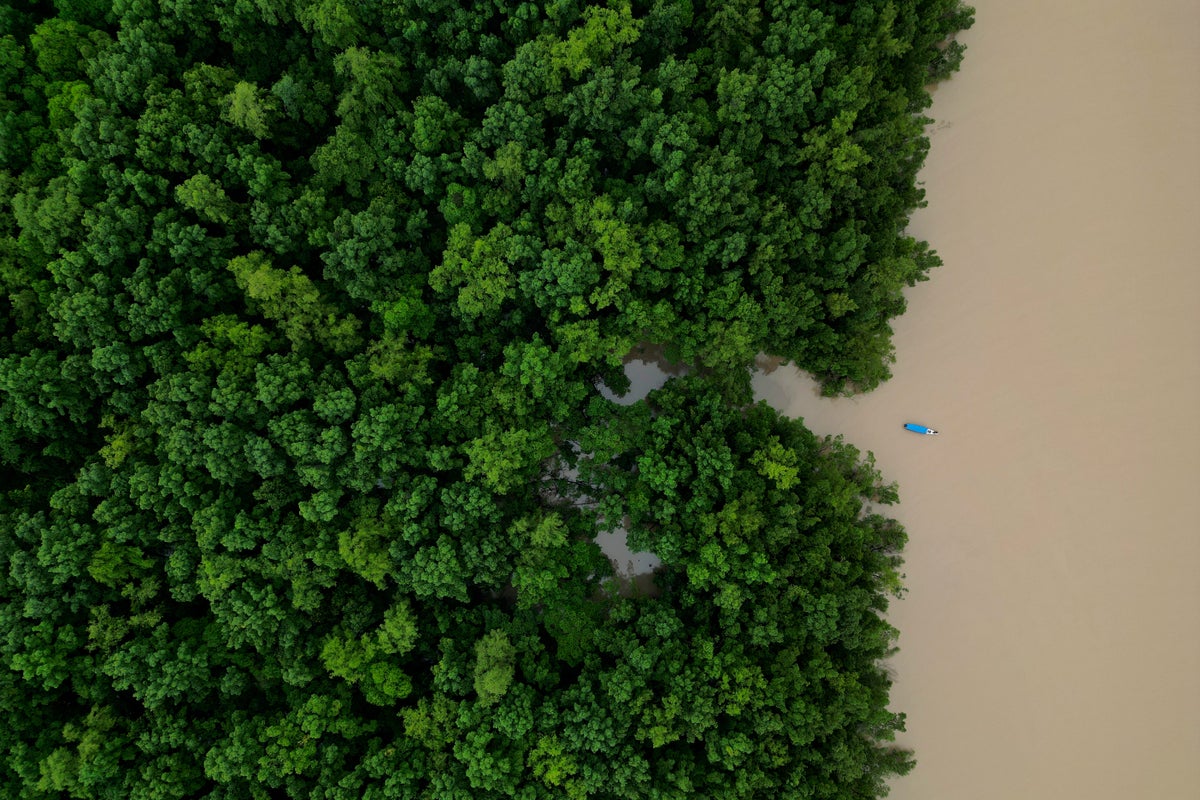
The Brazilian government said Monday it has committed 3.1 billion reais ($617.5 million) to foster ecological investment in the Amazon region, as part of a plan to expand a federal program known as Eco Invest that was announced during last year’s COP30 — the annual United Nations climate summit it hosted last year.
The resources are expected to go toward businesses that support sustainable tourism, improve infrastructure in the Amazon and expand the “bioeconomy” — the so-called economic activity based on natural resources that preserves the forest.
The model uses a blended finance approach in which the National Treasury lends funds to banks at an annual rate of 1%. In return, banks must mobilize at least four times that amount in private investment, with foreign investors accounting for at least 60%. So far, the program has committed 140 billion reais ($28 billion) in combined public and private resources.
The National Treasury allocated 3.1 billion reais ($617.5 million) Monday and eight banks committed another 10.1 billion reais ($2 billion) in the latest auction of the Eco Invest program, the Ministry of Environment said.
Carina Pimenta, the national secretary for the bioeconomy at the Ministry of the Environment and Climate Change, said the credit could support cooperatives producing Amazon products such as acai and Brazil nuts, as well as tourism infrastructure in conservation areas.
The Amazon, the world’s largest rainforest, plays a critical role in regulating the global climate. Brazil holds more than 60% of the forest, much of it spanning some of the country’s poorest states. Projects in the region are often costly and risky for investors, and the administration of President Luiz Inácio Lula da Silva designed the Eco Invest program, which launched in 2024, to reduce that risk by offering guarantees.
João Paulo Capobianco, Brazil’s environment minister, said Eco Invest supports Brazil’s path to net-zero carbon emissions by 2050 by creating financial incentives for economic activities in the Amazon that do not rely on deforestation. While agricultural expansion has been historically a major driver of deforestation, Capobianco said Brazil has reduced forest loss without compromising productivity since 2023.
The investment announcement comes after a week of setbacks for Brazil’s environmental policy.
Last week, the lower house — largely conservative and aligned with agribusiness interests — approved fast-tracked bills that weaken efforts to combat environmental crimes, including one that hinders enforcement against illegal deforestation based solely on satellite monitoring.
The policy has been a pillar of Brazil’s environmental enforcement and, according to Brazil’s natural resources agency known as IBAMA, helped drive a roughly 50% drop in Amazon deforestation since 2023.
The measures still need Senate approval and require a sign-off from Lula, but have caused concern among environmentalists.
“By weakening oversight tools, territorial protection and environmental governance, the measures reduce the Brazilian state’s ability to prevent, control and respond to the economic, social and climate impacts of climate change,” Climate Observatory, a network of environmental nongovernmental associations, said in a statement Monday.
Capobianco said that while such congressional initiatives may raise doubts about Brazil’s environmental policies, the country is still committed to staying on track with its climate pledges.
“We will show that Brazil remains on a path of controlling and reducing deforestation,” he said.
___
The Associated Press’ climate and environmental coverage receives financial support from multiple private foundations. AP is solely responsible for all content. Find AP’s standards for working with philanthropies, a list of supporters and funded coverage areas at AP.org.