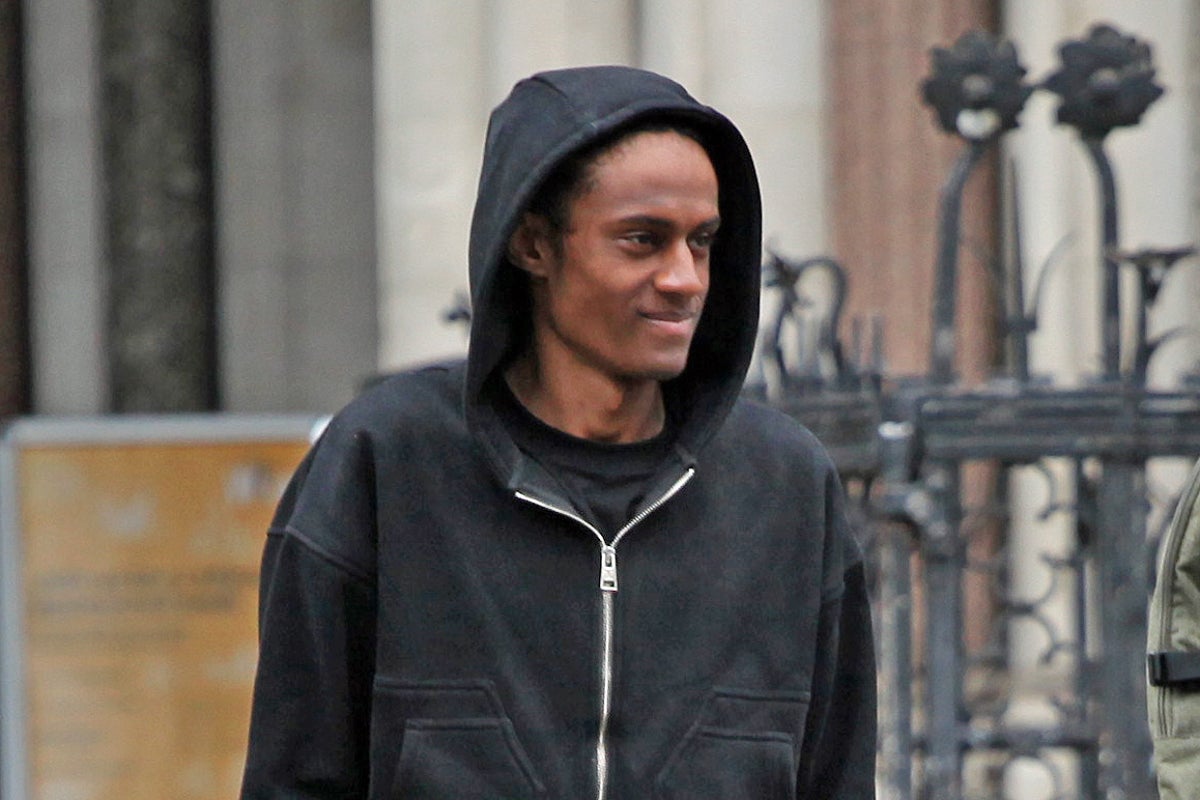
A Black teenager who was arrested for attempted murder after his mother attempted suicide is now suing the Met Police for race discrimination and false imprisonment.
Daryl McLune, a diligent student with “great grades”, was put in handcuffs and kept in custody for almost 24 hours on suspicion of trying to kill his mother Annette McLune in July 2021.
The “frightened” 16-year-old had arrived home from his grandmother’s house to find his mum fighting for her life. However, he was not treated as a “child in crisis” by officers, but instead arrested on suspicion of attempted murder, a jury was told.
Despite arriving after the police, he was handcuffed in the street in front of the family’s neighbours and taken to Wandsworth Police Station, where he was held overnight.
Officers refused to tell him during that time whether his mum was alive or dead, the jury heard.
He is now suing Met Commissioner, Sir Mark Rowley, over the July 2021 incident, claiming racially biased cops were too quick to “jump to the conclusion” that he was a suspect, rather than a shocked, grieving child.
Through his lawyers, he claims that instead of a fair investigation of what had happened, officers – influenced by their perception of him as a Black teenager – had arrested him, resulting in the “premature criminalisation of a child in crisis”.
The trauma of the arrest and detention had a profound impact on his life and education, going from a student with “great grades” to one who “couldn’t find it in himself to go to school”, the jury at Central London County Court was told.

But the Commissioner is fighting the claim, with Met lawyers arguing that officers were only doing their job in investigating a “serious and critical incident”.
Blood in the flat led officers to believe that the incident was “suspicious” and that something untoward may have happened, the jury was told, while police were unaware of a suicide note which was later discovered.
The court heard that Annette McLune survived but suffered “catastrophic” injuries from the suicide attempt, having earlier spoken of being in a “dark place” following struggles with a Covid infection.
Opening the case before a jury of eight this week, Daryl’s barrister Frederick Powell said he is claiming for false imprisonment, assault, race discrimination and human rights breaches, telling jurors: “We are here to seek accountability for what happened to Daryl when he was a 16-year-old boy.”
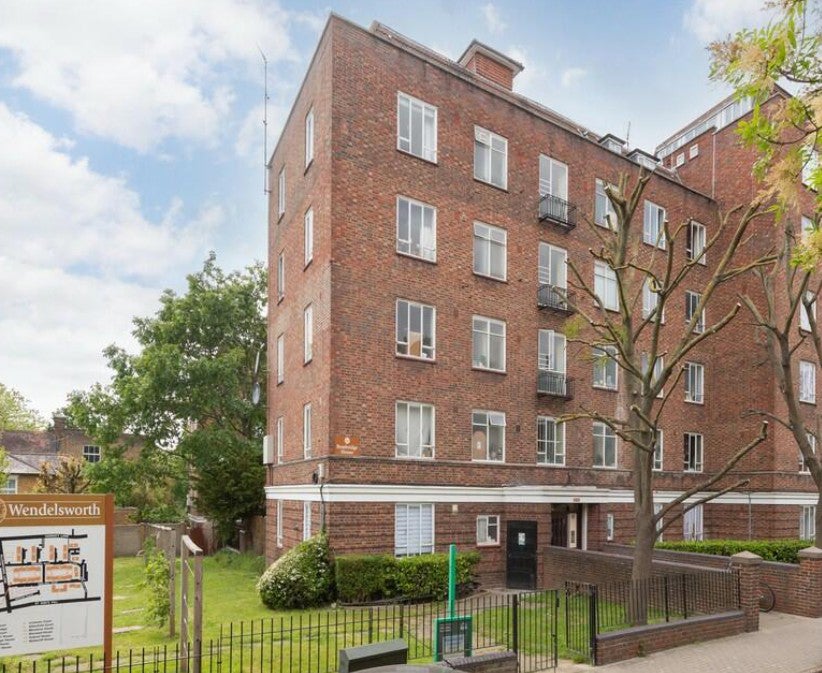
He said police had been called to the block, Bembridge House, in Iron Mill Road, Wandsworth, by Daryl’s father, Travayne McLune, after he found blood and his wife missing.
Officers who arrived found that Annette had sustained serious injuries, including a brain injury, which ultimately put her in hospital for a year, the court heard.
Police initially quizzed Daryl’s dad at the scene, while paramedics worked to save Annette’s life, before Daryl himself appeared, having cycled round from his grandmother’s.
A short time later, he was slapped in cuffs in the street, with officers telling him that he was under arrest on suspicion of the attempted murder of his mum.
He was later released from custody, and less than a week later police informed him that no further action would be taken, following the discovery of a suicide note in the flat.
Accusing the police of jumping to a conclusion too quickly about Daryl’s potential involvement, Mr Powell said it is his case that the arrest was driven by their perception of Daryl as a Black teenager.
“The scene had to be made safe, she had to be treated and the police were entitled to investigate what had happened to her,” he told the jury.
“The issue is whether in the midst of that uncertainty, the police acted lawfully in moving from investigating a grave incident to arresting Daryl, a Black boy who had just arrived at the scene in distress, on suspicion of attempting to murder his own mother.
“You will need to consider whether they needed to handcuff him and keep him restrained for the period they did, whether they needed to keep him in custody overnight without telling him what had happened to his mother, and whether his race played a part consciously or unconsciously in how quickly and how harshly he was treated.
“Our case is that when you hear the evidence the picture will be clear. We say this was not a case of careful and fair policing of a suspect – it was premature criminalisation of a child in crisis.”
The barrister said Daryl had never been in trouble with police before, telling the jury, “This was the very first time he ever experienced the back of a police van or the inside of a holding cell.
“He is a person of unblemished good character and is looking to you to restore his reputation that was taken from him that day.
“He was not an adult, he was a child. He was a son arriving at a catastrophic scene involving his mother. He was frightened, distressed and desperate for information.
“His case is that race formed a part of the way he was seen. He was too quickly treated as a suspect, as a risk, as somebody who had to be controlled.”
He said that a suicide note, stating, “I am so tired fighting this Covid-19, I have nothing left in me to fight”, was later found in the flat.
“That supported an obvious self-harm or mental health explanation for what happened,” he said.
“This was always an incident with obvious alternative explanations and the police needed to do a proper investigation, rather than leaping to conclusions.
“This isn’t about calling anyone a racist monster. He doesn’t have to persuade you that an officer used racist language. He doesn’t even have to prove they were consciously racist.
“Discrimination can be unconscious. It can appear in people’s assumptions, in their speed of judgment as to how behaviour is interpreted.
“Daryl should have been treated firstly and primarily as a child who was distressed and a potential witness to a family catastrophe.
“This mistake wasn’t harmless, it deprived him of his liberty, subjected him to force.
“His arrest and detention did take a profound psychological toll on him and it is an emotional weight he carries to this day.
“The mental anguish caused by this incident damaged his educational prospects, his employment prospects, and it changed his life trajectory.”
Giving evidence from the witness box, Daryl, now 20, told the jury that his mum had been “acting very strange” on the morning of the incident, having previously been in hospital for heat exhaustion and following a Covid infection.
She said she was in a “dark place” and repeatedly said “I’m sorry” and “I love you”, he told the court, but he had to go to see his grandmother and left her at home with his dad.
He accepted that when he returned to the home after his mum’s attempt, he was “disappointed” in his dad, with Met barrister Russell Fortt saying he had acted “aggressively” towards him.
The teen was arrested shortly after leaving the scene and returning. He told the court he had gone to phone his brother in Jamaica, but police have suggested he in fact “ran off.”
Describing the shock of the arrest, he told the jury: “I couldn’t believe it. I was crying and laughing at the same time. I explained to them multiple times that I wasn’t there.
“I felt I was being cooperative. I was confused why I was being arrested for that. There was nothing to suggest I had done anything wrong, so I was just confused.
“I was overwhelmed with emotion, I couldn’t understand. Nothing they were saying to me was making sense.
“It was really embarrassing, everyone on my road seeing me in handcuffs.”
Taken in a van to the police station and held overnight, he said: “I just felt alone. I didn’t have anybody with me. Nobody to stand in my corner. I was just left alone. I had never previously been to a police station in that way.
“Many times I did inquire what was my mum’s condition. The information they passed on was that I was a suspect in a crime so they wouldn’t tell me what was going on. I didn’t know if my mum was alive or dead.”
He told the court he was eventually released the next day. The suicide note was found later.
Daryl’s uncle, Annette’s brother Kevin Ramdeo, told the jury that his brain-damaged sister was in hospital for a year after the attempt and had to relearn to walk and speak.
While in the resuscitation unit at the hospital, her Covid symptoms had worsened and she was put on a ventilator in ICU before pulling around, he said.
“We had a conversation and the doctors actually said psychosis was one of the symptoms of Covid and she may have been suffering from psychosis,” he told the jury.
He said the impact of that day had been significant on his nephew.
“Before this event, Daryl was doing great at school. He was bright, his demeanour was bright and cheerful,” he said.
“Since the event…unrecognisable. He has been completely destroyed by this. He has almost lost his mother and on top of that he has been arrested for something we found out was a suicide attempt.
“He is angry, really resentful. His grades were impacted. His attendance at school was impacted. He couldn’t find it in himself to go to school.
“It damaged every aspect of him. He was angry and resentful and he would end up lashing out as a result.
“We have tried so hard to comfort him, but he hasn’t been the same since.”
For the Met, barrister Russell Fortt is fighting Daryl’s allegations, arguing that the police did their best in what was an uncertain situation.
Daryl had appeared in an “angry and hostile” mood and had behaved “aggressively” towards his father, pushing him, he said, before leaving the scene.
“The officers faced a challenging and very serious situation,” he put to Daryl in the witness box.
“They don’t know where you have been. They couldn’t know whether you had been present in the flat at the time.
“The officers couldn’t have known what had happened to your mother inside the flat.”
Describing the gist of Daryl’s case as an “inference” that his arrest must have been driven by his race, he said there was no evidence of any officers using racist language or actions.
In the witness box, Inspector Bryan Croucher, an officer involved in the arrest, explained the decision, telling the jury: “I could only go on what I could see and what I could gather from the scene and from speaking to witnesses.
“Although we talk about a suicide note, that wasn’t brought to my attention.
“If it had been, my life would have been so much easier and we wouldn’t be in this court today.”
The trial before a jury and Judge Andrew Holmes continues.
If you are experiencing feelings of distress, or are struggling to cope, you can speak to the Samaritans, in confidence, on 116 123 (UK and ROI), email jo@samaritans.org, or visit the Samaritans website to find details of your nearest branch.
If you are based in the USA, and you or someone you know needs mental health assistance right now, call or text 988, or visit 988lifeline.org to access online chat from the 988 Suicide and Crisis Lifeline. This is a free, confidential crisis hotline that is available to everyone 24 hours a day, seven days a week. If you are in another country, you can go to www.befrienders.org to find a helpline near you.