
.png?trim=0,0,0,0&width=1200&height=800&crop=1200:800 "Family outraged after teen left to discover her HIV diagnosis through online portal – UK Times")

What is the best standing desk?
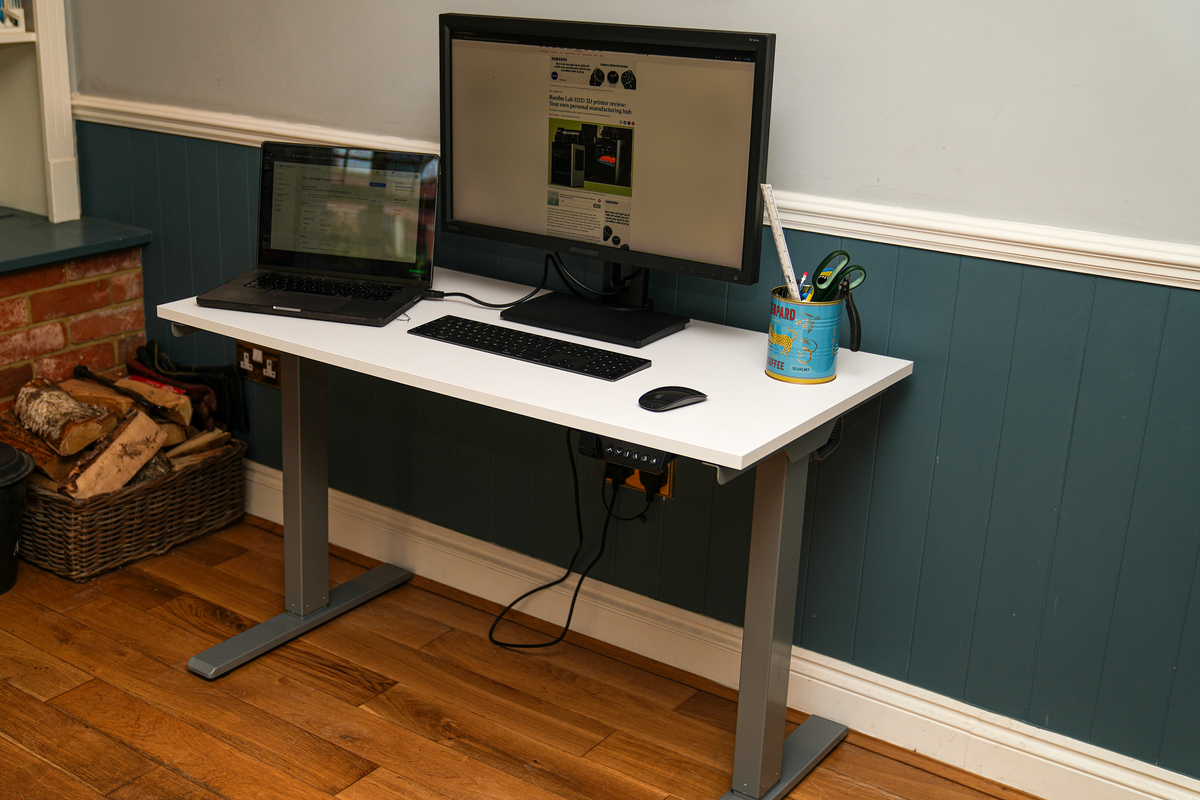
In my tests, I found the Yo-Yo alert 2+ to be the best standing desk, thanks to its style, design, cable management, and quality. While I preferred the wooden desk surfaces, when it came to a balance of all features, Yo-Yo stood out.
The Desktronic homepro desk simply offered the best value for money, and when it came to outright style, the Oakywood standing desk pro stands out for its quality and finish.
How long should you stand at a standing desk?
It’s recommended you alternate between sitting and standing regularly, with research suggesting you stand for one hour for every one to two hours spent sitting. You should try to break up long periods of time at your desk by alternating positions every 30 to 60 minutes.
Are standing desks good for you?
There are a number of benefits associated with standing as opposed to sitting at a desk, particularly when it comes to your posture. Research shows that incorporating standing into the working day reduces back pain caused by prolonged sitting. A study published in the British Medical Journal also noted that standing desks can reduce tiredness among workers and boost productivity.
What are the benefits of a standing desk?
The biggest advantage of a standing desk is that it encourages you to change position more often. Spending long periods sitting has been linked to a higher risk of several health conditions, including cardiovascular disease and type 2 diabetes, although simply standing still isn’t the answer either.
Research suggests alternating between sitting and standing can help reduce back discomfort from prolonged sitting, improve comfort at work and leave some people feeling more alert and less fatigued. To get the most benefit, experts recommend using a standing desk as well as moving regularly, such as taking short walks and stretching, – not just standing still for hours at a time.
How I tested standing desks
A major consideration when testing was the overall build quality – after all, these are desks that we want to use every day, rather than being a stylish accessory, although, of course, aesthetics need to be considered. Then there is the standing mechanism and how much control you will actually have over the height adjustment. Are there additional or optional extras? Many desks come with either an electronic or mechanical option, and USB ports, cable tidies, and upgrade options for the future are all worth considering.
These tests were carried out over a number of months, with one desk assembled and used for a few days before the next was installed for use, to get an idea of how each desk would function in day-to-day life, and how each design compared.
- Stability: Having worked at a standard desk for most of my working life, the stability of the unit has until now never been a real consideration. However, with a standing desk and that additional height, this is a major consideration as you don’t want the monitor wobbling as you type.
- Ease of height adjustment: I already own a standing desk, and while, for the most part, I’m happy with the size and design, the height adjustment is mechanical. This means that you get a mini workout every time you raise the surface. Here, I wanted to see how easy life with motors could be.
- Cable management: This is a constant battle, and through the test, the different approaches to cable management really showed a divide in the ease of use of the desks. Good cable management is essential for the easy use of a desk with moving parts as it rises and lowers.
- Extras: If you think that a desk is simply a work surface, then think again. Many of these desks are available with extras, including USB ports for convenient charging. However, none of the tests came with a cup holder; still, that’s where a little 3D print customisation comes in with the Bambu Lab H2D.
- Future-proofed design: One of the standout features that I noted from all of the desks was the ability to adapt and change. If you tire of the colour of the legs, then swap them out. Want to extend from 120 cm to 160cm? Then, for a price that should also be possible, making sure a desk is adaptable to you and your work can and will save you money in the future.
Why you can trust IndyBest reviews
At IndyBest, every product we review is tested extensively in real-world conditions, and with as many different testers as possible. We only recommend products we rate highly or believe are the best in their respective class, based on a range of factors, including affordability, quality and durability. This keeps our reviews accurate, honest and unbiased.
Our tester for this review, Alastair Jennings, is a technology journalist with more than 30 years’ experience. He has carried out thorough, hands-on testing with countless pieces of kit, from cameras to laptops. And as a journalist, he’s a WFH pro and has tested the best ergonomic office chairs for IndyBest, meaning he understands what to look for in a practical standing desk solution. After hours of use, these are the models that passed his tests.
Want to upgrade your WFH setup? Check out our roundup of the best ergonomic office chairs