



Actor Sarah Hadland is demanding to know why her local council is set to “destroy” her village as she speaks out on the celebrity planning row that has been dubbed the “Battle of Blackheath”.
The controversy has engulfed the picturesque corner of southeast London as a celebrity-backed campaign group fights against a proposed residential development in the station car park, home to the village’s thriving farmers’ market.
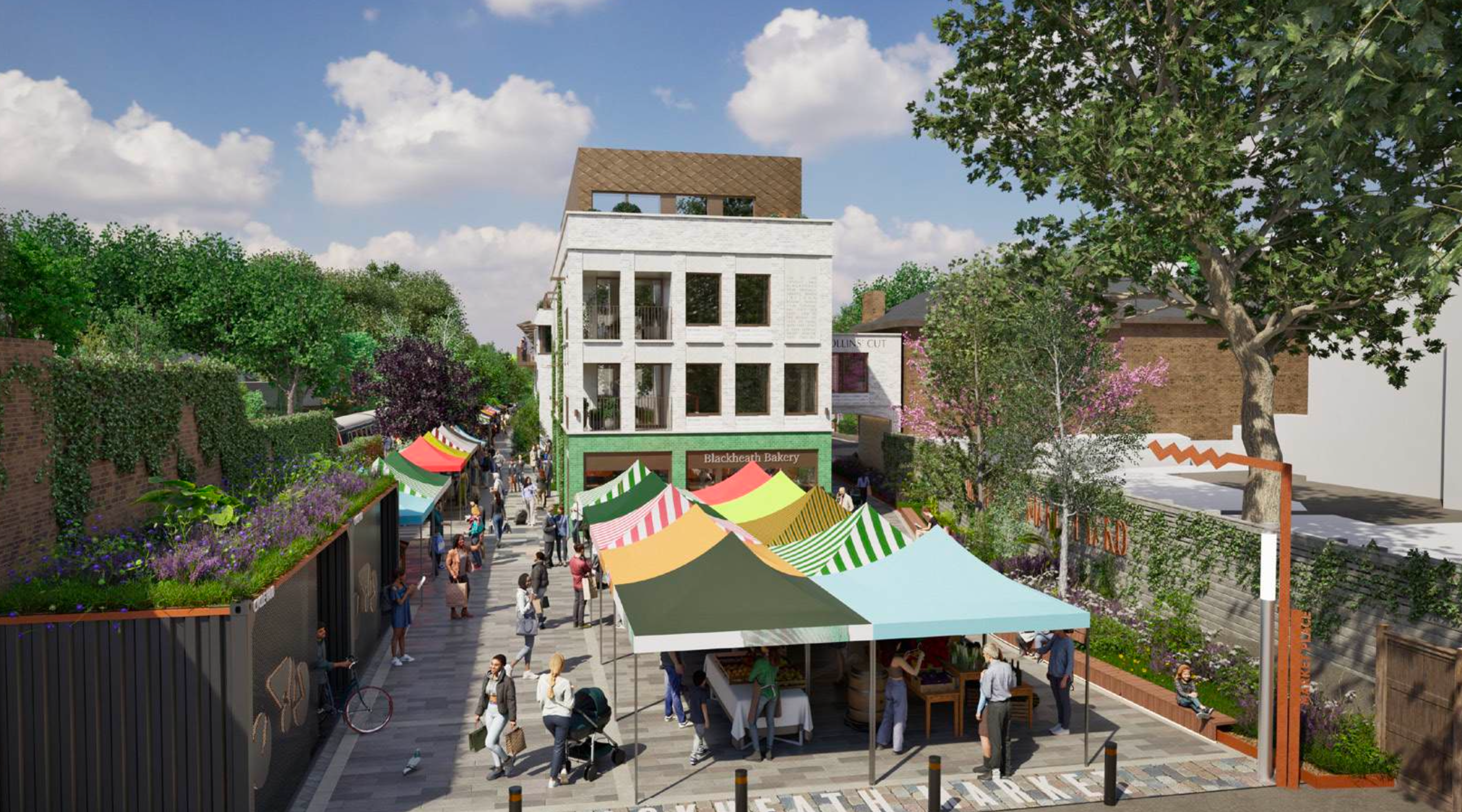
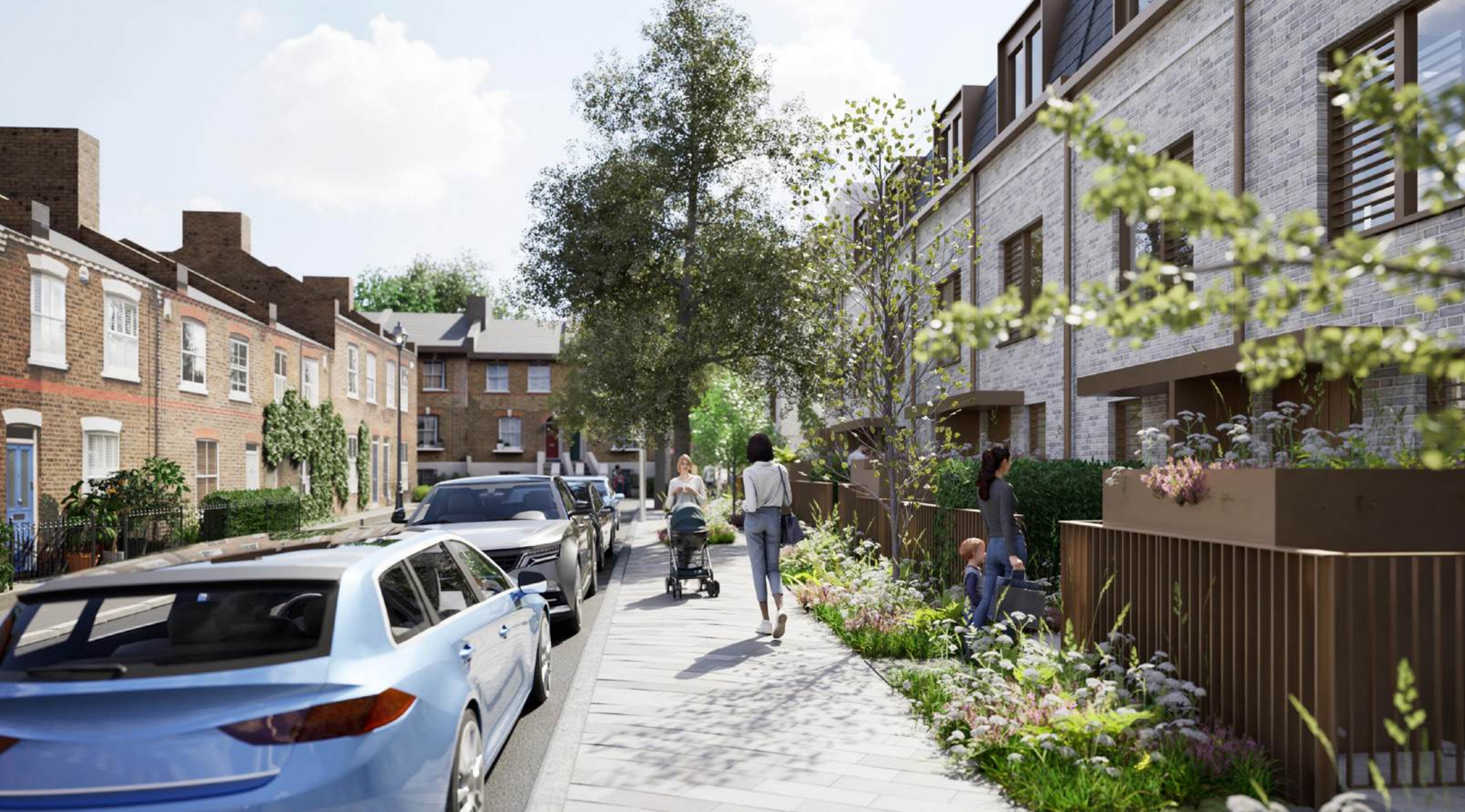
Developer Acorn Property Group has submitted plans to build 20 houses and 25 flats in three blocks, four and five storeys high.
So far, Lewisham Council has received more than 1,200 objections over the plans, which campaign group A village worth saving has described as “unprecedented”. The council deferred its decision in January following the criticism, with a ruling now expected later this year.
Former Strictly Come Dancing finalist Ms Hadland, who lives in Blackheath with her child, has condemned the plans, alongside actors Jude Law and Dominic Cooper, both of whom grew up in the area, and LBC presenter Nick Ferrari, a current local.
Ms Hadland told The Independent: “The developers never imagined in their wildest dreams that they’d get this Battle for Blackheath on their hands…

“For me, the main thing is safety for the village. You’d be destroying a village that is full of families. They’ll come in, destroy livelihoods and safety, then walk away with millions.
“I would really love the council to explain. It’s baffling. I want the council to respond, because any reason they give, I would love to know and be given a chance as a resident to challenge it. We pay a lot in council tax here, so what is the benefit to us?…
“The impact to the village will be massive and negative – the benefit, as far as I can see, will purely be to the developers, who will sweep in, cause a tonne of noise, pollution, destruction, then walk away with millions.”
Calling on the council to revisit the plans, Mr Cooper said anything less would be a “devastating betrayal of the electorate”.
Residents stress that they understand the urgent need for more houses to be built, but argue that this should not be done in a way that goes against the interests of the community.
Blackheath is a conservation area – the first in London to be designated, in 1968. Residential streets are lined with well-preserved Georgian and Victorian buildings, while the leafy high street is dotted with independent cafes and bookshops.


It has been described as a “special place” by those who live there, with “real community spirit” and “true village character”.
Ms Hadland is among those fearful about the future of Blackheath’s farmers’ market and the knock-on effect for local businesses on Sundays, the reduction of the car park’s more than 150 spaces, and the impact on the primary school and residents who live by the proposed development.
Speaking of the fight against the proposals, Ms Hadland, a resident now for two decades, said: “People say it’s nimbyism – it’s not, I’m one of those people. This is bonkers.
“I think they rely on the fact that people won’t complain or feel uncomfortable complaining…
“When you talk to people in different parts of the country, they say they’ve had a similar thing happen. Then when people complain, they say it’s nimbysim and people feel they can’t say.”
Locals have raised fears that “the battle of Blackheath” could soon be repeated around the UK, as the government has committed to delivering 40,000 homes over the next 10 years in residential developments around railway stations.


In the bid to unlock what it has called “untapped” land, housing minister Matthew Pennycook said he intends to fast-track building on previously developed urban land – and, if needs be, to intervene in the face of local opposition.
Ms Hadland vowed she would not give up the fight in Blackheath – for the village and its community, other places “up and down” the UK that are similarly doing battle, and also for her child. She said she could not let them walk to school on their own if the development went ahead, citing the extra congestion and all the building materials being transported around the village, which could be “incredibly dangerous”.
“It’s difficult to explain that to your child”, Hadland said. “Our village is going to be really disrupted and you’re not going to be able to walk to school. ‘Well, why are they allowed to do that mummy?’ Because they’ve got a lot of money and they want to make more.”
But the controversy has highlighted the strength of Blackheath’s community, and Ms Hadland believes the “David and Goliath” nature of the fight is part of what has brought it such widespread attention.
She said: “It’s a bit of David and Goliath – these big developers, why are they allowed do it? Because they make a lot of money…
“This is not okay. I think the community has really pulled together. We’re not going to let this go. I won’t give up campaigning – I feel very strongly about it. I think it’s really important. There’s this community spirit, we’ve all got to look out for each other.”

Mr Cooper added: “Residents are not anti-development – they are instead demanding development that is fair, responsible, and puts local people at the heart of decision-making. To plough ahead with a proposal of this size, that provides so little social and affordable housing, that prioritises developer profit, while ignoring overwhelming public opposition, would amount to a devastating betrayal of the electorate.
“Lewisham Council must revisit the plan – anything less is a failure of its duty to the public it serves.”
A spokesperson for Acorn Property Group said it is now collating the additional information requested following the council meeting on 27 January.
It said: “Our proposals have been the result of four years of dedicated engagement with the local community, planning officers, stakeholders and consultees and have been thoroughly reviewed and supported by Lewisham’s independent Design Review Panel.”
They added that parking provision has been reduced in response to policy promoting sustainable travel close to train stations and housing in sustainable locations.
They argued the “more sustainable and safer” development would deliver “significant public benefits”, with 21 per cent of the 45 new homes set to be socially rented.
They continued: “The Farmers Market will return to the site with improved facilities such as electrics, water and ground anchors providing a permanent home. A new urban square will be created adjacent the station with safer commuter cycle parking and the opportunity for pop-ups or additional market stalls during the week. A new, much safer, fully pedestrian route will be created from Tranquil Vale so that parents and children do not have to walk through a car park to reach the school.”
They added that London Farmers’ Markets, which manages the Blackheath market, supports the proposals. The Independent has approached them for further comment.
A Lewisham Council spokesperson said:”The Blackheath Station Car Park application was deferred after a Planning Committee at the end of January because members were not satisfied that they had the information needed to make a fully informed decision.
“In particular, councillors were clear they needed stronger and more detailed evidence about the potential impact of the proposals on Blackheath’s economy.
“Deferring the application ensures residents’ concerns can be properly considered and any decision is taken with a full understanding of the likely effects on local businesses and the wider area. Our priority is securing the best possible outcome for Blackheath.”