

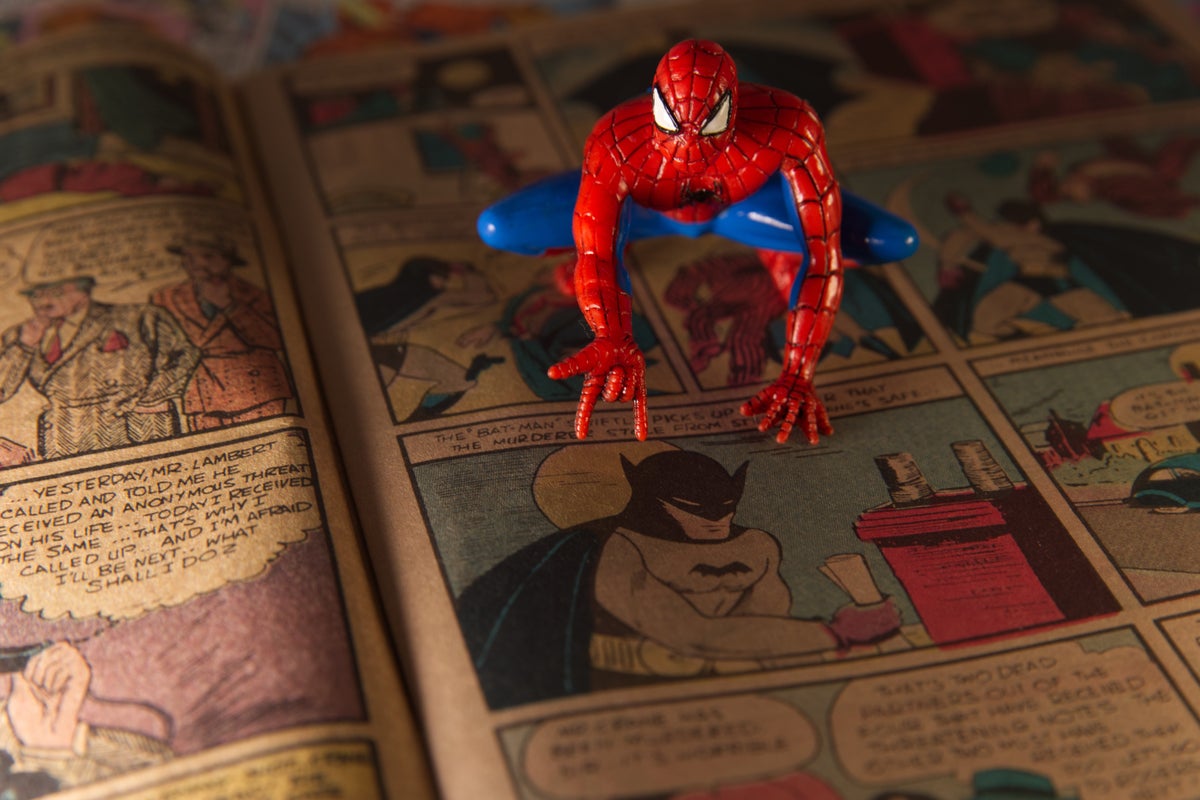
Pick one up. Be seduced by its glossy cover. Gaze upon the impossibly muscular body clad in a skin-tight suit. Our hero or heroine will surely be soaring, shouting, blasting a villain into next week.
They are ridiculous. They are addictively great. Comic books, of the superhero variety, are 100% American.
Compare the thin comic book to Europe’s graphic novels, and they come off looking flimsy, infantile. Compare the American comic to Japanese Manga and they appear innocent in their fixation with heroism; they hark back to a departed American age.
Once a nickel, a dime, a quarter, now the price of a latte, they are objects of America consumer capitalism. The comic is literature in junk-food version. Candy for the eyes, candy for the mind.
Yet what truly makes them American objects is what plays out in their 32 pages month after month, decade upon decade.
When the Fantastic Four took their fateful space journey in 1961 and “cosmic rays” transformed the quartet into unwilling superheroes, comics entered a weird realm where the all-powerful were also the unwilling, decidedly modern victims of science and circumstance.
Spider-Man, the Hulk, Wolverine (the list goes on) were given supernatural abilities that made them outcasts, obliging them to be flawed messiahs.
They were, by some quirk of the American character, bound to Peter Parker’s moral imperative: “With great power comes great responsibility.” They are versions of an American Sisyphus, bound to saving us over and over again.
What could be more American — that might, when lashed to a sense of justice, eventually, makes right? So honorable, so naïve.
To this day, though the tone is darker, Marvel and DC, the two mammoths of comics, continue to reimagine the American character.
Once side attractions in a world of leading white men, Gwen Stacy, Jean Grey and Susan Storm have in recent years emerged as leaders to reinvigorate the Spider-Man, X-Men and Fantastic Four sagas. Absolute Wonder Woman has broken ground with beautiful art. Miles Morales is Spidey for a new generation.
Yet the central fissures remain.
Bruce Wayne can’t connect with anyone other than his butler; he is the lonely individual in an atomized America. Steve Rogers bears the burden of representing the “Greatest Generation” from World War II. He is a Captain America forever out of place, even in his own land.
And could there be a more iconic tech magnate toying with humanity’s fate than Superman’s nemesis Lex Luthor and his delusions of grandeur? If only our world had a bespectacled Clark Kent keeping an eye on things. Just in case.
___
Part of a recurring series, “American Objects,” marking the 250th anniversary of the United States. For more American objects, click here. For more stories on the anniversary, click here.