

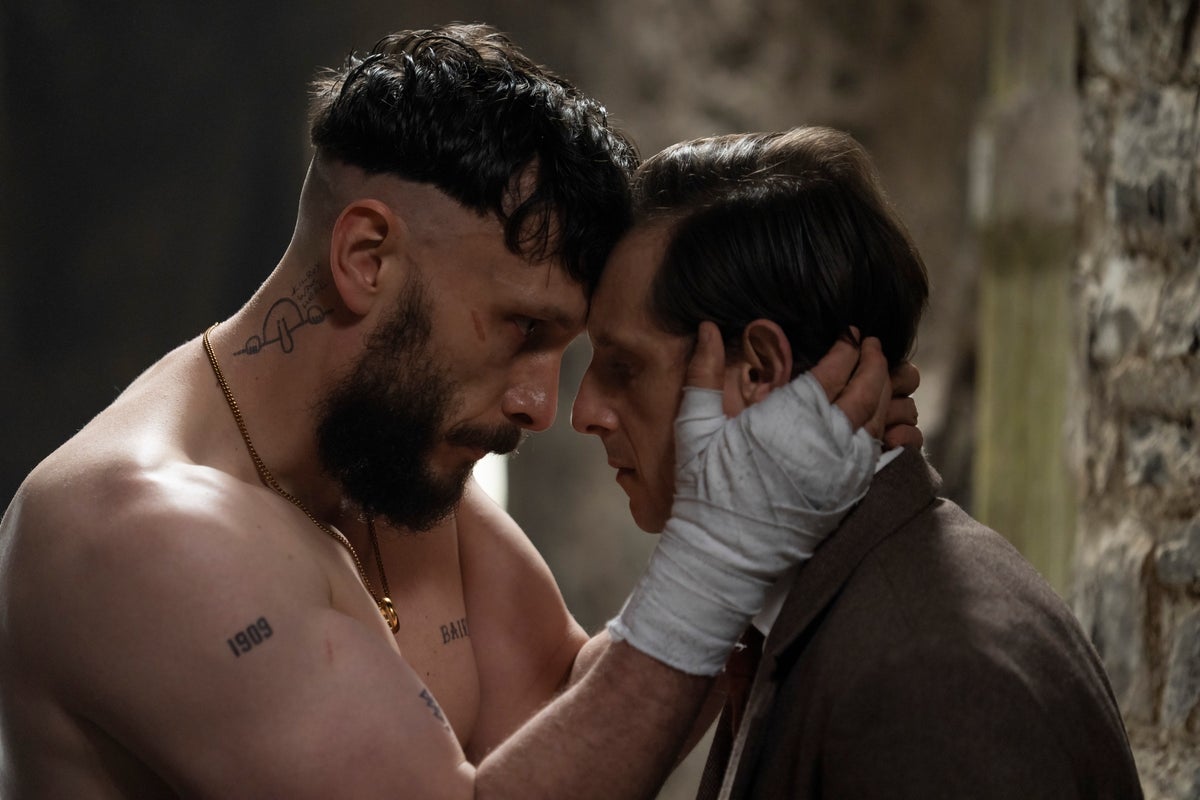
Bleak. Unpleasant. Prurient. These three words, based on the opening episode alone, could be applied to Half Man, Richard Gadd’s much-hyped follow-up to Baby Reindeer, his semi-autobiographical stalker drama on Netflix. By the end of this six-part BBC/HBO drama, two more stand out: trauma porn. Never before have I seen a TV show this smugly grim – such a relentless exercise in self-punishment that even watching it feels like an act of nihilism. Spanning four decades, it’s the story of two siblings bound together by circumstance, violence and the secrets each keeps from the other.
Take a scene in episode two. Hoving in with a horrific sense of foreboding, the air thick with menace, it left me gasping. Two brothers from another mother, the volatile Ruben (Stuart Campbell) and the timid Niall (Mitchell Robertson), are at the latter’s student flat. Alby (Bilal Hasna), with whom Niall has just hooked up, is about to tell Ruben his younger sibling is gay. Before he gets his words out, though, Ruben is beating him to a bloody pulp, every ounce of rage coming out as he stamps repeatedly on the man’s skull to the strains of “Only You”, Yazoo’s aching Eighties ballad. From there, we cut to a wedding where an older Niall (Jamie Bell) walks down the aisle to marry Alby (Charlie de Melo), the latter’s face still bearing the scars of that attack.
Against a backdrop of cultural dread – Trump’s second administration convulsing the world order, two wars showing no sign of abating, a cost-of-housing crisis that has ground an entire generation into the dirt – asking an audience to sit through something this perturbing requires justification. The series has to say something, right? There has to be some kind of payoff.
Baby Reindeer, which won four Emmys and became the most talked-about drama of 2024, earned its right to probe the darkest corners of humanity. Its tale of stalking, sexual abuse and coercive control was unsparing, certainly. But Gadd found a bracingly original route into the material by making himself culpable, not just the victim. Half Man doesn’t feel like that, nor does Gadd feel relatable in the same way. Superb as the performances are here – Campbell and Robertson, particularly, as the young Ruben and Niall – great acting does not necessarily a great series make.
In cinema, granted, there’s always been space for this kind of extremity. You won’t find many laughs, say, in Gaspar Noé’s Irréversible, so barbaric and cruel that around 200 people walked out of its Cannes premiere, its nine-minute rape scene engineered, as Roger Ebert noted, to be close to unwatchable. Or in Lars von Trier’s misogynist horror Antichrist, written during a period of clinical depression and featuring genital mutilation so graphic that this writer fainted during a screening of the film.
But television is different. Arriving into your home, whether in weekly instalments or all in one go, it carries an implicit promise that even the most harrowing drama offers some counterweight, something to hold on to as the walls close in. Adolescence – Jack Thorne and Stephen Graham’s four-part Netflix phenomenon about a 13-year-old boy arrested for murdering a classmate – covered similar terrain to Half Man: toxic masculinity, male rage, the question of how men become capable of the things they do. It was structured around revelation rather than degradation, though, and forced a national debate in the UK that might lead to genuine political change.
In I May Destroy You, Michaela Coel wrestled with the same preoccupations as Half Man – violation, shame, cycles of abuse – and found formal and emotional exits that Gadd refuses to build. Even HBO’s Euphoria, a toxic series about teenage toxicity, at least gestured, in its prime, towards escape, before becoming too far-fetched for its own good.

Against Half Man, two charges at least can reasonably be laid, and they compound one another. Peddling a fatalism so total that it drains the drama of tension and moral agency simultaneously, the series leaves its audience not watching a story across six hours so much as awaiting a foregone conclusion. If Ruben was always going to be this person, and Niall was always going to let him, what is gained by us witnessing that play out? The same criticism was levelled at Hanya Yanagihara’s 2015 novel A Little Life, which seemed to create characters with the pure intention of torturing them.

Watch Apple TV+ free for 7 day
New subscribers only. £9.99/mo. after free trial. Plan auto-renews until cancelled.
Try for free
ADVERTISEMENT. If you sign up to this service we will earn commission. This revenue helps to fund journalism across The Independent.
Watch Apple TV+ free for 7 day
New subscribers only. £9.99/mo. after free trial. Plan auto-renews until cancelled.
Try for free
ADVERTISEMENT. If you sign up to this service we will earn commission. This revenue helps to fund journalism across The Independent.
Gratuitousness, too, pervades in Half Man: episode by episode, the sex and violence escalate past insight into spectacle, until the accumulated horror is no longer in service of an argument but has become the argument itself. In recent years, there’s been growing praise for scenes where rape is alluded to, rather than shown, and how that is not only more palatable, but can be more powerful. Not that Gadd has paid attention here: the camera lingers for what seems like an eternity on young Niall as he loses his virginity, while his brother cajoles him. Little is left to the imagination as we watch a sexual assault take place.
Critically, the series has been polarising. In her five-star review, The Guardian’s Lucy Mangan described it as “brave and blazing”, while The Independent’s Nick Hilton called it “a show in search of meaning, a plot looking for a story – and, frankly, a huge misfire”. He also noted that it had the feeling of “a dark, misanthropic novel – the sort of thing Martin Amis would have written, to great acclaim, in the Eighties”. I agree, as I do with Anita Singh, in The Daily Telegraph, who deemed it a “strange vanity project”.
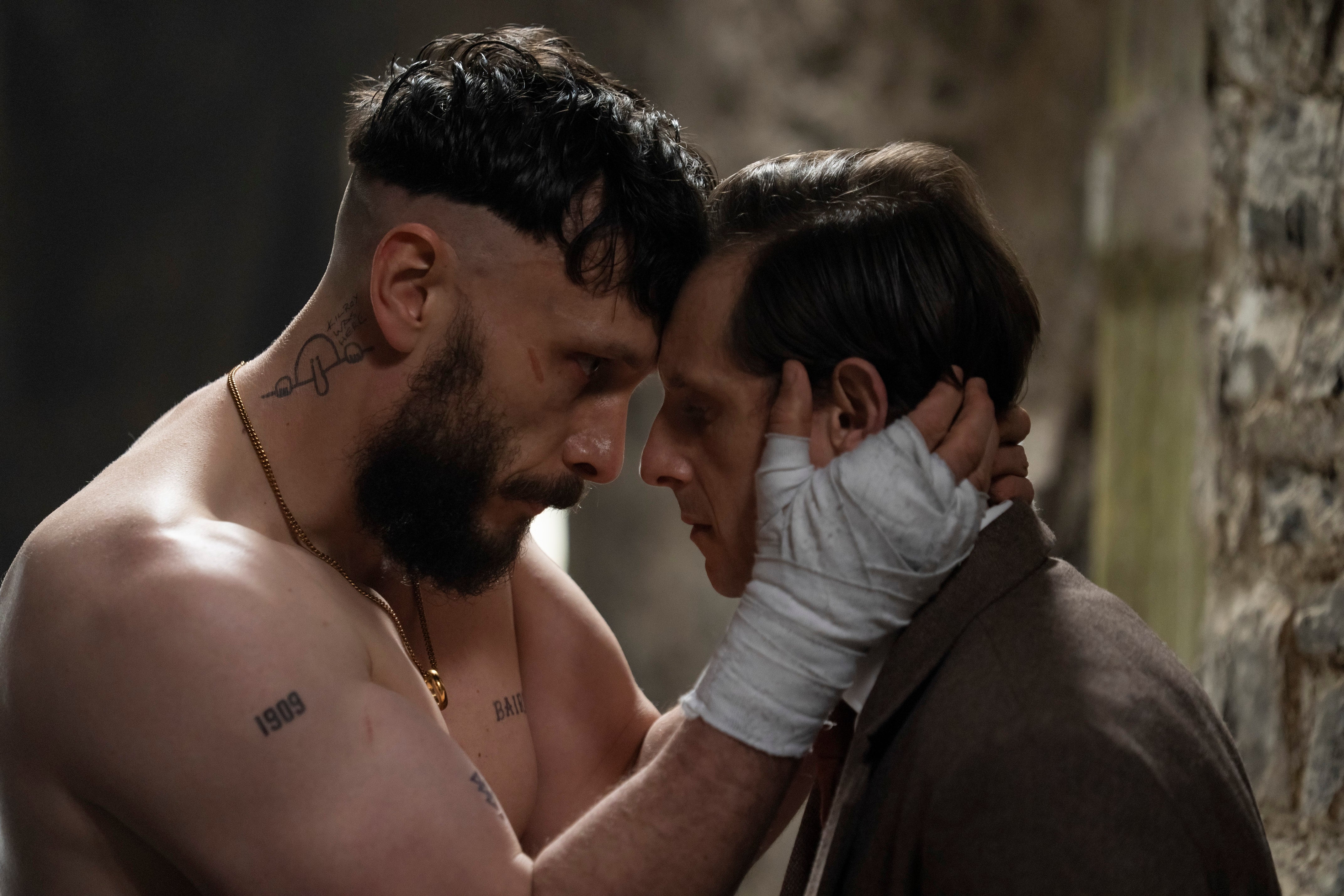
That it most certainly is. Emboldened by the success of Baby Reindeer and given ample rein by the BBC and HBO, Gadd has amplified the darkness quotient. But it is not just the series that feels jacked up – so, too, does Gadd himself. The biceps, the pecs, the gait: this is a gruffly imposing, often shirtless performance from a man who not long ago was a scrawny stand-up whose entire previous screen persona was built on vulnerability.
Gadd’s willingness to go to the most extreme possible places is laudable in theory, but that project is only as valuable as what you find when you get there. Here, it’s nothing but more damage. Incredibly talented though he may be, he’s made something that mistakes misery for depth and pain for purpose.
‘Half Man’ is available now on BBC iPlayer