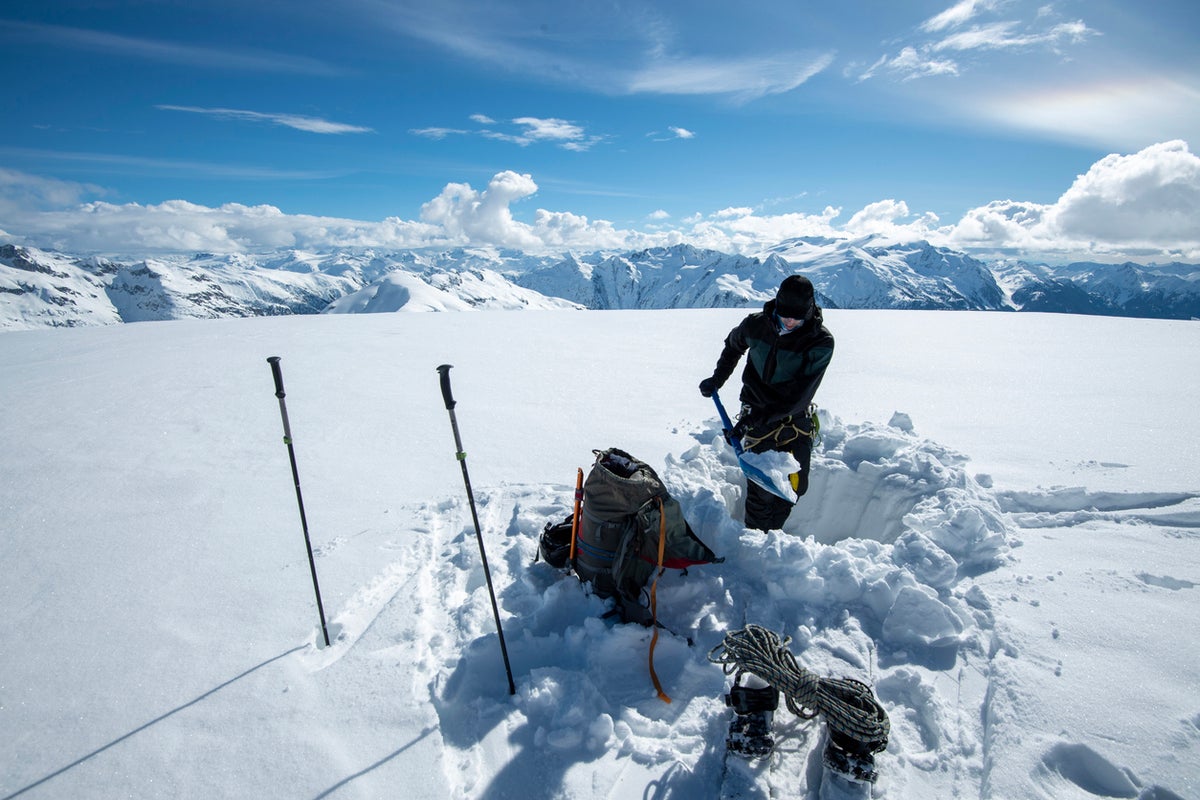
This piece was originally published in 2024 and is being republished after an avalanche once again hit skiers in the mountainous wilderness near Lake Tahoe in February 2026.
An avalanche swept up skiers at Lake Tahoe’s largest ski resort on Jan. 10, 2024, as a 150-foot-wide sheet of snow slid down a mountain slope into a pile 10 feet deep. One person died in the avalanche and three others were rescued, according to the Placer County, California, Sheriff’s Office. The slide happened in steep terrain near the KT-22 chairlift, which had just opened for the season that morning. A second unplanned avalanche hit the same ski resort the next day, but no one was injured.
Avalanche deaths are rare inbounds at ski resorts like Palisades Tahoe, but the risk rises in the backcountry – 30 backcountry avalanche deaths were reported in the U.S. during the 2022-2023 season. Nathalie Vriend, a skier and physicist at the University of Colorado Boulder who studies avalanches, explains what happens in an avalanche and techniques for surviving one.
What causes avalanches?
The behavior of an avalanche depends on the structure of the snowpack, but that’s only one ingredient. An avalanche requires all the wrong conditions at the wrong time.
The angle of the mountain slope is important. Slopes between 25 and 40 degrees run the greatest risk of avalanches. Those are also ideal for skiing, of course. If the slope is less than 25 degrees, there might be little slips, but the snow won’t pick up speed. If it’s over 40 degrees, the snow typically cannot accumulate, clearing away the avalanche risk.
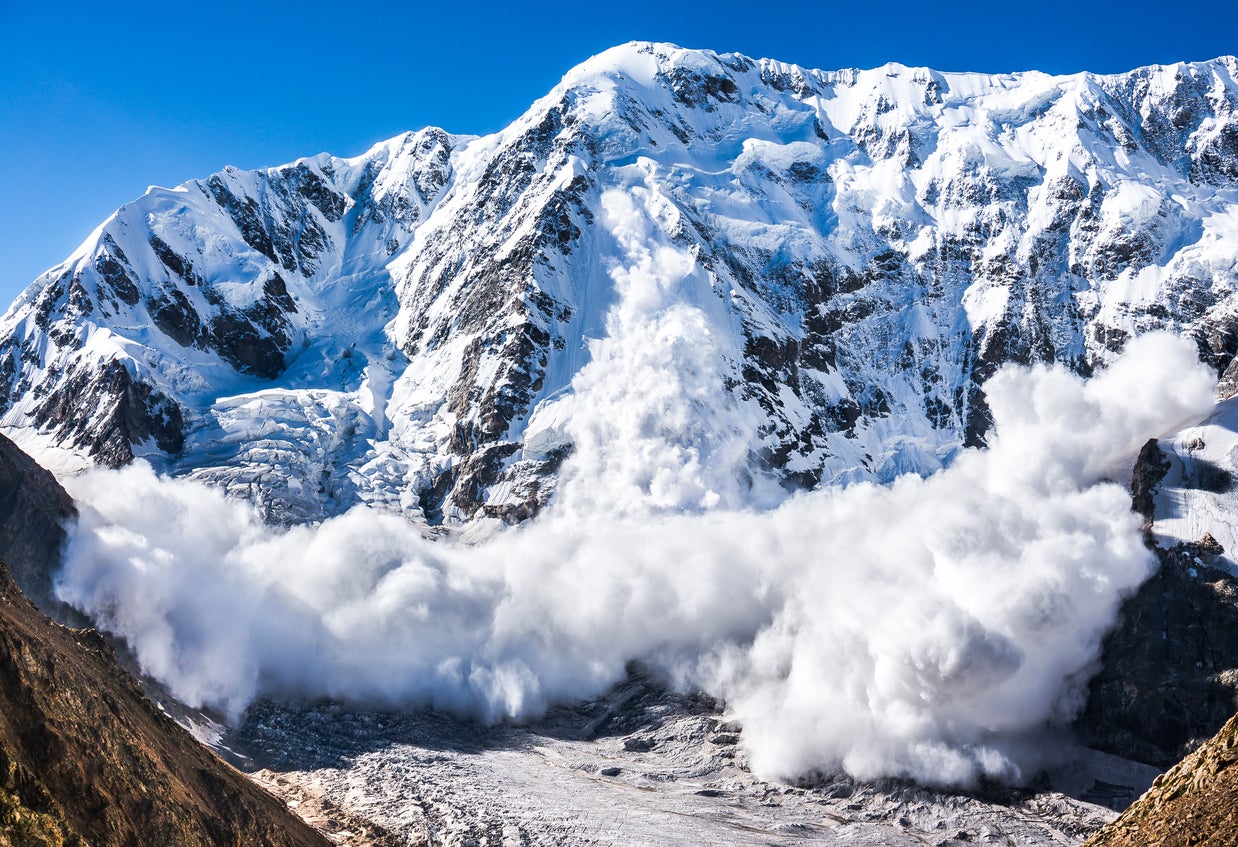
Then there needs to be a trigger. A snowpack may be seemingly stable until a snowmobile or skier disturbs it enough that the snow starts to move. Strong winds or rock falls may also cause an avalanche. Blowing snow can create wind loading and build up into cornices, creating an overhang that can eventually fall and trigger an avalanche below.
What happens inside the snowpack during an avalanche?
Mountain snowpack isn’t uniform. Because it builds up over time, it is a snapshot of recent weather conditions and has both stable and weak layers.
When snow falls, it’s a fluffy crystal structure. But when the temperature rises and the snow starts to melt and then refreezes, it turns more granular.
That granular, icier snow is a weak layer. When a new snowfall dumps on top of it, the grains in the weak layer can shear, creating a surface for an avalanche to slide on. The weight of new snowpack can cause the entire face of a mountain to fall away almost instantaneously. As the avalanche picks up speed, more snow and debris are incorporated in the avalanche and it can become really big and violent.
In my lab at the University of Colorado at Boulder, I study small-scale laboratory avalanches. We use a technique called photoelasticity and create thin avalanches to reveal what’s going on inside the avalanche. We track photoelastic particles with a high-speed camera and can observe that particles bounce and collide really fast, within 1/1,000th of a second.
In a real avalanche, those violent collisions create a lot of heat through friction, which causes more melting. As the avalanche comes to a rest, this liquid can quickly refreeze again, locking the snowpack in place like concrete. People say “swim to the surface” in an avalanche, but you may not know whether the surface is up or down. If the avalanche is still moving and the granules haven’t frozen solid again, you might be able to move slightly, but it is really hard.
What can skiers do if they’re in an avalanche?
I’ve done fieldwork on real snow avalanches triggered intentionally in Switzerland. We were in a bunker in a valley, and they dropped explosives at the top of the mountain. Using radar, we could look inside the avalanche as it came toward us. It was easily going more than 110 miles per hour (50 meters per second).
Even if the avalanche is small, you can’t outski or outrun it easily. The big danger is when the snow is deep – you could be buried under several feet of snow. Basically, as the avalanche slows down, new snow keeps piling on top of you. People report this as being trapped in concrete without an ability to even move a limb. It must be a very frightening experience.
Backcountry skiers carry tools that can increase their chances of survival. Your best bet, though, is your peers – particularly in the backcountry, where emergency crews will take hours to arrive.
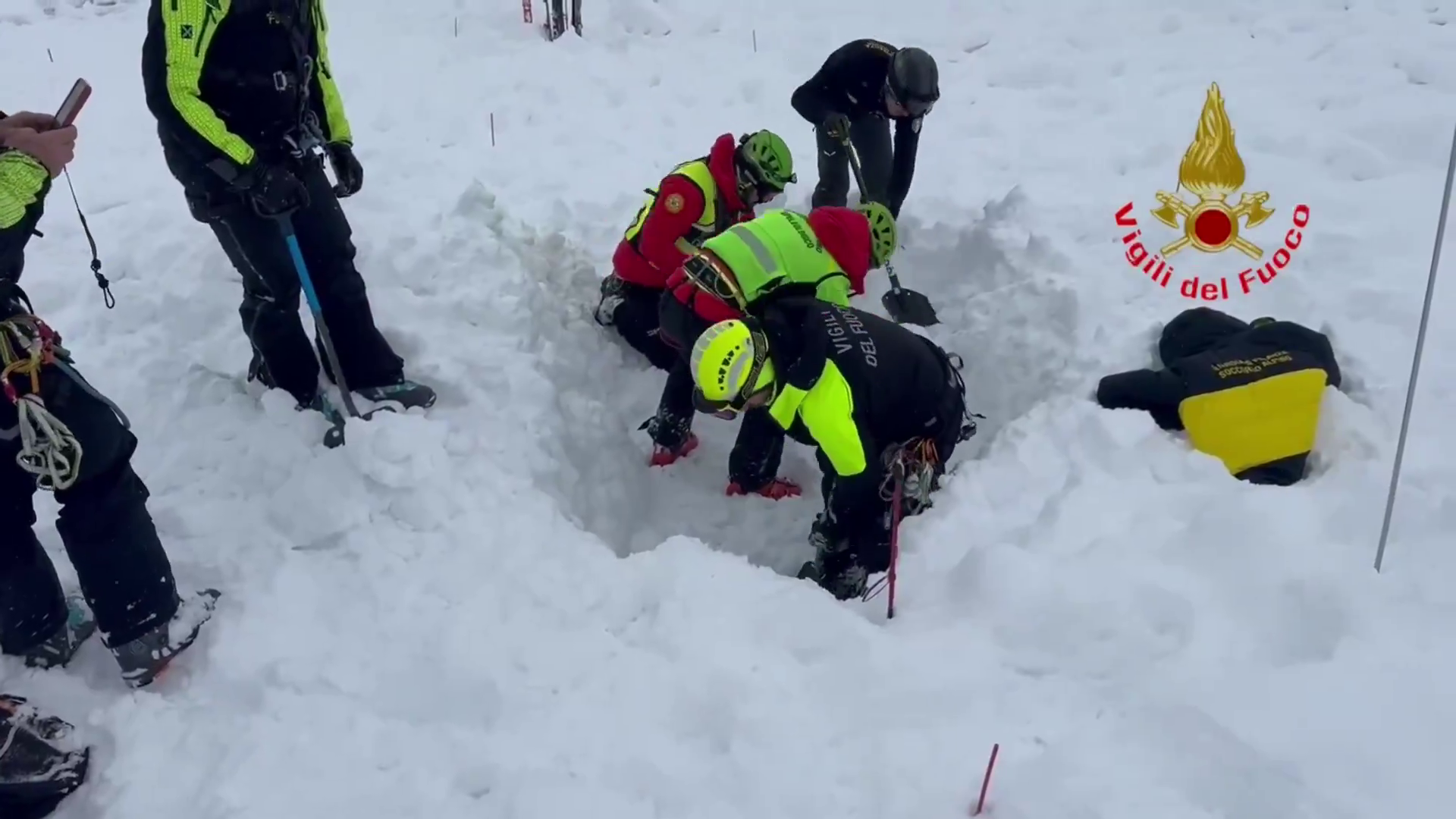
There are a few things you can do. First, carry a transceiver, which transmits a signal identifying your location. When you are caught in an avalanche, you are transmitting a signal. Your friends can switch their transceivers to the “receiving” mode and try to locate your beacon. It’s also important to have an avalanche probe and a shovel in the backcountry for when your friends do locate your position: The snow is like concrete, and it will be hard to extract you.
Avalanche air bags can also help – James Bond used an elaborate concept of one in “The World Is Not Enough.” With modern avalanche air bags, you pull a toggle on your back, and the air bag inflates behind your head, turning you into a bigger particle. Bigger particles tend to stay at the surface, making you easier to locate.
How is avalanche risk changing as winter temperatures rise?
It’s an important question, and it’s not as simple as warming temperatures mean less snow, so fewer avalanches. Instead, if mountains have more variation in temperatures, they may have more melting and refreezing phases during the winter, creating weaker snowpacks compared with historical records.
The historical conditions that communities have grown up around can change. In 2017, there was a big avalanche in Italy that took out an entire hotel. It was in an area where people didn’t expect an avalanche, based on historical data.
There are computer models that can calculate where avalanches are likely to occur. But when temperatures, snowfall and precipitation patterns change, you may not be able to truly understand cause and effect on natural hazards like snow avalanches.