


At least 21 people were killed in a single day of flash floods, landslides and cloudbursts as monsoon rains battered northern and northeastern India and forecasters warned of more to come.
The deaths on Sunday were spread across Jammu and Kashmir, Nagaland and Uttarakhand.
In the Himalayan territory of Jammu and Kashmir, at least 11 people died and several went missing. Rescue crews were searching for people feared trapped under landslide debris and officials said the death toll was likely to rise.
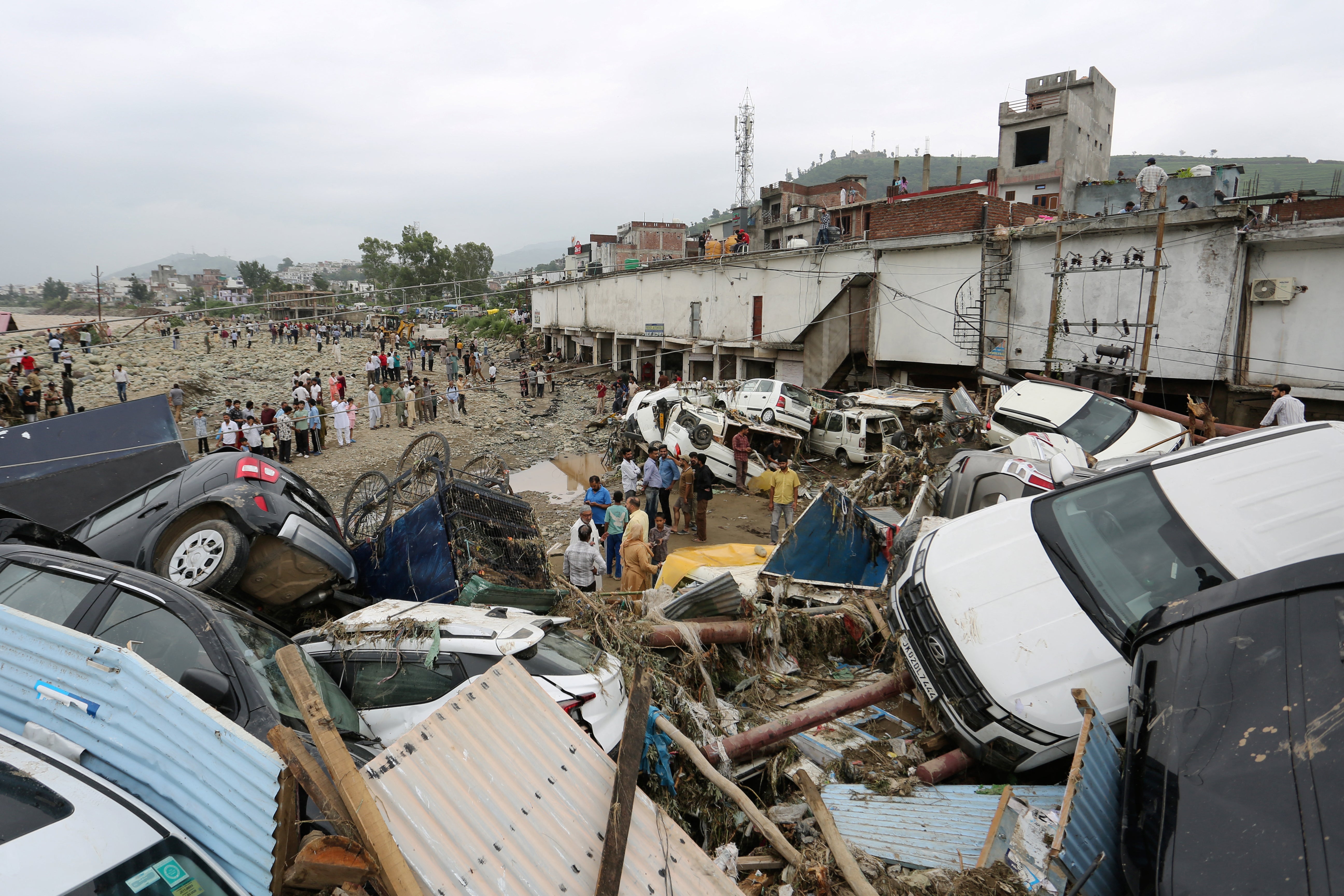
In the worst-hit districts of Rajouri and Poonch, cloudbursts, landslides and flash floods damaged roads, homes and businesses, according to local news reports. A flash flood in Rajouri left vehicles piled on top of one another.
Chief minister Omar Abdullah cut short a trip to the national capital Delhi, where his party had planned a protest to demand the restoration of statehood, which was taken away when the Indian government dismantled Jammu and Kashmir’s autonomy and divided it into two federally ruled territories in 2019.
The lieutenant governor, Manoj Sinha, directed officials to provide immediate help to affected families.
The rain and flooding forced the suspension of the Amarnath pilgrimage, an annual Hindu trek to a Himalayan cave shrine in Kashmir, along its Pahalgam and Baltal routes. The pilgrimage to Vaishno Devi, a Hindu shrine in the Jammu region, was also halted.
In Nagaland, in the northeast, at least eight people were killed and 12 injured in Mon district, where a cloudburst and flash floods washed away houses, blocked roads and trapped people under debris, the news agencies PTI and ANI quoted local officials as saying.
“So far four bodies have been recovered,” Mon deputy commissioner Wennyei Konyak told ANI, adding that several disaster response teams were involved in search and rescue work. The toll was expected to climb as several people were still trapped and roads remained cut off by landslides. The weather office forecast heavy rain in the state over the next 24 hours.

In the northern state of Uttarakhand, lightning killed two people in Haridwar district while landslides blocked 84 roads, including two national highways, the State Emergency Operation Centre said.
Rain-triggered landslides also disrupted the Hindu pilgrimages to Kedarnath and Kailash-Mansarovar, suspending horse and mule services and affecting helicopter flights.
The India Meteorological Department said that heavy rain would continue across northern, eastern and northeastern India over the coming week, driven by active cyclonic conditions in the upper atmosphere.
Deadly floods are a near-annual feature of India’s monsoon, the rainy season that runs from June to September and brings most of the country’s yearly rainfall after its long, hot summer. The rains are vital to farming and water supplies, but increasingly fall in short, violent bursts that overwhelm rivers and hillsides.
The mountainous Himalayan north is especially prone to cloudbursts, sudden and intense downpours that set off flash floods and landslides with little warning. Building on flood plains and unstable slopes, along with deforestation, has left more people and property exposed.
In August 2025, a cloudburst sent a flash flood through the village of Chositi in Kishtwar, in Jammu and Kashmir, killing 68 people and leaving dozens missing. During the 2024 monsoon, floods and landslides killed more than 1,800 people across states from Assam in the northeast to Gujarat in the west.
Scientists link the rising intensity of such events to a warming climate, which allows the atmosphere to hold more moisture and can make rainfall heavier and more erratic.
India is among the countries most exposed to climate-driven disasters, with dense populations in river valleys and hill towns.