


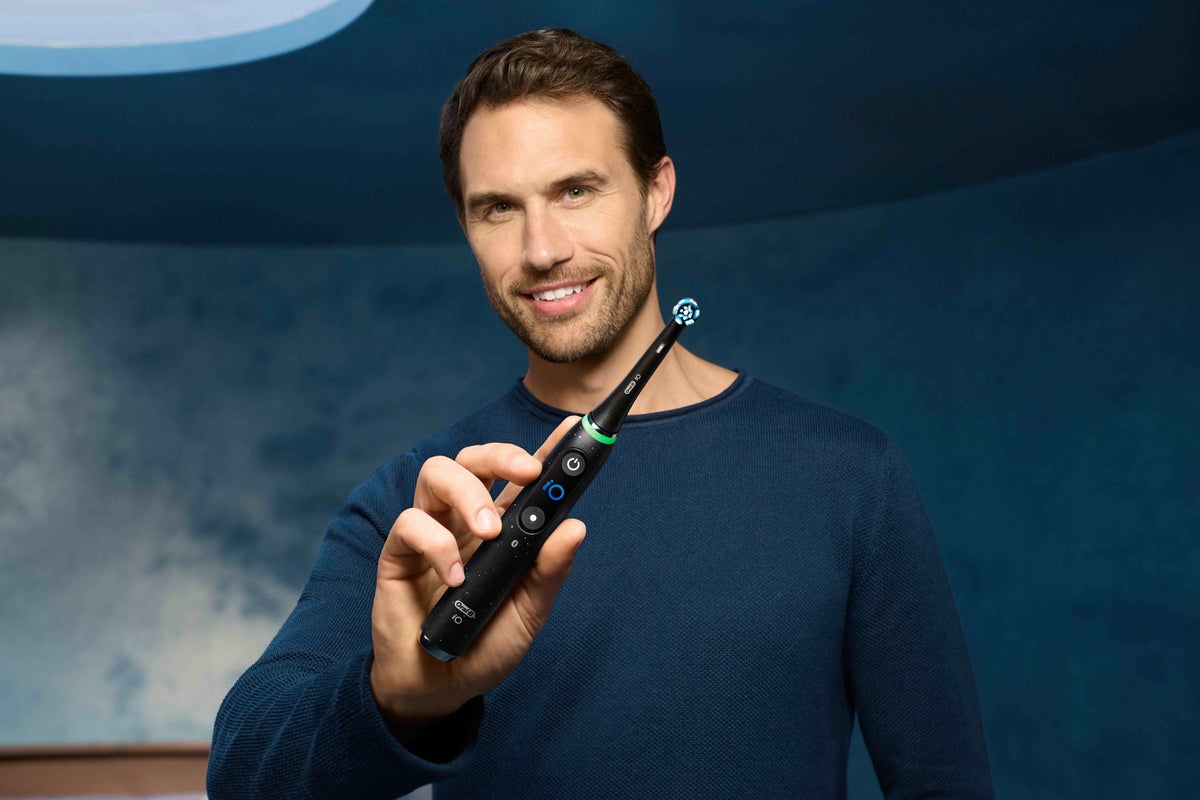
When it comes to oral health, we want to ensure our pearly whites stay that way, as well as having healthy and strong gums, and avoiding tooth sensitivity and bad breath. But the discussion on how to best achieve this through brushing always comes down to whether a manual or an electric toothbrush is the optimum tool for the job.
So, to put the debate to bed, we’ve sought expert advice from Eva Castro Perea, a qualified dentist with a master’s degree in Dental Implantology and over a decade’s experience in dental practice. Perea shares her trusted advice as the senior scientific relations manager for Oral-B in the UK, where she focuses her work on prevention which helps to keep the nation smiling.
Keep reading to discover four key reasons why your manual toothbrush may not be doing a good enough job – and what to do instead.
Missing key spots and not removing plaque properly
Eva Castro Perea reports that she has often seen patients who brush twice daily, for two minutes and have a good technique, but still have plaque in the areas that are hardest to reach with a manual toothbrush.
“The challenge with manual brushing is that most of us are consistently missing the same spots without realising it: the gumline, the spaces between teeth, and the hard-to-reach back molars,” explains Perea.
It’s these exact areas where plaque has the chance to build up if it’s not consistently dealt with by thorough brushing.
“An electric toothbrush like the Oral-B iO is specifically designed to clean deeper into those areas. The round brush head wraps around each tooth individually rather than sweeping across multiple teeth at once, and the combination of rotation and micro-vibrations breaks down and removes plaque simultaneously,” adds Perea.
What to do instead:
Perea suggests not rushing the time spent brushing the gumline. “Hold the brush head at a slight angle to the gum and spend a moment on each tooth individually, including the backs and the hard-to-reach molars. That’s where most people miss,” she explains.
The result is a consistently, cleaner mouth and when patients do make the switch to an electric toothbrush, their dentist is usually able to see improved gum health at their next appointment.
Ignoring the signs of gum disease
If plaque is left to build up, this can also lead to the early stages of gum disease and decay, with red or purplish swollen and sore gums, instead of the usual pale pink colour. They can often bleed during brushing too, so look out for blood on your brush or in the sink.
But it’s not just a minor issue, and actually can cause further issues. “The gumline is where plaque does the most damage if it’s left to accumulate,” advises Perea.
Many people ignore these clear signs as they’re often painless, at least to start with, and if they’re subtle some people believe they’re normal and don’t think it’s an infection. With an improved hygiene routine, it’s quite easy to reverse this though if you do experience it. Perea says: “Gum disease is largely preventable, but it requires consistent, effective plaque removal at the gumline every day.”
What to do instead:
Thoroughly brush your gums gently and look out for the signs early on. Perea says that “Oral-B iO removes up to 100 per cent more plaque than a manual toothbrush, and six times more plaque along the gumline specifically.”
Applying too much pressure and accidentally scrubbing
It’s easy to mistake thorough cleaning with scrubbing your teeth too hard. It’s a very common problem that many dentists see. “Most people brush too hard without knowing it, which damages gum tissue over time,” Perea says.
It’s one of the major reasons dentists are often recommending people swap from manual to electric brushes. And when they do, relatively quickly they can see measurable improvements in gum health.
“A gentle touch with the right tool will always outperform aggressive pressure with the wrong one,” advises Perea.
What to do instead:
With Oral-B iO technology you let the brush do the work – don’t scrub. The technology is doing the cleaning; your job is simply to guide it slowly around each tooth
Part of what makes it so effective for gums is the pressure sensor. Paying attention to this is key to overcoming this issue. The iO brush has a “360-degree visible smart sensor that tells you in real time whether you’re pressing too hard, just right, or not quite enough,” says Perea. If it shows a red light, then it’s telling you you’re pressing too hard.
Not brushing for two minutes
An easy win for creating the best oral regime is brushing for the advised full two minutes. The longer you brush, the better you’ll get rid of bacteria and it gives you enough time to reach everywhere in your mouth, and prevent the hardier plaque from building up and making a nuisance of itself.
Some brushes have a two-minute timer, to make this even easier. No one wants to have to remember to set a timer on their phone each time they brush their teeth, or to have an actual timer in the bathroom to achieve this.
What to do instead:
Let the tech do its job and make sure you learn how to use its simple and nifty features. “All iO models have a timer built in, divided into 30-second quadrants. It sounds simple, but most people significantly underestimate how long two minutes actually is when they’re brushing. The iO takes that guesswork away entirely,” says Perea.
Ultimately, electric toothbrushes clean deeper and help you brush smarter by guiding you in real time, which will no doubt bring a (healthy white) smile to anyone’s face. Make the switch now.