

Amazon has acquired robotics startup RIVR to test machines for what it calls “doorstep delivery.”
The mammoth online retailer is no stranger to automation, laying off workers as it pursues artificial intelligence “in virtually every corner of the company,” as CEO Andy Jassy put it. Amazon told The Independent the company’s use of AI was not the reason for the vast majority of recent layoffs.
With the quiet acquisition of RIVR this week, Amazon hopes to further integrate AI into the process of bringing goods to people’s doors.
“We want to share that we’ve recently acquired RIVR, a company focused on technology that can help with doorstep delivery,” Amazon wrote in a notice to third-party delivery contractors, which was viewed by CNBC.

“We believe this technology, when working alongside your [delivery associates], has the potential to further improve safety outcomes and the overall customer experience, particularly in the last steps of the delivery process,” the notice read.
The Information, a tech news site, first reported on Amazon’s acquisition of RIVR.
The Independent has reached out to RIVR for comment.
RIVR is a Swiss company that uses “physical AI to revolutionize doorstep delivery,” according to its website. Its robots vaguely resemble dogs with four legs that have wheels attached to them.
Amazon will be able to test how RIVR’s technology can help with delivery operations, including “helping DAs carry packages from delivery vehicles to customer doorsteps,” according to the notice, which emphasized that the company is in the “early stages of this journey.”

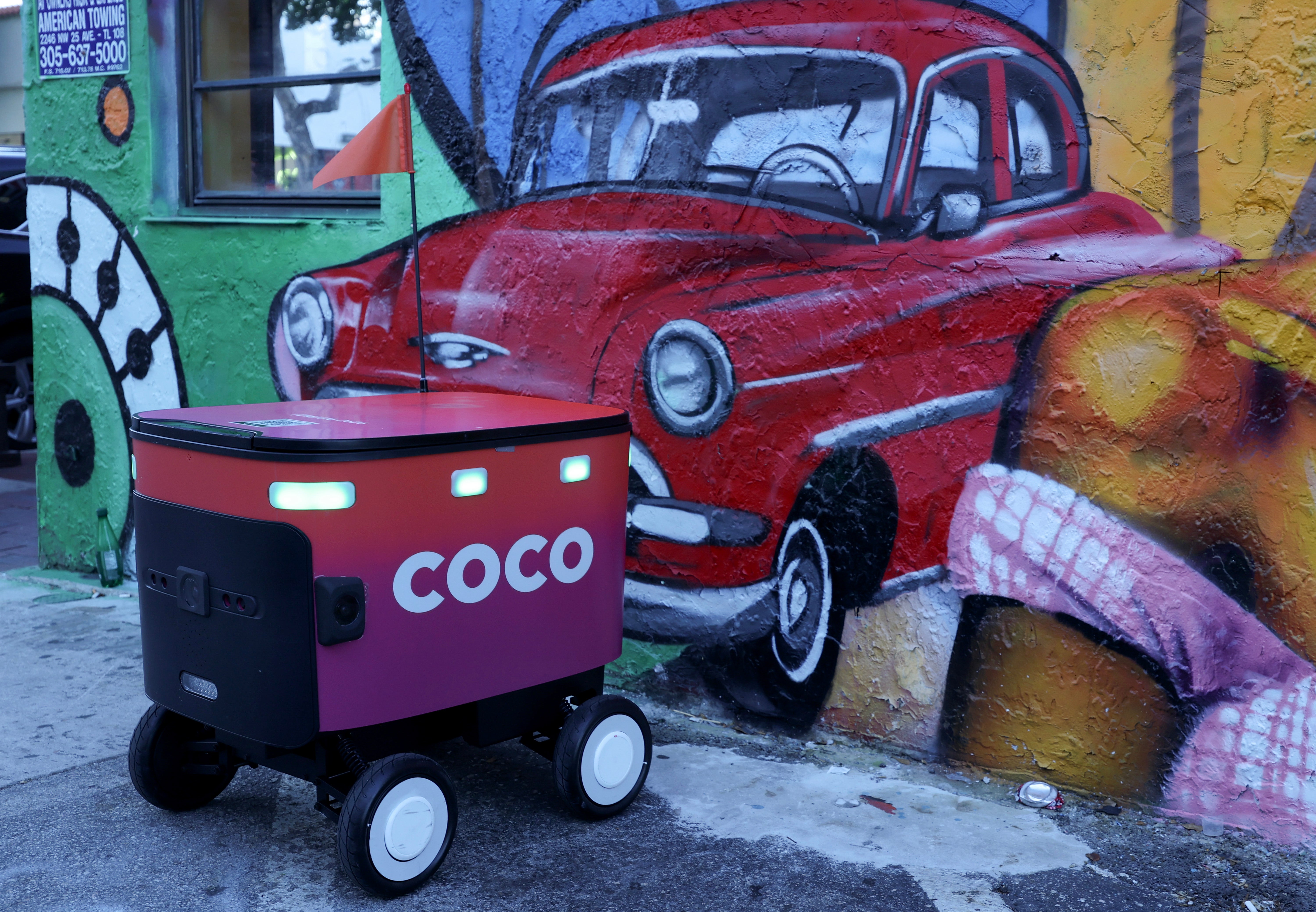
The acquisition came after California-based Coco Robotics unveiled the newest version of its delivery robot, dubbed “Coco 2,” late last month. The robot can carry your groceries, pharmacy drugs and takeout orders through busy city streets.
Last June, Jassy spoke about how Amazon was investing in generative AI, which creates original content.
“Today, in virtually every corner of the company, we’re using Generative AI to make customers’ lives better and easier,” the CEO said in a message shared with Amazon employees. “In our fulfillment network, we’re using AI to improve inventory placement, demand forecasting, and the efficiency of our robots—all of which have improved cost to serve and delivery speed.”

Last October, Amazon announced that it had deployed more than 1 million robots that sort and carry packages across its operations network since 2012.
“For more than a decade, we’ve been inventing and experimenting with robotics and assistive technology across our operations,” an Amazon spokesperson told The Independent. “In many cases, these efforts have led to safer work environments, while simplifying operational processes, and improving the customer experience.”
Jassy admitted last June, “In the next few years, we expect that this will reduce our total corporate workforce as we get efficiency gains from using AI extensively across the company.”
Amazon announced last October that it was laying off 14,000 workers. Another 16,000 company employees were let go in January.
Amazon told The Independent the layoffs were, in part, about increasing ownership and reducing bureaucracy. Even with the layoffs, it continues hiring and investing in strategic areas, Amazon said.