

Airbus and Air France have been found guilty of corporate manslaughter in the 2009 crash of flight AF447 over the Atlantic. Airbus has announced it will appeal against the verdict of the court in Paris. The case has brought fresh focus to a tragedy could have been avoided.
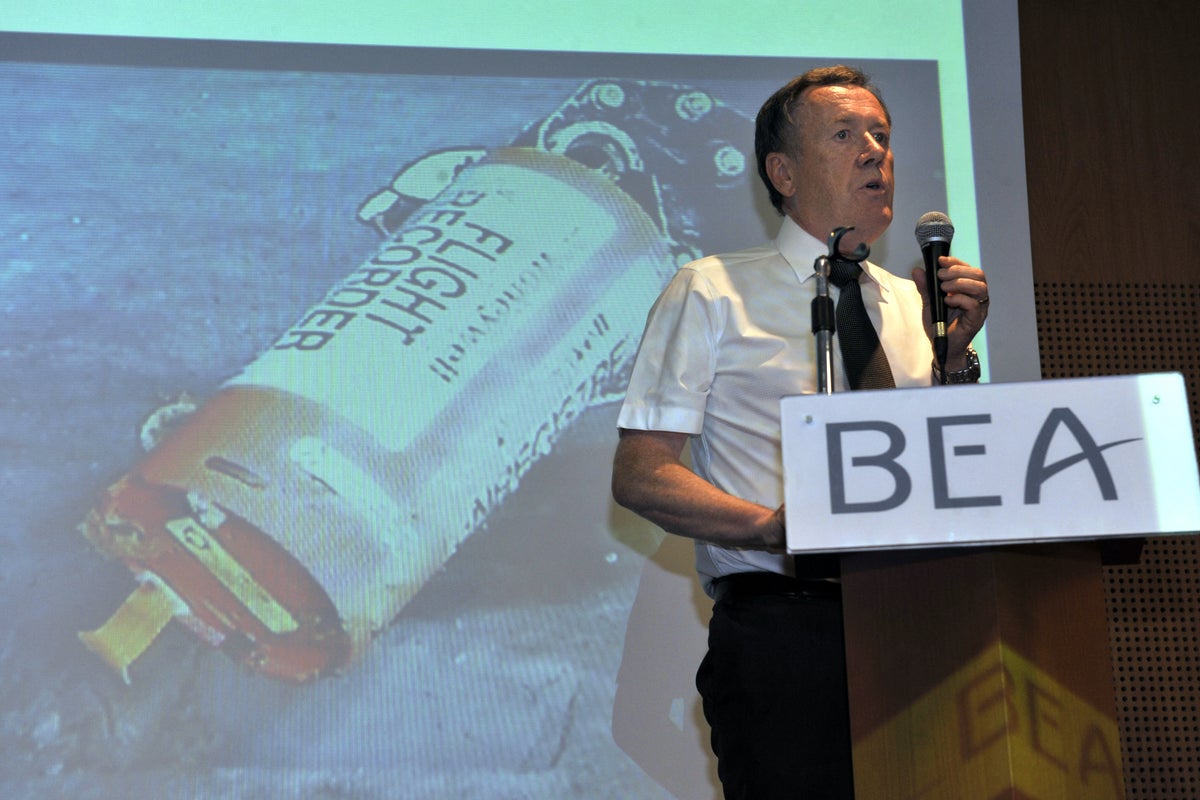
In the dispassionate language used by accident investigators, the cause of the tragedy of Air France AF447 – and the needless loss of 228 lives – is revealed in the final accident report issued by the BEA. This is the highly regarded French air safety investigation authority for civil aviation.
In the dead of night, passengers were sleeping when the fatal events began.
“At around 2 h 02, the captain left the cockpit,” the report says. “At 2 h 10 min 05, likely following the obstruction of the pitot probes by ice crystals, the speed indications were incorrect and some automatic systems disconnected.”
The tubes that are used to measure airspeed were blocked. The autopilot handed back control to the two co-pilots.
“The aeroplane’s flight path was not controlled by the two copilots. They were rejoined 1 minute 30 later by the Captain, while the aeroplane was in a stall situation that lasted until the impact with the sea at 2 h 14 min 28.”
The Airbus A330, on a routine flight from Rio to Paris, encountered a problem that had happened repeatedly: ice blocking the sensors, resulting in the autopilot handing back control to two co-pilots. The flight management system was effectively saying: “These readings don’t compute – over to you.”
The “pilot flying” (PF) was inexperienced and reacted with “inappropriate control inputs that destabilised the flight path”: pulling back on the stick, putting the aircraft into a climb, when remaining level or descending would have been the appropriate action.
The “startle effect” generated “a highly charged emotional factor for the two co-pilots”.
The “pilot not flying” (PNF), who was more experienced, failed to overrule his colleague’s actions.
The accident report found: “Initial and recurrent training as delivered today do not promote and test the capacity to react to the unexpected.”
Even when the stall alarm sounded for 54 seconds, the crew failed to heed the warnings and failed to take “actions that would have made recovery possible”.
With airspeed catastrophically low and the nose tilted up at 40 degrees, the crew and their passengers were doomed.
“Only an extremely purposeful crew with a good comprehension of the situation could have carried out a manoeuvre that would have made it possible to perhaps recover control of the aeroplane. In fact, the crew had almost completely lost control of the situation.”
As with all such tragedies, lessons have been learnt that make future aviation even safer.
“The sole objective of the investigation is to improve air safety,” the BEA says. “It is intended neither to apportion blame nor to assess responsibility.”
But that is no comfort to those who lost their loved ones in what was a survivable set of circumstances.
Within weeks, a final report is expected on the cause of the crash of Air India flight 171. The Boeing 787 bound for London Gatwick crashed seconds after taking off from Ahmedabad airport. The families of the victims, and the wider aviation community, must hope than the investigation is as thorough, honest and transparent as the report into AF447.
Read more: Concorde by numbers – from minus 60C to £9,179