

UK TimesUK Times
  • Home
  • News
  • TV & Showbiz
  • Money
  • Health
  • Science
  • Sports
  • Travel
  • More
    • Web Stories
    • Trending
    • Press Release
What's Hot
Asian shares are mixed and oil jumps 4% after Trump rejects Iran’s response to ceasefire proposal – UK Times

Asian shares are mixed and oil jumps 4% after Trump rejects Iran’s response to ceasefire proposal – UK Times

11 May 2026
Aston Villa are sleepwalking and could blow the Champions League – and one superstar’s odd habit is what might cost them, writes NATHAN SALT

Aston Villa are sleepwalking and could blow the Champions League – and one superstar’s odd habit is what might cost them, writes NATHAN SALT

11 May 2026
Hungary returns seized cash and gold shipment worth  million to Ukraine – UK Times

Hungary returns seized cash and gold shipment worth $82 million to Ukraine – UK Times

11 May 2026
Facebook X (Twitter) Instagram
UK TimesUK Times
Subscribe
  • Home
  • News
  • TV & Showbiz
  • Money
  • Health
  • Science
  • Sports
  • Travel
  • More
    • Web Stories
    • Trending
    • Press Release
UK TimesUK Times
Home » AI model finally learns to say ‘I don’t know’ in breakthrough to curb chatbot overconfidence – UK Times
News

AI model finally learns to say ‘I don’t know’ in breakthrough to curb chatbot overconfidence – UK Times

By uk-times.com11 May 2026No Comments3 Mins Read
Facebook Twitter LinkedIn Telegram Pinterest Tumblr Reddit WhatsApp Email
AI model finally learns to say ‘I don’t know’ in breakthrough to curb chatbot overconfidence – UK Times
Share
Facebook Twitter LinkedIn Pinterest Email

Sign up to our free weekly IndyTech newsletter delivered straight to your inbox

Sign up to our free IndyTech newsletter

Sign up to our free IndyTech newsletter

IndyTech

South Korean researchers have developed a new way to finally make AI models acknowledge their unfamiliarity with topics – similar to human behaviour.

The breakthrough could improve the reliability of AI models used in fields like autonomous driving and medicine, researchers from the Korea Advanced Institute of Science and Technology say.

Previous research has exposed AI “overconfidence” as one of the major risks in the use of such tools to make decisions, especially in fields like medical diagnosis.

Commonly used AI models like OpenAI’s ChatGPT have been shown to “hallucinate”, or make up facts, as they are incentivised to make guesses rather than admit their lack of knowledge.

Now, researchers have developed a method that enables AI to recognise situations with unfamiliar or unseen knowledge, helping improve the overall reliability of chatbots.

They say a fundamental cause of overconfidence in AI is the way they learn from initial data using artificial neural networks, which form their backbone infrastructure.

Small errors that creep up at this stage can propagate and cause significant errors during subsequent training if they are not corrected.

Researchers found that when random data was input into a neural network during the initialisation phase, the model exhibited high confidence despite not having learned anything.

This led to “hallucination”.
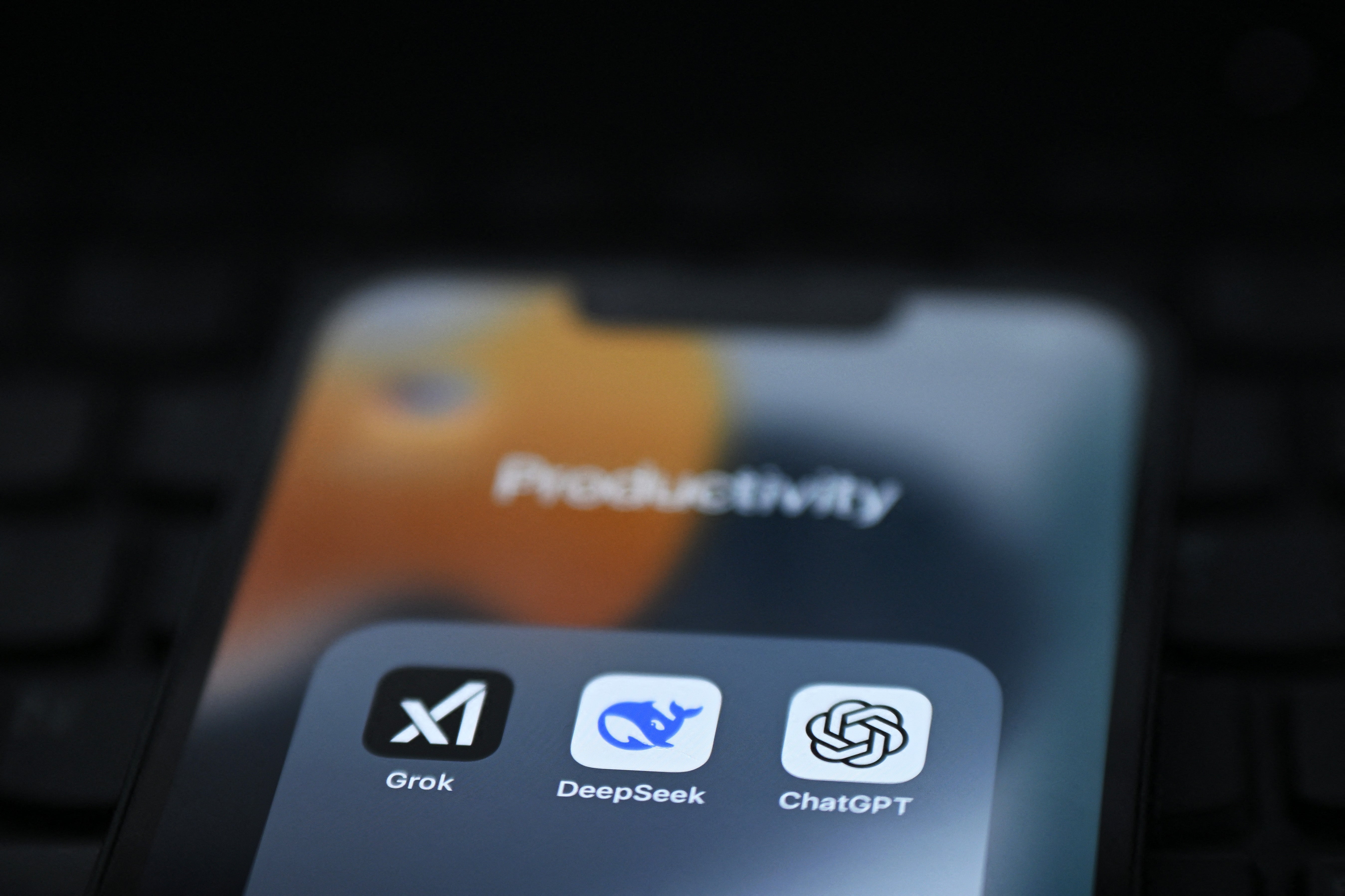
Grok, DeepSeek and ChatGPT apps displayed on a phone screen
Grok, DeepSeek and ChatGPT apps displayed on a phone screen (AFP via Getty)

To address this, researchers say they used clues from the way the human brain solves the issue.

In humans, brain signals are generated without external input even before birth, which helps deal with the issue.

Mimicking this, scientists developed a system in which the neural network backbone of an AI model underwent brief pre-training with random noise inputs before actual learning.

This process, according to researchers, helps AI set a baseline for itself by adjusting its own uncertainty before starting data learning.

The warm-up process can help an AI model set its initial confidence to a low level close to chance, and significantly reduce its overconfidence bias.

In other words, researchers say, the method helps models first learn the state of “I don’t know anything yet”.

“While conventional models tend to give incorrect answers with high confidence even for data they have not encountered during training, models with warm-up training showed a clear improvement in their ability to lower confidence and recognise that they ‘do not know’,” researchers explained.

This can help AI develop the ability to distinguish “what it knows” from “what it does not know”.

“This study demonstrates that by incorporating key principles of brain development, AI can recognise its own knowledge state in a way that is more similar to humans,” Se-Bum Paik, an author of the study published in the journal Nature Machine Intelligence, said.

“This is important because it helps AI understand when it is uncertain or might be mistaken, not just improve how often it gives the right answer.”

Share. Facebook Twitter Pinterest LinkedIn Tumblr Telegram Email

Related News

Asian shares are mixed and oil jumps 4% after Trump rejects Iran’s response to ceasefire proposal – UK Times

Asian shares are mixed and oil jumps 4% after Trump rejects Iran’s response to ceasefire proposal – UK Times

11 May 2026
Hungary returns seized cash and gold shipment worth  million to Ukraine – UK Times

Hungary returns seized cash and gold shipment worth $82 million to Ukraine – UK Times

11 May 2026
Dua Lipa files  million lawsuit against Samsung for using her face without permission – UK Times

Dua Lipa files $15 million lawsuit against Samsung for using her face without permission – UK Times

11 May 2026
I went on the perfect Tuscan family roadtrip – at the worst time of year – UK Times

I went on the perfect Tuscan family roadtrip – at the worst time of year – UK Times

11 May 2026
America’s favorite cereal revealed, state by state – UK Times

America’s favorite cereal revealed, state by state – UK Times

11 May 2026

A19 northbound between A1046 and A139 | Northbound | Accident

11 May 2026
Top News
Asian shares are mixed and oil jumps 4% after Trump rejects Iran’s response to ceasefire proposal – UK Times

Asian shares are mixed and oil jumps 4% after Trump rejects Iran’s response to ceasefire proposal – UK Times

11 May 2026
Aston Villa are sleepwalking and could blow the Champions League – and one superstar’s odd habit is what might cost them, writes NATHAN SALT

Aston Villa are sleepwalking and could blow the Champions League – and one superstar’s odd habit is what might cost them, writes NATHAN SALT

11 May 2026
Hungary returns seized cash and gold shipment worth  million to Ukraine – UK Times

Hungary returns seized cash and gold shipment worth $82 million to Ukraine – UK Times

11 May 2026

Subscribe to Updates

Get the latest UK news and updates directly to your inbox.

Recent Posts

  • Asian shares are mixed and oil jumps 4% after Trump rejects Iran’s response to ceasefire proposal – UK Times
  • Aston Villa are sleepwalking and could blow the Champions League – and one superstar’s odd habit is what might cost them, writes NATHAN SALT
  • Hungary returns seized cash and gold shipment worth $82 million to Ukraine – UK Times
  • Diane Keaton’s daughter posts emotional first Mother’s Day tribute since actress’ death
  • UFC cult hero shares emotional update on 14-year-old son’s cancer battle during post-fight interview

Recent Comments

No comments to show.
© 2026 UK Times. All Rights Reserved.
  • Privacy Policy
  • Terms of use
  • Advertise
  • Contact Us

Type above and press Enter to search. Press Esc to cancel.

Go to mobile version