


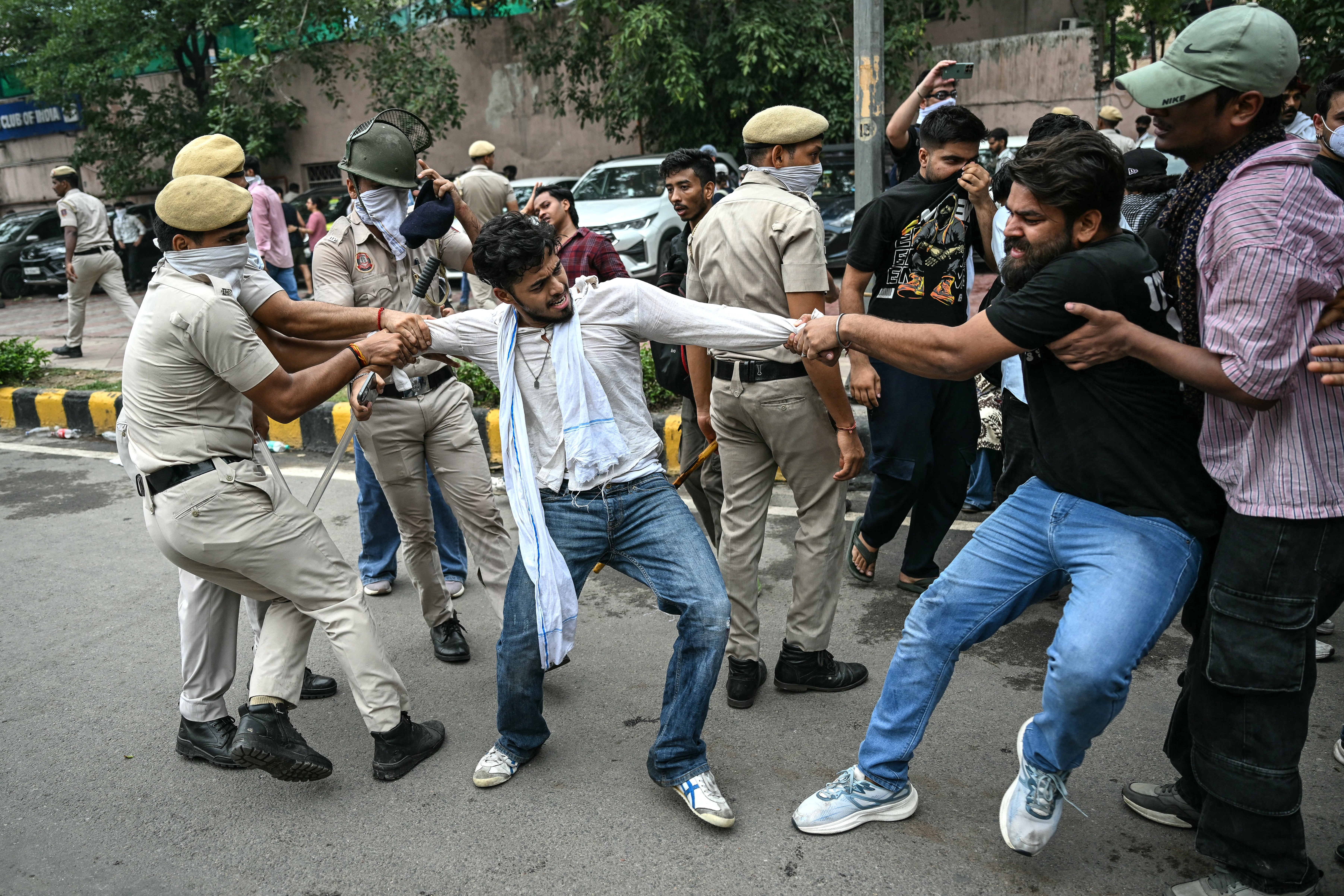
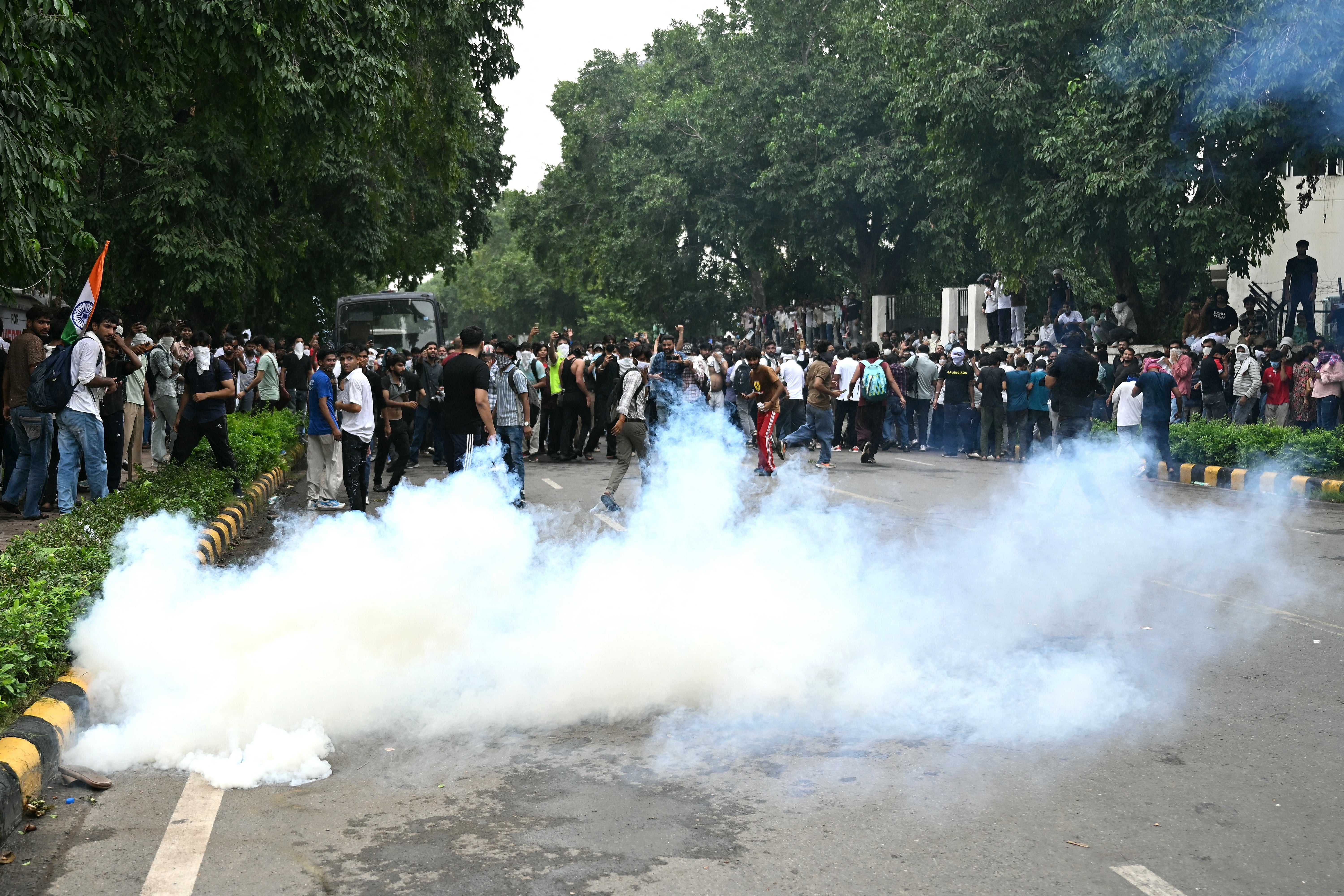
Indian police used teargas and batons to stop supporters of India’s youth-led Cockroach movement from marching to parliament on Monday to demand the education minister’s resignation, while the government appeared to make its first outreach to the movement’s leaders.
Thousands of demonstrators tried to breach security barricades surrounding the protest site in central New Delhi, marking one of the most serious confrontations in the movement’s campaign against Narendra Modi’s government. Despite the crackdown, many protesters continued marching toward parliament in small groups.
The Cockroach Janta Party, which organised the march to demand the resignation of Dharmendra Pradhan over a series of botched national exams, said its founder Abhijeet Dipke was “picked up” by police.
The movement is seeking reforms of the education system after the leak of a question paper led to the cancellation of the national medical entrance exam, affecting over 2.3 million students.
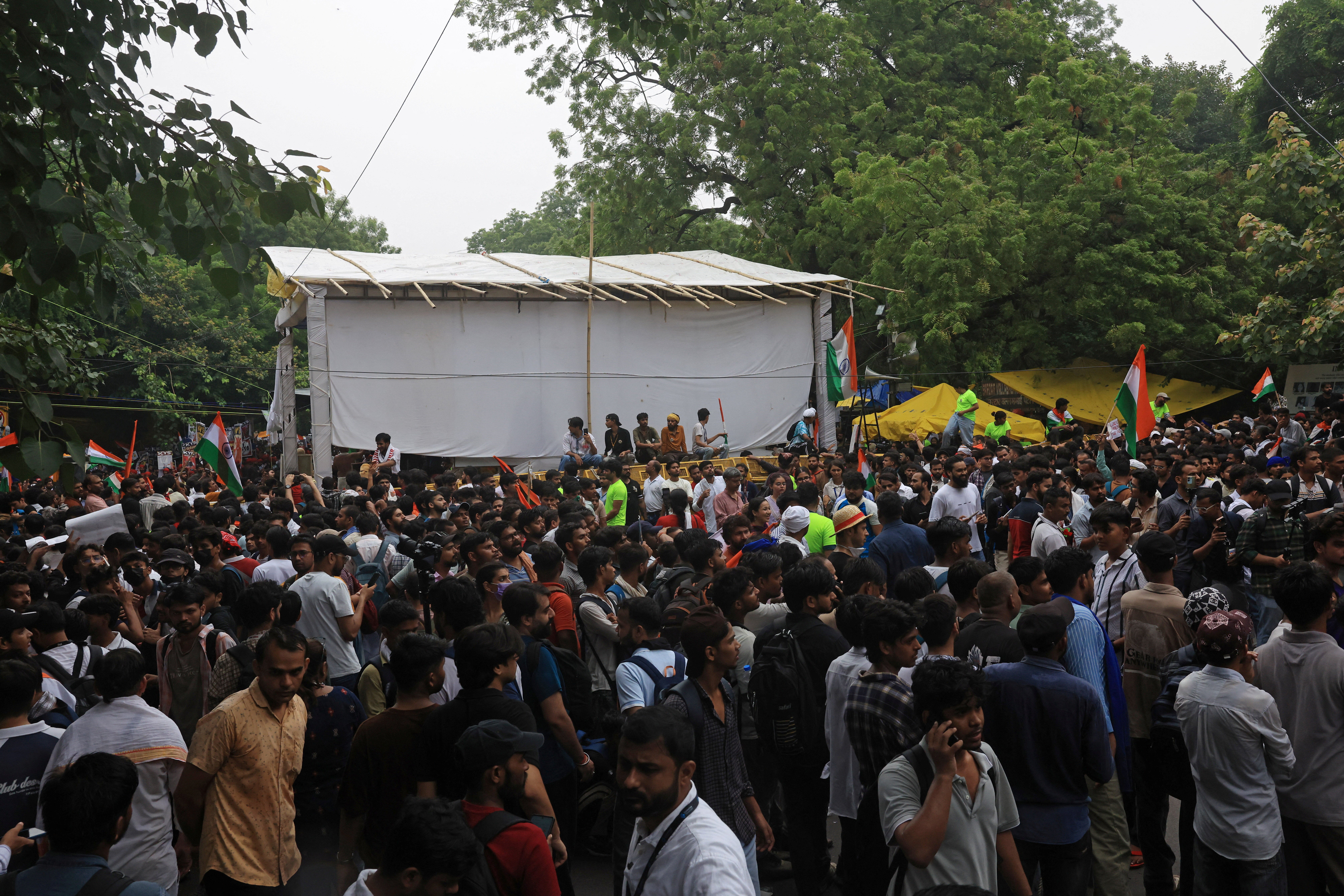
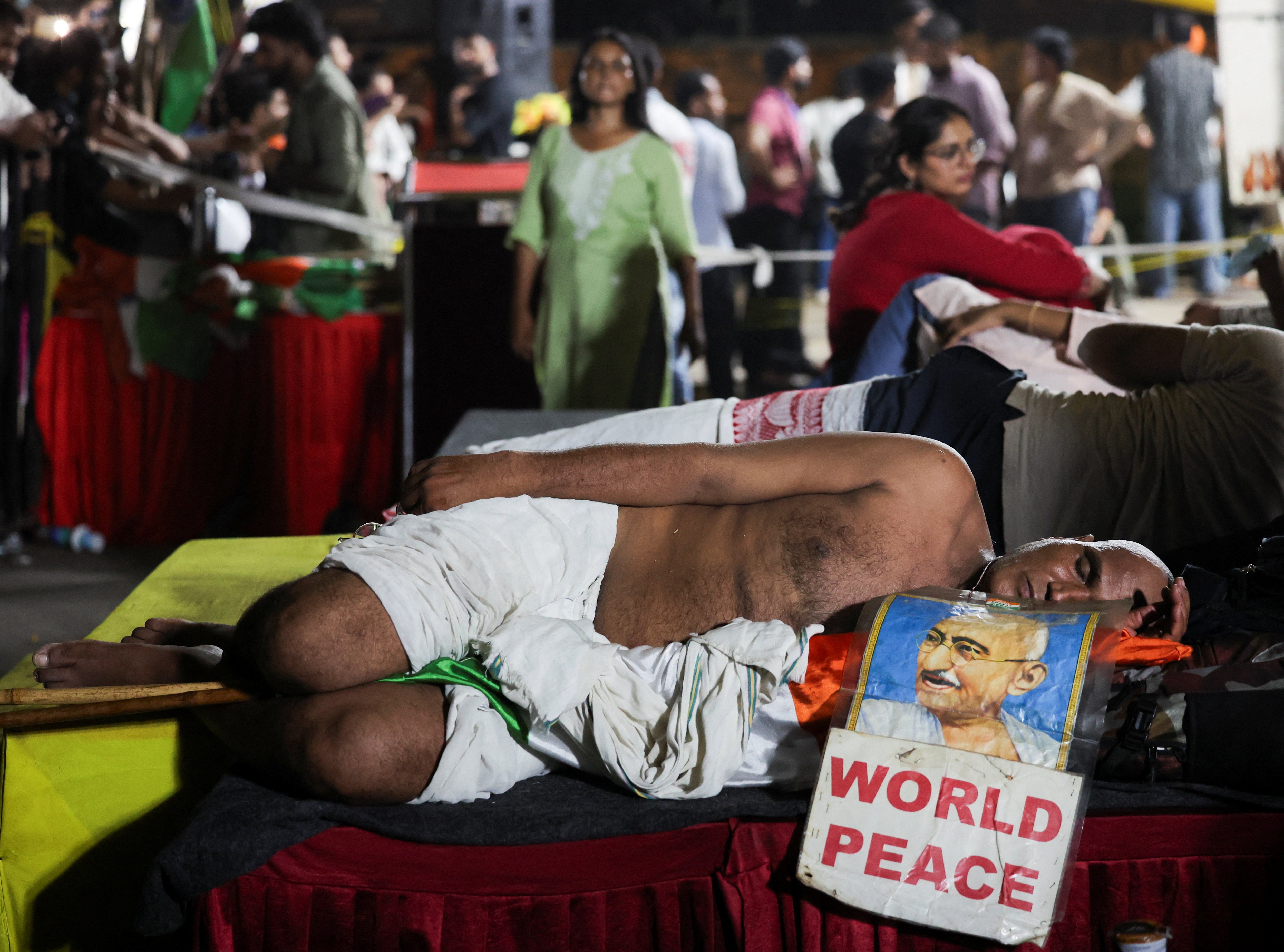
Mr Dipke and his supporters launched a sit-in protest at Jantar Mantar in Delhi last month to press their demand for Mr Pradhan’s resignation. They were joined on 28 June by Sonman Wangchuk, an innovator and education reformer, who launched an indefinite hunger strike.
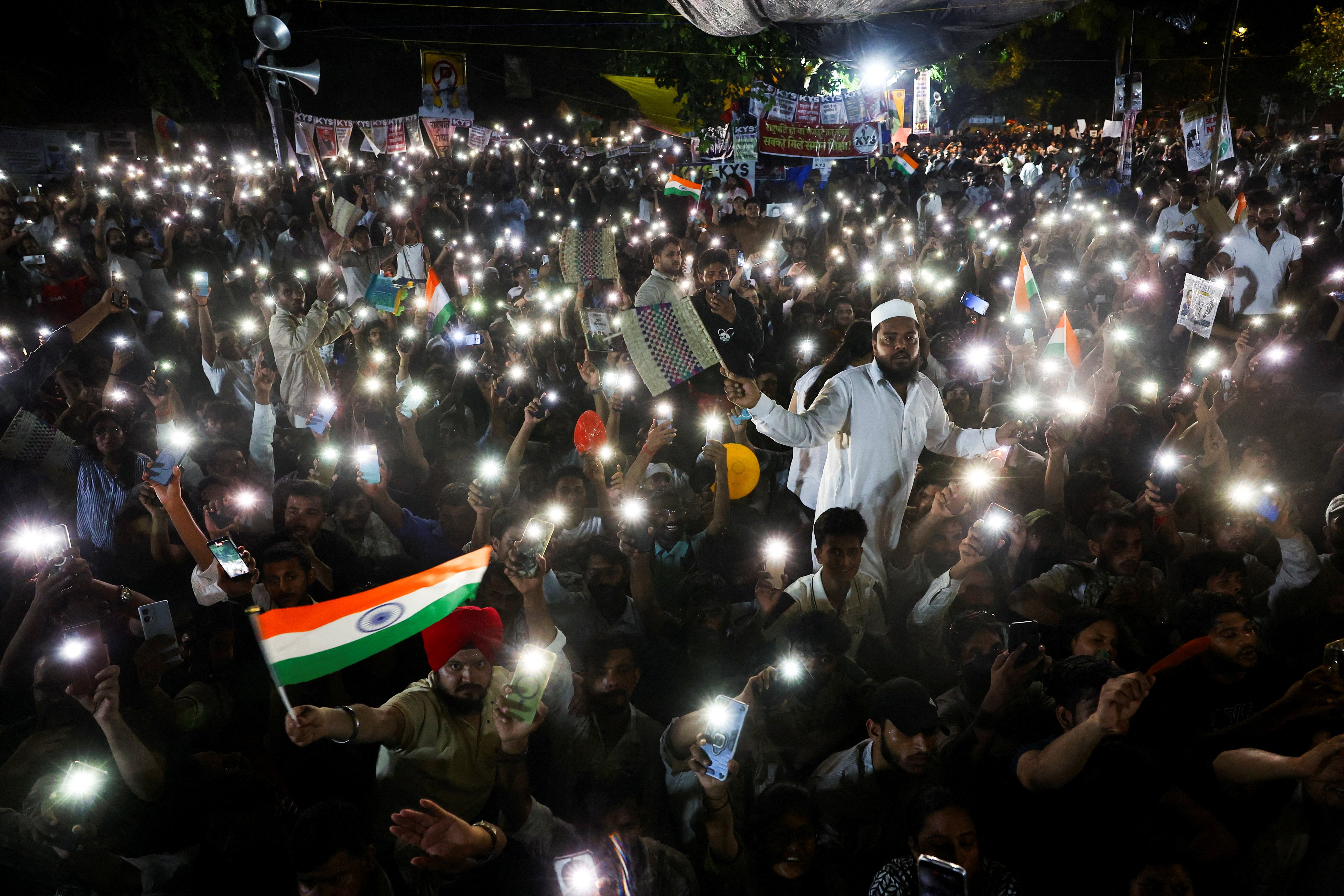
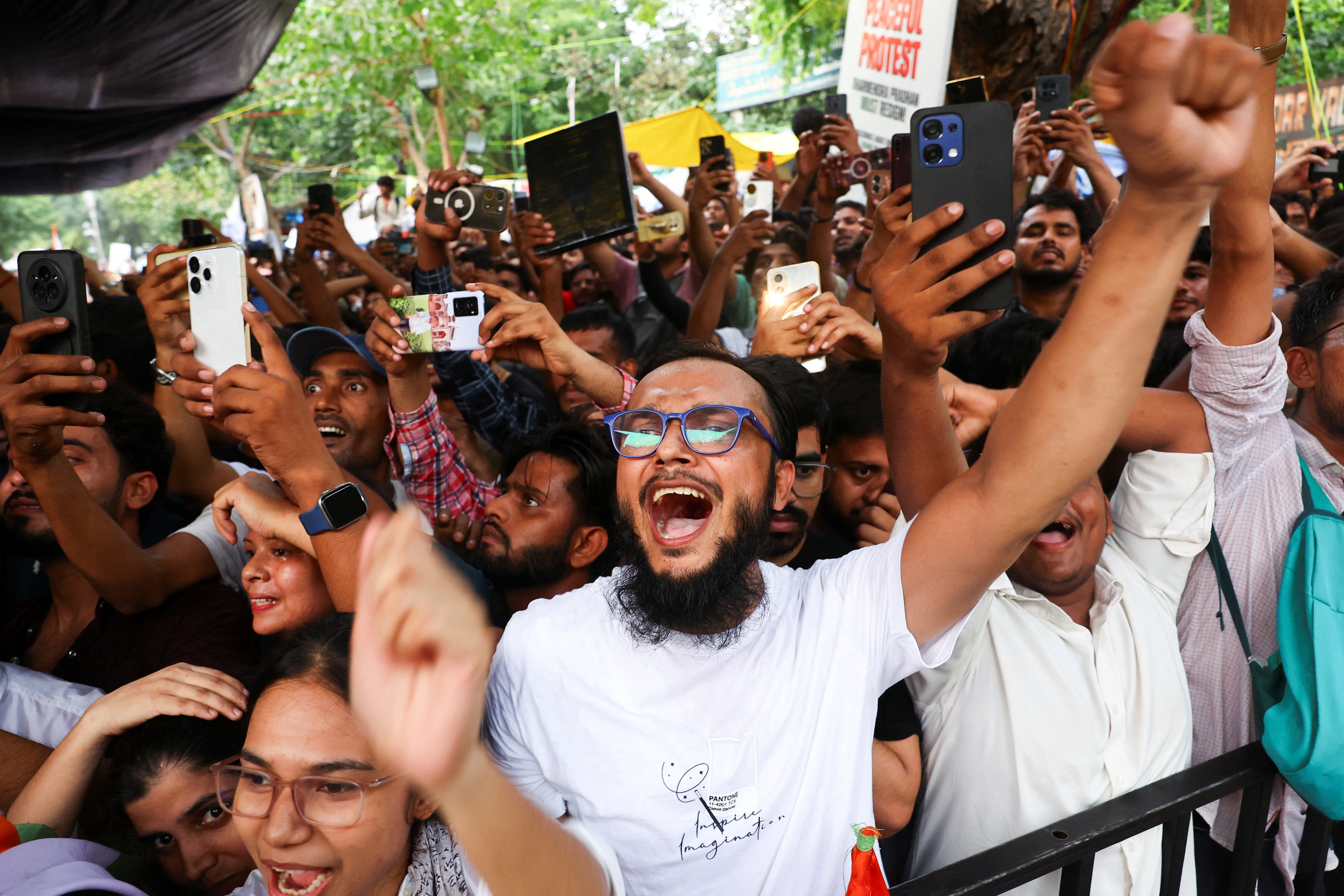
The youth-led movement was galvanised after police forcibly moved Mr Wangchuk, whose health had begun deteriorating, to a Delhi hospital on Saturday, prompting thousands of CJP supporters to reach Jantar Mantar. They waved the national flag and shouted slogans against the education minister as well as prime minister Narendra Modi.
“Quit, quit,” they chanted in Hindi. “Dharmendra Pradhan quit. Narendra Modi quit.”
On Sunday, police said they had denied permission for the planned march and banned gatherings of five or more people in the New Delhi district housing the parliament.
However, CJP spokesperson Vijeta Dahiya, told the Indian Express the party hadn’t sought permission to hold the march as they “want to challenge these colonial laws where you have to ask for permission from the government to protest against the government, while the government can arbitrarily deny it”.
On Monday morning, hundreds of police and paramilitary personnel were deployed in the area, threatening a standoff as the protesters said they were determined to go ahead with the march.
The march coincided with the start of the parliament’s monsoon session, posing a challenge to the Modi government. It drew support from opposition parties, activists and some Bollywood celebrities.
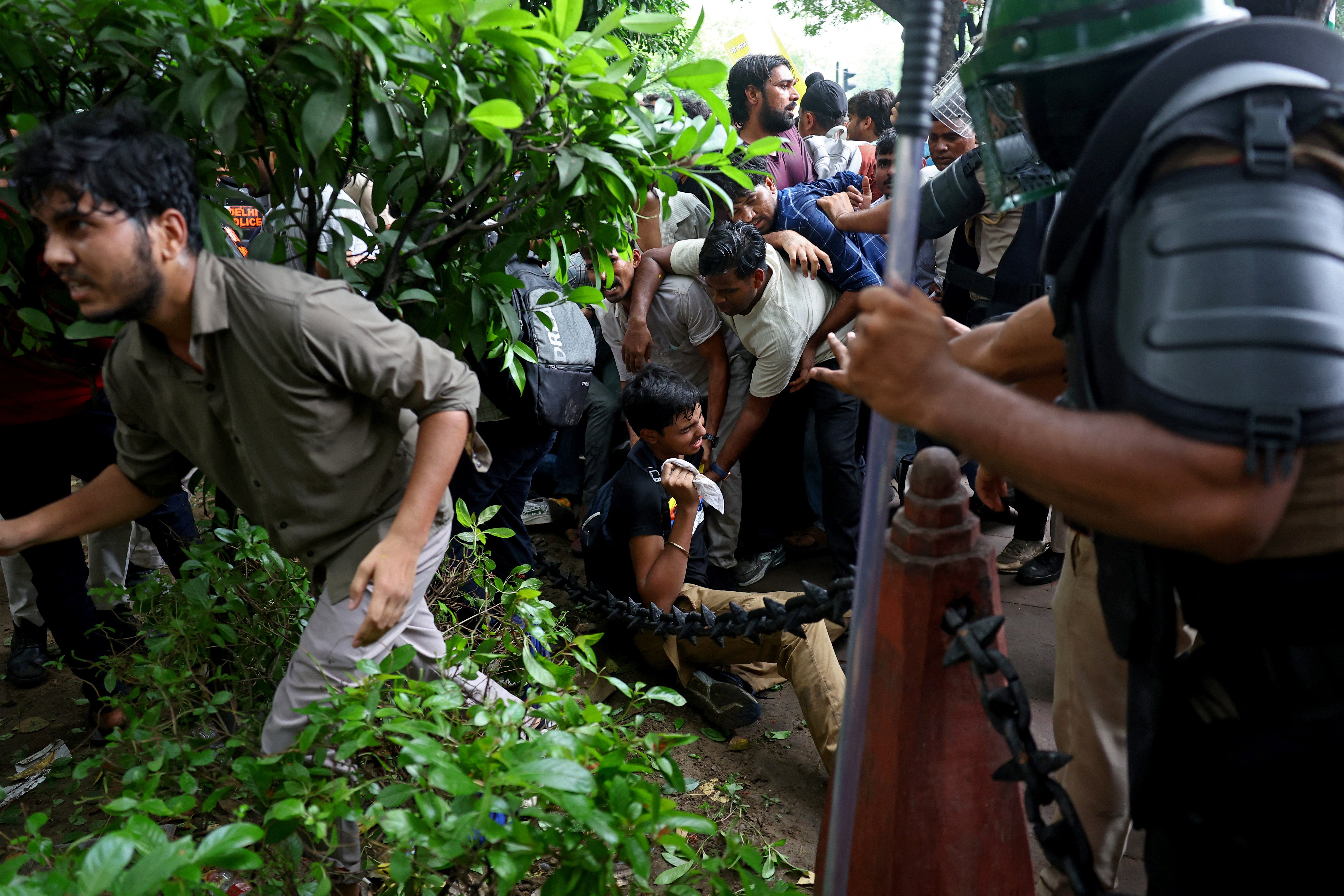
At Jantar Mantar, police charged at the protesters with batons. They also closed five metro rail stations servicing the area to prevent the protest from swelling.
In response, the CJP urged its supporters to “remain calm”. “Even if you have been stopped at certain points, remain calm and maintain peace. We will only win this with peace and love,” the party said.
The fear of a standoff with police did not prevent students, parents and activists from travelling long distances to join the demonstration.
“All these leaders in power are illiterate and I’m here to protest because we don’t want exam papers to leak,” Adi Nathan, 21, a student from Meerut city, about 100km from Delhi, said. “This should come to an end.”
Mohammed Tabrez, 22, a student from Amroha in Uttar Pradesh state, about 165km away, said he and his peers wanted “this corruption to end”.
“We want all the frauds in paper leaks, in competitive examinations to end and this is the reason I have come here,” he said.
Jyoti Rajput, a yoga teacher, said she had joined the protest because “this rotten system refuses to take action.”
“It cannot see the pain of students, and that’s why so many people have joined this movement,” she said.
Sneha Eppili, a 26-year-old protester, said she believed the government had a responsibility to answer their questions.
“I voted for this government, so I think it’s accountable to answer our questions. That’s the basic human right that I deserve,” she said.
While Mr Pradhan was yet to directly respond to the demand for his resignation, he told NDTV that the teachers entrusted with the responsibility of setting the exam paper had failed in their duty.
The National Testing Agency, responsible for conducting the medical entrance exam, had “placed its trust in certain teachers but some of them did not fulfil their responsibility”, he said. “The protectors themselves turned predators.”
Several prominent politicians from opposition parties extended their support to the protesters while criticising police action.
Mallikarjun Kharge, president of the main opposition Congress party, described the police action as “an attack on democracy” while parliamentarian Mahua Moitra of All India Trinamool Congress said “any government that attacks non-violent student protesters with brute force is on its last legs”.
Samajwadi Party leader Akhilesh Yadav supported the protesters, demanding that they be treated with respect. His wife and parliamentarian, Dimple Yadav, was detained during the protest, the party said on X.
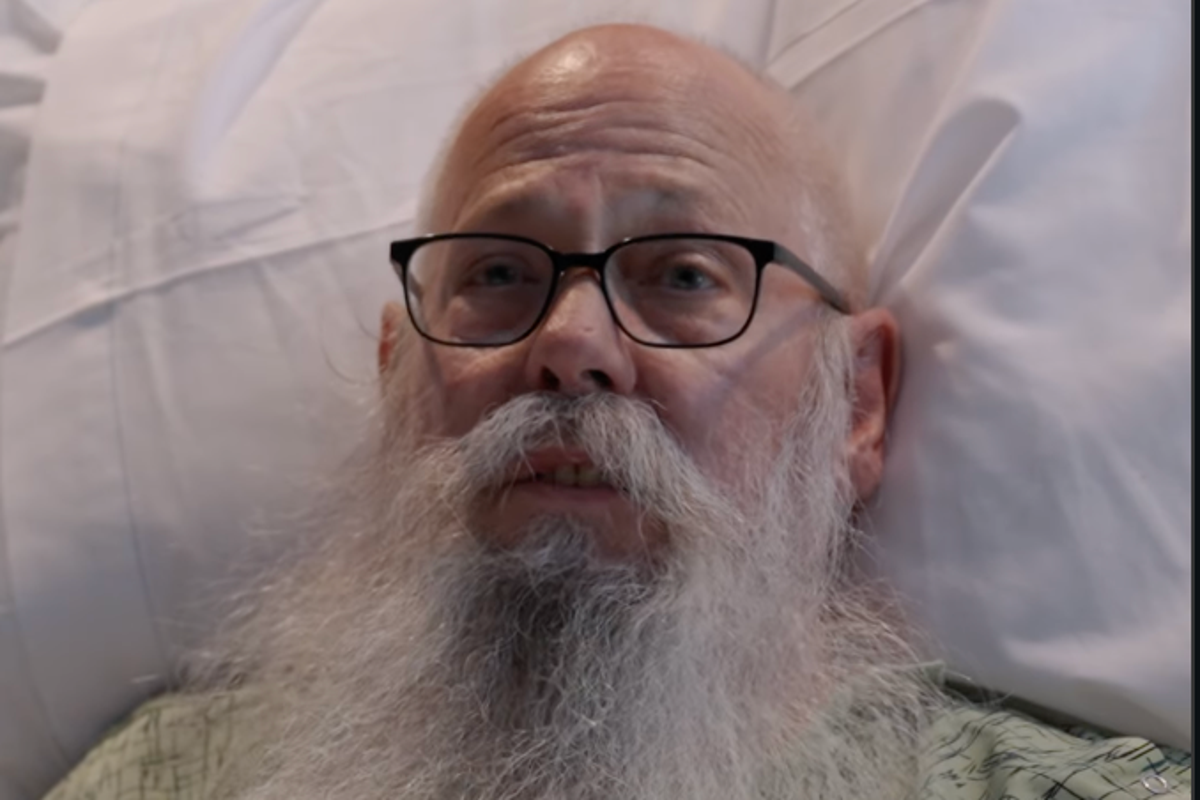
In a handwritten note from hospital that was posted on his X account on Monday, Mr Wangchuk said he would end his fast if the government took accountability for recent failures in the education system and the paper leaks, or if the protesters were allowed to reach the parliament and assured that their issues would be discussed by the lawmakers.
“India’s second freedom movement, march to the parliament,” he said in a message relayed through his wife on Sunday. “Please make it a big success.”
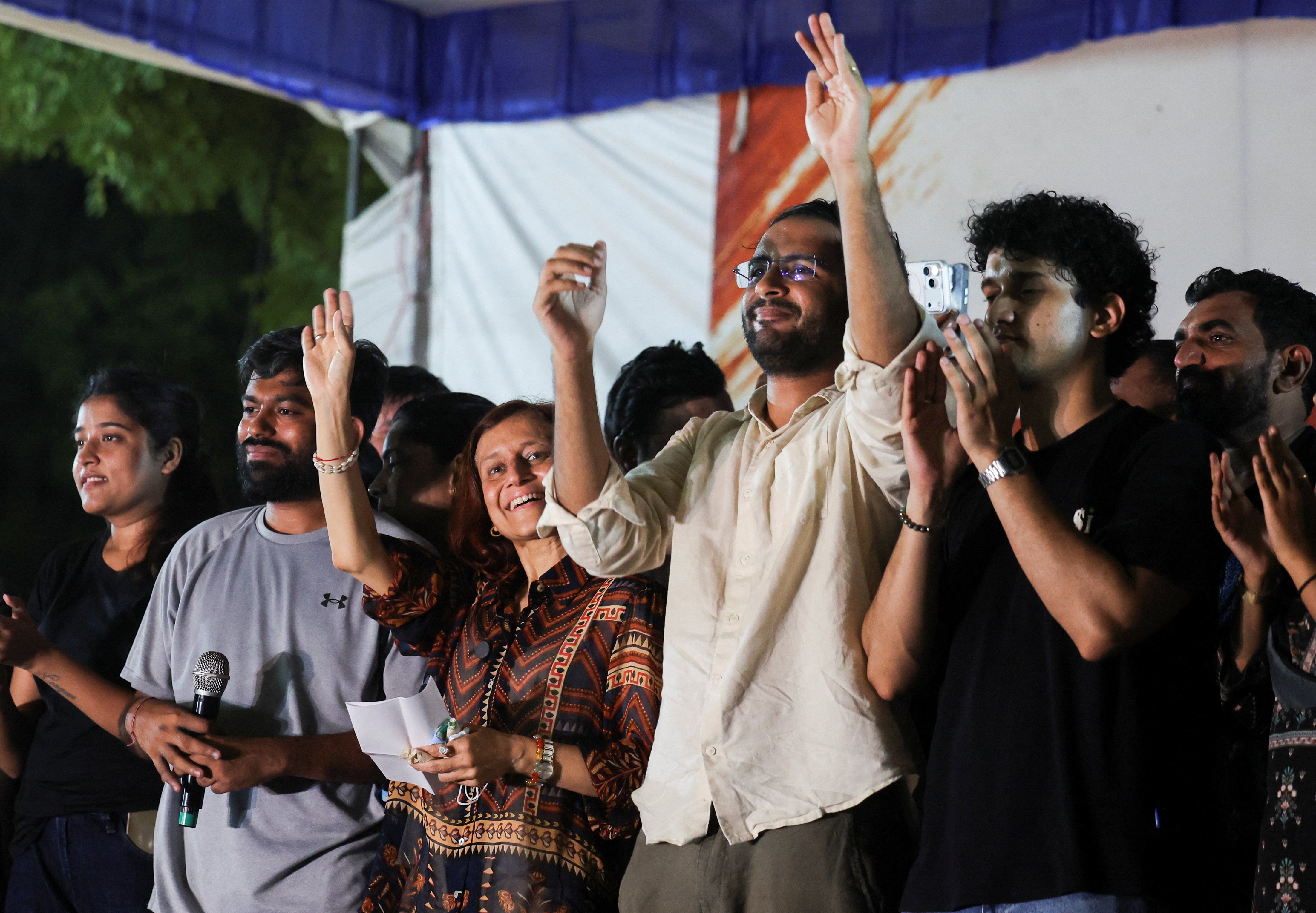
Three senior leaders of the All India Students’ Association, a leftist youth group, who had been fasting alongside Mr Wangchuk ended their strike on Sunday after actors Shabana Azmi and Prakash Raj and parliamentarian Manoj Jha offered them water.
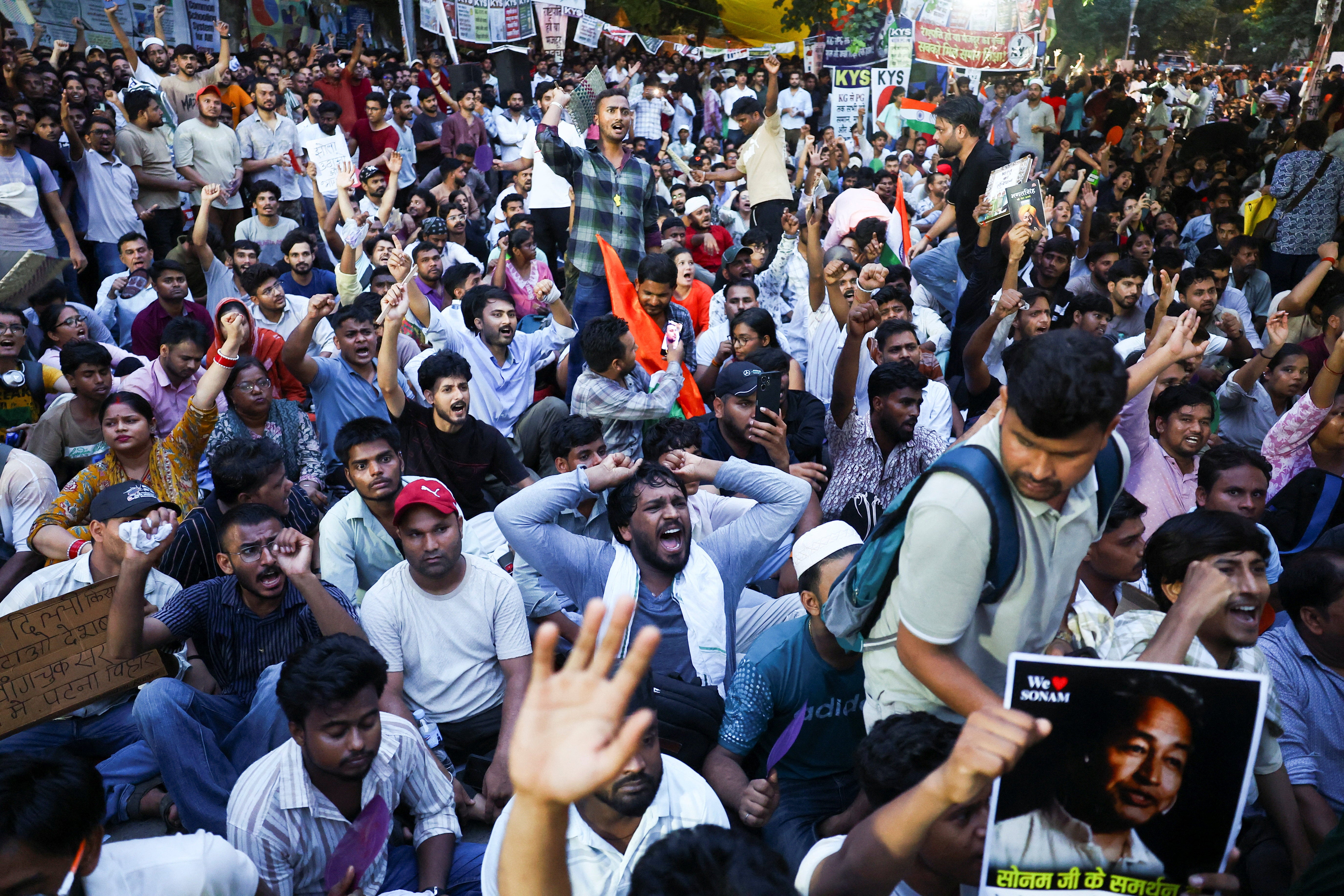
The rise of the CJP reflects growing frustration among India’s youth Indians over unemployment and frequent examination paper leaks, analysts say.
In 2025, the rate of unemployment stood at 3.1 per cent among Indians aged 15 and above, according to government data, but in the bracket from 15 to 29 it was much higher, at 9.9 per cent. It was also far higher in urban areas, at 13.6 per cent, than in rural regions, where it was around 8.3 per cent.