



Sharon Michael was around 30 when the decision crystallised in her mind, quietly. There was no dramatic moment, no single life event that changed everything. Instead, it emerged through years of work, reflection and a growing sense that motherhood was not a future she wanted.
For generations, having children in India was less a choice than an expected chapter of adult life. Marriage was followed by parenthood, often with little discussion of alternatives. Today, that certainty is fading among married couples and single professionals alike; conversations around children are becoming more deliberate, more cautious and, in some cases, more sceptical.
“Having kids was never a priority,” says Michael, 36. “I have PCOD and I didn’t want to go through the whole process because of how much effort it takes and all of that,” she says, referring to polycystic ovarian disease, a hormonal condition that affects how the ovaries work and can cause irregular periods.
Michael, who works in the corporate sector, says parenthood would require sacrifices she is unwilling to make. “I do not see that lifestyle fitting in with a child specifically,” she says. “I would not be doing justice to either.” After taking a career break to pursue an MBA, she says she remains uncertain about stepping away from work again. “I still don’t feel ready myself to take up responsibility of that scale.”
She is an example of a highly-educated woman weighing up the balance of her options, rather than following what for previous generations was an assumed path through life. Such personal choices are now reflected in national statistics.
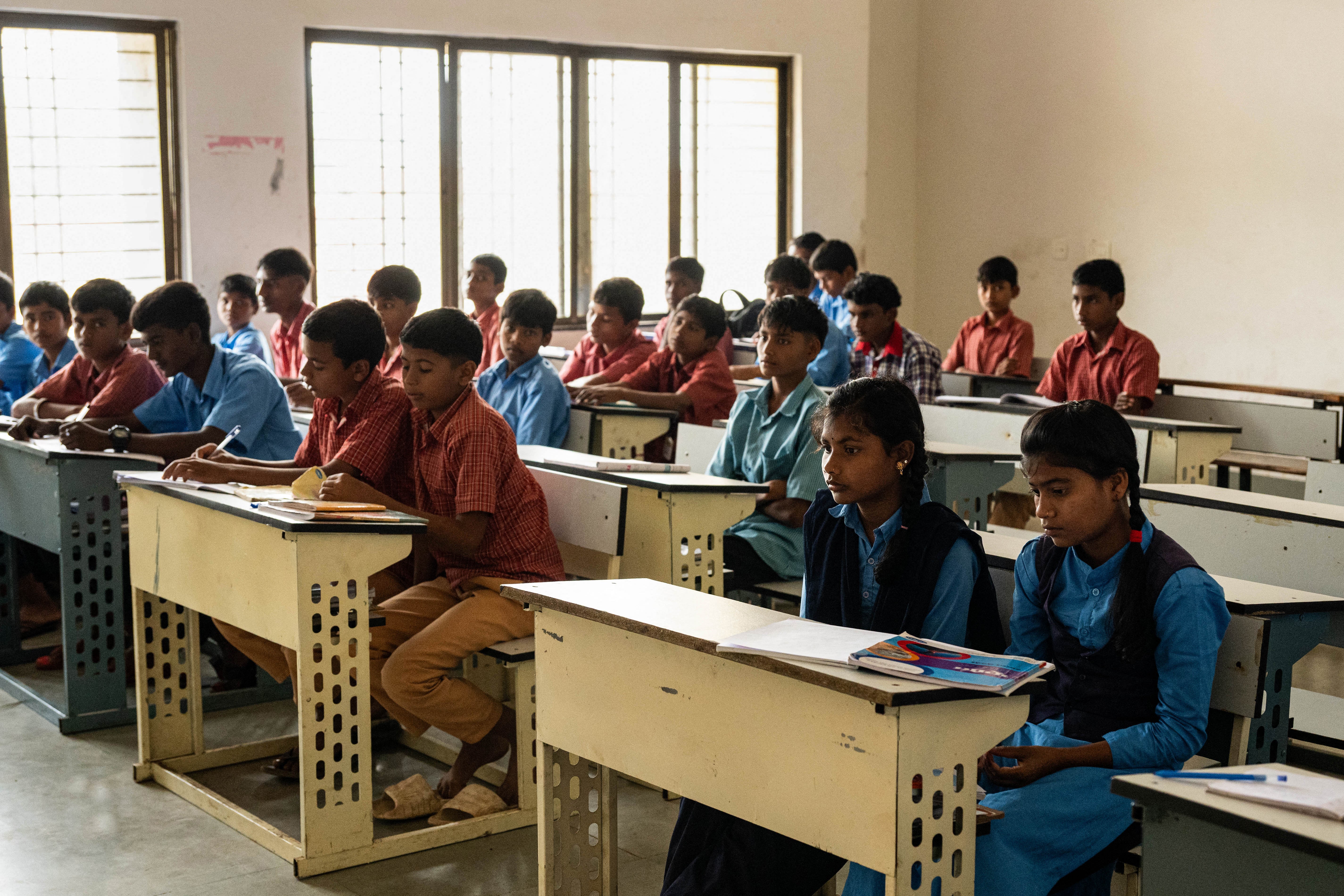
India’s total fertility rate – the average number of children a woman is expected to have during her lifetime – has for the first time fallen to 1.9, below the replacement level of 2.1 required to maintain a stable population, according to the latest Sample Registration System report.
The shift marks a remarkable demographic transformation for a country that spent decades worrying about rapid population growth. In the early 1990s, when women had an average of 3.4 children, family planning campaigns became part of public life and, at times, took controversial forms, including the forced sterilisation programme during the Emergency in 1970s.
Later campaigns encouraged couples to have no more than two children, and were popularised through slogans such as “Hum do, humare do”, loosely translating from Hindi as “We two, ours two”.
For decades, Indian governments worried about overpopulation.
Economists say that India should avoid viewing fertility decline as a crisis. Alicia García-Herrero, the chief economist for Asia Pacific at Natixis, explains the decline should not be viewed as a demographic failure.
“India’s fertility decline is not a failure – it’s a sign of progress,” she tells The Independent. “As women gain education, economic options and decision-making power, they are choosing smaller families.”
“The immediate impact is still positive,” says Garcia-Herrero. “India continues to benefit from a large working-age population.”
Behind the statistics lie millions of unique and intimate stories, a generation rethinking what family, success and fulfilment should look like.

The forces reshaping Indian families, she says, are the same ones that transformed societies across Europe and East Asia: rising female education, urbanisation, changing aspirations and the growing cost of raising children.
Sociological patterns visible across India’s geography support that argument. New Delhi records one of the country’s lowest fertility rates at 1.2 births per woman, while Kerala and Tamil Nadu stand at 1.3. Bihar, among India’s poorest states, records the highest rate at 2.9. In other words, birth rates closely mirror differences in education, healthcare, infant mortality and women’s economic participation.
For Akshita Gupta, a 35-year-old Mumbai resident and mother of a 21-month-old son and now pregnant with their second child, becoming a parent was always something she imagined for herself. “I’ve always felt maternal,” she says. “I have always felt I wanted a child.”
But before she and her husband started a family, they spent years discussing not just whether to have children, but how they would raise them. Financial security mattered alongside emotional stability and familial support.
“I feel our base was secure financially, emotionally,” she says. “And we both had our families. So I feel one is of course the inherent desire, but I also feel the fact that, you know, we had the support system.”
Even then, timing weighed heavily on her mind. Having watched friends undergo IVF treatment, Gupta was determined to try to conceive naturally. After consulting her gynaecologist, she set herself a goal of having children before the age of 35. “I wanted to have both my children before 35,” she says. “I had a few friends who were going through IVF and I saw their struggles.”
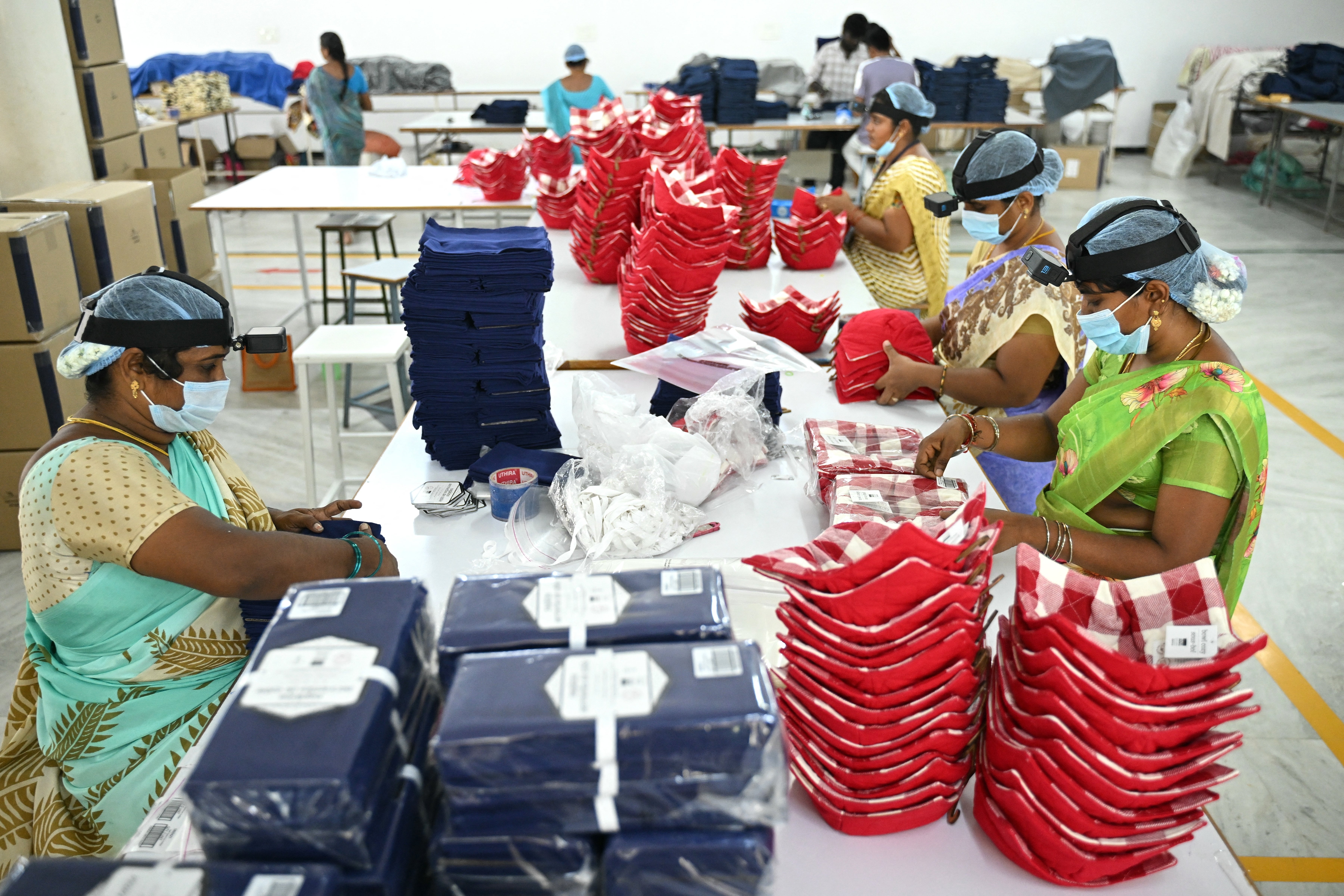
Demographers describe India’s falling fertility rate as part of a broader demographic transition seen across much of the world. As child mortality falls, healthcare improves, women gain greater access to education and people marry later, family sizes typically shrink.
Government data suggests several long-term changes have converged at once. Infant mortality has fallen sharply, dropping from 30 deaths per 1,000 live births in 2019 to 24 in 2024. At the same time, women are marrying later than previous generations. Nationally, 73.5 per cent of women now marry after the age of 21, while the figure rises to 82.2 per cent in urban India. In 2018, 64.5 per cent of women married in their 20s across the country.

“Higher levels of education, particularly among women, have played a key role, along with urbanisation, later marriages and delayed childbirth,” says development economist Dipa Sinha. “Improved access to health care and a sharp fall in infant mortality have also contributed.”
“More recently, you also see that the opportunity cost of having children is high.”
García-Herrero agrees that education sits at the centre of the transformation.
“The biggest drivers are female education and economic pressures,” she says. “Educated women marry later, use contraception more effectively and prioritise investing in fewer children.”
She argues that the decline reflects a broader expansion of female agency rather than a rejection of family life.
“This is the same story seen across developed and rapidly developing societies,” she says. “Female education is one of the strongest forces lowering fertility because it changes aspirations and gives women real choices.”
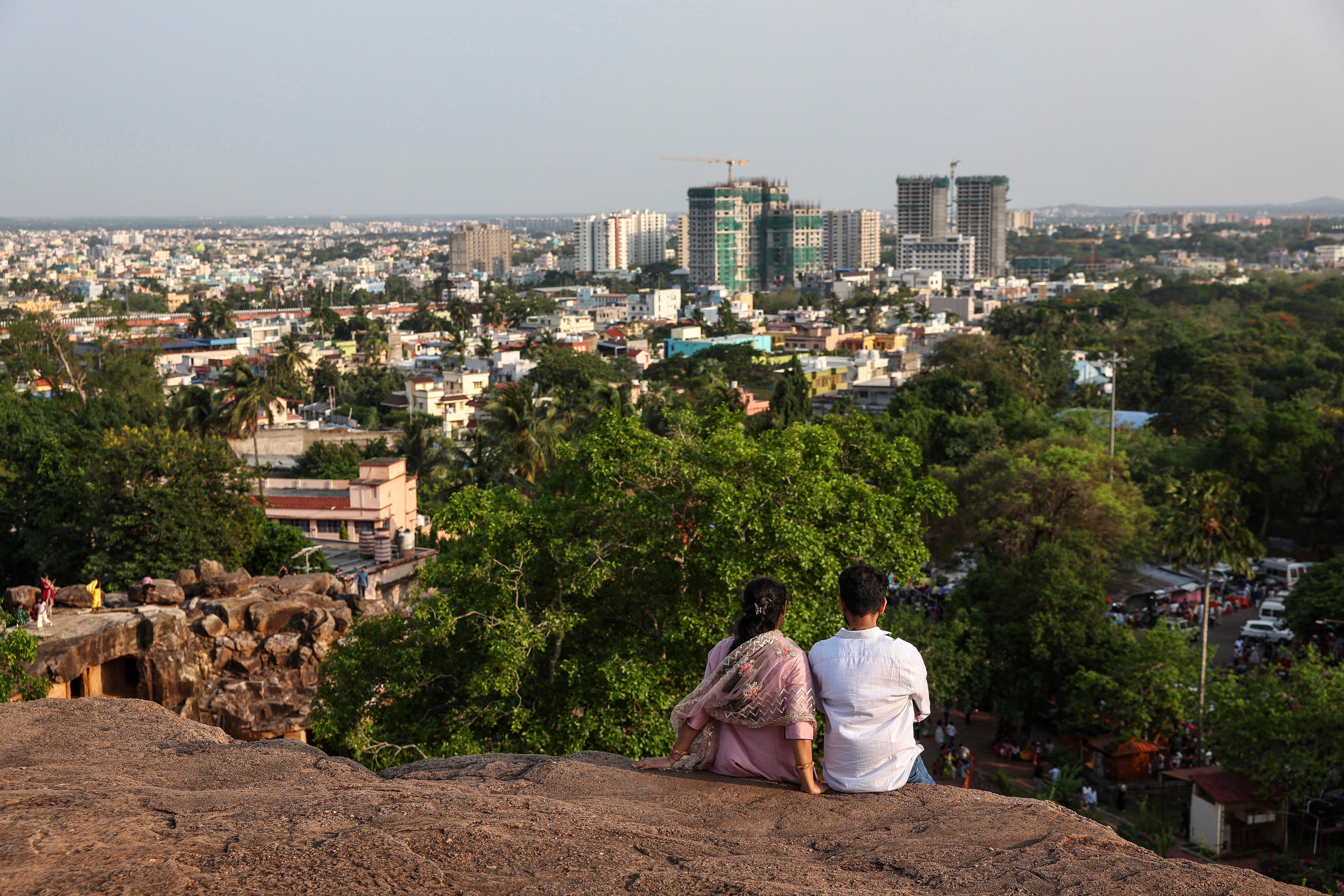
For some, the choice is about autonomy. Abhimanyu Sinha says he has never wanted children.
“That was a fairly unpopular opinion when I first used to say this when I was like 16-17,” he says. “I’ve noticed it’s sort of becoming essentially the norm now among people I speak to.”
The 28-year-old dismisses affordability as the primary explanation. “I think a lot of people hide behind claims like affordability, the rising cost of private school or housing,” he says. “In my social position, those aren’t as much of a concern. I just don’t want to tie myself down to that kind of thing.”
Looking ahead, he expects a longer and healthier life than previous generations experienced. “I don’t think that I wanna spend like… 70-80 years focused on one or two relationships, of children.”

His view reflects a broader cultural shift that researchers are observing globally. Parenthood is increasingly being weighed against other aspirations including travel, education, careers, relationships and personal freedom rather than treated as an inevitable destination.
García-Herrero says cultural changes are reinforcing the demographic transition. “This is not just economics,” she says. “It reflects women gaining agency and societies becoming more modern.”
The contrast with previous generations is striking. “When I think of myself having a kid,” Michael says, “I want that kid to have the best life possible.”
Her parents saw children as part of a social script, she says. “Their idea was that, OK, this is a rite of passage.” Today’s prospective parents often approach the decision differently. They want more involvement, more emotional awareness and more resources dedicated to each child.
Gupta sees that change in her own parenting. “Parents now are a lot more conscious,” she says. “About parenting styles, about what they are talking in front of their kids, what they’re exposing their children to.”
The result is that many families are choosing quality over quantity.
“Children have become more expensive,” says Sinha, the economist. Not only because costs have risen, she argues, but because parents increasingly want to invest more heavily in each child’s wellbeing and future.
India entered its demographic-dividend phase in 2005, when the share of working-age adults exceeded the combined number of children and elderly people. According to UN estimates, that demographic window is expected to last until around 2055.
The country’s median age remains just 29.8 years, younger than the global average of 31 and far below countries such as Britain, where the median age is more than 40. Economists argue that this gives India a rare opportunity to generate growth, create jobs and increase productivity before ageing becomes a more serious challenge.
“The real challenge will come in 15 to 20 years with a shrinking workforce and rising elderly dependency,” García-Herrero says.
“If there are fewer children born, then in about 30 to 40 years, India will have more older people who cannot participate in the labour force as much,” Sinha adds.
That raises questions about pensions, healthcare, elderly care and the future workforce.
It may also reshape politics. Southern states, which already have lower fertility rates and slower population growth, have expressed concerns that future redistribution of parliamentary seats based on population could reduce their political influence relative to faster-growing northern states.
Economists say the priority now should be making the most of India’s demographic dividend while it lasts.
Around the world, governments from South Korea to Singapore and China have spent billions trying to encourage people to have more children through subsidies, cash incentives, housing support and fertility programmes. But the outcomes have been mixed.
“No Asian country has successfully reversed a low fertility rate despite massive spending,” García-Herrero says. “South Korea poured hundreds of billions into incentives with almost no lasting effect.”
The reason, she argues, is that policymakers often misunderstand why people are having fewer children. “These programmes have largely failed because they treated low fertility as a financial problem rather than a structural and cultural one.”
In countries such as Japan and South Korea, marriage remains closely linked to traditional gender roles. Women continue to carry most childcare and domestic responsibilities, even when both partners work.
“Many young women and increasingly men, no longer see marriage as an attractive proposition,” García-Herrero says. “Women often face intense pressure to either give up or severely compromise their careers once they marry and have children.”
Sinha similarly argues that meaningful support requires more than one-off payments. “Free childcare. Free schooling. They have free healthcare,” she says of some European systems. “All these services, I think should anyway be there.”

The challenge, Sinha suggests, is not persuading people to have children through incentives but creating conditions that make parenthood compatible with modern life.
Sinha says, that means affordable childcare, better parental leave, flexible work arrangements and reducing the costs of housing and education.
For Gupta, it means rethinking expectations around work and caregiving. Even in households committed to equal parenting, she says, mothers still shoulder a disproportionate burden. “When you give birth, you are the one who’s basically going through pregnancy,” she says. “You are the one delivering the child. You are the one who has to breastfeed the child.”
After becoming a mother, she stepped away from her family’s business and began considering a new career path. “There’s definitely a sacrifice,” she says.