



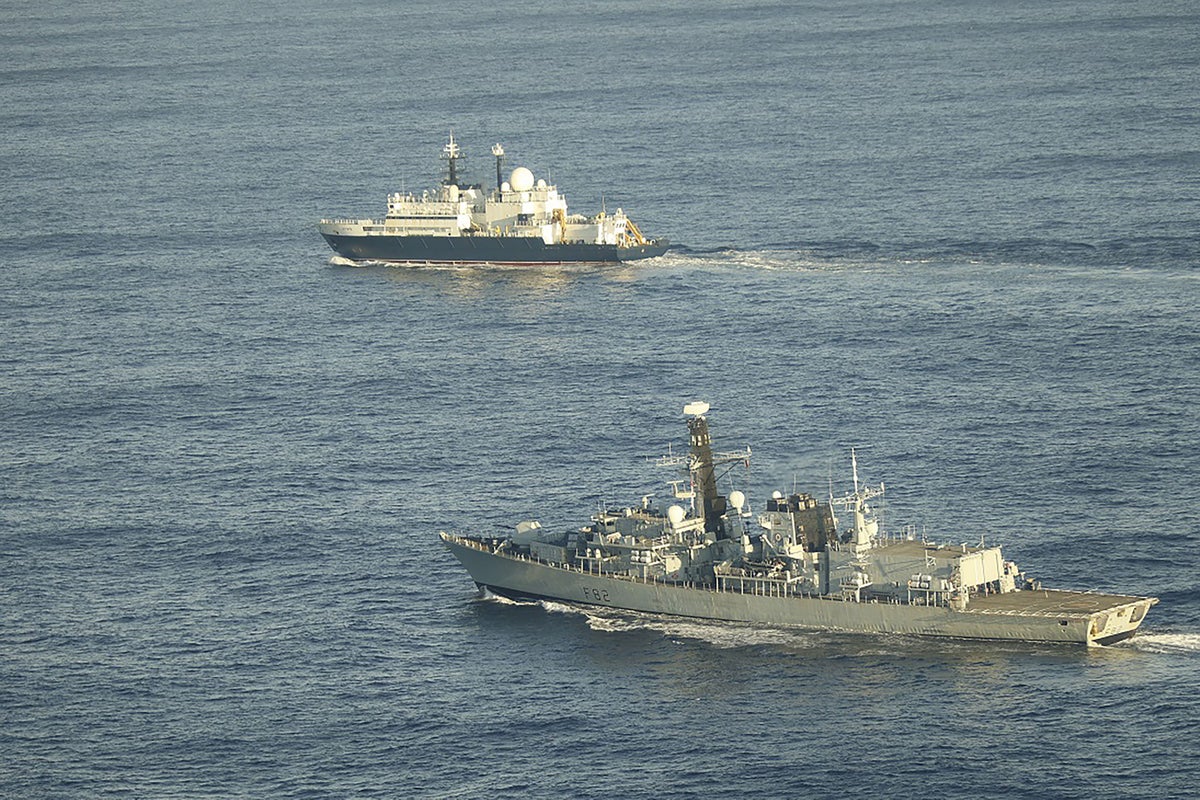
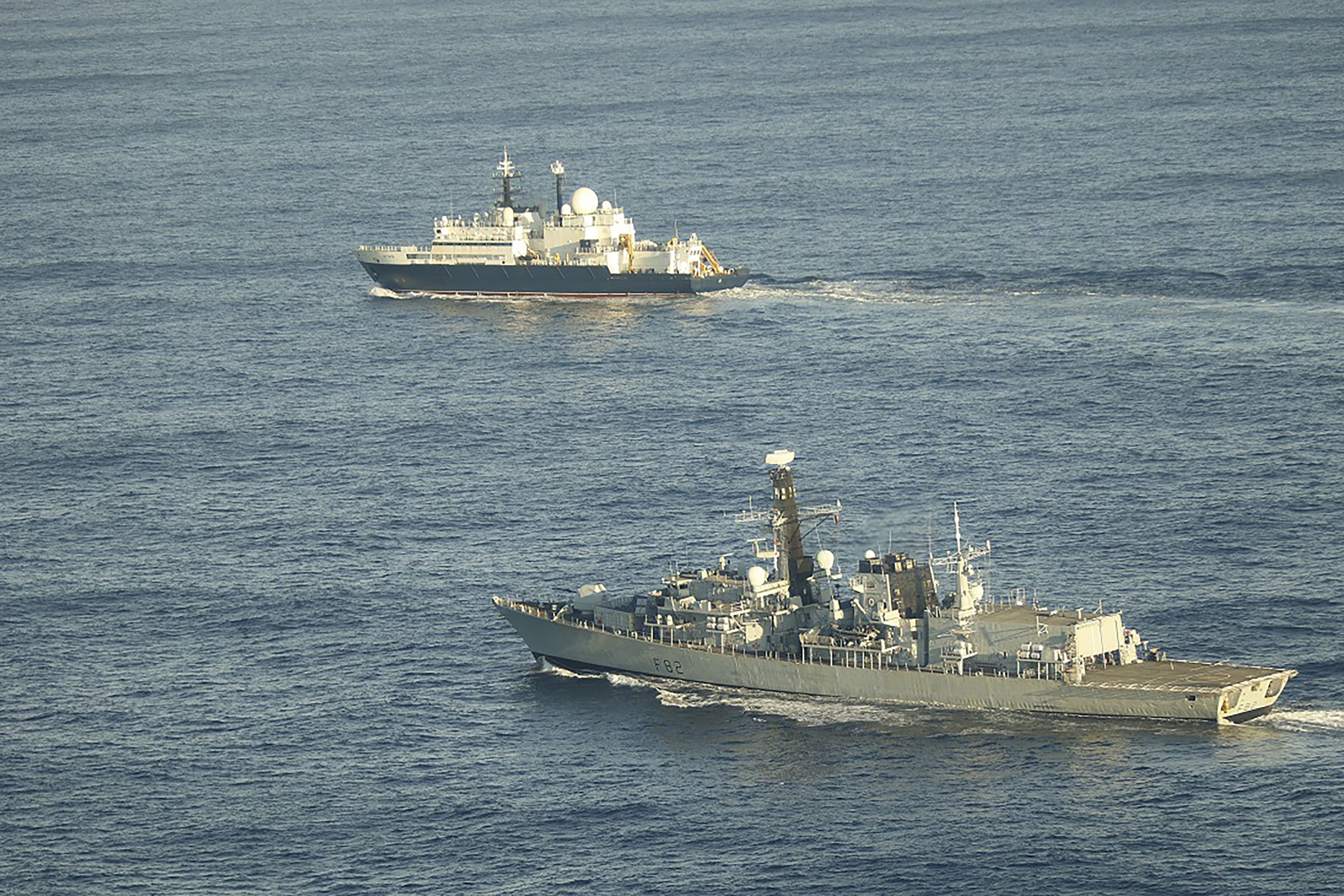
The UK must take more risks to “stay ahead of our enemies” as Russian incursions into British waters soar, the head of the Royal Navy has warned.
In a speech in central London, First Sea Lord General Sir Gwyn Jenkins said that Russian ship sightings have “jumped” by a third in two years and the UK was forced to respond dozens of times last year alone.
In response, he warned the UK had to invest not only in “the technologies of the future” but also have an “entire mindset” shift.
“If we are to stay ahead of our enemies, that requires us to take more risk, to ruthlessly remove unnecessary regulations and other barriers holding us back, so that we can cut the time it takes between trialling new systems and putting them to sea,” he said.
He warned that “things will only accelerate from here. The pace of technological change will never again be as slow as it is today”.
And he said that recent events in the Middle East, where Donald Trump’s Iran war led to the blockage of the crucial Strait of Hormuz, had hit home that “the sea and our ability to control it is central to our prosperity, our resilience and our very survival”.
His call comes just weeks after former defence secretaries and Labour grandees threw their weight behind a former Nato secretary general who warned that the UK’s security was “in peril” as a result of the “corrosive complacency” of Sir Keir Starmer.
George Robertson, a former Labour defence secretary who was appointed by the prime minister to write the government’s Strategic Defence Review (SDR), also accused “non-military experts” in the Treasury of “vandalism” and claimed Sir Keir was unwilling “to make the necessary investment” in Britain’s defence.
The first sea lord also announced that the first navy-wide wargame to test the potential of its new “hybrid” approach was held last month.
In his speech at the Royal United Services Institute defence think tank, Sir Gwyn said: “The wargame provided clear evidence that our hybrid approach will deliver a significant increase in war-fighting capability.
“Our hybrid navy generated a substantial increase in combat mass as measured by weapons and sensors, whilst also providing added flexibility and tactical choice for commanders.
“Our missile capacity increased threefold to the level necessary to win a contest in the North Atlantic.
“Across all our key missions, be it deterrence, carrier strike groups, amphibious strike groups, or integrated air and missile defence, we saw our readiness to respond improve markedly.”
He also said he was determined to leave the Royal Navy “much stronger than the one I inherited”.
He said: “By the time I depart in 2029, I am determined that the Royal Navy will be much stronger than the one I inherited, a fleet fit for 21st-century warfighting.”