



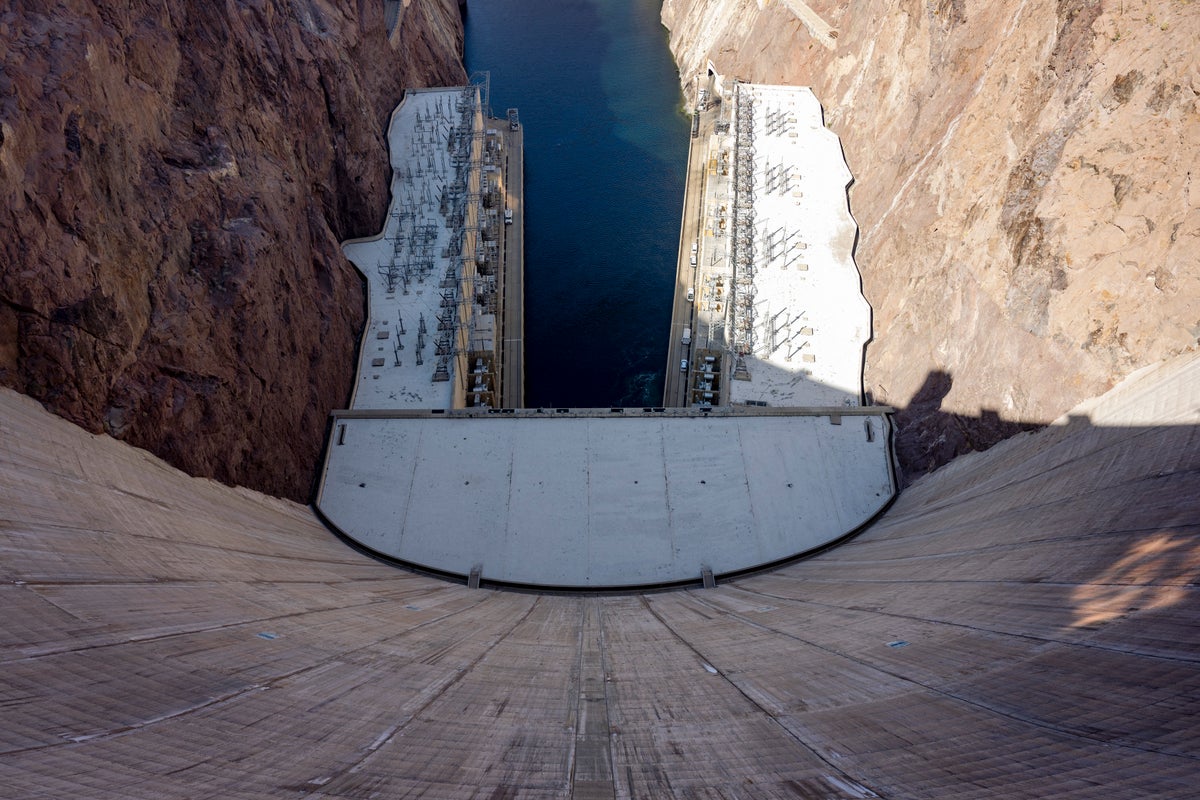
The Hoover Dam will generate up to 40 percent less power this year as federal and state officials scramble to protect the Colorado River system from a historic drought driven partly by climate change.
For nearly a century, water collecting in Lake Mead and rushing out through the dam’s turbines has helped power large swathes of Nevada, Arizona, and southern California, including Las Vegas and Los Angeles.
But on April 17, the U.S. Bureau of Reclamation announced that it will be forced to reduce water flows from Lake Powell on the Arizona-Utah border, about 300 miles upstream, in order to stop that reservoir’s Glen Canyon Dam from shutting down completely.
That in turn will further sap Lake Mead’s already historically low water level, potentially leaving some of the Hoover Dam’s turbines high, dry, and unable to spin.
“Long-term drought has reduced Colorado River system storage to about 36 percent of capacity, and the combination of the lowest snowpack on record and record-breaking March heat has further intensified drought conditions across the Basin,” said the bureau.
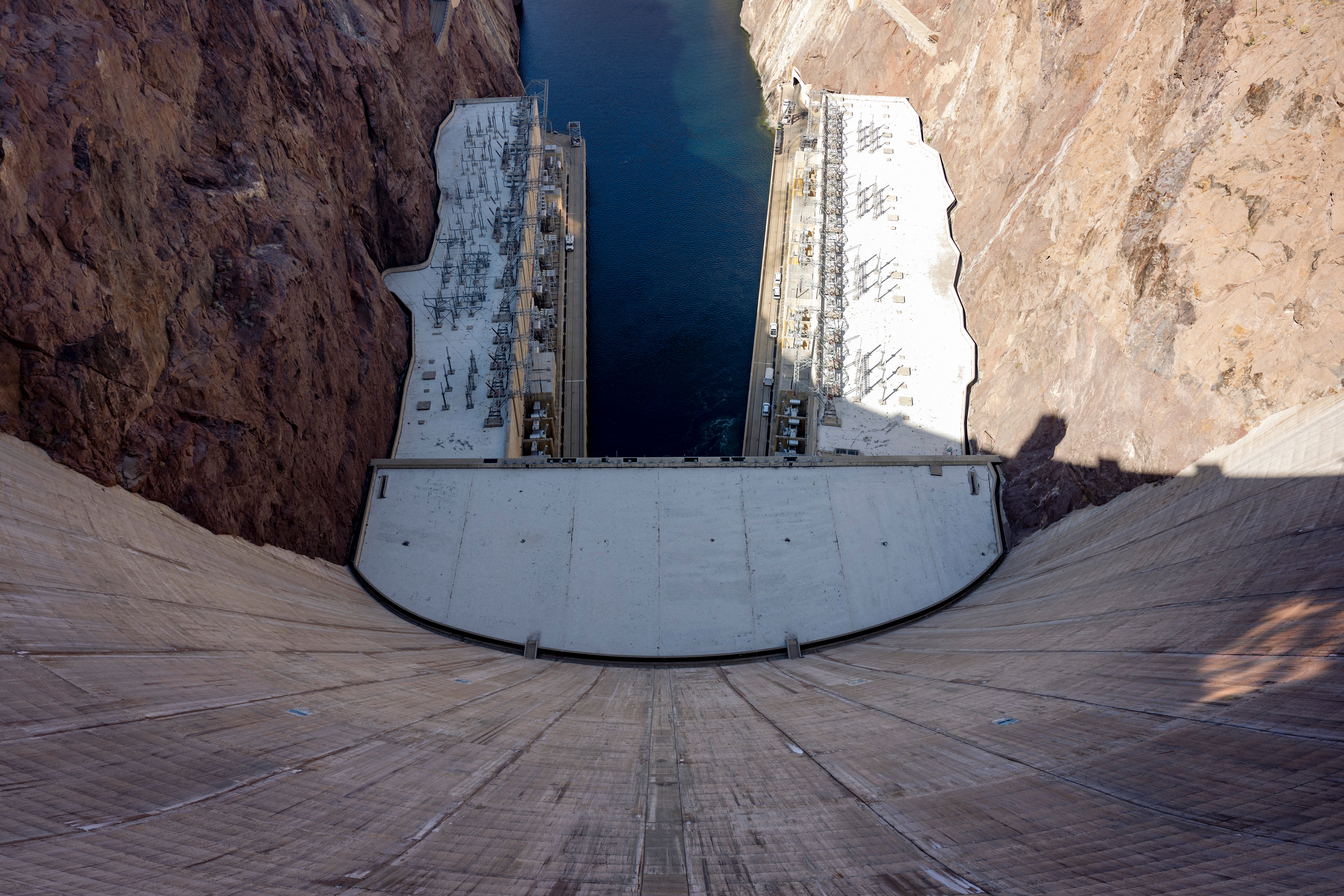
“These compounding factors are creating elevated risks to essential water and power infrastructure that supply water to more than 40 million people, underscoring the need for immediate action.”
The bureau then acknowledged that reduced releases from Lake Powell “will accelerate the downstream decline of Lake Mead, with the potential for up to an additional 40 percent reduction to Hoover Dam’s hydropower generating capacity as early as this fall.”
It added: “Reclamation and its lower basin partners are collaborating to conserve water in Lake Mead and maintain its water levels, even as releases from Lake Powell are planned to decrease.”
Officials are growing more concerned about low water levels in the Colorado River, which recently saw one of its driest years in decades, CalMatters reported last August. Experts are particularly concerned about losses in Lake Mead and Lake Powell.
Doug Kenney, chair of the Colorado River Research Group, told The Colorado Sun last year that the basin is “out of time, the crisis is no longer theoretical.”
Lake Mead reached a record low in 2022, but it’s now predicted to fall more than 8 feet lower in the next two years, due in part to the flow reductions at Lake Powell.
That will exacerbate an ongoing issue with Hoover Dam’s 17 turbines. The lower waterline means that only five of them can currently generate power, and one of them is undergoing repairs.
Less power from the dam will force Las Vegas and other areas that depend on it to buy electricity on the open market, often at a higher price.
“Unfortunately, those prices are passed on to our customers,” southern California water official Shane Chapman told The Las Vegas Review-Journal.
One saving grace, he added, might be California’s thriving solar power and battery storage industry, which last year beat natural gas to become the Golden State’s biggest energy source.

