


A significant depot from the Second World War’s infamous “Death Railway” has resurfaced in western Thailand, having lain submerged beneath a reservoir for decades.
The unexpected reappearance of Nithe Station has prompted a race against time for researchers eager to survey its remnants.
Thousands of Allied prisoners of war and Asian labourers toiled and died constructing the railway, a supply route through mainland Southeast Asia for the occupying Japanese forces.
The Electricity Generating Authority of Thailand recently drained the Vajiralongkorn Dam reservoir for maintenance, revealing the station.
Historians are now seizing this rare opportunity to study the Kanchanaburi province site for artifacts and to verify details.
However, time is limited; the dam’s maintenance concludes in August, and Southeast Asia’s rainy season threatens to begin refilling the reservoir.
Nithe was a major station along the 415-kilometre (257-mile) railway that connected Thailand, known at the time as Siam, with Myanmar, then known as Burma.
The railway was built by about 60,000 Allied POWs, mainly from Australia, the United Kingdom, the United States and Indonesia, which was known then as the Dutch East Indies, as well as hundreds of thousands of Asian labourers, whom the Japanese called römusha.
More than 12,500 of the POWs and 75,000 laborers died during construction, which inspired the widely used nickname “The Death Railway”.
The railway was featured in the classic 1957 film The Bridge on the River Kwai and the 2013 movie The Railway Man.
It also was the focus of the award-winning novel The Narrow Road to the Deep North, which became a 2025 miniseries starring Australian actor Jacob Elordi.
Researcher finds dog spikes and bridge staples
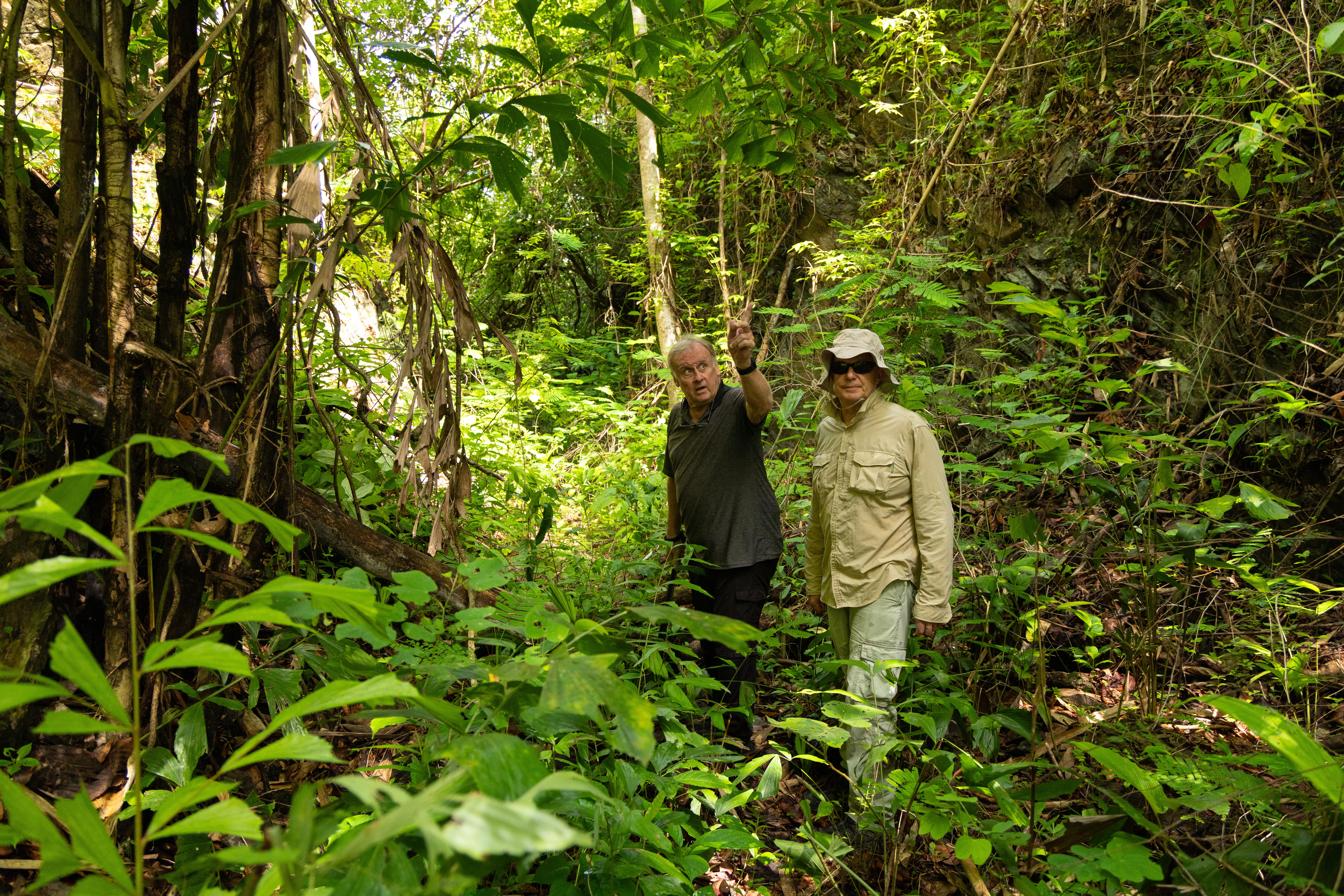
Independent Australian researcher Martyn Fryer flew from Perth to see the site. His grandfather died as a POW working on the railway after his 1942 capture in Singapore.
He stomped through muddy bogs in sweltering 38 Celsius (100 Fahrenheit) heat to “understand what those lads went through and to appreciate the country and the terrain that they endured”.
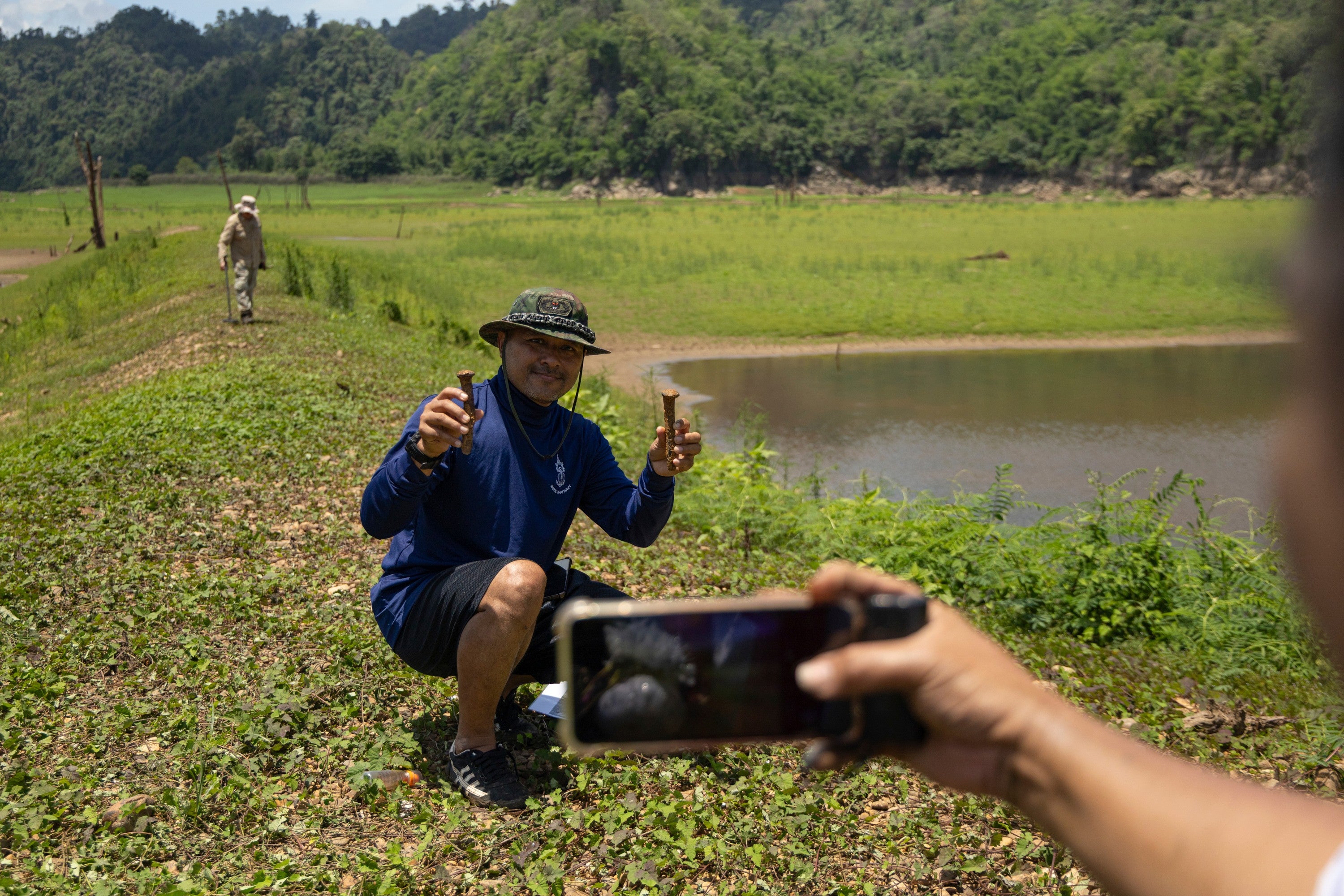
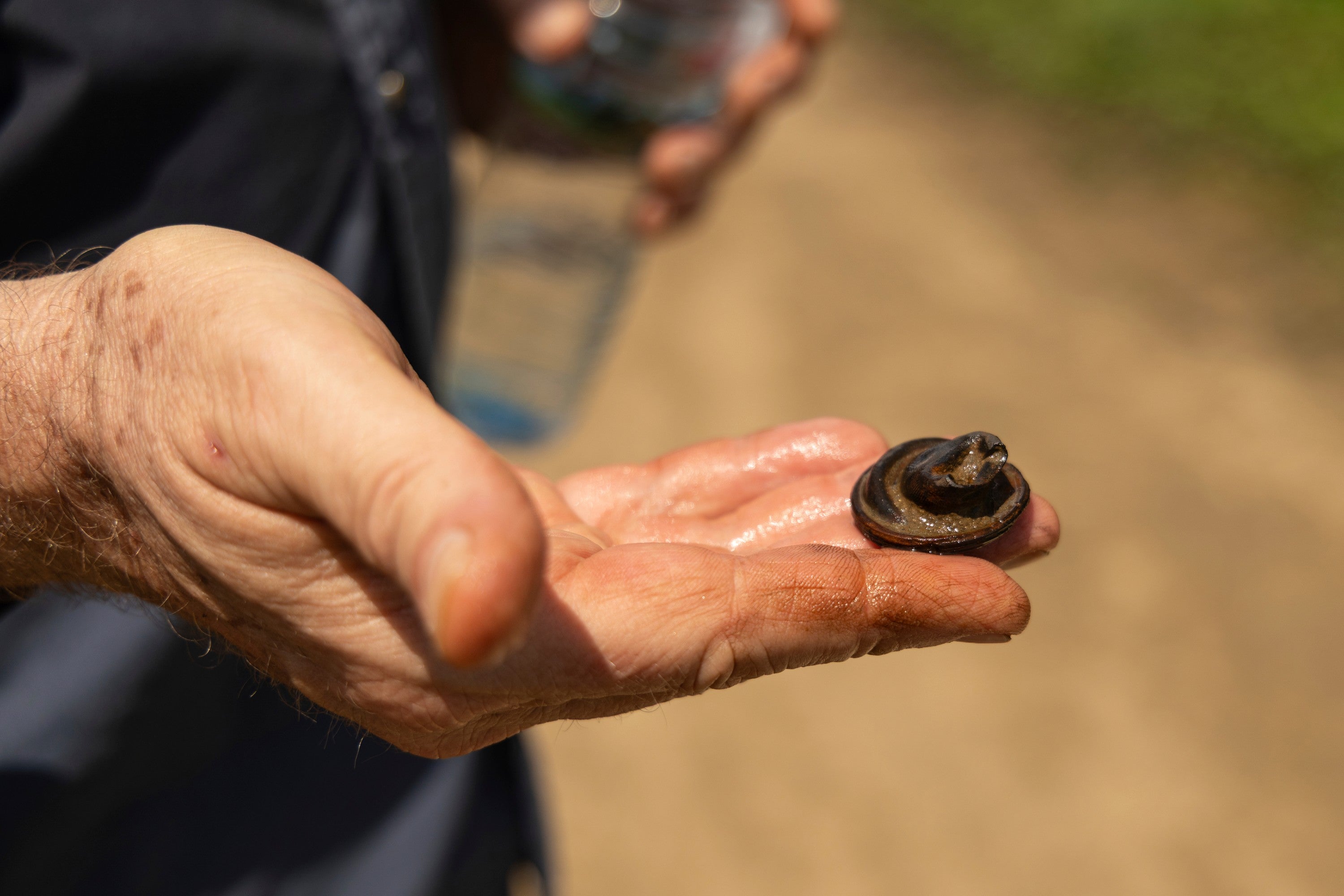
Mr Fryer, who wrote a book about his grandfather’s regiment, titled From the Woodlands to the Jungle, scanned historic railway embankments with a metal detector. He found iron dog spikes, bridge staples and other war artifacts.
“I’ve been to Nithe Station three times in the past, but the water level has always been too high to actually really appreciate the fantastic offerings that it has with the remaining infrastructure and the layout of the railway itself,” Mr Fryer said.
To locate POW camps in the area, Mr Fryer compared wartime aerial photographs of Nithe from the National Archives in London with hand-charted maps brought by Andrew Snow, a researcher with the Thailand–Burma Railway Centre.
Like Fryer’s grandfather, Mr Snow’s father was captured in Singapore and forced to work on the railway.
Southeast Asia’s dry season often exposes bits of the station. But the water levels hit a new low this year and drained so quickly that vegetation has not yet regrown, making Nithe easier to study, Mr Snow explained.
“It is a good opportunity for us to do some surveying,” he said. “When you’re dealing with relatives of people that worked on the railway, it’s always nice to be able to show them the areas that maybe their relative worked on.”
Hundreds of Thai visitors have traveled to the area to see the “rare incident”, said Kitti Laokham, a 47-year-old local resident whose posts of Nithe have racked up 32 million views on social media.
Channarong Noimala saw the videos online and motorbiked 350 kilometres (217 miles) northwest from Bangkok to see the exposed station.
“At least for those who died here, no matter whether they are labourers or prisoners of war, we can remember them.”
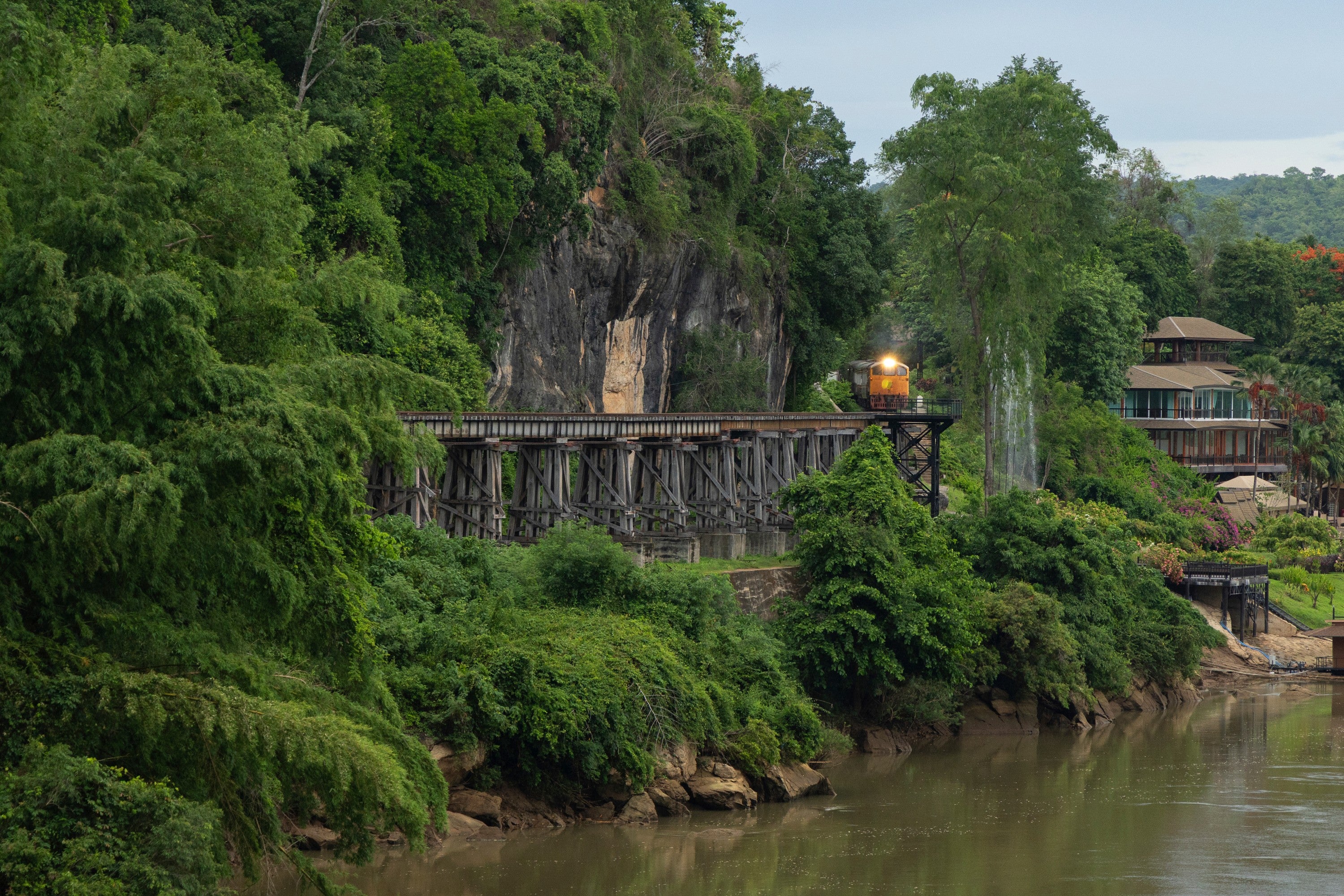
Hellfire Pass
About 100 kilometres (60 miles) of winding mountain roads southwest of Nithe is Hellfire Pass, a brutal section of mountain where hundreds of POWs died.
The Hellfire Pass Interpretive Centre, funded by the Australian government, received a record-breaking 169,000 visitors last year, which also marked the 80th anniversary of the end of World War II.
“As time passes, places like Hellfire Pass become even more important,” said Mick Clarke, an Australian Army veteran who manages the centre. “They keep personal stories alive and help future generations understand the cost of war.”
Around 22,000 Australians became POWs during the war and about 13,000 worked on the railway, with 2,800 dying during construction, according to Australia’s Department of Veterans’ Affairs.
“For many Australians, Hellfire Pass is deeply personal,” Mr Clarke said. “It connects families and the nation to a difficult but important chapter of wartime history.”

.png?trim=0,0,0,0&width=1200&height=800&crop=1200:800 "Well Enough | Ed Gamble on body transformations: ‘Your life is horrible’ – UK Times")