

Fes, Morocco, is a city where culture, beauty, and generous, homely feasts converge, but it is the pervasive sense of meticulous dedication that truly defines its character.
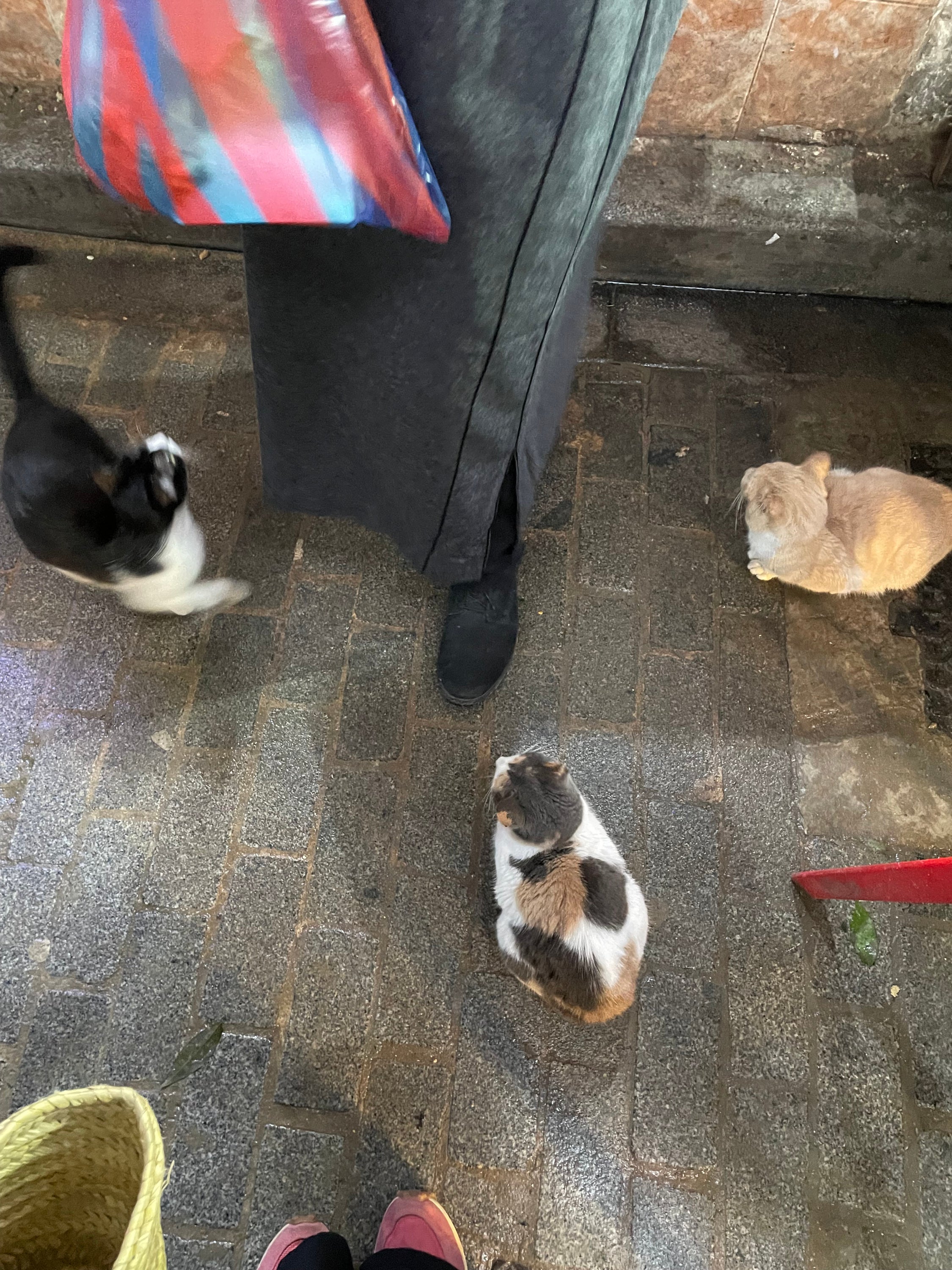
This commitment to detail is immediately apparent, even in the most unassuming corners. Outside a local butcher’s, three scrawny cats patiently await scraps, weaving through shoppers’ feet with an unwavering focus that mirrors the city’s own.
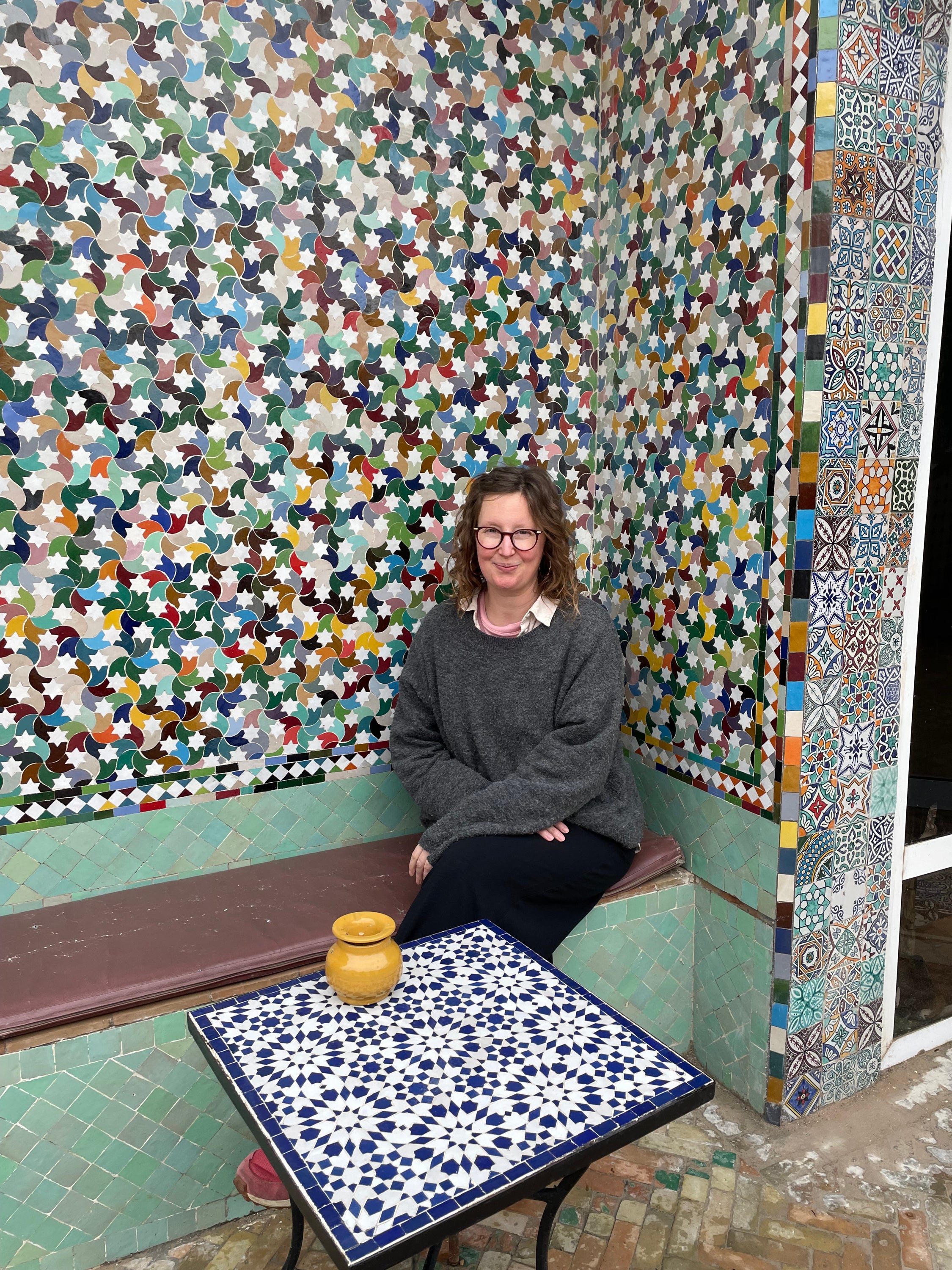
From the painstaking creation of intricate, thousand-piece mosaics – often crafted upside down and blind – to the specialised souk vendors, each dedicating themselves to a single product, be it vast baskets of dates, glistening olives, or delicate sheets of handmade filo pastry destined for savoury pastilla pies.
Even the ritual of pouring Moroccan mint tea, a silver kettle held high as a single crunchy sugar cube is dropped into the glass, speaks to a culture that cherishes precision and ceremony. In Fes, time is not merely spent, but invested – in the beautiful, the important, and the undeniably tasty aspects of life.
Considered a capital of crafts, and a hub of cultural, spiritual and political stability, Fes was the capital until the French switched it to Rabat in 1912.
Dubbed Morocco’s ‘second city’, Fes is often passed over in favour of the glitzier, slightly more accessible Marrakech, which has more flight routes and articles dedicated to it.
But Fes has been named by GetYourGuide as one of 2026’s ‘hidden gems’.
It’s clear the city is on the up, and these kittens seem to know it, even though today they’re dodging drips of rain sneaking through the criss-crossed lattice of the souk’s cedar roof.
Everyone is confused by the weather. At breakfast in our hotel, Riad El Kadi/La Maison Bleue, a traditional riad with a courtyard open to usually blue skies, we tear shards off crispy, roti-style breads and slather them in local fig jam (OK, Nutella too) as they bring in outdoor heaters. It is unseasonably chilly for mid-Feb, rather than the expected 18C.
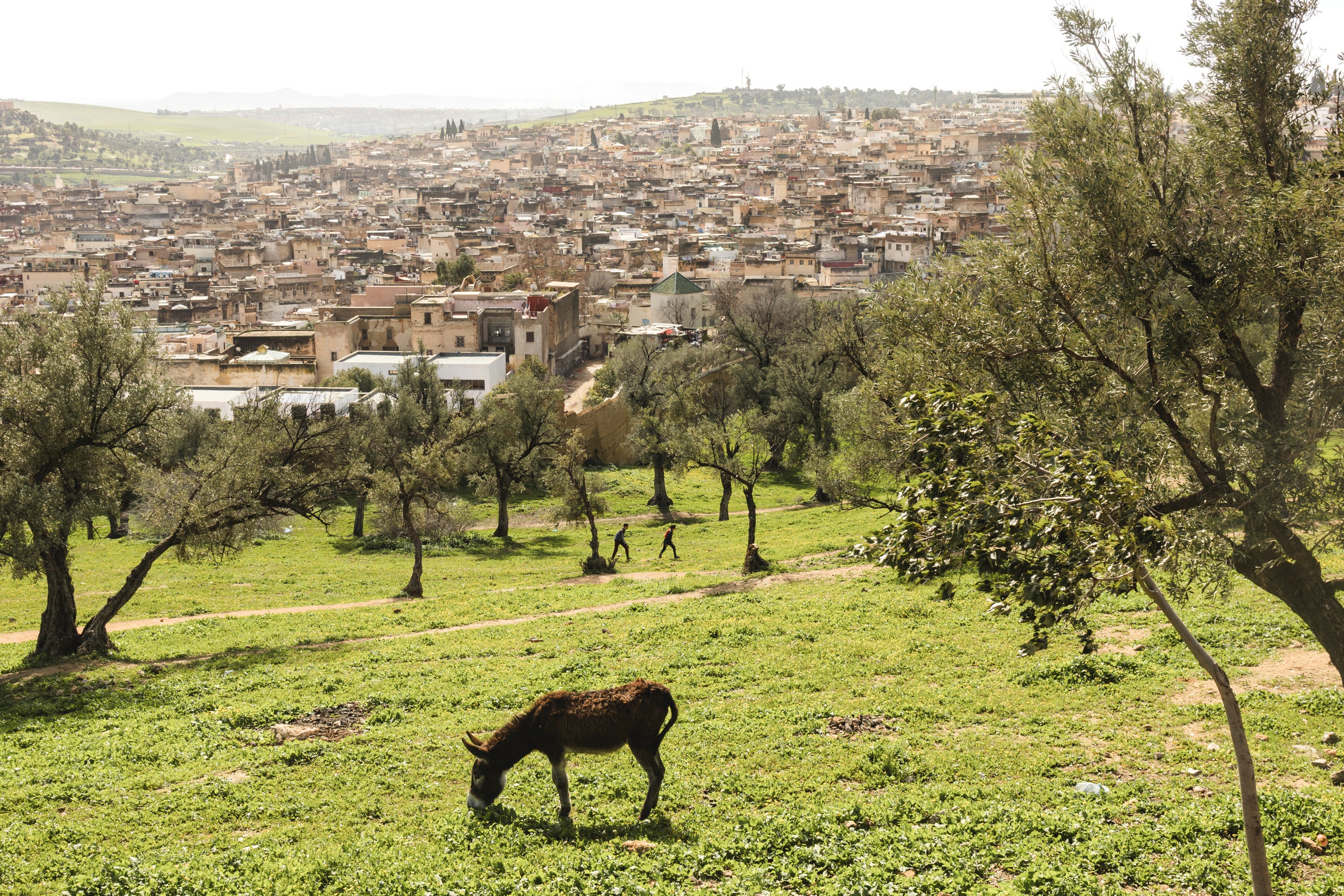
The sky glimpsed between Fes’ medieval, UNESCO World Heritage medina’s narrow walkways – some barely the width of a person – stays firmly grey, the clouds thick and white. A storm sees the wind whipping the frilly tops of palm trees like they’re in a salad spinner, and the rain pours through our riad’s roof.
The staff bemusedly sweep puddles as we’re served dates stuffed with walnuts and rose water-scented milk, in a plush lounge overlooking a turquoise pool you’d normally stick your feet in.
It must be annoying when the season Fes unfurls for tourism is February to May, whereas Marrakech’s visitor window is much longer.
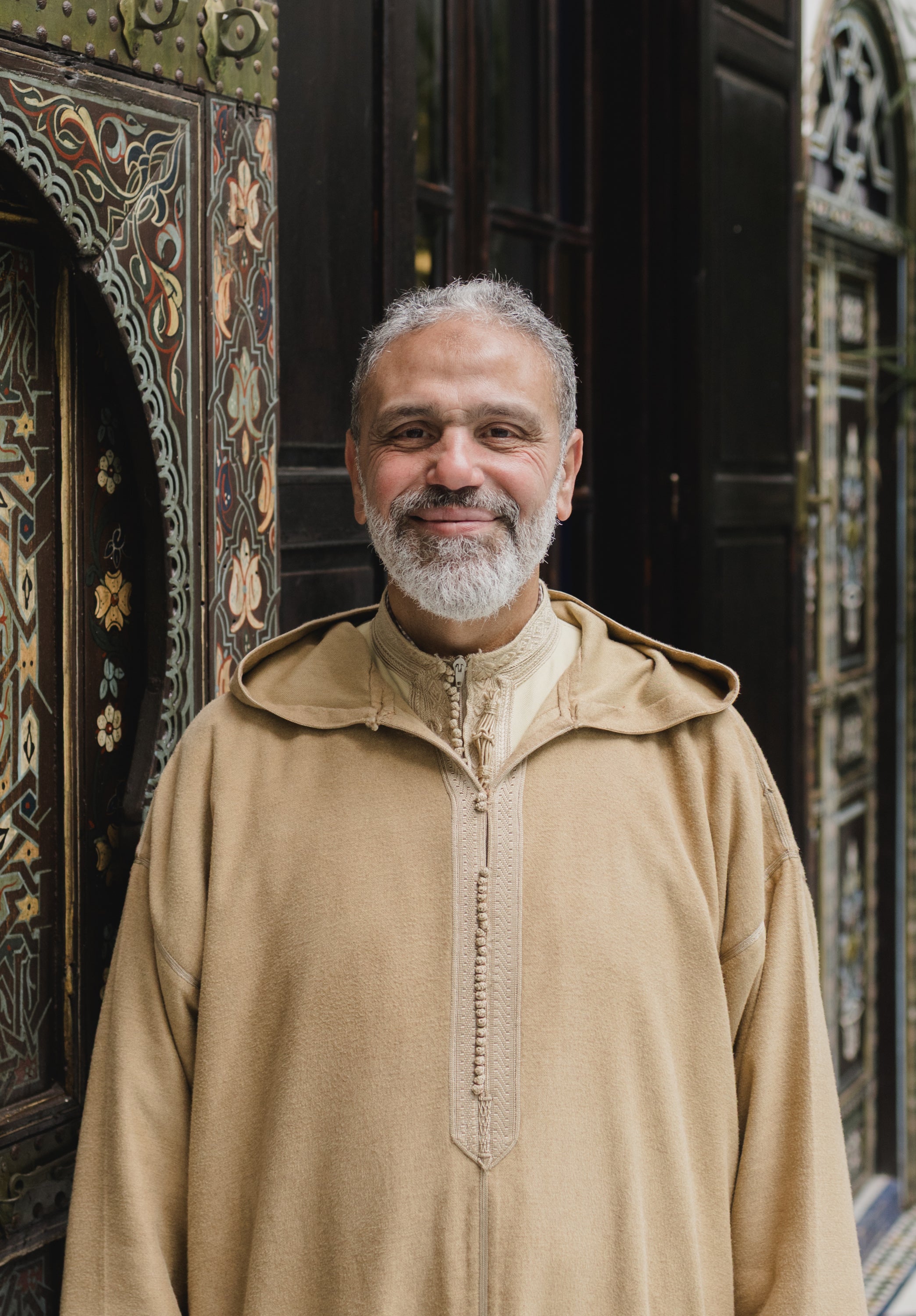
Our walking tour guide, Fatah, later tells us he hasn’t seen Fes and the surrounding countryside this green and lush since his childhood.
“Spring was only a month last year,” he says, alluding to how swiftly the heat can spike, but the fact the hills enclosing the city aren’t scorched to ochre dust already, is unusual.
But beautiful too, the greenery offsetting the terracotta shades of the Arabic-style medina’s labyrinthine passageways, all 9,000 of them.
There are no cars in the medina and 500,000 people live within its 14 main gates.
“There is everything you need in the medina, no need to go outside,” says Fatah with a proud smile.
Which is why, like the hungry cats, we are queuing with Muhammad for supplies to help cook a traditional Moroccan feast of pastille, tagine, lamb topped with crisp, fried aubergine, a sticky carrot salad, tangy olives with preserved lemon, and rich merguez sausage in a tomatoey sauce.
Muhammad, a plaster sculptor, and his wife Jessica, run a homestay within the medina, where they host souk shopping and cookery classes. He takes us through the souk, noting: “You shop where your parents shopped.”
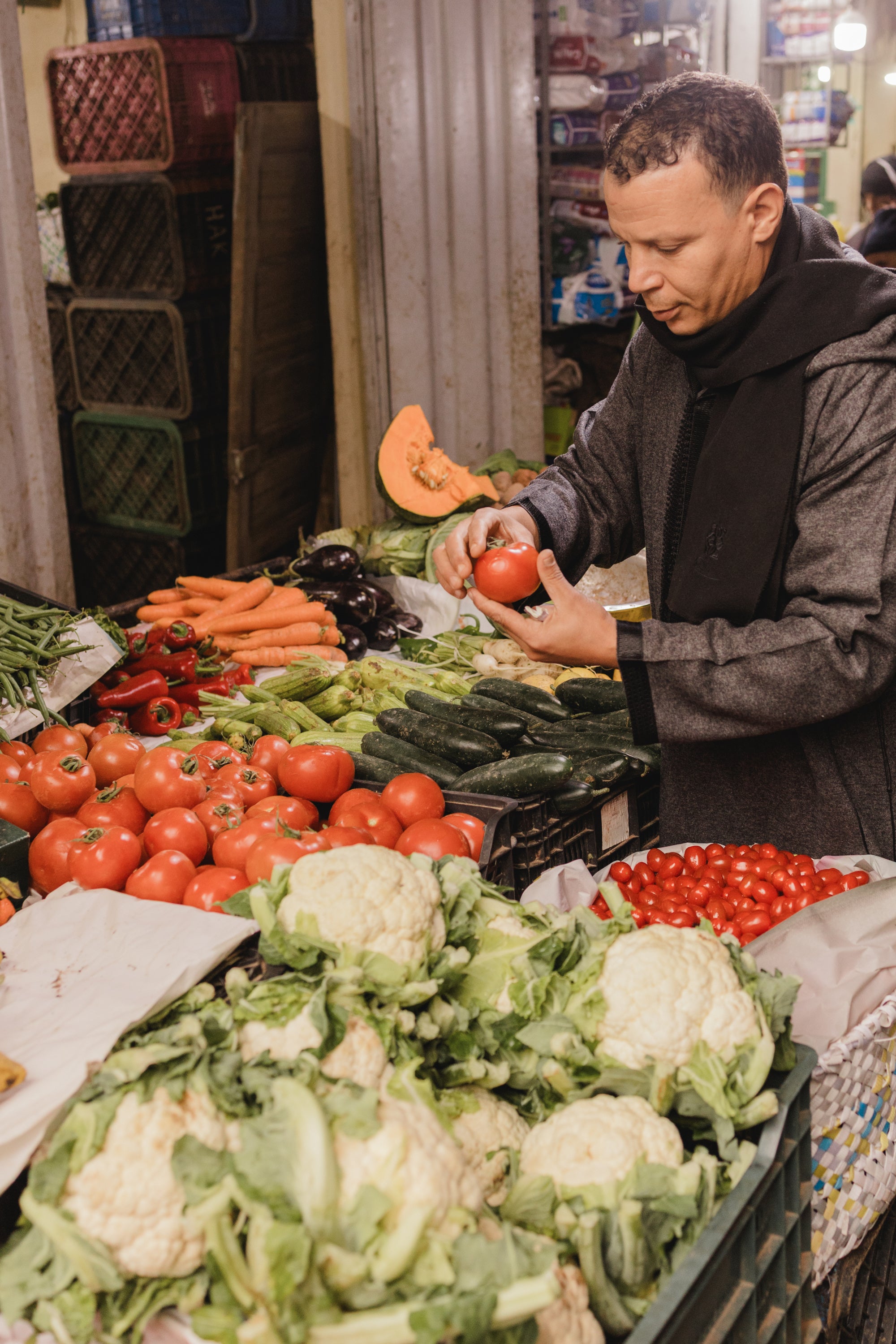
We pick plump aubergines and even plumper dates. Muhammad says Medjools are the absolute best, and can tell the difference with his eyes closed.
Every little store seems to have the Liverpool v Man City game blinking away on the telly, while live chickens cluck on shelves before being slaughtered and popped in a centrifuge (basically a washing machine drum) that spins and plucks them.
The path becomes clogged with people around a shop that grinds almonds. Ramadan is coming, and the sweet cookies synonymous with the Islamic month of fasting require a lot of almonds.
The souk doesn’t feel remotely touristy; you’re not accosted to buy things, or pulled into shops. In fact, you’re more likely to be bustled out of the way gently by older women wanting to get their shopping done, and their almonds ground.
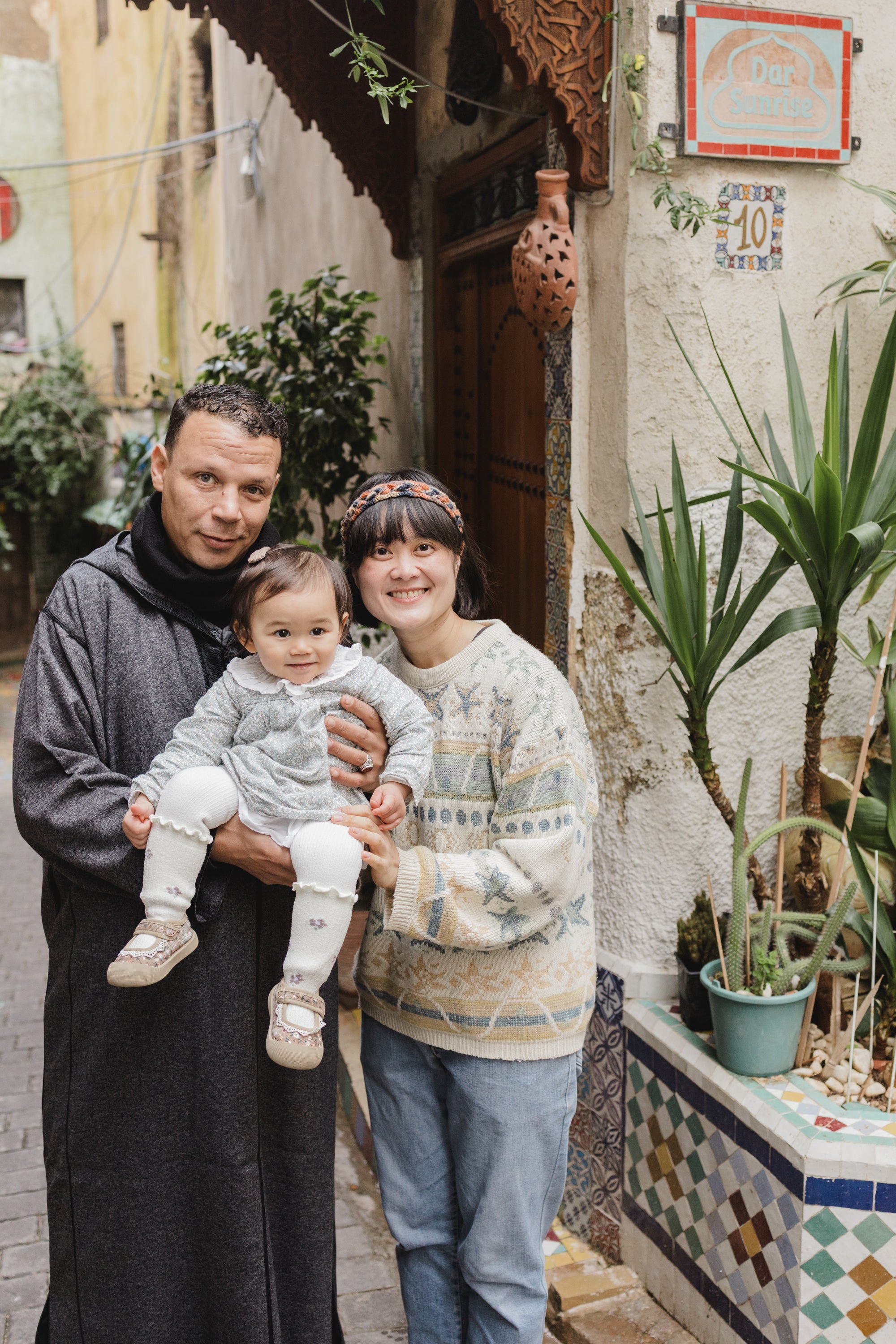
Baskets full, Muhammad grins at us: “Let’s go destroy the kitchen.”
Not only do we learn how to build up a classic Moroccan tagine (make a pyramid of ingredients, and then realise that couscous is not at all boring), but I discover one tablespoon of honey in Fes is three tablespoons in the UK, that you can never have too much cumin or cinnamon, and you must kiss your hand before adding a pinch of salt to the pot.
We dance around the kitchen playing maracas, then eat, family-style, in a quest for what so many people tell us is, grabbing their bellies with a laugh, a ‘tagine baby’.
Cooking in Muhammad and Jessica’s kitchen is as therapeutic (although more raucous), as creating mosaics at Art D’Agile.
“Mosaic is the most important [craft] unique to Fes,” says Mourad, who shows us round the pottery atelier.
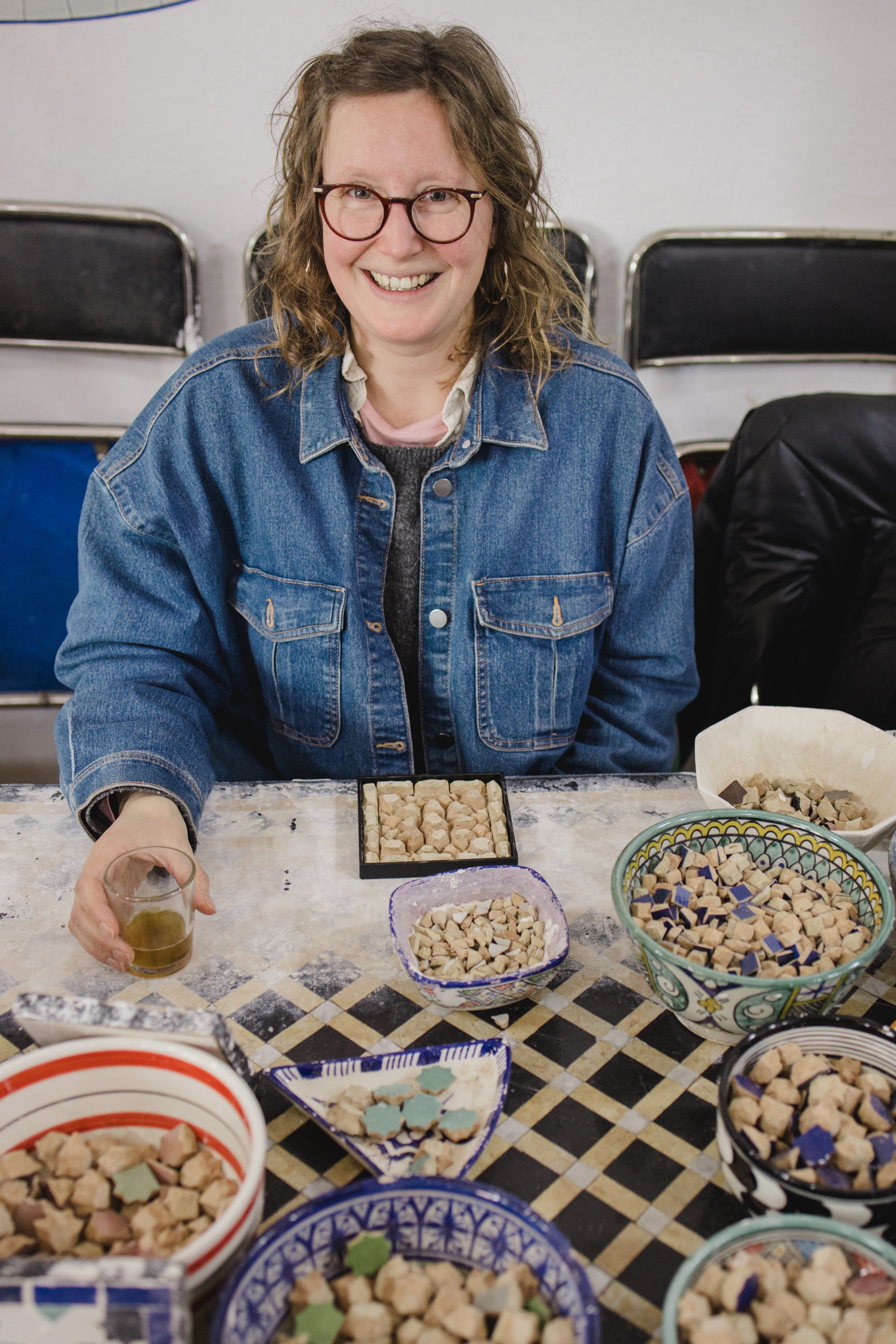
We watch craftsmen cutting tiles made from local clay, chiselling them into zellige (tiny shapes) by hand.
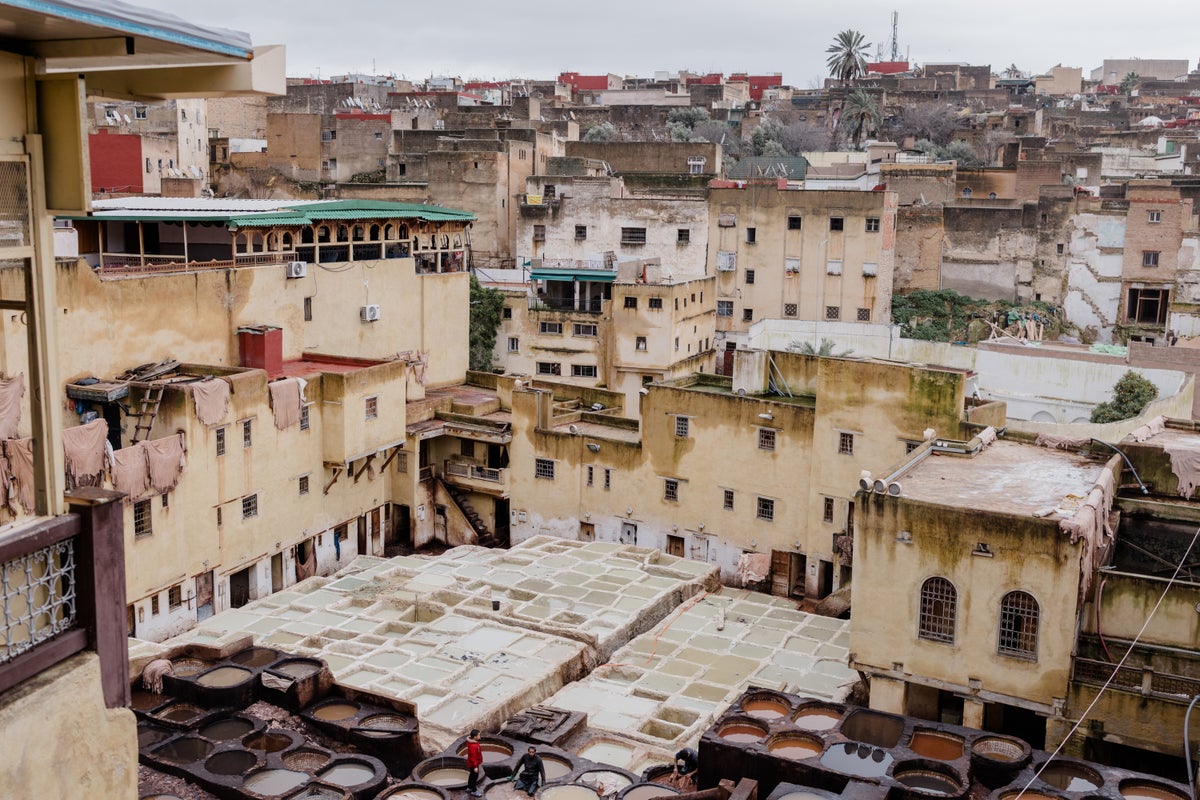
It’s methodical, painstaking work that hinges on incredible patience and focus, so they work short hours, much like the men in the medina’s oldest tannery, who feed animal skins into vats of lime, transfer them to jacuzzi-shaped pools and dye and pummel them while wearing waders.
The work is as intense as the smell – we’re given fronds of mint to hold under our noses when it gets too much – so the men do three to four hour days.
Back in the atelier, once cut, the tiles are used to create bespoke geometric designs, inspired by algebra and algorithms, made by memory, and found all over the city.
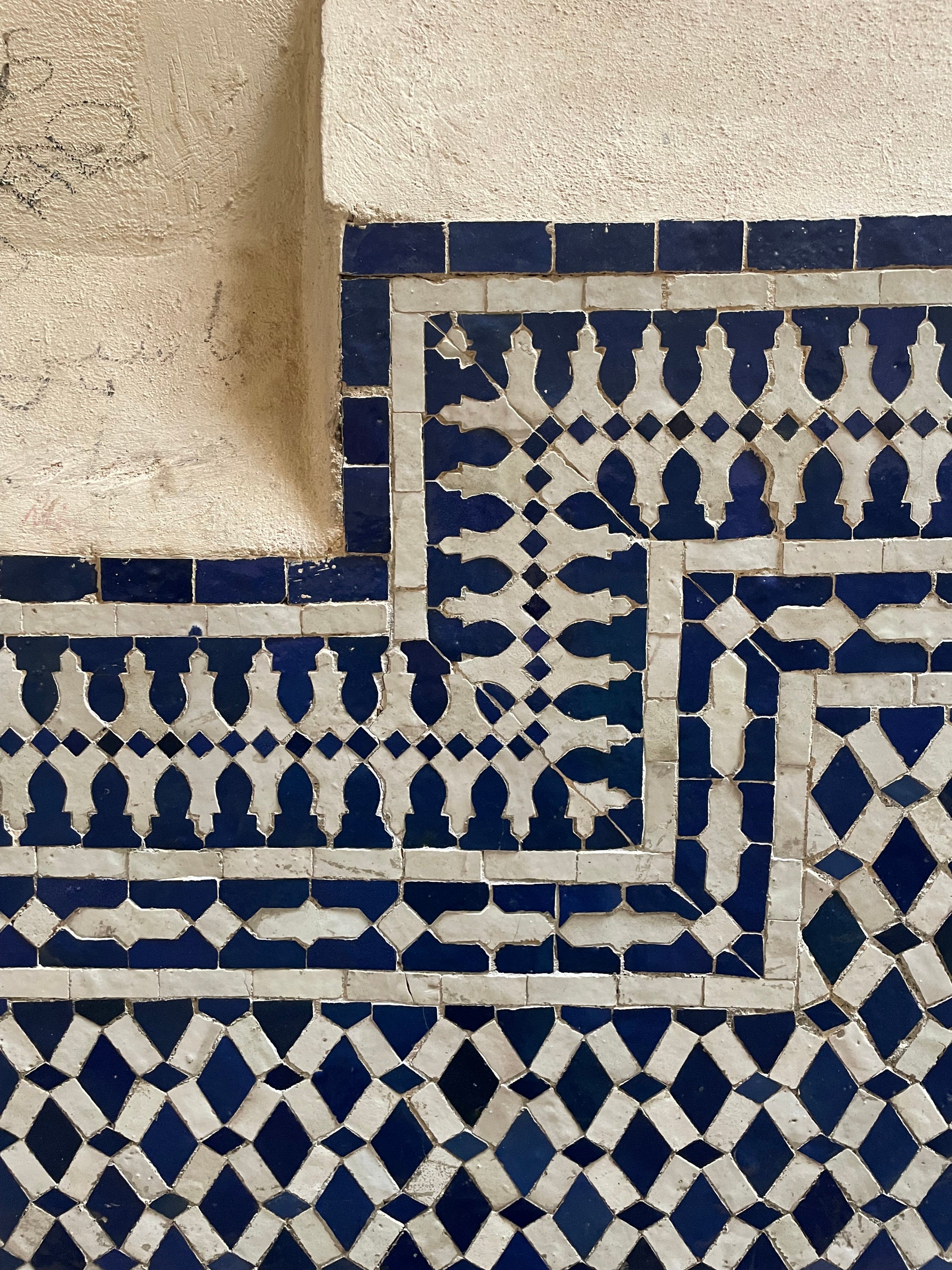
Mosaic acts like aircon, cooling homes when summer temperatures can hit 48C.
A master has to remember the colours they’ve used and pattern they’re designing, without being able to check they haven’t gone wrong, with large mosaics taking almost a month to finish.
“Perfection is only for God, sometimes we make mistakes,” says Mourad wryly.
Just making a small mosaic has my brain tangling, trying to keep track of what colours I’ve used where.
But the tiles clink pleasingly as I arrange them, and finding the perfect-sized tile to fit a slot becomes so satisfying I eventually enter a state of deep calm, rather than worrying I’ve messed up.
The result is actually pretty charming.
On our meander through the medina, Fatah explains that the external walls are simple, but the mosaics and furnishings inside people’s homes are something else.
“Modesty and poverty on the outside, on the inside you pay attention to the beauty,” he says solemnly.
But I’d argue Fes is full of beauty, right out in the open.
How to book
Return flights with Ryanair from London STN to Fes, from £140. Deluxe rooms at Riad El Kadi/La Maison Bleue, are from 2500 MAD (£201) per night. Deluxe rooms at Hotel Sahrai, are from 3500 MAD (£280) per night.
Experiences with getyourguide.com, include Pottery Workshop with Guided Tour (£35pp), Fes Souk Tour & Traditional Home Cooking Class (£48pp), Fes Guided Tour (£13pp for 3.5 hours). Visit getyourguide.com for more information.