


“Hold on tight”, warns Stephen Bath as he slowly notches up the throttle on his blue and white speedboat to send us gliding across the calm waters of Christchurch Harbour.
It’s a cold, misty January morning, but quickly into view comes the postcard image of dozens of colourful wooden beach huts perched on the beachy headland.
Such a high-speed marine arrival for a news job may seem unorthodox. However, at Mudeford Sandbank, where huts sized from just 150 sq ft go on the market for up to £575,000, nothing is quite ordinary.
Unlike other UK coastal spots with beach huts, here, on the Dorset coast, at the edge of the sprawling Bournemouth Bay, the isolation and surrounding water views create a remote village-like community.
.jpeg)
The huts do vary widely in appearance. Some are discoloured, with wood clearly rotting, while others are luxury in comparison, kitted out with solar panels, new felt roofs and modern interiors to match a Chelsea penthouse.
And their appeal, thanks in part to a Covid-wave of city-living sunseekers looking for a slice of seaside life, has seen prices balloon, from just a few thousand pounds in the 1980s to more than half a million pounds today.
But all is not well.
.jpeg)
“It’s so unjust we are being targeted,” says Mr Bath, on news that the cash-strapped local council has pushed ahead with plans to charge beach hut owners full second-home council tax.
For years, the professional photographer, whose family has owned beach huts since 1964, has had a 50 per cent discount on the tax along with his fellow 343 “hutters”, but with Bournemouth, Poole and Christchurch Council under financial pressure, bosses decided to act. Based on 2025/26 charges, it will mean council tax for the huts will increase from £752 to £1,503 a year.
Councillor Mike Cox said: “This change delivers fairness and consistency for all owners of second homes in the area.”
But the beach hut owners, who have no connection to mainline electricity or water supply and cannot stay in their properties for the four months from November to February, are calling the move a step too far.
They already claim to be victims of rising license fees that the council charges for renting the ground the huts sit on, which is currently £3,400 a year, but set to rise next year.
Mr Bath, standing in the doorway of his £500,000-valued hut, says: “It’s very disappointing, since 1997 we’ve paid half the [second home] council tax because there is no power or toilets. It’s just a hut on the beach. And that seemed fair enough for the past 30 years, but now the council have put it up to the same value as for a one-bedroom house. This is just an unjustified money grab by a desperate council.”
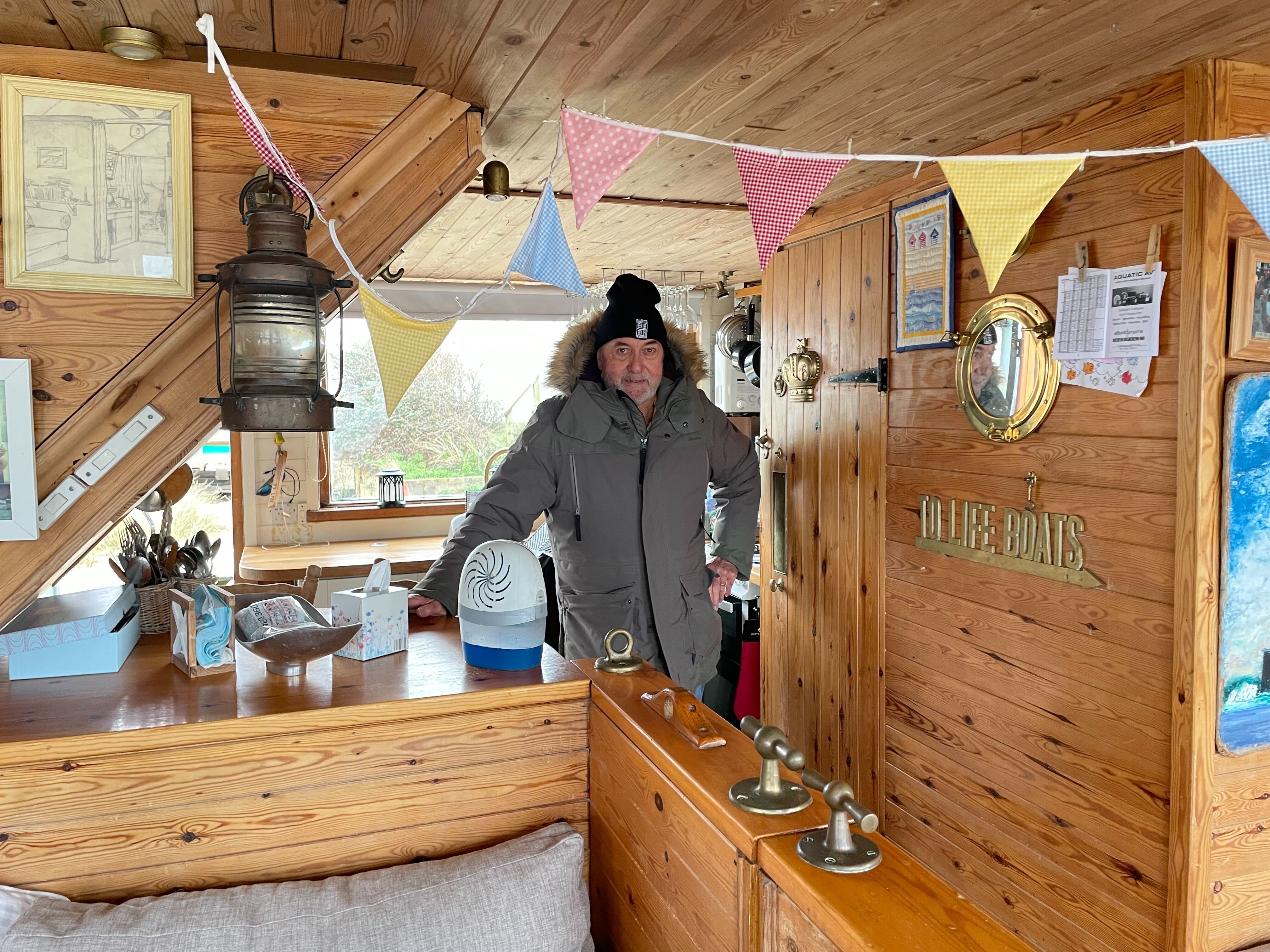
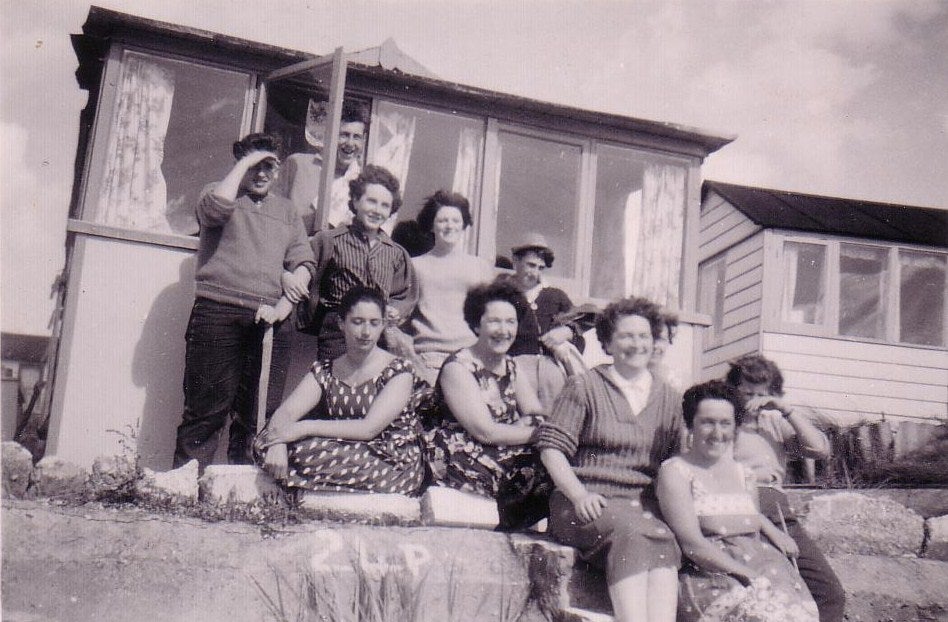
Mr Bath’s hut cost him £3,000 in 1982, before he rebuilt at the cost of £8,500. Inside, there is a small kitchen with a sink and taps connected to a water tank and a kettle powered by a solar panel. The kitchen opens out into a living room with old family pictures on the beach on the walls. Up a wooden stairwell is a tiny second floor with two mattresses, enough to sleep six people.
“For many of us, we have stayed here for generations in the family, and this is our second home,” Mr Bath says. “Plain and simple, this is a cash grab by the council and it will impact those like us who won’t be able to afford the £100-a-week cost of fees and council tax. I think it’s clear we’re going to see more people selling up.”
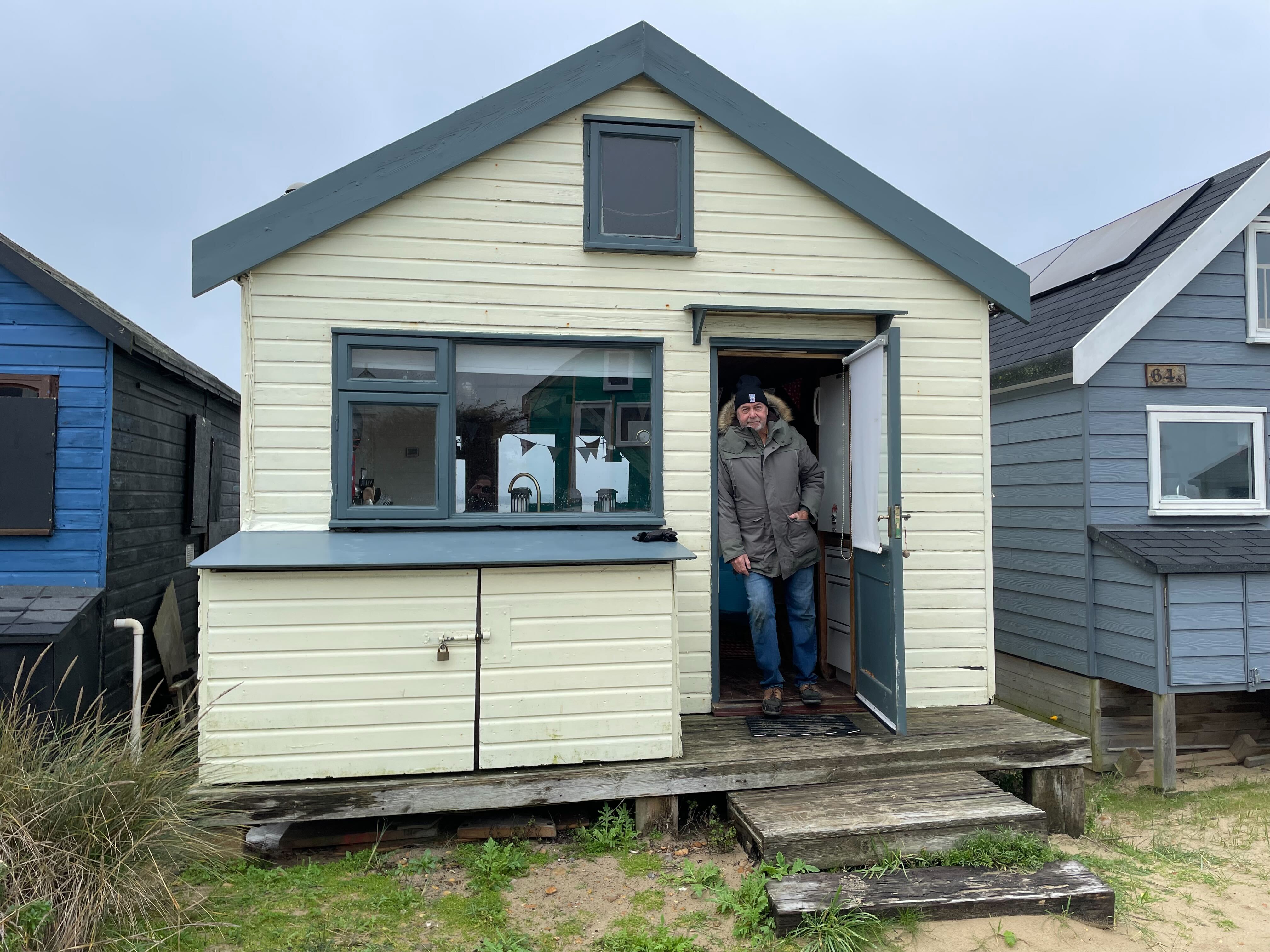
Most of the 344 huts are laid out on the beachhead in orderly lines, but some appear placed in a higgledy-piggledy fashion, with almost every spot possible taken up by the 15ft by 10ft buildings. Yet despite concentration, it doesn’t feel crammed. Not on a January off-peak day, anyway.
The huts are broken up by a number of communal brick toilet blocks and tap facilities. At the heart of the community is a cafe, that despite partly burning down six years ago, still retains its sheltered viewing area. Serving up is a catering van selling cans of beer from £5 and scampi and chips for £13.
Access to the strip of sand is a 20-minute walk from the nearest car park, or a ferry from Mudeford on the other side of Mudeford Quays.
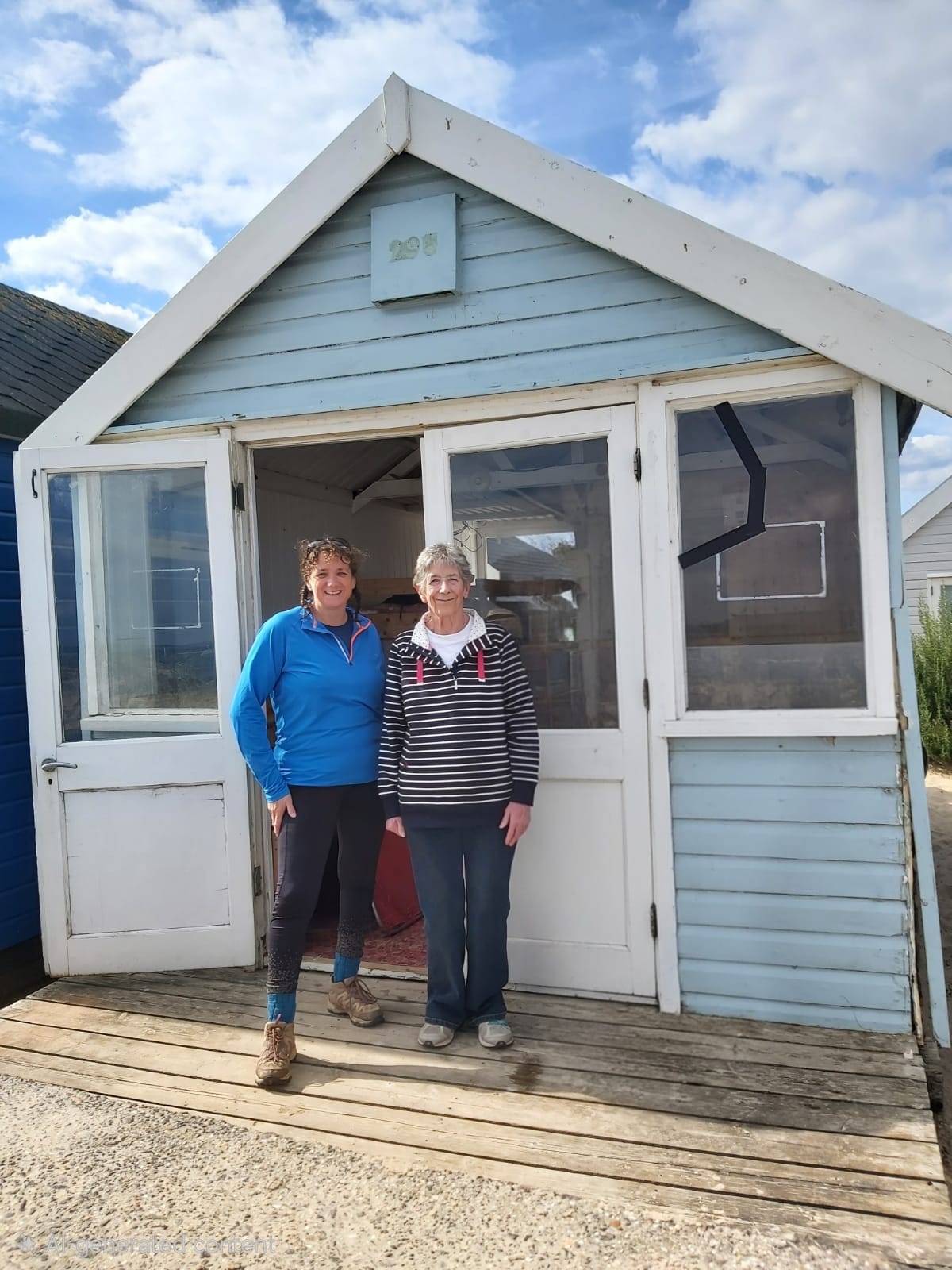
Nine huts are showing for sale signs in their windows. Hayley Reynolds is selling one – a sea-facing hut with solar panels and a tank for running water – for £430,000. Her family bought it for £4,000 in 1986, but a life-changing crash involving her brother left them needing cash to pay for a home conversion.
However, with the hut already having been on the market for more than a year, the 55-year-old, who lives in Oxfordshire, fears the council tax increase will only push back interest. And while the hut remains unsold, her family will be faced with paying the bills.
“The council have realised there is wealth they can get at,” she says. “But not everyone is in the same position; some of us are just lucky to have a hut in our possession, and would never be able to afford one now. The extra tax will only make it harder to sell, and we’re looking to let it out to pay the extra bills.”
In opposing the council tax rise, members of the Mudeford Sandbanks Beach Hut Association have also pointed out the condition of the toilets. They say they also spend money on maintaining the huts, which enhances the beauty spot for visitors.
However, the local council, which claims around a third of the huts are owned by its residents, points out that they sell for more than the £313,000 average house price for a home in the local authority.
Councillor Cox said: “We understand this change may be disappointing for some owners, but it is important to apply council tax policy consistently and fairly across the council area.”
He added: “The council, like all local authorities across England, faces an unprecedented, ongoing financial crisis and the latest government settlement does not address this. As a result of this severe financial pressure, the council must use all levers at its disposal to raise funds to protect essential services important to our residents.”