

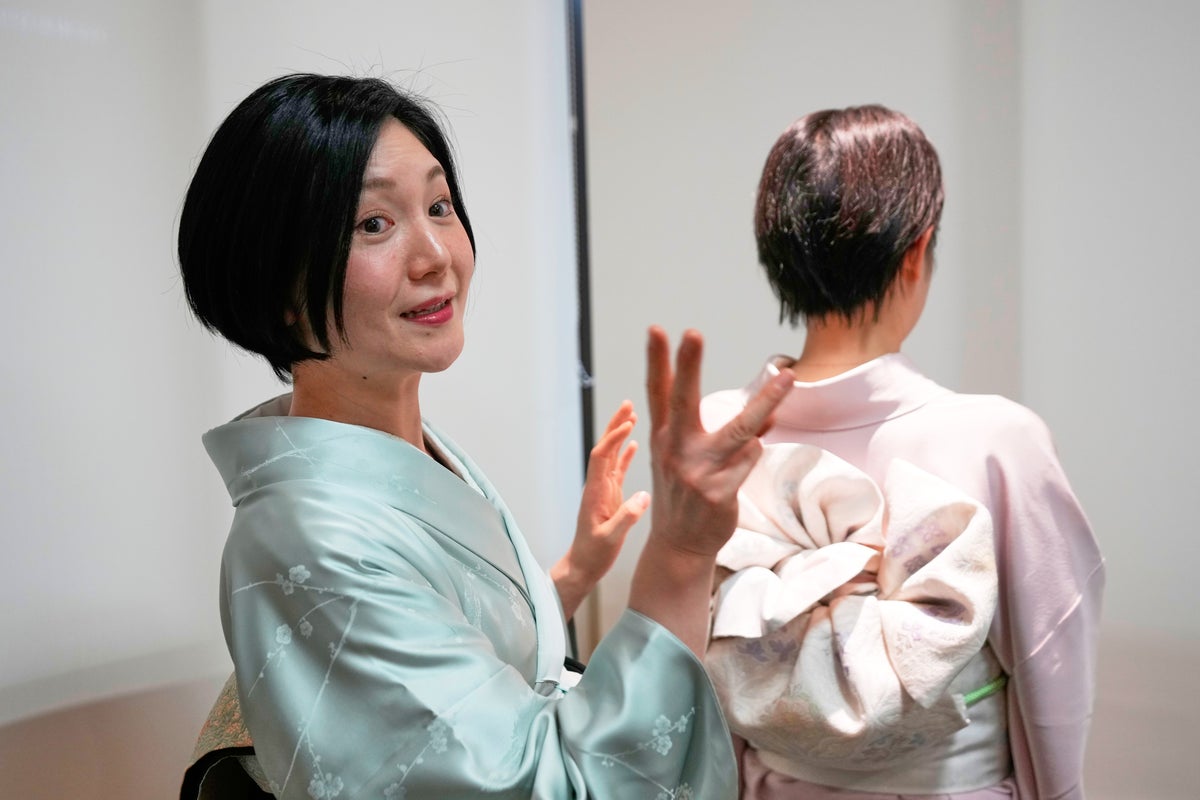
The kimono, a traditional Japanese garment, is experiencing a modern resurgence, now celebrated for a quality more pertinent than ever: sustainability.
A genuine silk kimono, literally meaning “worn thing,” lasts a century or more.
It is often passed down through Japanese families as a cherished heirloom, much like jewellery or artworks, its style never diminishing.
Its fundamental design, including the distinctive “obi” sash, has remained largely unaltered since the 17th-century Edo period, as depicted in Akira Kurosawa samurai films.
Yet, a new wave of creativity is emerging, with designers refashioning these traditional garments, deconstructing and reassembling them into contemporary jackets, dresses, and trousers.
“I noticed that a lot of beautiful kimono is just sleeping in people’s closets. That’s such a waste,” said Mari Kubo, who heads a kimono-remake business called K’Forward, pronounced “K dash forward.”
Hers is among a recent surge in such services, which also turn old kimono into tote bags and dolls.
The most popular among Kubo’s products are “tomesode,” a type of formal kimono that is black with colorful, embroidered flowers, birds or foliage at the bottom.
She also creates matching sets, or what she calls “set-ups.” A tomesode is turned into a jacket with its long, flowing sleeves intact, and its intricate patterns placed at the center in the back. She then takes a kimono with a matching pattern to create a skirt or pants to go with the top. Sometimes, an obi is used at the collar to add a pop of color.
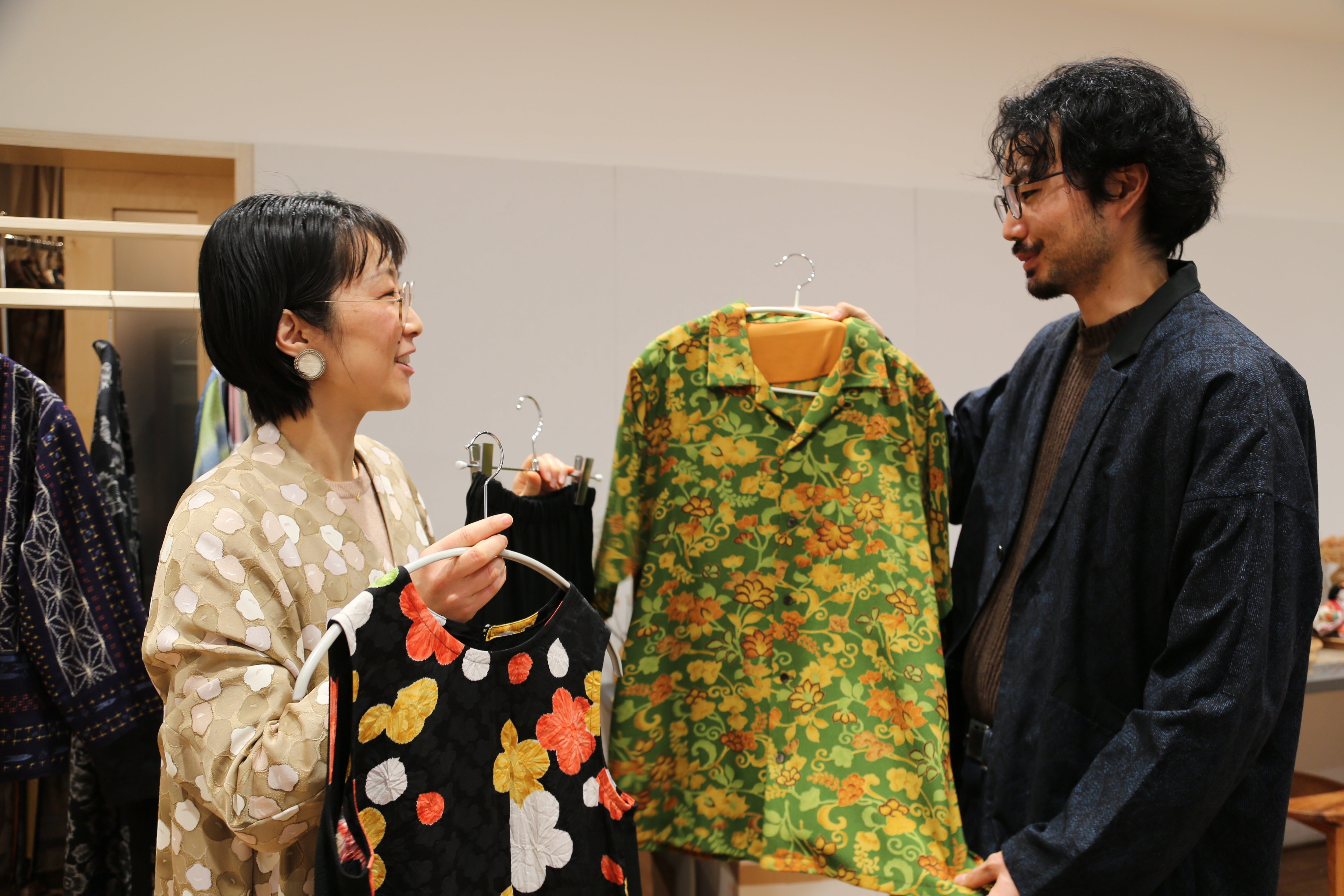
Kubo said many of her customers are young people who want to enjoy a kimono without the fuss.
A remade kimono at K’Forward can cost as much as 160,000 yen ($1,000) for a “furisode,” a colorful kimono with long sleeves meant for young unmarried women, while a black tomesode goes for about 25,000 yen ($160).
Reuse and recycle
What Tomoko Ohkata loves most about the products she designs using old kimonos is that she doesn’t have to live with a guilty conscience, and instead feels she is helping solve an ecological problem.
“I feel the answer was right there, being handed down from our ancestors,” she said.
Recycling venues in Japan get thousands of old kimonos a day as people find them stashed away in closets by parents and grandparents. These days, Japanese generally wear kimonos just for special occasions like weddings. Many women prefer to wear a Western-style white wedding dress rather than the kimono, or they wear both.
Many of Ohkata’s clientele are people who have found a kimono at home and want to give it new life. They care about the story behind the kimono, she added.
Her small store in downtown Tokyo displays various dolls, including a samurai paired with his wife, who are traditionally brought out for display in Japanese homes for the Girls’ Day festival every March 3. Her dolls, however, are exquisitely dressed in recycled kimonos, tailored in tiny sizes to fit the dolls. They sell for 245,000 yen ($1,600) a pair.
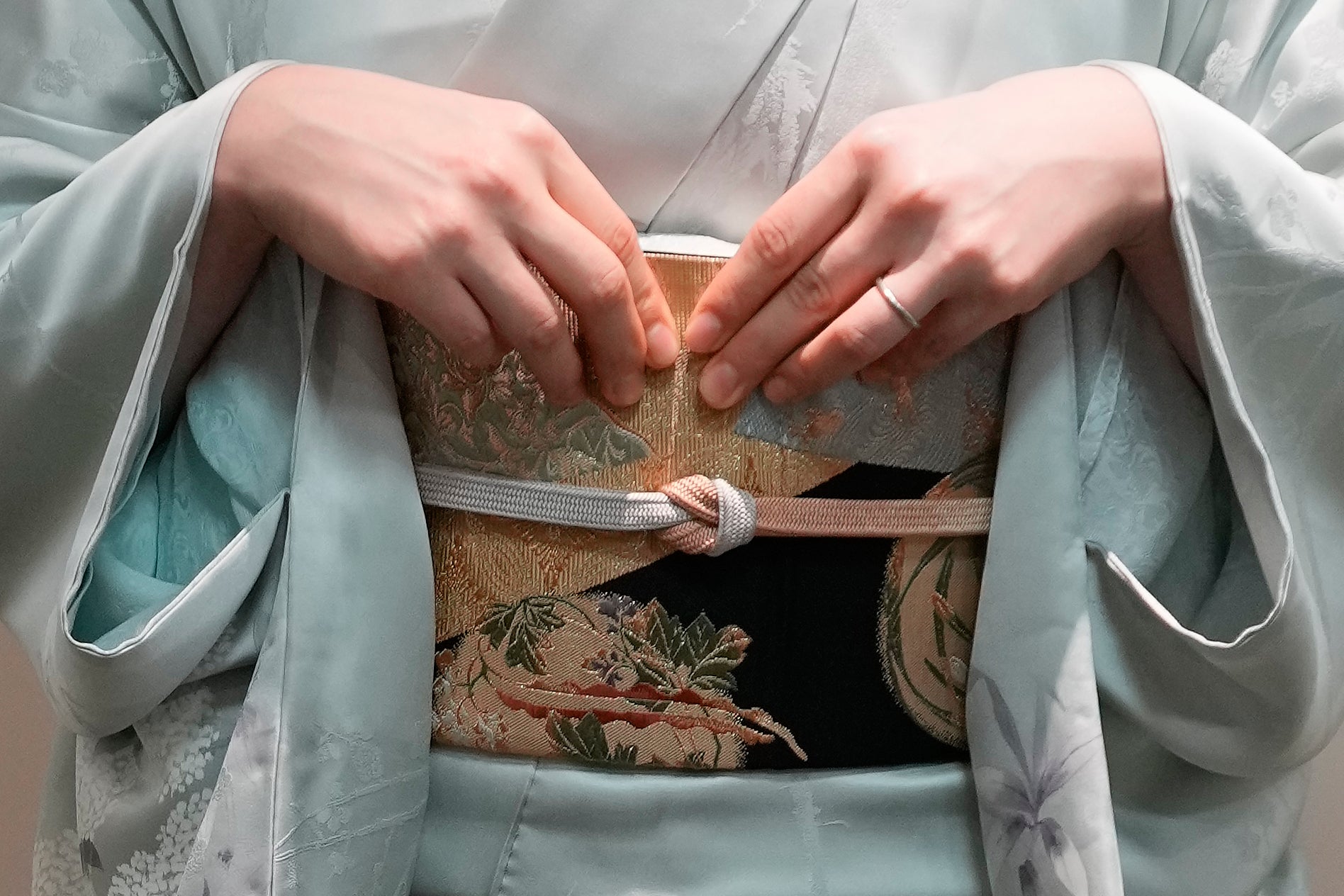
The art of putting on a kimono
The original old-style kimono is also getting rediscovered.
“Unlike the dress, you can arrange it,” says Nao Shimizu, who heads a school in Japan’s ancient capital of Kyoto that teaches people how to wear a kimono and how to carry oneself while wearing it.
“In half a year, you can learn how to do it all by yourself,” she said, briskly demonstrating several ways to tie the obi to express different moods, from playful to understated.
Besides its durability, said Shimizu, that versatility also makes the kimono sustainable.
Younger Japanese are taking a more relaxed view, wearing a kimono with boots, for instance, she laughed. Traditionally, kimono is worn with sandals called “zori.”
Although it requires some skill to put on a kimono in the traditional way, one can take lessons from teachers like Shimizu, like learning a musical instrument. Professional help is also available at beauty parlors, hotels and some shops.
Most Japanese might wear a kimono just a few times in their lives. But wearing one is a memorable experience.
Sumie Kaneko, a singer who plays the traditional Japanese instruments koto and shamisen, often performs wearing flashy dresses made of recycled kimonos. The idea of sustainability is deeply rooted in Japanese culture, she says, noting that the ivory and animal hide used in her musical instruments are now hard to obtain.
She calls it “the recycling of life.”
“The performer breathes new life into them,” says the New York-based Kaneko.
“In the same way, a past moment — and those patterns and colors that were once loved — can come back to life.”