


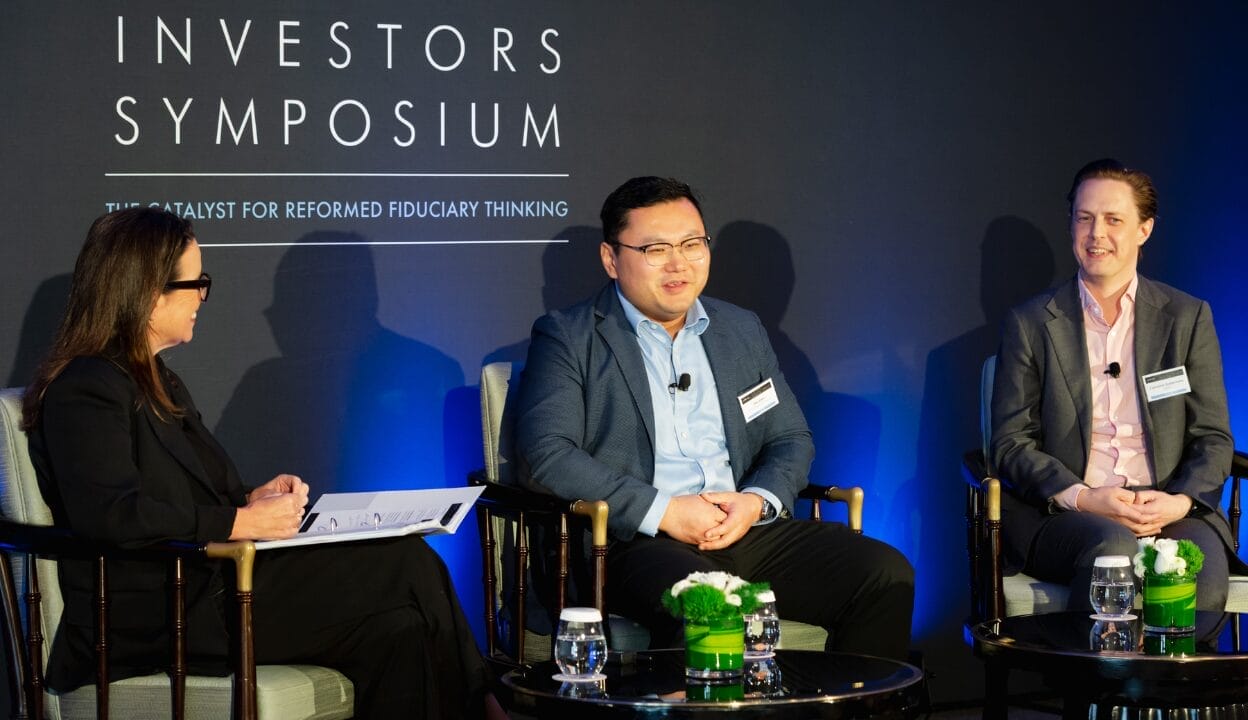
Global institutional investors are growing more and more bullish on emerging market equities and broader Asia ex-Japan due to the exposure they have to the AI thematic through chip manufacturing and other AI hardware companies.
“Korea and Taiwan have very concentrated exposure to some of the key players in the [AI] sector,” Cameron Systermans, head of multi-asset, Asia at Mercer told the Top1000funds.com Fiduciary Investors Symposium in Singapore.
“And through a direct allocation to those countries or through Asia ex-Japan you can get a very solid allocation to the AI theme, but at a lower cost to some of the US mega-cap tech companies.”
That exposure is becoming more important as geopolitical tensions between the US and China continue to spike. Companies like TSMC, SK Hynix and Samsung – which are key chip hardware producers that would be difficult to replace “for the foreseeable future” – can supply both sides of the US-China divide, providing good returns and access to the AI theme even if a “silicon curtain” does slam down and limit access to either country’s market.
“When you get themes right, you can see the bigger picture unfolding in Asia, which is that Asia has become more and more predominantly a part of the world that is playing a bigger role in the manufacturing cycle,” said Zhe Shen, managing director and head of diversifying strategies at OCIO firm TIFF Investment Management.
“With AI we’ve gone from a highly intangible world of software where a lot of it is just numbers to a more capex-heavy manufacturing world.”
But Shen argued that investors should avoid accessing that theme only through passive equities.
“When we talk to managers who are based in Taiwan we ask them what their edge is and why we should pick them over any other manager, part of the answer – and I’m not joking – is ‘I have a tent outside TSMC. I sleep outside TSMC and I get news 10 minutes faster than anybody else’.
“That’s the edge of being geographically local. Understanding the dynamics of these local interactions – how things work and the order flow that’s coming through for certain types of chips, certain types of power, for memory – all that culminates in a competitive edge for our managers that we choose to invest in.”
It’s “extremely hard” to underwrite managers in a new geography, Shen said, but understanding the local culture and business approach is also “extremely important”.
“We looked at Japanese activism [strategies] and we interviewed a lot of managers. Some of them were Western [professionals] who said they can do the job from New York – we didn’t believe them,” Shen said.
“Then we met this manager and asked ‘what do you do?’ and he said ‘Every Friday I go and see the CEO of these companies and offer up my liver. I drink myself under the table for a couple of days’. I’m not going to comment on the health, but that’s the right strategy.”
But while their performance has been strong over the last year, Systermans conceded that the emerging markets aren’t all sunshine and roses.
“Most of the economies across Asia are net energy importers, with the exception of Malaysia, and if you include Australia as part of that – a more prolonged crisis, where energy prices stay high, is obviously bad for this part of the world and could put a bit of a pause on that.”


