



Reform UK has a chequered history when it comes to women and families, with some of the party’s more prominent figures having faced criticism for their views.
Matt Goodwin, the party’s candidate in the upcoming Gorton and Denton by-election, has previously called for young girls to be given a “biological reality” check, as well as suggesting people who don’t have children should be taxed extra as punishment, while the party’s new head of policy, Dr James Orr, has previously argued that marriage is best for children when it is between a man and a woman.
Nigel Farage himself has also faced criticism for his comments about women, last year suggesting that men are prepared to sacrifice family lives for successful careers in a way many women aren’t.
As the party surges in the polls and attempts to get its top team ready to fight an election, The Independent has taken a look at exactly what key figures in the party have said about marriage, women, abortion and fertility – and what it might mean for policy.
Marriage
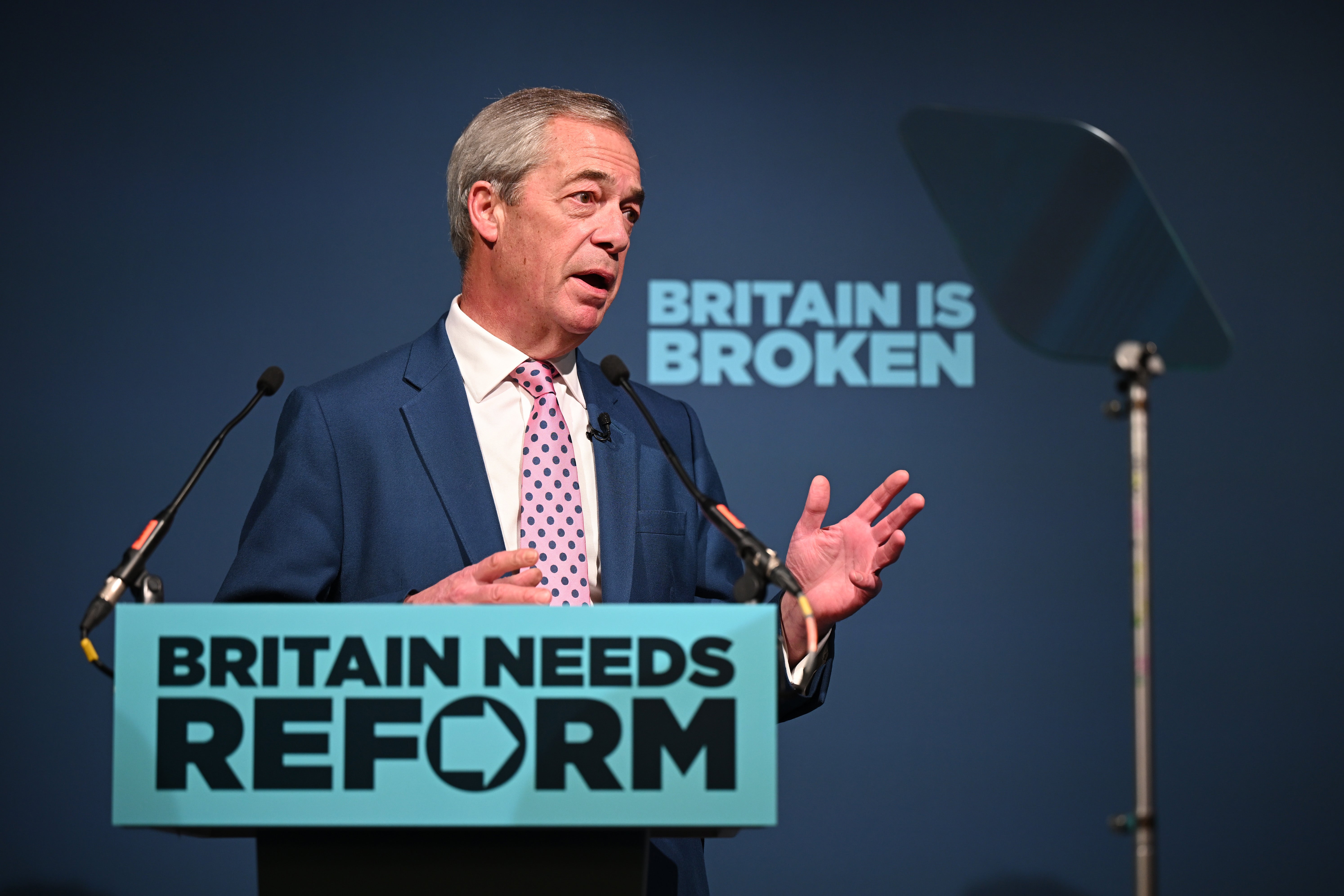
In 2025, Mr Farage was accused of “vile homophobia” for claiming straight couples are more stable than gay relationships during a press conference welcoming former Conservative MP Danny Kruger to Reform UK.
Mr Farage, who has twice been married and is now in a relationship, said “the most stable relationships tend to be between men and women” after he was asked about past comments made by the right-winger, who became the first sitting Tory MP to join Mr Farage’s party.
Mr Kruger, who defected to Reform from the Tories last year, previously told a National Conservatism conference that marriage between men and women was “the only basis for a safe and successful society”.
This is a view that has been echoed by the party’s new head of policy.
Speaking to the Family Education’s Trust’s 2025 Annual Conference, Dr Orr said: “All the data shows that the children are better off, are best off with a mum and a dad, preferably in the house, preferably biologically related to them. It’s a difficult piece of data to put forward in our permissive age, but it’s true.”
Describing families which are made up of a heterosexual couple with children as “natural”, he added: “There needs to be some kind of normative ideal, there needs to be some benchmark that we can at least aspire to… that the state, to some extent, can help families aspire to.”
Abortion
Nigel Farage has previously taken aim at UK abortion laws, saying they are “totally out of date”, arguing it is “ludicrous we allow abortion up to 24 weeks”.
Mr Kruger, the Reform MP for East Wiltshire, in a debate on abortion once disagreed that pregnant women had an “absolute right to bodily autonomy”, sparking protests in his constituency.
He later clarified that he does “not wish to dictate what a woman should do with her own body, as has been claimed”, adding that his position on abortion “reflects the status quo” and that he supported the 1967 Abortion Act.
It came as MPs voted to decriminalise abortion in England and Wales, reforms which were designed to protect women while maintaining penalties for medical professionals and abusive partners who terminate a pregnancy outside the current legal framework.
A Reform spokesperson last year said the party does not have a stance on abortion and has no intention of making changes to the current abortion laws.
However, the party’s new head of policy has described Britain’s abortion laws as “extreme”.
“Two or three days ago, I think, there was an interview on Times Radio with a medic arguing that – even though Britain has one of the most extreme abortion regimes in the world, 24 weeks, we’re up there with North Korea, China and, God help us, Canada – this wasn’t extreme enough, that we should be pushing for 37 weeks, 38 weeks,” Dr Orr told Family Education Trust’s 2025 annual conference.
Fertility and birth rates
Earlier this month, The Independent revealed that Reform UK’s candidate in an upcoming by-election, Matt Goodwin, previously called for women and young girls to be given a “biological reality” check, as he gave his views on how Britain should tackle its impending “fertility crisis”.
Days earlier, it was revealed that Dr Goodwin previously suggested people who don’t have children should be taxed extra as punishment. The unearthed clip posted to his personal YouTube channel in November 2024 showed the former academic warning that “many women in Britain are having children much too late in life”.
While Nigel Farage later poured cold water on the proposal to tax people without children, saying the party has no plans to hike taxes, he said those who have “quite a few children” could be given tax breaks to help with the cost of living if his party came to power.
Dr Orr has also advocated for pro-natalist public policy, saying that the “gap between desired fertility and actual fertility was getting wider and wider in most parts of the West”.
While he said this is “not about coercing women into making choices that they don’t want to have”, he added that it is “perfectly legitimate for social conservatives, for all of us, to ask why and what can be done” to make it easier to “bring new life into the world”.
But in spite of these comments about the declining birth rate, Reform UK earlier this year U-turned on a promise to lift the two-child benefit cap, which penalises families which have more than two children.
Mr Farage vowed to axe the cap in May last year, saying it was the “right thing to do”, before later clarifying it should be lifted only for British families in work.
But Robert Jenrick, Reform UK’s new Treasury spokesman, said on Wednesday that the policy “has to go”, calling for the cap to be kept, as Mr Farage admitted his “attempt at being pro-family has failed”.
Women in the workplace
The most concrete policy Reform has unveiled relating to women and families so far is their plan to scrap the Equality Act, announced by Suella Braverman, Reform’s new education and equalities spokesperson.
But the announcement has sparked concerns that it could negatively impact women, given its role in protecting maternity leave and discrimination against mothers and pregnant women.
In the wake of the announcement, the Good Law Project accused Reform UK of “pitching for the votes of misogynists, homophobes, racists and antisemites, who are the only people who benefit from removing discrimination protections”.
And in 2025, Mr Farage risked triggering a row over sexism after he told a Westminster lunch that more men “are prepared to sacrifice their family lives in order to pursue a career and be successful in a way that fewer women are.”
“And those women that do have probably got more chance of reaching the top than the blokes,” he added.