

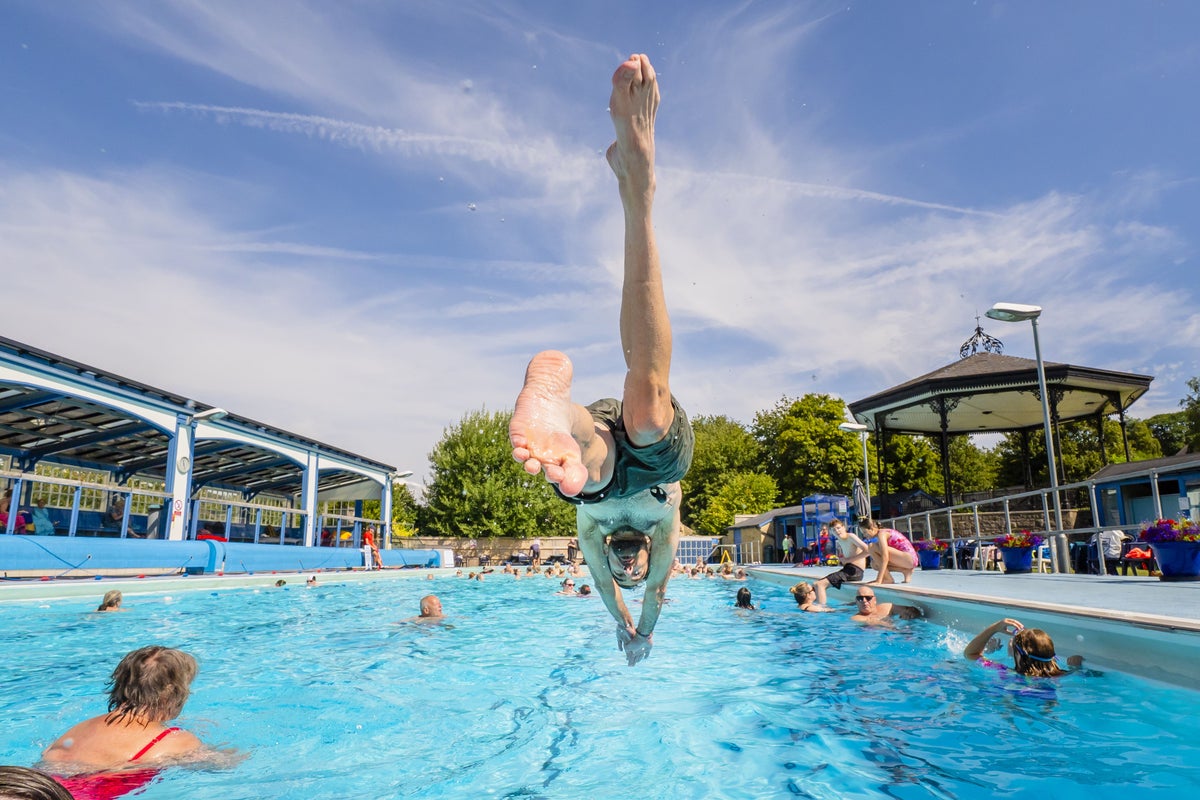
Temperatures remain above average for much of the UK after a record-breaking spell of hot weather saw 12 people die in open water and a yellow heat health alert remains in force.
The UK Health Security Agency (UKHSA) alert for eastern and South East England and London runs until 8pm on Saturday.
Water-related incidents could increase during this time, with the agency warning of cold water shock and drowning.
What is cold water shock?
Cold water shock is the body’s natural physical reaction to sudden immersion in cold water.
The response is immediate and can lead to drowning, the National Fire Chiefs Council (NFCC) said.
Anyone who suddenly enters cold water is at risk, and they may accidentally fall in or jump in, the NFCC added.
Cold water shock can affect anyone regardless of swimming ability.
What happens when you have cold water shock?
It causes gasping, panic and loss of swimming ability, all of which can lead to drowning, the National Water Safety Forum (NWSF) said.
It also causes a spike in heart rate and blood pressure, which can result in a heart attack, even if the person is fit and healthy.
How cold is the water in the UK?
Many inland waters remain at 16C or below even in summer.
This temperature is considered hazardous for cold water shock, according to the NWSF.
Even on a hot day water can be cold, the RNLI said.
Average UK and Ireland sea temperatures are 12C and rivers such as the Thames are colder, according to the RNLI.
Water, depending on its location, depth, stirring and flow into it, can take many weeks to warm up, Professor Mike Tipton, chairman of the NWSF, said.
Sea water around the UK, for example, does not get to its warmest until late August or early September, he added.
What can people do to stay safe?
Phone Float Throw is a new water safety campaign from the NWSF and Respect The Water.
It provides bystanders witnessing someone struggling in the water with instructions for how to help, without putting themselves in danger: Phone 999 to get help; Tell the person to stay calm and float on their back; Throw rescue equipment to help them float until emergency services arrive.