.jpeg?trim=0,106,0,128&width=1200&height=800&crop=1200:800 "‘We want to use it for everything’: How Project Maven became central to America’s AI-powered warfare – UK Times")
AI is being increasingly used by the US military – and Project Maven is at its heart.
An investigation by The Independent and conflict monitoring group Airwars has found that Abdul-Rahman al-Rawi, a 20-year-old student, is the first civilian killed in a series of airstrikes that were acknowledged to have been carried out with the assistance of AI.
Weeks after the strikes in Iraq in early February 2024, a senior US official boasted about the use of AI to help identify the targets in these strikes – but US Central Command later said it “did not know” whether AI had been involved.
AI in warfare has become an increasingly pressing issue.
Deadly US attacks across Iran, which have killed hundreds in the past week, are reported to have used Palantir’s Maven Smart System (MSS) to identify targets, a broader AI-enabled warfighting decision support system into which Project Maven is typically integrated.

That the US may not be recording its use of AI in individual airstrikes raises questions over accountability in Iran, where growing evidence indicates US responsibility in the Minab school attack that authorities say has killed more than 165 people, most of which were students.
So intense is the bombing campaign that in its first 100 hours, the US and Israel declared hitting more targets in Iran than in the first six months of the US-led Coalition’s bombing campaign against ISIS, an analysis by Airwars found.
“A state has responsibility to know if it has used AI on any of their strikes,” said Jessica Dorsey, a professor of international law who specialises in AI warfare at Utrecht University.
“Commanders should have access to the intelligence their strikes are based on in order to directly interrogate the target to ensure positive identification.”
The Independent and Airwars take a look at what Project Maven really is – and why some experts are so concerned about where AI warfare could be headed.
What is Project Maven?
Established by the Pentagon in 2017, the Algorithmic Warfare Cross Functional Team – better known as Project Maven – was adopted by the National Geospatial Agency (NGA), and uses computer vision algorithms to locate and identify targets from satellite imagery, video and radar to detect movement and track targets.
Project Maven saw its first major deployment following Russia’s invasion of Ukraine in 2022, albeit with a basic version provided to Ukrainian forces to help identify Russian military vehicles, people and buildings.
.jpeg)
However, Maven delivered mixed results. Snow, dense foliage and decoys are known to hinder its abilities. And in desert terrain like western Iraq, where weather conditions can change a landscape abruptly, Maven’s accuracy can drop to below 30 per cent, US officials told Bloomberg.
Maven is now available to all US services and combatant commands and, since the strikes in 2024, its user base has more than quadrupled, then-NGA Director Vice Admiral Frank Whitworth said in a speech last year.
It is currently able to make 1,000 targeting recommendations in an hour, “choosing and dismissing targets on the battlefield,” he explained.
A month later, Whitworth acknowledged that the NGA was using artificial intelligence so routinely that it created a standardised disclosure to go on AI-generated intel products.:“We want to use it for everything, not just targeting.”
Project Maven is typically integrated into the broader Maven Smart System, an AI-enabled warfighting system, to speed up US military targeting decisions.
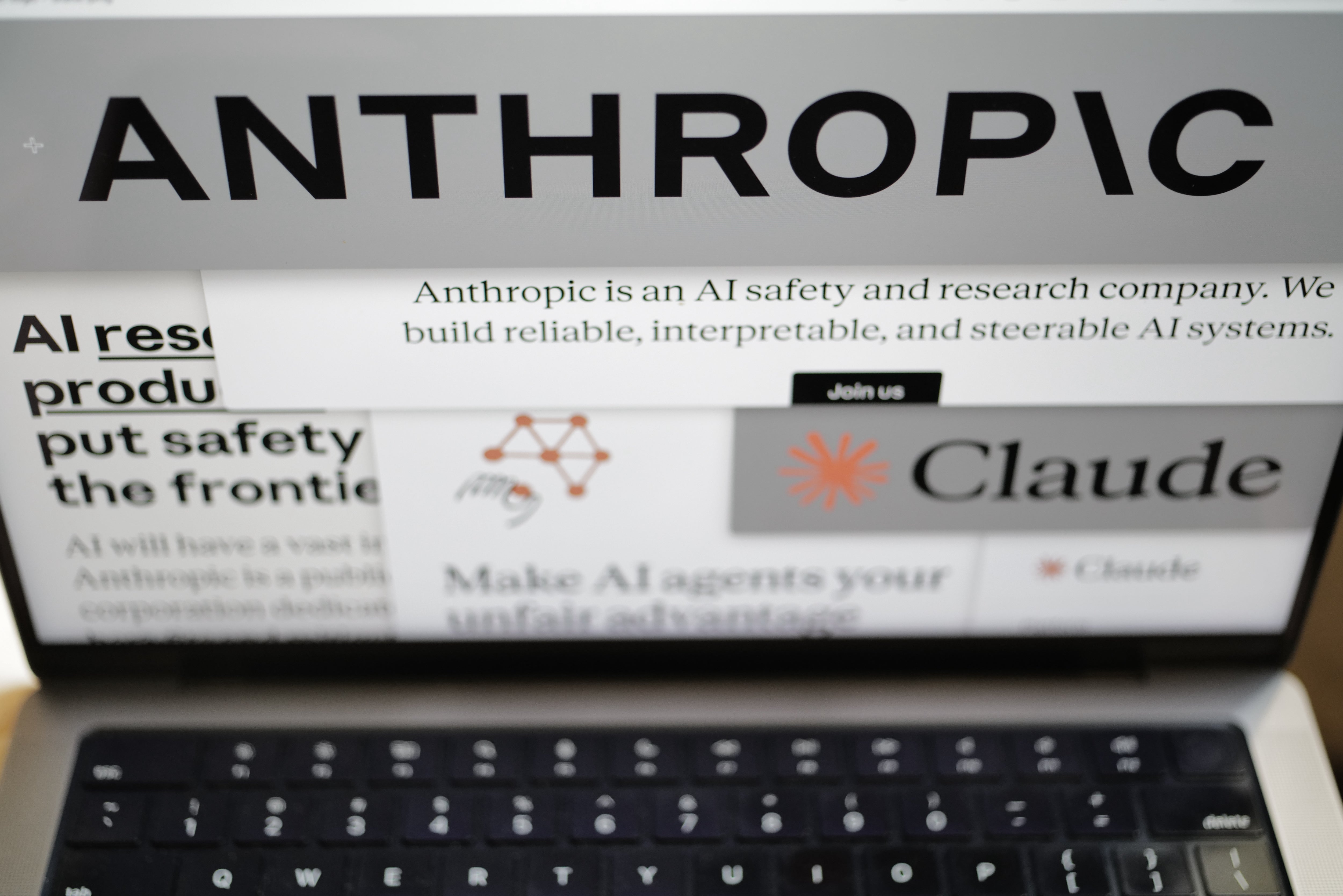
Palantir’s MSS, which uses Anthropic’s Claude AI, is currently deployed by the US to assist targeting in Iran.
MSS draws together all the data from satellites, drones, intelligence reports and radar signals. Anthropic’s Claude then analyses this data to provide target recommendations and suggest what type of force to use.
Use of Maven is growing – as is dissent against it
“We will become an ‘AI-first’ warfighting force across all domains,” US Secretary of Defense Pete Hegseth declared in January, vowing to “unleash experimentation” and “eliminate bureaucratic barriers”.
Following the strikes on Iraq in 2024, US Central Command’s chief technology officer Schuyler Moore told Bloomberg that the “benefit that you get from algorithms is speed”.
However, with speed has come growing concerns about the human involved in the decision-making doing little more than rubber stamping recommendations made by AI.

A group of experts warned in an April 2025 submission to the UN that current frameworks fail to address the “profound risks” that AI-assisted targeting like Project Maven pose to international humanitarian law and human judgment in targeting.
These concerns have been echoed by tech workers opposed to their companies’ involvement in AI initiatives systems for warfare.
Initially a key player in Project Maven, protests and resignations from Google employees against the company’s involvement in artificial intelligence for lethal purposes saw the company exit the project.
Palantir stepped in to fill the void, referring to the project internally as ‘Tron’, after the 1982 film in which a computer engineer is transported into the digital world.
Revelations that Claude AI was used in the US raid on Venezuela in January led to tensions between its maker, Anthropic, and the Department of War.
Anthropic does not permit its AI systems to be deployed for mass domestic surveillance or fully autonomous weapons, and rejected pressure to back down.

In a punitive move on 5 March, the Pentagon designated Anthropic a “supply chain risk” with major consequences for the company.
“America’s warfighters … will never be held hostage by unelected tech executives and Silicon Valley ideology. We will decide, we will dominate and we will win,” Pentagon press secretary Kingsley Wilson said.
Why are experts so concerned?
Speaking to The Independent, Prof Dorsey and Dr Elke Schwarz, who specialises similarly at the London School of Economics, raised several concerns. Both were among the experts to warn about the risks of AI-assisted targeting last year.
At the heart of these were two critical issues: algorithmic bias, and human de-skilling.
“The criteria the US has used in the past is ‘military age male’. You can’t just go round killing military aged males,” said Prof Dorsey.
“And maybe in a computer vision algorithm, maybe they’ve programmed in something like carrying a weapon. But carrying a weapon is not something that should sentence you to death.”
“If you don’t have enough accurate, reliable or up-to-date data, your system is going to be vulnerable and flawed, and that in itself contains potential for harm. The big challenge, really, is that speed and scale are prioritized,” said Dr Schwarz.
“Speed and scale are the paramount in these kinds of systems, and that accelerates the action chain. That’s the allure, that’s the seductive part about the system.”
Israel’s offensive in Gaza included an AI-assisted target-creation platform called ‘the Gospel’ which produces potential targets so fast some Israeli officers have compared it to a “mass assassination factory”.
Another Israeli AI-powered target identification tool, called Lavender, at one stage identified 37,000 potential targets based on their apparent links to Hamas and Islamic Jihad.
One Israeli intelligence source told The Guardian the role of humans overseeing Lavender’s target selection was minimal: “I would invest 20 seconds for each target at this stage, and do dozens of them every day. I had zero added-value as a human, apart from being a stamp of approval.”
Prof Dorsey also warned of the risk of “automation bias”, in which humans begin trusting the computer’s output without critically assessing the target themselves.
As militaries rely increasingly on AI-assisted targeting, she argued personnel will begin offloading their own responsibilities to the machines. “We’re de-skilling ourselves. Commanders are getting less good at identifying what they are responsible to do on a battlefield.”
“Humans have a tendency to not question decisions that are made by computational outputs,” Dr Schwarz added.