



The United States issued a 30-day waiver allowing Indian refiners to purchase Russian oil without any tariff repercussions, as disruptions at a key shipping route continued to threaten global oil supply.
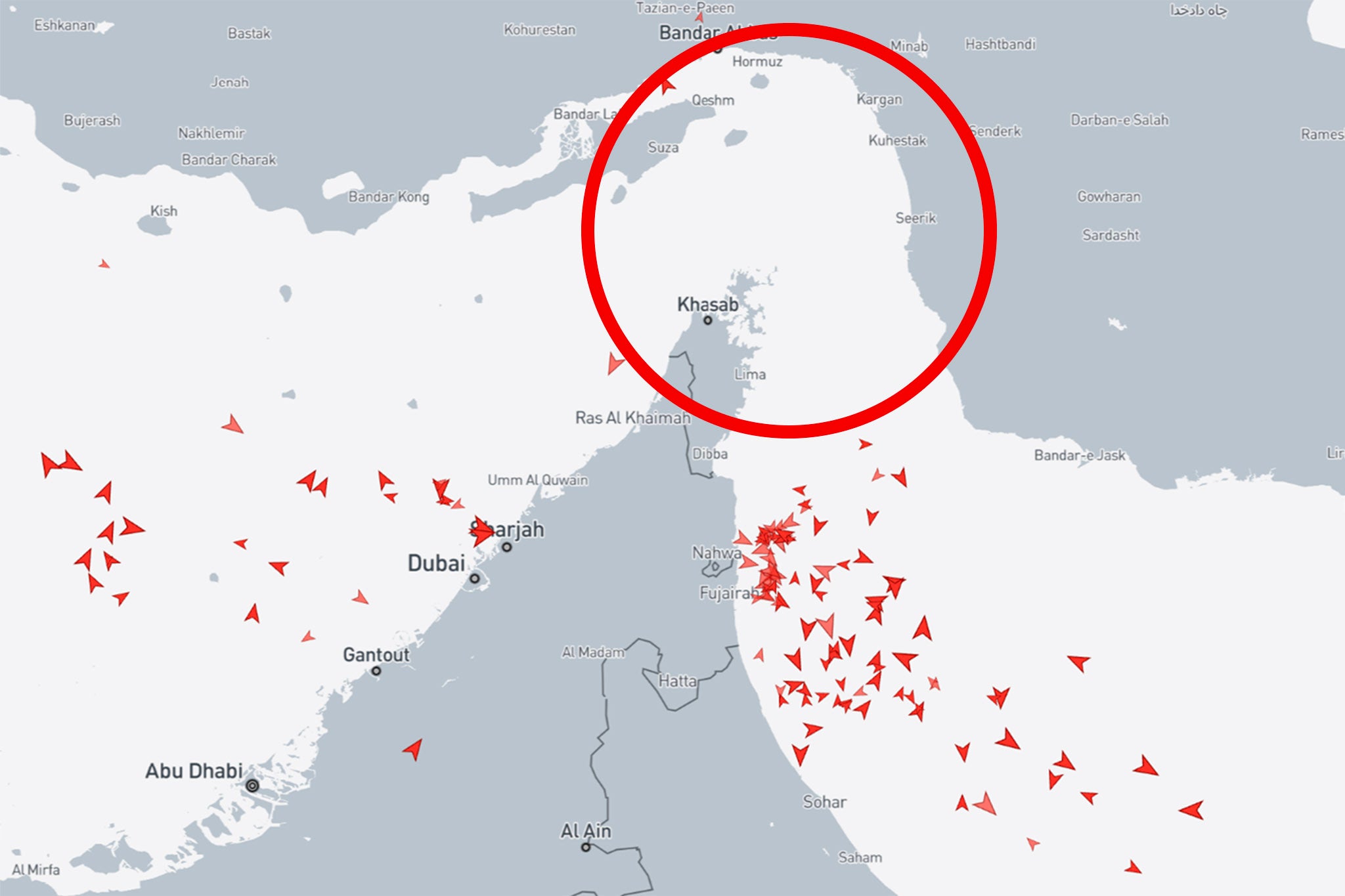
The Strait of Hormuz, through which a fifth of global oil and liquefied gas supplies pass, has remained effectively closed since Iranian forces threatened to “set fire” to ships passing through. Oil surpassed $80 a barrel for the first time in months and analysts feared a prolonged crisis could push it above $100.
The Treasury Department’s Office of Foreign Assets Control (OFAC) issued a license on Thursday authorising the delivery and sale of Russian crude oil and petroleum products to India – but only for oil already loaded onto vessels as of 5 March. The waiver expires on 4 April.
Follow our live coverage of the Middle East conflict here.
Treasury secretary Scott Bessent announced the measure on X, framing it as a response to Iran’s attempt to “take global energy hostage”.
He said the waiver “will not provide significant financial benefit to the Russian government as it only authorises transactions involving oil already stranded at sea”.
“India is an essential partner of the United States, and we fully anticipate that New Delhi will ramp up purchases of US oil,” Mr Bessent wrote.
The announcement came as at least three sanctioned tankers carrying around 2.1 million barrels of Russian Urals crude, were already diverting to Indian ports this week, according to vessel-tracking data.
Indian refiners, whose supplies were stuck in the Gulf, started buying Russian oil that’s readily available, Reuters reported quoting sources familiar with the matter.
Separately, India moved to shore up domestic fuel supplies on Thursday, ordering all refiners to maximise production of liquefied petroleum gas and restrict its supply to three state-run companies – Indian Oil, HPCL and BPCL. Refiners were also told not to divert propane and butane to petrochemical production, with state firms instructed to sell LPG to domestic customers only.
Russia’s deputy prime minister Alexander Novak told state-run TV that Moscow was “getting signals of renewed interest from India” in purchasing additional volumes of its crude, adding that it “remains convinced” the trade is beneficial to both countries.
The US has framed the move as a stopgap measure, as Washington expects India to eventually buy more US oil.
The US had previously said India committed to halting purchases of Russian crude – a claim Indian authorities have not publicly acknowledged.
However, data shows in January this year Russian crude accounted for less than 20 per cent of India’s imports, the lowest in nearly four years, while Saudi imports rose to their highest in almost six years.
The US reduced tariffs on Indian imports to 18 per cent amid broader trade negotiations, and Mr Bessent had signalled in January that additional tariffs on Indian goods could be removed given what he described as a sharp reduction in Indian purchases of Russian oil.
Analysts who spoke to The Independent earlier this week said Russia stood to be among the clearest beneficiaries of the disruption, with Moscow’s sanctioned oil – already sitting in Asian waters – now in high demand from buyers shut out of the Gulf.
India is among the countries most exposed to the disruption as it relies on imports for more than 88 per cent of its oil needs, with nearly half of its crude coming from Gulf states whose exports pass through the Strait.
‘ style=”border:0″>
Iran’s Islamic Revolutionary Guard Corps (IRGC) announced on Thursday that the Strait was closed to vessels from the US, Israel, Europe and their Western allies – leaving passage potentially open for others, including India, though no formal exemption has been confirmed. Tehran had earlier indicated it would permit Chinese-flagged vessels through as a gesture of appreciation for Beijing’s stance during the conflict.
However, with Iranian forces threatening to strike vessels, insurance cover for the route became effectively unavailable, leaving much of the waterway grounded to a standstill regardless, as shipping companies and vessel operators halted crossings.
Real-time vessel tracking shows clusters of tankers anchored outside the waterway, with ships waiting near Kuwait, off the coast of Dubai, and just beyond the entrance to the channel. Tanker traffic through the Strait dropped by roughly 70 per cent , with over 150 ships anchoring outside the waterway. Major container lines including Maersk and Hapag-Lloyd suspended transits entirely.
The closure marks the first time in history that traffic through the Strait has effectively halted – even during the Iran-Iraq war between 1980 and 1988, merchant vessels continued operating despite frequent tanker attacks.
US president Donald Trump moved to address the insurance problem directly, announcing that the US Development Finance Corporation would provide political risk insurance for ships transiting the Gulf. France also dispatched the Charles de Gaulle aircraft carrier to the Mediterranean, with president Emmanuel Macron saying French forces had already shot down drones in “legitimate self-defence.” Neither measure has so far been enough to reopen commercial flows to their normal state.
Alternative routes exist but offer limited relief. Saudi Arabia’s East-West Pipeline and the UAE’s Fujairah pipeline can carry some volume, but cannot replace normal Strait flows.
.jpeg?trim=0,0,0,0&width=1200&height=800&crop=1200:800 "Jimmy Lai will not appeal conviction and 20-year sentence, lawyer says – UK Times")