




Ukraine’s war effort is being undermined by sales of air-defence munitions to the Gulf and continued aggression from Washington, while an oil-price bonanza means that Moscow can now, literally, fund its own war dead.
In the grim calculus of the “meat grinder” conflict on Europe’s eastern flank, Kyiv’s defence ministry has a target of killing 50,000 Russian soldiers a month.
This is because Ukraine estimates that Vladimir Putin can only recruit somewhere between 35,000 and 37,000 troops a month, despite staggering sign-up bonuses, extravagant salaries, and a $165,000 (£124,000) compensation package provided to the families of Russian soldiers killed in action.
According to Ukrainian and Western sources, if Putin’s ministry paid for all the Russian dead the war is generating every month – also estimated at around 35,000 – the cost would be $5.775bn (£4.35bn).
Add to that the cost of recruiting 35,000 replacements with $24,000 (£18,000) sign-up bonuses, and the figure rises by another $840m (£632m). That’s a total of $6.615bn (£4.98bn) that Russia must generate to pay for its monthly casualty list.
Ukraine knows it cannot outlast Russia in terms of manpower – but Kyiv’s aim is to make the war unsustainable for Putin in basic economic terms.
“Russia’s crisis point is not running out of people; it is running out of money to buy people,” according to intelligence analysis seen by The Independent.
But a surge in oil prices, along with Donald Trump’s decision to lift some sanctions on Russia’s massive oil industry, has provided Moscow with an immediate respite from the bloody financial pressure Ukraine is delivering, at a heavy cost to itself in human life, on the front lines of the Donbas.
Russia is estimated to have made an extra $6bn to $10bn (£4.5bn to £7.5bn) in oil revenues as a result of the US-Israeli war in Iran, since it began less than a month ago. That more than covers the cost of Russia’s war dead every month.
It is a body blow to Ukraine.
This year, Kyiv’s innovations in drone warfare, longer-range strikes against Russian targets, and improved tactics have resulted in a turn in favour of Ukraine.
Morale on the front lines improved over the previous year. In the major cities being targeted by waves of Russian drones and ballistic missiles, and where winter temperatures plunged to -25C, civilians were managing to cope with days of power cuts as the energy infrastructure was pounded by Russia.
Ukrainian military assessments were based on figures that prevailed in the global oil markets, and in the weapons industry, before Iran was attacked by Israel and the US, and before oil prices surged and the production of air-defence munitions was absorbed by Gulf nations and their allies combating Iranian counterattacks with home-produced drones and missiles.
Lifting sanctions on Russia’s oil exports saw a 13 per cent surge in its crude oil exports – mainly to China, India and Turkey, according to the Centre for Research on Energy and Clean Air.
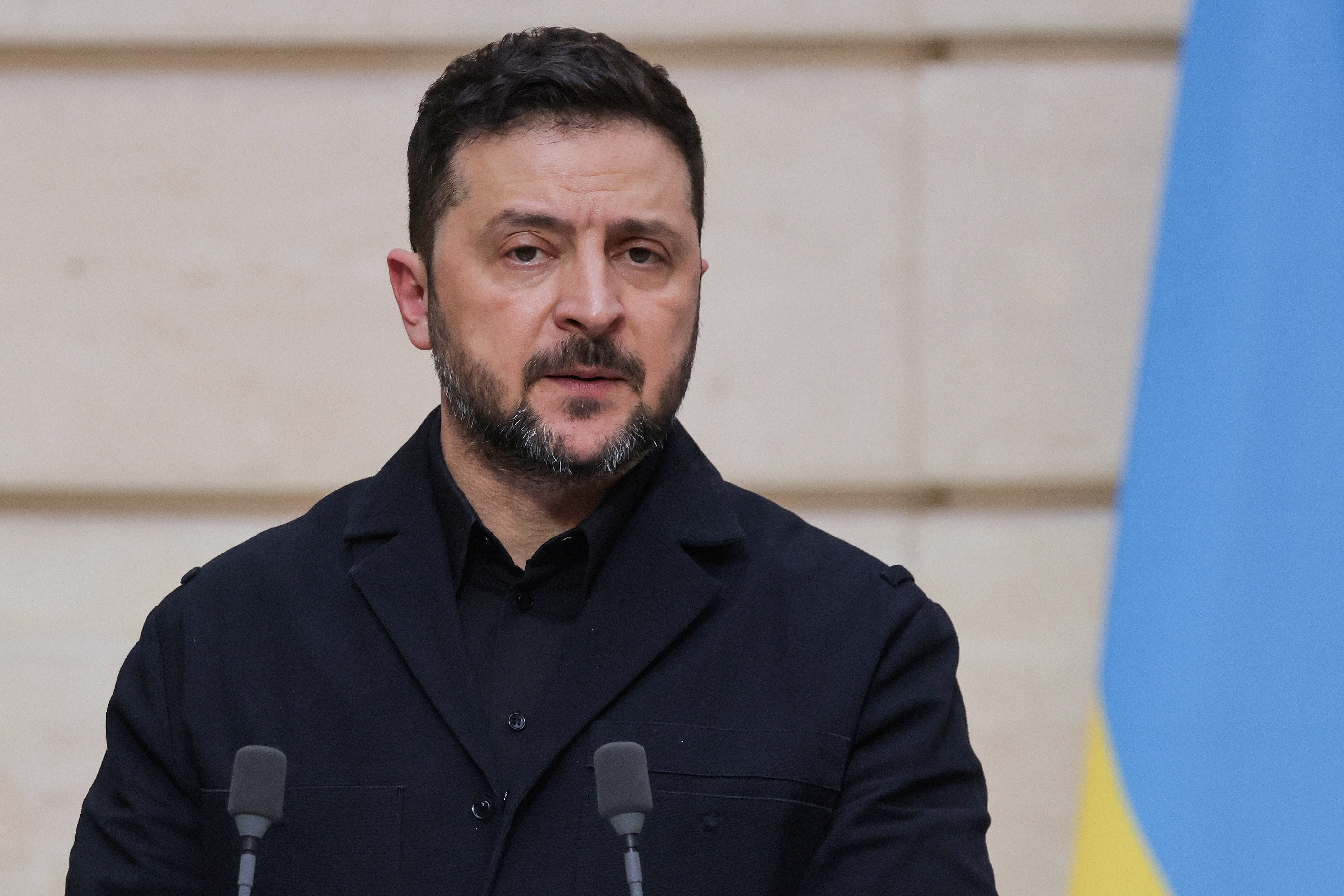
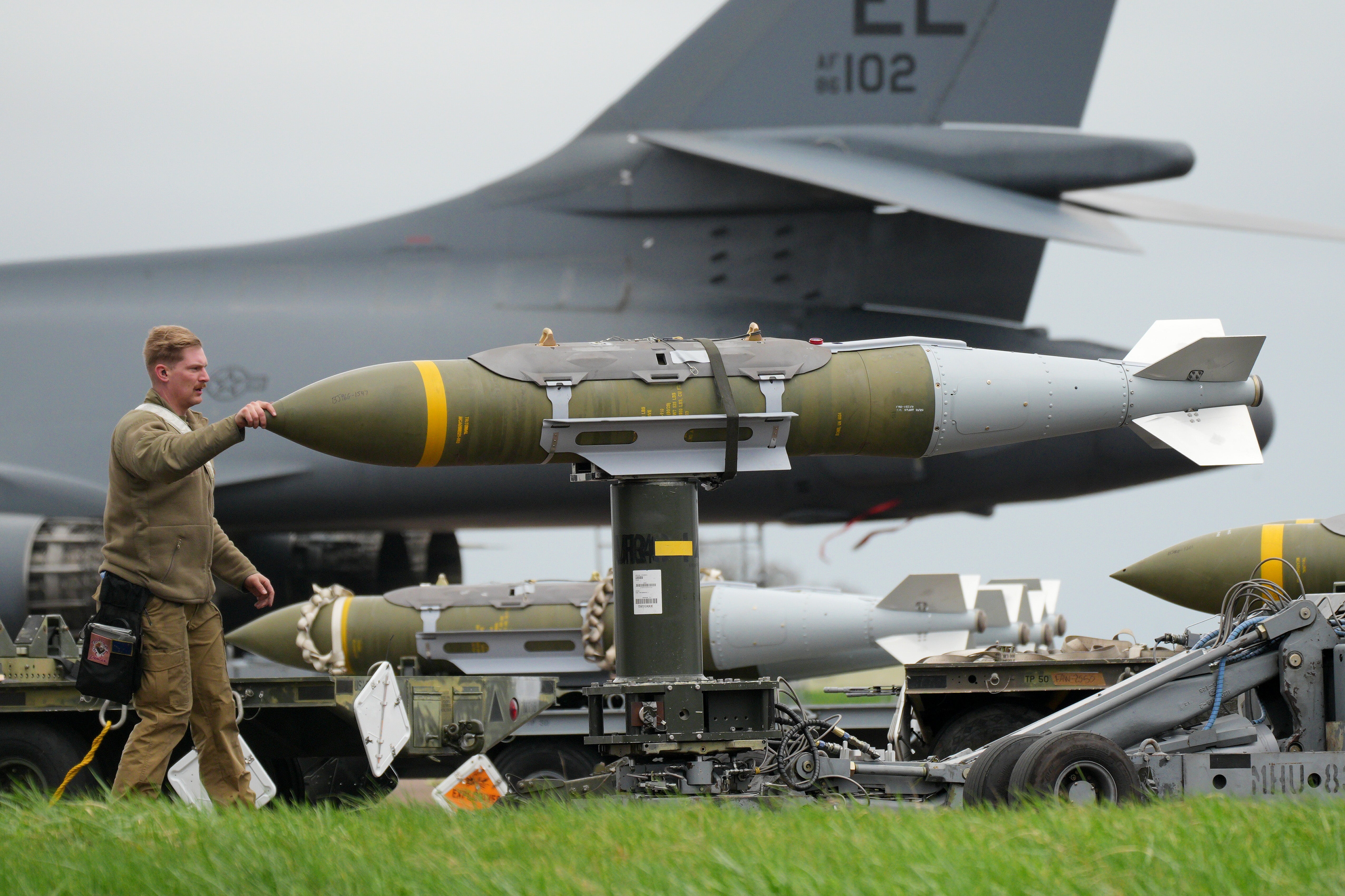
From the start of the Israel-US campaign against Iran, Volodymyr Zelensky warned, first in an interview with The Independent, that Ukraine’s air defences would suffer from a loss of supply. Ukraine gets most of its anti-ballistic-missile technology from the US, and it is purchased for Ukraine by European allies.
“The focus will shift to the Middle East, to the Iranian war, now, and to the United States and also to Israel,” Zelensky told theWorld of Trouble podcast. “This is very understandable. And to the countries in the Middle East, who are now under attacks, massive attacks of drones and missiles from the Iranian side.
“Our estimation, of course, is that air defence [for Ukraine] could decrease.”
Since then, Zelensky’s offer of Ukrainian drone experts to help defend the Gulf has been rejected by Trump, who said at the weekend: “We don’t need their help on drone defence. We know more about drones than anybody. We have the best drones in the world, actually.”
The oil bonus for Russia, allowed by Trump, has been condemned by European leaders and Ukrainian politicians. Oleksandr Morezkho, chair of the Ukrainian parliament’s foreign affairs committee, said: “It’s like giving a murderer more bullets. For Russia, oil and gas are weapons. If we see, as a result of lifting oil sanctions, more intensive Russian attacks and more casualties, it might be perceived as if Trump is aligning himself with Putin.”
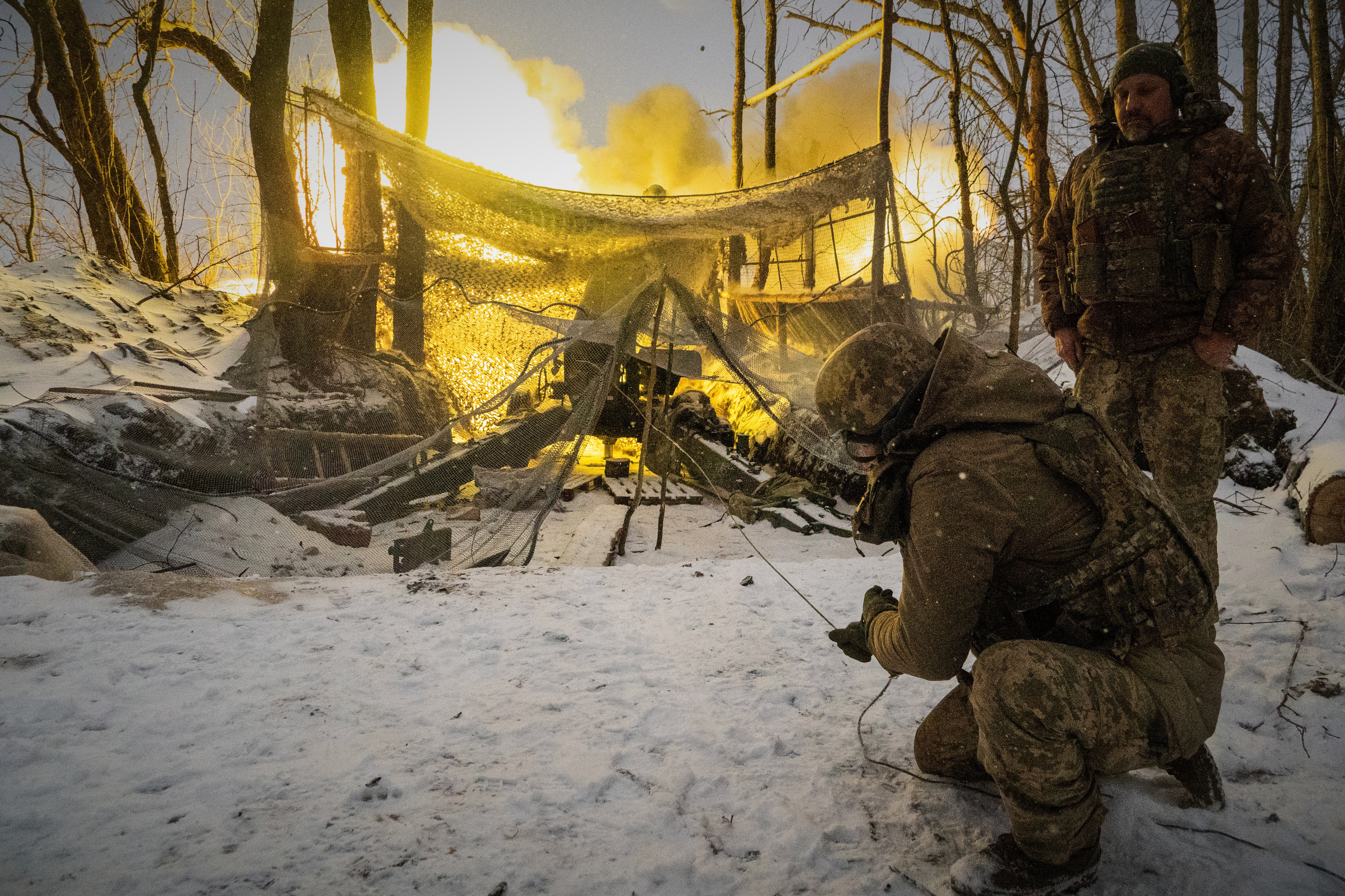
Ukraine continues to push Russian forces back in small territorial shifts in its favour along a front line that is 1,200km (745 miles) long.
Soldiers serving there have repeatedly said that the quality and motivation of Russian soldiers appear to have improved. “It’s because they’re motivated by lots of money,” one commander on the Zaporizhzhia front line explained.
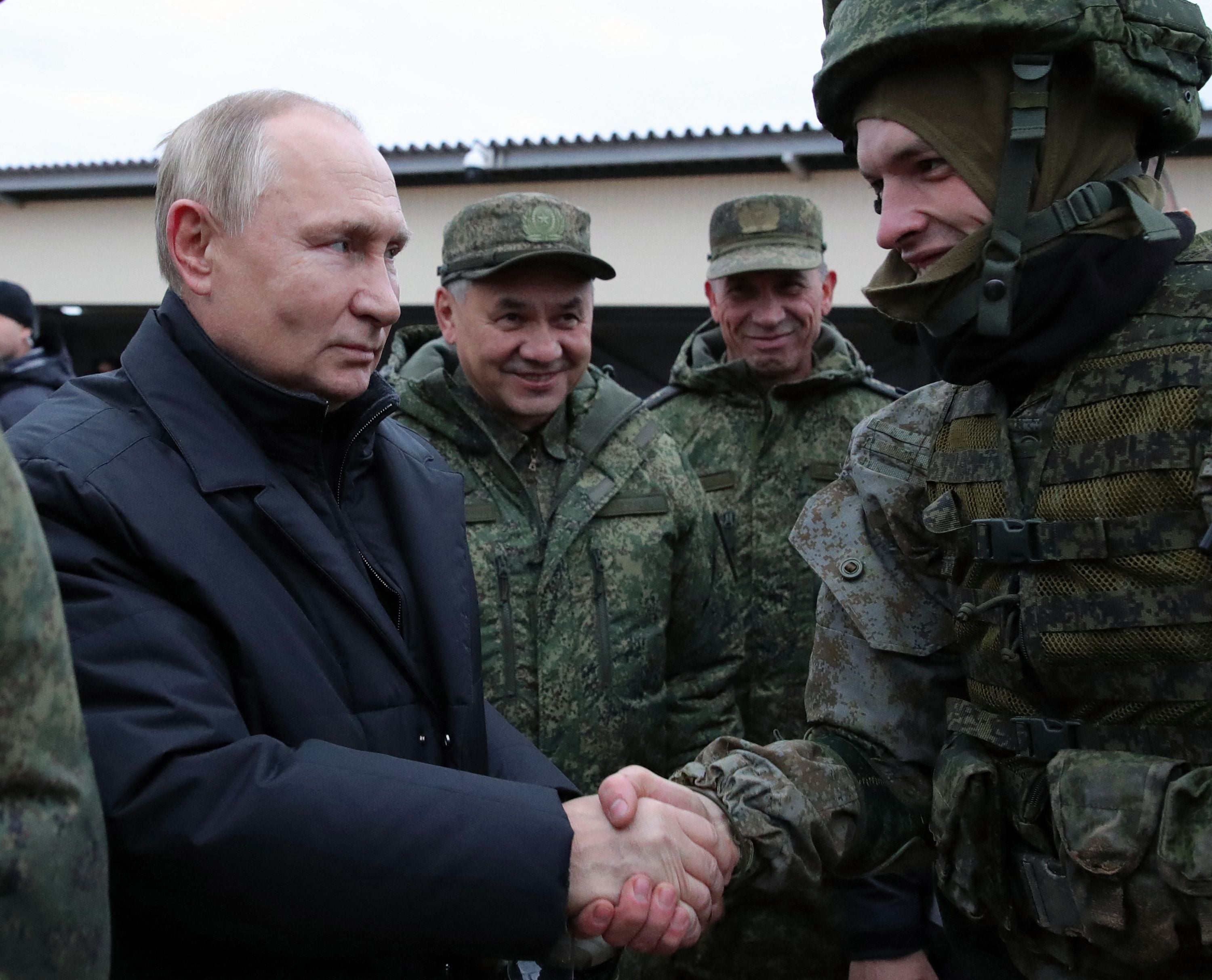
Putin wants to avoid general conscription, and has recruited between 400,000 and 430,000 “contract soldiers” on salaries of around $3,000 (£2,260) a month, alongside their sign-up bonus and death compensation for their families.
Russian officers have routinely hidden casualty figures from their bosses. Mass graves of Russian dead have been found on sites liberated from Moscow’s forces, and the number of dead is suppressed in an effort to save the Kremlin money.
But still, the salary bill of $1.3bn (£98m) a month for contract soldiers is a further strain on the Russian economy, which is growing at only 0.8 per cent, and which is 40 per cent focused on defence since the full-scale invasion of Ukraine in February 2022.
Before the oil-price surge, Western intelligence analysis calculated that in Russia, “at current trajectory, regional budgets financing recruitment will face insolvency before manpower pools are exhausted”.
Ukraine is now being forced to recalibrate these assumptions. Kyiv had estimated that killing Russians at a rate of 50,000 a month would have caused “systemic collapse” by the autumn. That date will now have been pushed back, following the Netanyahu-Trump war against Iran.

