



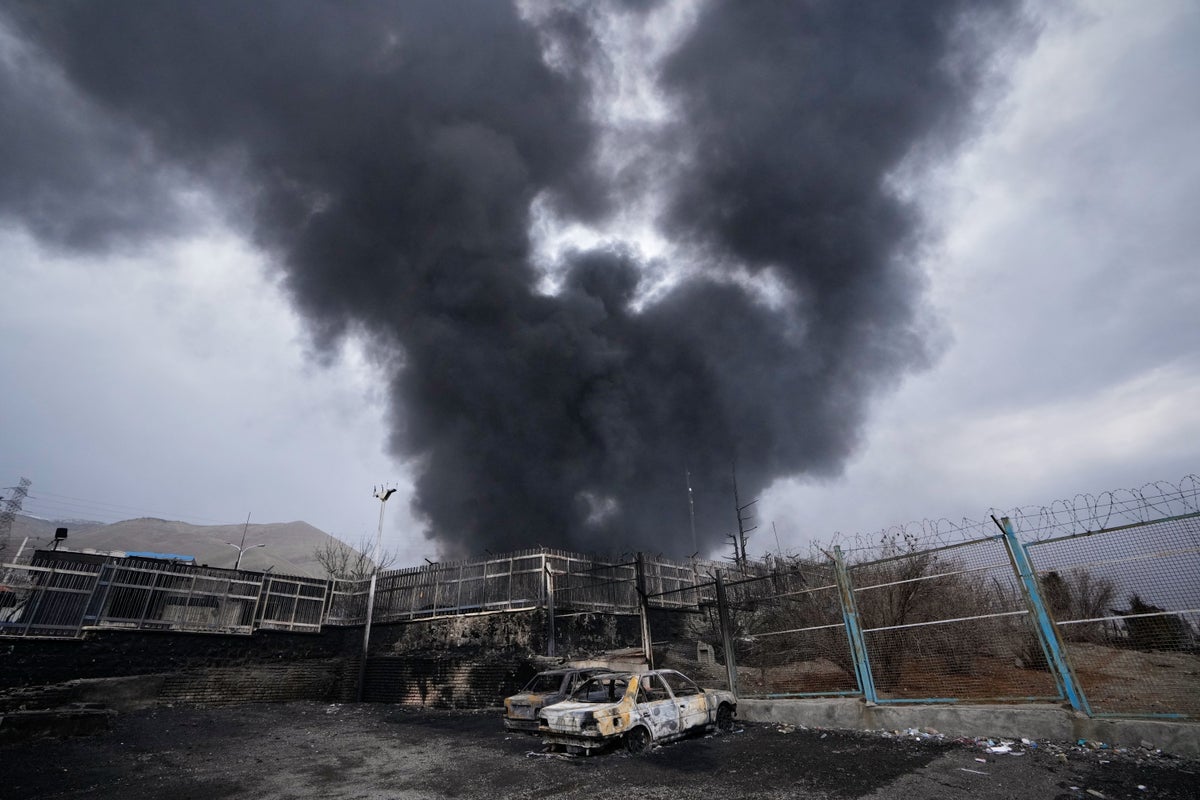
Ministers face pressure to act on the cost of living as the Iran conflict threatens to push prices higher.
Oil prices have soared since the US and Israel began strikes on Iran, exceeding 100 dollars per barrel on Monday.
Although prices fell back below 90 dollars as US President Donald Trump suggested the conflict was nearing a conclusion – contradicting his own Defence Department – economists warned that the war would mean inflation remains higher for longer.
The British Chambers of Commerce forecast that inflation would remain “firmly above” the Bank of England’s 2% target, noting the “highly uncertain” global situation.
Both Prime Minister Sir Keir Starmer and Rachel Reeves have acknowledged that the war is likely to cause economic damage in the UK, with the Chancellor telling MPs it was “likely to put upward pressure on inflation” over the coming months.
Following a call with her G7 counterparts on Monday, Ms Reeves said she was ready to support “a co-ordinated release” of international oil reserves to ease the economic shock of the crisis.
She also called for action to “guarantee the security of vessels passing through the Strait of Hormuz”.
But despite asking the competition watchdog to prevent wartime profiteering, the Chancellor resisted calls to cancel a planned increase in fuel duty in response to the oil price spike.
Fuel duty has been frozen since 2011, and was cut by 5p in 2022 in response to Russia’s full-scale invasion of Ukraine.
At her budget last year, Ms Reeves said the 5p cut would be unwound between September 2026 and March 2027, but the Conservatives and Liberal Democrats have called for her to change course.
Shadow chancellor Sir Mel Stride said: “The latest developments in the Middle East make it even more important for Rachel Reeves to reverse course and scrap the rise in fuel duty she announced at the budget.”
Lib Dem leader Sir Ed Davey went further, saying the Prime Minister should convene the Government’s emergency Cobra committee “to personally get a grip on the threat of brutal price shocks facing families, pensioners and businesses”.
Meanwhile, the Royal Navy continues to prepare the destroyer HMS Dragon for deployment to the eastern Mediterranean.
Defence Secretary John Healey confirmed the ship, currently docked at Portsmouth, would set sail “in the next couple of days” before linking up with US air defence vessels in the region.
The move is intended to bolster defences against missiles and drones, particularly around the British bases at Akrotiri and Dhekelia in Cyprus.
But the Government has been accused of being slow to act, criticised for both failing to deploy HMS Dragon in advance of the US-Israeli strikes on Iran and the length of time it has taken for the vessel to even leave port.
It remains unclear how long the conflict will continue, with further strikes reported in Tehran as Mr Trump claimed the US operation was “very complete” and the Pentagon said America had “only just begun to fight”.
The US has also withdrawn non-essential diplomatic staff from Saudi Arabia amid continued Iranian retaliation, while the UK has withdrawn the dependants of embassy staff in the UAE “as a precautionary measure”.
Israel and Lebanon-based, Iran-backed militant group Hezbollah have also continued to exchange missile fire.
Speaking in the Commons on Monday, Mr Healey urged Hezbollah to stop targeting Israel and warned Israel against expanding the conflict into Lebanon.
