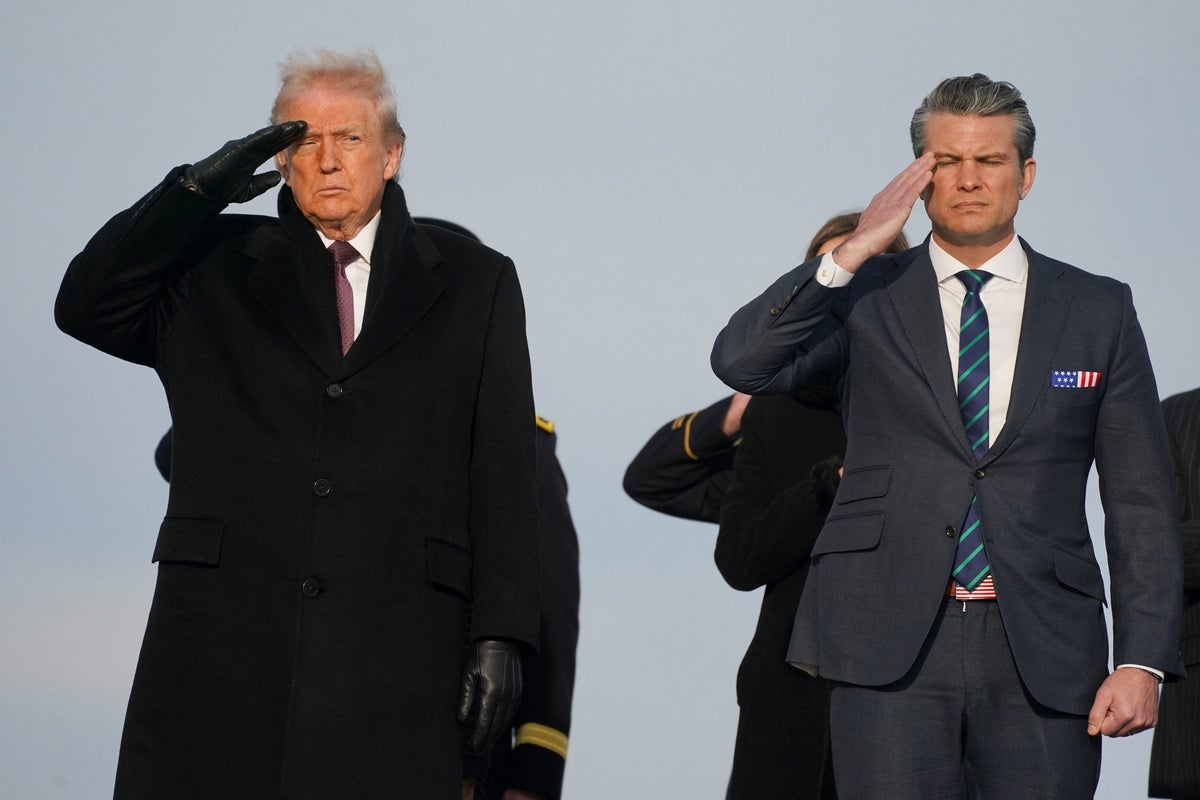
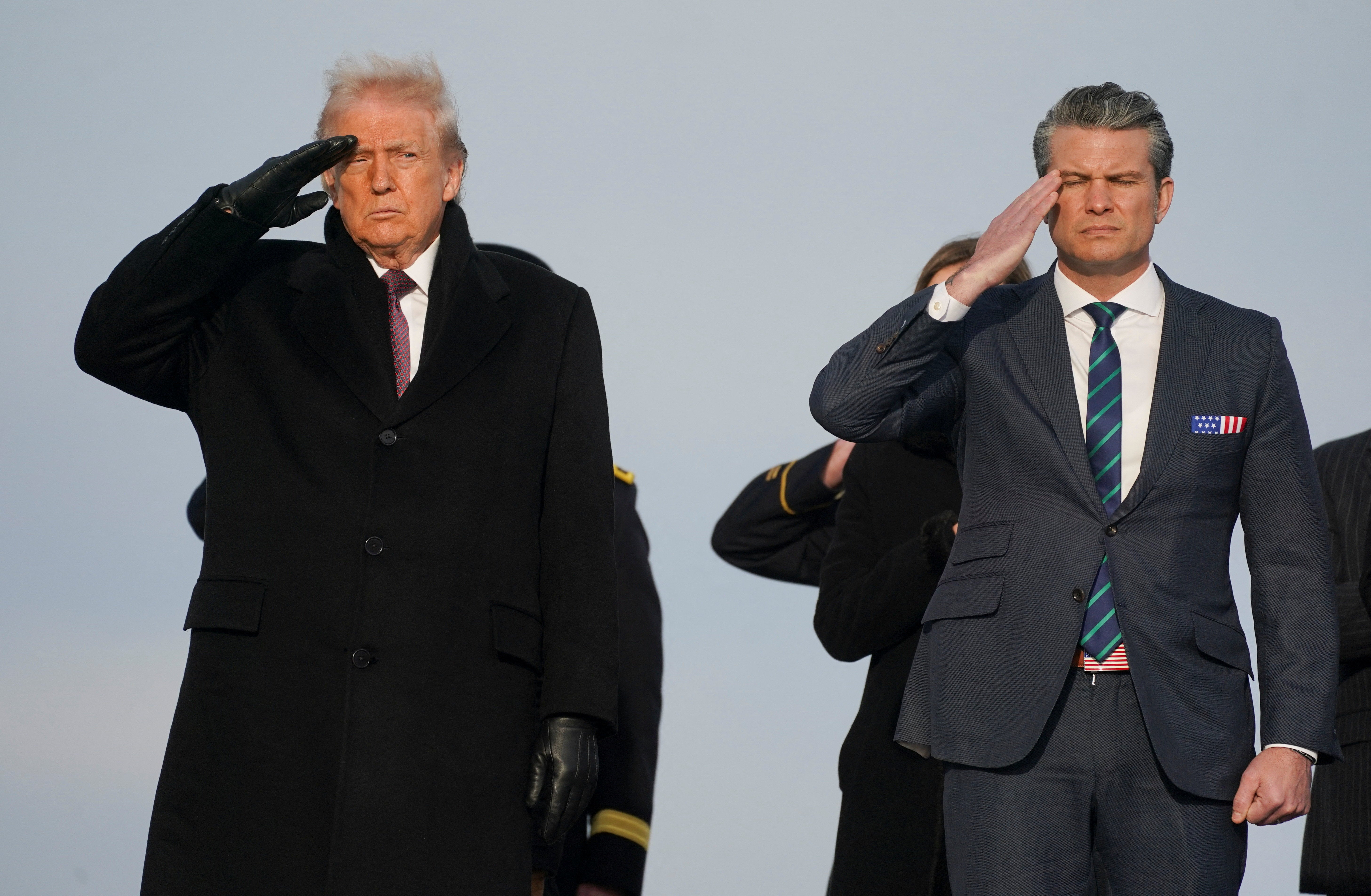
President Donald Trump is scheduled to make an announcement alongside Secretary of Defense Pete Hegseth and Secretary of the Navy John Phelan from his Mar-a-Lago home in Florida on Monday afternoon.
The event has been set for 4:30 p.m. ET, but no further details have yet been revealed about what the president intends to say.
However, the development comes after the Coast Guard seized a second sanctioned oil tanker off the coast of Venezuela over the weekend and announced it was “pursuing” a third.
“The United States will continue to pursue the illicit movement of sanctioned oil that is used to fund narco-terrorism in the region,” Homeland Security Secretary Kristi Noem said in a statement posted to social media after the capture of the second vessel, following an earlier interception made on December 10.
“We will find you, and we will stop you.”
An unnamed U.S. official has since told Reuters of the third ship: “The United States Guard is in active pursuit of a sanctioned dark fleet vessel that is part of Venezuela’s illegal sanctions evasion. It is flying a false flag and under a judicial seizure order.”
The moves mark an escalation of Trump’s aggressions against Venezuela and its president, Nicolas Maduro, after he announced a “blockade” of all sanctioned oil tankers entering and leaving the Central American country’s ports.
The president has said that U.S. land strikes could soon follow.
The administration has meanwhile also engaged in a series of lethal missile strikes on alleged drug trafficking boats in the Caribbean and eastern Pacific this fall, which have resulted in the deaths of more than 100 people.
Trump has faced heavy criticism since those strikes began over the administration’s failure to offer evidence to substantiate its claims that the vessels being targeted belong to dangerous drug traffickers attempting to deliver harmful intoxicants to American shores.
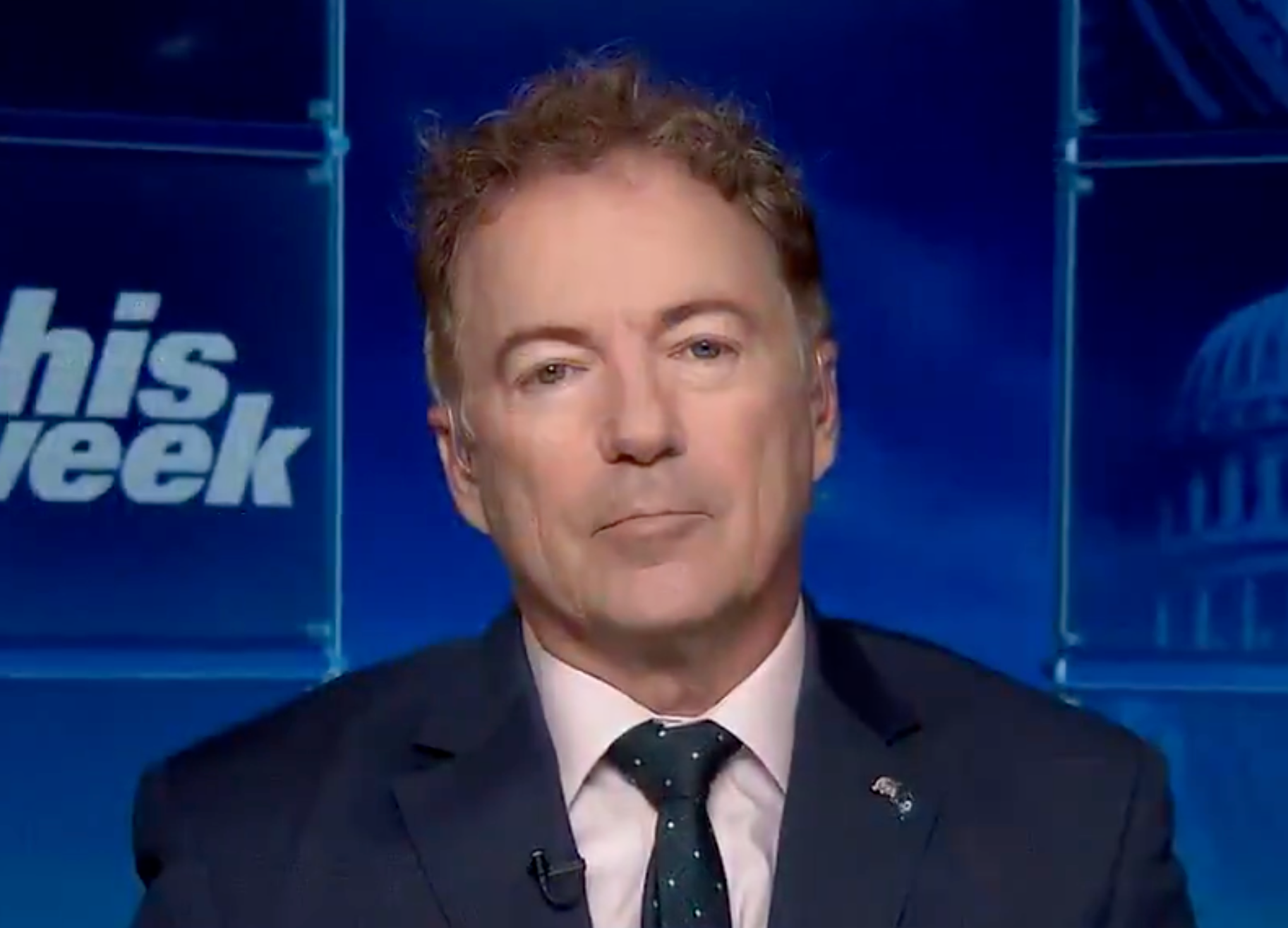
Both Republicans and Democrats on Capitol Hill have expressed their disquiet, with Kentucky GOP Sen. Rand Paul coming forward again Sunday to warn that the seizure of the tankers amounts to “a provocation and a prelude to war.”
“I’m not for confiscating these liners,” he told Jonathan Karl on ABC News’s This Week. “I’m not for blowing up these boats of unarmed people that are suspected of being drug dealers. I’m not for any of this.”
Paul went on to brand the administration’s efforts to stamp out northbound smuggling from the region “bizarre and contradictory,” citing Trump’s decision to pardon former Honduran president Juan Orlando Hernandez after he was sentenced to 45 years in a U.S. jail in March 2024 after being convicted of drug trafficking and weapons charges.
“So, some narco-terrorists are really OK and other narco-terrorists we’re going to blow up?” Paul asked. “And then some of them, if they’re not designated as a terrorist, we might arrest them?”
Since the first seizure, Venezuelan crude exports have fallen sharply.
While many vessels picking up oil in Venezuela are under sanctions, others transporting the country’s oil and crude from Iran and Russia are not sanctioned, and some companies, particularly Chevron, transport Venezuelan oil on their own authorized ships.
China is the biggest buyer of Venezuelan crude, which accounts for roughly 4 percent of its imports, with shipments in December on track to average more than 600,000 barrels per day, analysts have said.
For now, the oil market is well supplied, with millions of barrels of oil on tankers off the coast of China waiting to be offloaded. If the embargo stays in place for some time, then the loss of nearly a million barrels a day of crude supply is likely to push oil prices higher.
Since the U.S. imposed energy sanctions on Venezuela in 2019, traders and refiners buying Venezuelan oil have resorted to a “shadow fleet” of tankers that disguise their location and to vessels sanctioned for transporting Iranian or Russian oil.
The dark or shadow fleet is considered exposed to possible punitive measures from the U.S., shipping analysts have said.