

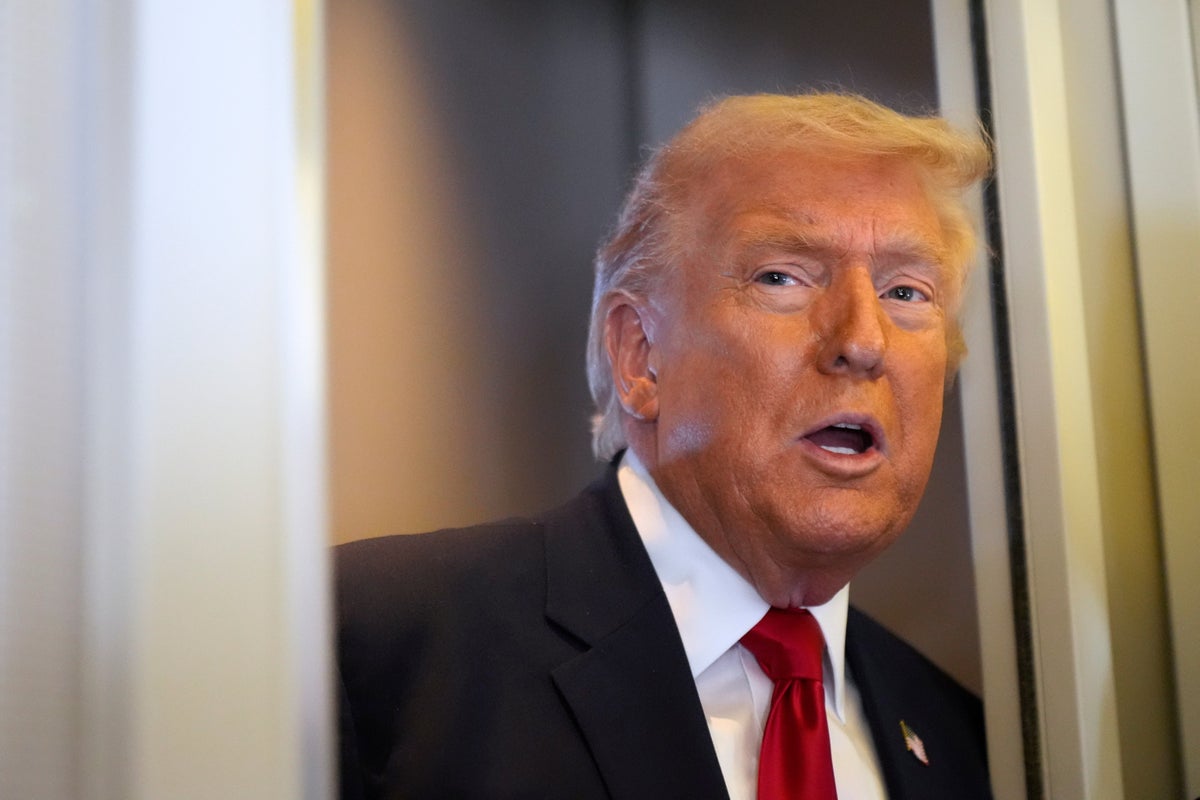
President Donald Trump on Monday said he’s just fine with seeing more American service members killed in the ongoing aerial campaign against Iran as long as U.S. forces can “finish the job.”
Asked how many deaths on the U.S. side would be acceptable to him after Pentagon officials announced that an eighth American service member had been killed in the conflict, Trump told reporters at a press conference in Doral, Florida: “When you have conflicts like this, you always have death.”
He claimed to have been at the U.S. military mortuary at Dover Air Force Base “yesterday” while attempting to recount to reporters how family members of the first six American service members to die in the conflict had been supportive of the week-old war effort when he met them during a dignified transfer ceremony that had taken place two days before, on Saturday, March 7.
“They were unbelievable people, but they all had one thing in common. They said to me, one thing every single one: ‘Finish the job. Sir, please finish the job,’” he said.
The roughly 35-minute appearance before reporters came at the tail end of a four-day weekend split between his Palm Beach, Florida home and the Doral resort he owns outside Miami, where Republicans were holding a policy retreat.
The press conference also featured a bizarre aside in which he claimed Iran had been responsible for the 2000 bombing of the U.S.S. Cole in Yemen which had actually been carried out by al-Qaeda, as well as a strange moment when Trump claimed that Iran — which does not possess U.S.-made Tomahawk cruise missiles — had fired the Tomahawk which struck a girls’ school in the opening days of the war.
When pressed on whether the U.S. would accept responsibility for the strike, Trump claimed he hadn’t seen any evidence that the U.S. was responsible and falsely claimed Iran “has some Tomahawks” even though the cruise missiles are operated exclusively by the U.S. and a few key allies such as the U.K.
“Whether it’s Iran or somebody else … a Tomahawk, is very generic. It’s sold to other countries, but that’s being investigated right now,” he said.
Pressed further on why he’d make such a claim when even Defense Secretary Pete Hegseth has refused to go that far, Trump replied: “Because I just don’t know enough about it.”
“I think it’s something that I was told is under investigation, but Tomahawks are aused by others. As you know, numerous other nations have Tomahawks. They buy them from us. But I will certainly whatever the report, I’m willing to live with that report,” he said.
Trump’s latest comments came just hours after he claimed the joint U.S.-Israeli bombing campaign against Iran could wrap sooner than expected as global markets have continued to tumble from the effects of rising oil prices as a result of the week-old war.
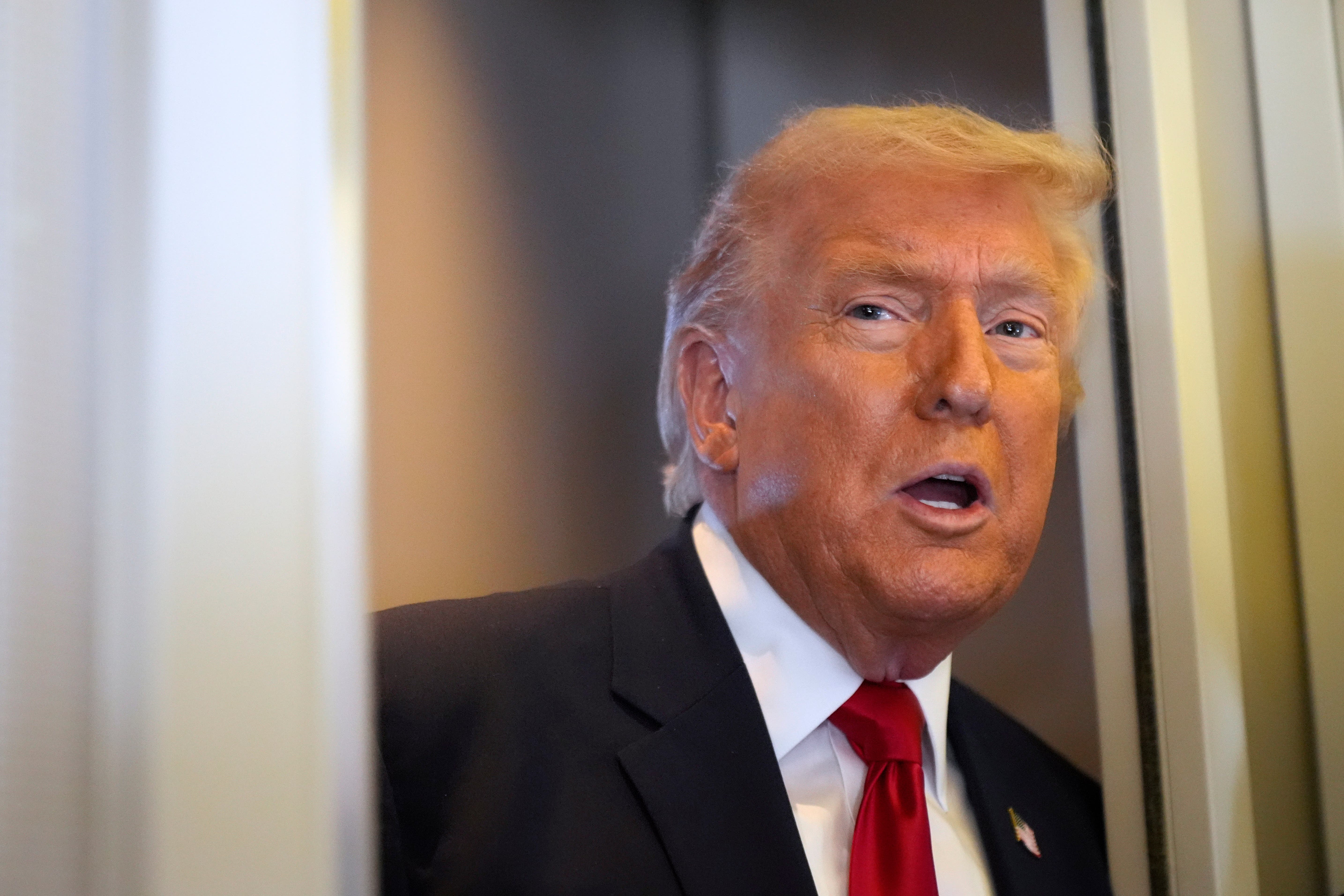
In a Monday interview, Trump told CBS News he thought the war is “very complete, pretty much.”
“They have no navy, no communications, they’ve got no Air Force,” he said.
Trump also told the television network that the U.S. war effort is now “very far” ahead of the four to five week timeline he and his advisers had estimated when the air campaign began just over one week earlier.
In remarks to Republican members of Congress several hours later, he claimed the U.S. was “winning” the war but had not won yet “by enough” to end the bombing campaign.
He also told reporters at the same press conference that the joint U.S.-Israeli effort would “go further” while suggesting that the “big risk on that war” has been “over for three days” because the U.S. “wiped out” Iran’s naval and air forces.
“These were serious ships. These were ships that you buy when you want to win battles. They’re all they’re all on the bottom floor. The sailors are rolling off the ships,” he said.
“The Air Force is gone. Everything’s gone. The missiles are down to a trickle. The drones are down to probably 25% and they’ll be soon be down to nothing.”
He also said the remainder of the campaign would be “a determination as to my attitude, along with the people in the Trump administration, what we want to do.”
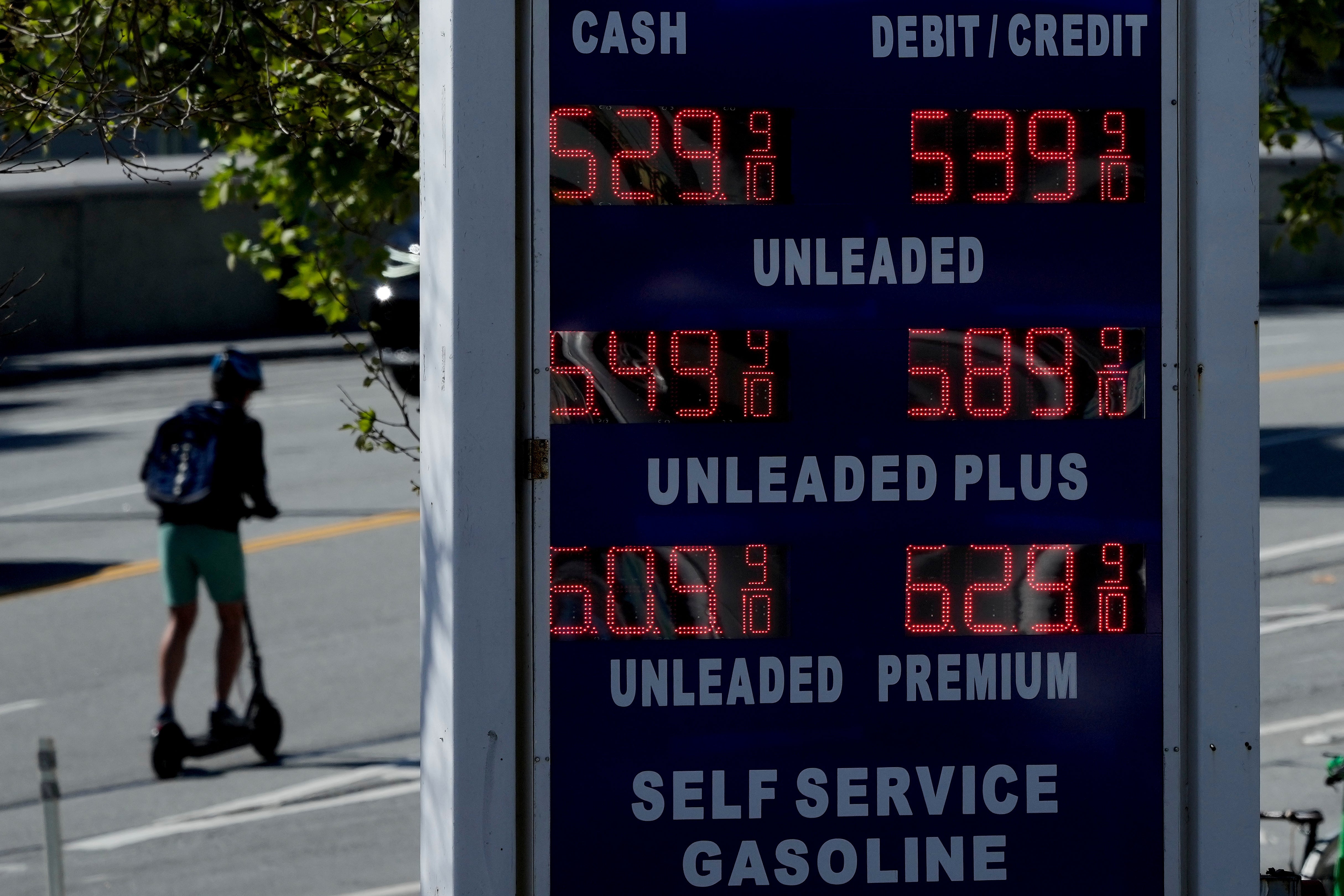
While the American death toll from the airstrikes has remained in the single digits, the war’s effect on the petroleum market has caused gasoline prices in the United States to soar by double-digit percentages since the war’s start last week after Iran’s military threatened shipping through the Strait of Hormuz.
Trump told CBS ships are currently moving through that key chokepoint but he also said he’s “thinking about taking it over.”
“They’ve shot everything they have to shoot, and they better not try anything cute or it’s going to be the end of that country,” he added.
According to the American Automobile Association, the average cost of a gallon of gasoline hit $3.48 on Monday, with prices hitting even higher levels in places such as California, where the price of a single gallon is $5.20.
Gasoline costs are closely tied to oil prices and the latest explosion of violence in the Middle East has badly disrupted the flow of crude oil from the Persian Gulf, sending oil soaring beyond the $100 per barrel mark for the first time since the outbreak of the war in Ukraine in 2022.
Iranian threats against tankers intending to cross the key shipping route Strait of Hormuz has led to their idling in port rather than risk being attacked. As a result, shipments are going undelivered and the world faces being cut off from around one-fifth of its supply.
Iraq, the United Arab Emirates and Kuwait have responded to the impasse by making precautionary cuts to their domestic oil production in anticipation of forthcoming storage issues if their exports remain grounded, according to CNBC.
But Trump has so far attempted to downplay the problem in a Sunday night Truth Social post in which he wrote that “short-term” spikes in oil are “a very small price to pay for U.S.A., and World, Safety and Peace.”
He added that anyone who believes otherwise is a “fool.”
A day later, he told reporters the U.S. is “looking to keep oil prices down” and suggested that the rise as a result of the ongoing war had been “artificially up” but not as high as he’d once believed while calling the week-old war “an excursion” and “a very positive thing.”
“I knew oil prices would go up if I did this, and they’ve gone up probably less than I thought they’d go up, but I don’t think anybody thought we were going to be this quickly successful. This was a military success, the likes of which people haven’t seen,” he said.