

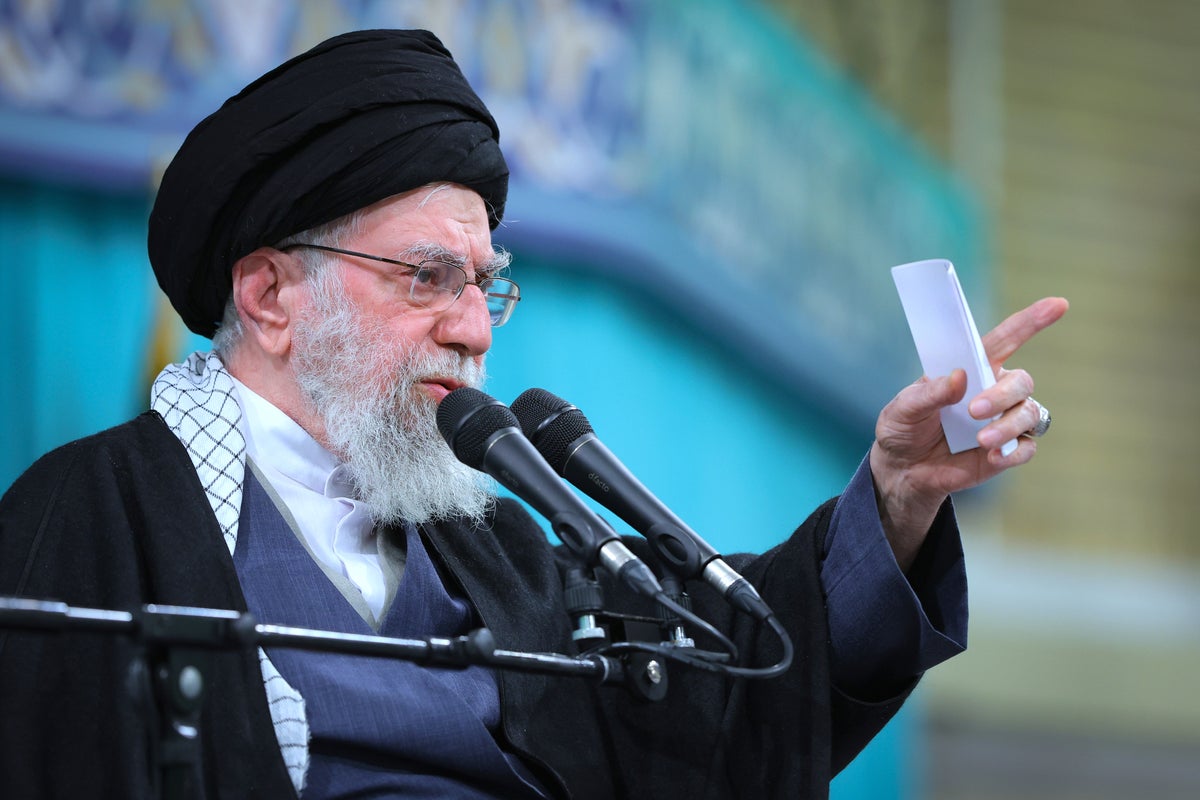
According to Donald Trump, Iran does “want to do a deal” which would, in theory, preserve the power of the present regime in return for ending its nuclear weapons programme. On the face of it, that is an offer that the supreme leader of Iran, Ayatollah Ali Khamenei, cannot refuse.
It is an offer that he cannot refuse, in the old mafiosi sense, because the overwhelming firepower available to the United States could destroy the current Iranian state. It is also an offer that, rationally, it would be wise for the regime to accept for the basic purposes of self-preservation. After all, despite the president’s earlier vocal support for the Iranian protesters and promise that “help is coming”, the only tangible effect of US policy has been to deter the mass hangings of anti-regime Iranians arrested in the recent disturbances.
As in Venezuela, and in stark contrast to past US policy in the region, the Trump administration does not have as its central objective “regime change” in Iran. Instead, the objective the president has set himself, as he puts it in his social media posts, is simple and emphatic, but limited: “NO NUCLEAR WEAPONS”. President Trump has not, for example, campaigned for the return of the exiled shah, nor for free elections. As with the machinery of President Maduro’s government in Caracas, the American approach is not about spreading freedom and democracy across the world but of finding people with whom the White House can do business. It is all transactional.
Ayatollah Khamenei seems uninterested, however, despite Mr Trump’s apparent optimism about an agreement. Instead, he displays defiance and makes threats of his own: “Talk of war and military mobilisation against us is nothing new and Iran has faced such events historically. Americans should know that if they start a war, this time it will be a regional war.”
This is not idle talk, despite the huge disparity in conventional military capability between the two nations. Iran is not Venezuela. It is perfectly true that Iranian air defences are weak, as is Tehran’s ability to fly missiles directly into Israeli territory with any success. That much was graphically demonstrated in the 12-day war between Israel and Iran last June, and the severe damage to Iranian nuclear facilities inflicted by the Americans’ Operation Midnight Hammer. Iran’s conventional forces are equipped with largely outdated Russian, American, Chinese and British weaponry, some dating back to before the Iranian revolution of 1979. No match for a stealth bomber.
That, though, is not where the potency of the supreme leader’s threat lies. Iran’s extensive, albeit recently weakened, network of terrorist allies and its expertise in drone warfare mean that it can still wage a proxy and asymmetric war against US and Israeli interests across the Middle East. This includes the many US bases from Oman to Iraq and Turkey, a large range of embassies and consulates, as well as some capacity to strike civilian naval targets in the Red Sea, thanks to the Houthi rebels in Yemen. Hamas and Hezbollah might be induced to join a retaliation campaign against Israeli forces, which would obviously end the implementation of President Trump’s already fragile peace plan in Gaza. Last, but diplomatically not least, Iran remains an important ally for Russia, and Vladimir Putin has a vested interest in protecting a useful source of drone technology and sanctions-busting. So that has wider implications for Mr Trump’s long-term aim of normalising relations with Moscow.
Other, closer American allies have also rightly warned the US president to exercise caution. Even if they support the principle of stopping Iran acquiring nuclear weapons, Saudi Arabia, Turkey, Oman and Qatar have publicly voiced fears about what a regional conflagration might mean for them, with the possibility of a breakdown of the Iranian state and civil war perhaps the ultimate nightmare. It hardly needs adding that the effects on the oil price on the world economy would be ruinous.
To borrow a couple of favourite phrases of President Trump, he is presently “playing with fire” and, despite America’s might, he “doesn’t have all the cards”; and the ayatollahs in Tehran know it. They also understand only too well that the possession of a nuclear deterrent is their best protection against US intervention and Israeli aggression, albeit also attracting attacks in the short term. For Mr Trump, the best option might be to find some more compelling way of persuading Tehran that he is prepared to accept the Islamic Republic’s legitimacy in return for the abandonment of the nuclear programme, to be verified by an independent agency, and some restraint towards protesters. That might even be an attractive option for the more pragmatic elements in the theocracy and the powerful Iranian Revolutionary Guards Corps. The tragic downside is clearly that it would be a betrayal of the Iranian people.
For the moment, the president is relying on the kind of intimidatory tactics and, possibly, limited military action that worked so well for him in Venezuela. But this playbook is already very different indeed because the Middle East is more combustible than Latin America. The fall of the ayatollahs might merely usher in more chaos and conflict – a terrible, counterproductive outcome analogous to those that followed Western interventions in Libya, Afghanistan and Iraq. For America and its president, this attempt to coerce Iran could still prove disastrous.