


President Donald Trump says Iran is responsible for shooting down an Apache helicopter above the Strait of Hormuz and has vowed to “respond” to the attack.
“I have just been informed by our Great Military that last night the Iranians shot down one of our highly sophisticated Apache Helicopters while patrolling over the Strait of Hormuz,” the president wrote on Truth Social Tuesday.
“There were two pilots involved, both are safe and uninjured,” he added. “Nevertheless, the United States must, of necessity, respond to this attack.”
The helicopter crashed hours after hostilities in the region escalated with Iran and Israel exchanging their first direct strikes in two months.
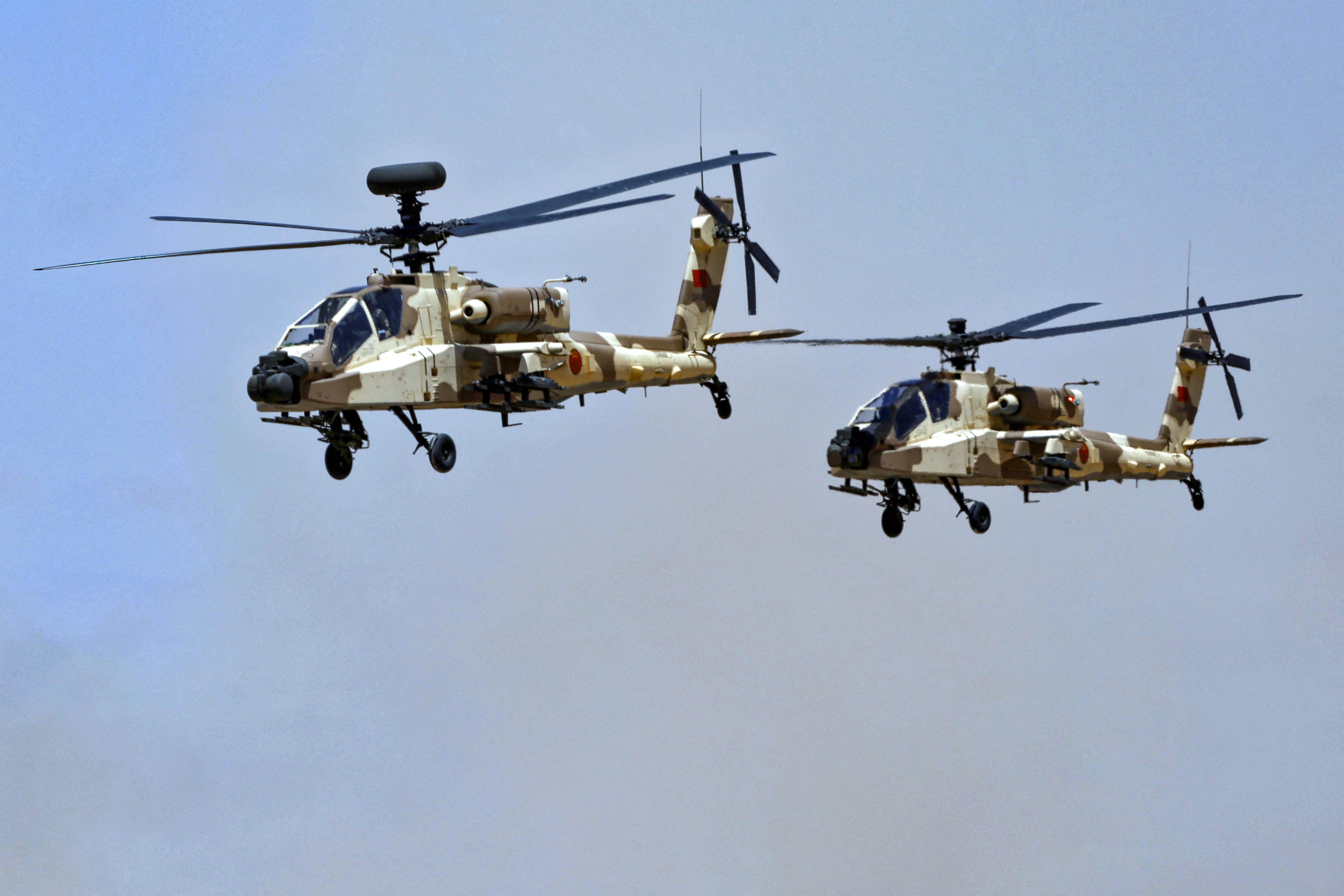
The helicopters, which cost around $35 million to $40 million, have been used by the U.S. military to police a blockade of Iranian ports near the strait as part of its large military presence in the region.
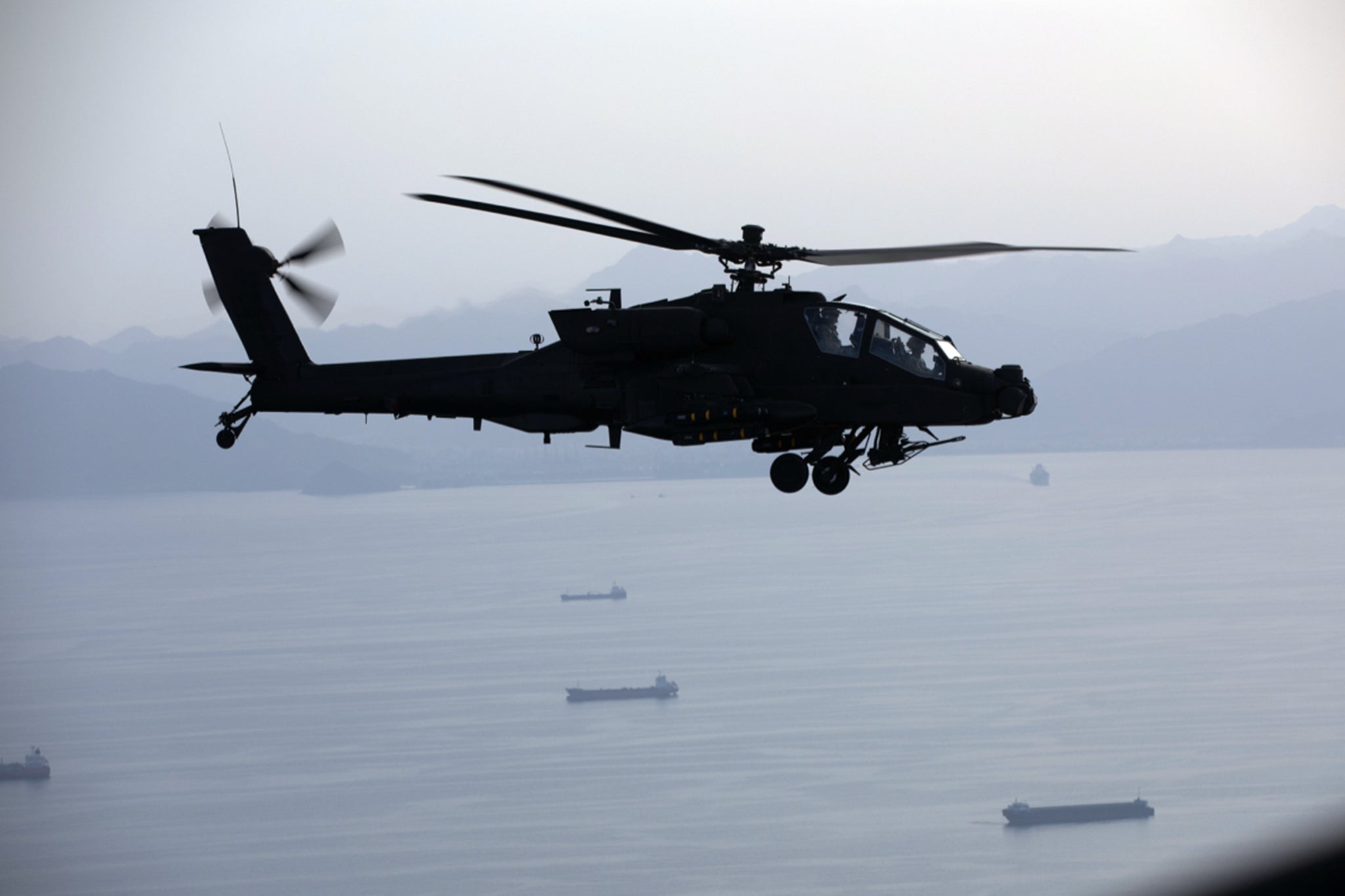
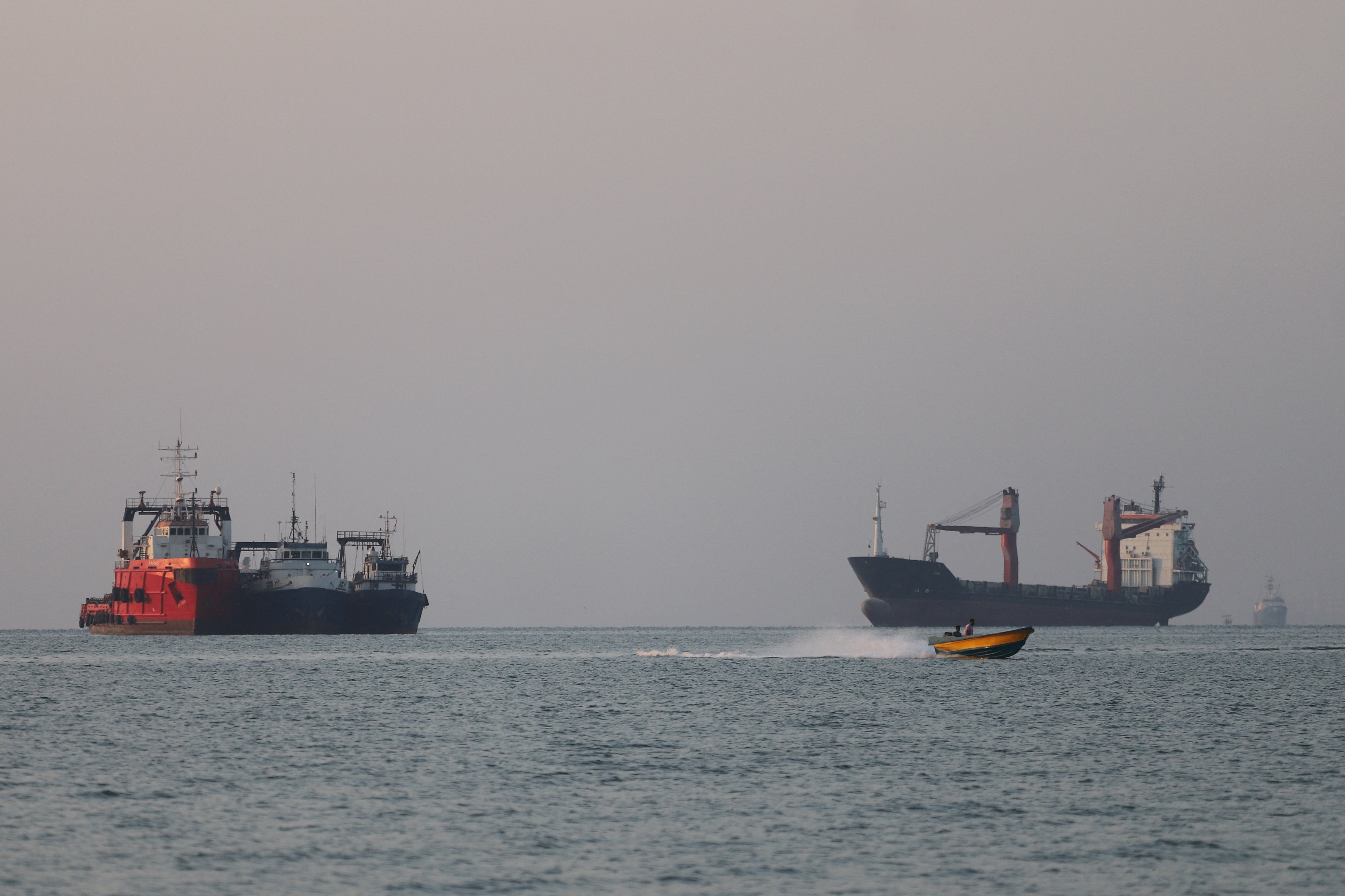
Apache aircraft have been a key asset in the U.S. blockade and have previously been used to attack Iranian small boats.
An unmanned Navy surface drone found and rescued the crew members after they spent roughly two hours in the Strait of Hormuz, U.S. Central Command said on Tuesday. It marked the first-known drone rescue at sea by the U.S. military.
They are in stable condition. Trump previously reported that the two pilots inside gunship were “fine” after their rescue.
Iranian state media acknowledged the helicopter crash but did not elaborate on the circumstances.
The incident took place hours after Iran and Israel said they had halted their attacks following yet another plea from Trump, though Tehran warned it would resume hostilities if Israel continued to hit Hezbollah in Lebanon, while Israel said it would attack Beirut if Hezbollah fired in its direction.
The threat from Trump comes after he urged Israel and Iran to halt fighting each other after the two countries exchanged attacks at the weekend.
But on Tuesday morning, an Israeli airstrike hit a housing district in the ancient southern Lebanese city of Tyre on Tuesday, after it issued an evacuation order for tens of thousands of residents in the UNESCO World Heritage site.
The refusal to stop attacks in Lebanon, as Iran demands, had hindered Trump’s efforts to turn a temporary ceasefire with Tehran into a long-term settlement.
Before his latest threat, Trump said the U.S. has a “very good chance” of signing a peace deal “in two or three days.”
“We’re very close to having a very, very good, strong, powerful deal,” the president said. “If we go and bomb — which we could do very easily if we want, and we spend another two or three weeks bombing — they’ll have nothing left whatsoever. But you won’t have the strait open for months.”
Iranian involvement in the helicopter crash would cast doubt over a peace deal, but there is currently no suggestion from Washington or Tehran that it was the result of a deliberate attack.
Re-engaging in what has already been a very costly war for the U.S. — with the Apache helicopter among dozens of military aircraft to have been lost or damaged — is not in the Trump administration’s interest.
The war is taking a mounting toll on American forces, with injuries growing to more than 500, as the U.S. faces dwindling munitions stockpiles and potential budget cuts without emergency funding from Congress.
At least 13 U.S. service members have died, including six people who were killed when two refueling jets collided above Iraq. An Iranian drone strike that hit a command post in Kuwait killed another six service members.
The Department of Defense initially said a critical surveillance plane was heavily damaged after an attack on a Saudi Arabia air base in March, but subsequent assessments and congressional reports confirmed the aircraft was completely destroyed — along with more than 40 other military aircraft that have been lost or damaged during the Iran war.
At least 42 aircraft have been damaged or destroyed, including F-15 fighter jets, an F-35 Lightning II aircraft, drones, and a HH-60W Jolly Green II combat search-and-rescue helicopter, according to a Congressional Research Service report published last month.
In April, Pentagon officials told Congress that the U.S. had spent $25 billion on the war, though Democratic leaders believe the true cost of the war is much higher.
Administration officials, facing bipartisan concerns about growing costs of the war, have meanwhile repeatedly declared victory while admonishing lawmakers and members of the press who have questioned or doubted American success in Iran.
Apache helicopters, while costing around $35 million to $40 million for the airframe alone, typically cost between $52 million and $100 million when including weapons, spare parts and training packages as part of the acquisition.
The F-35A Lightning II alone is worth around $110 million, according to the Centre for Arms Control and Non-Proliferation.
A single F-15 Strike Eagle fighter jet estimated to cost around $30 millionwhen purchased in 1998 is now worth between $65 million and $70 million when adjusted for inflation.
Four F-35s have been destroyed in the conflict so far, including three that were shot down by friendly fire over Kuwait on March 2.
A congressional report noted that the Pentagon had revised its estimates for repair and replacement costs from $25 billion to $29 billion over the same period.