
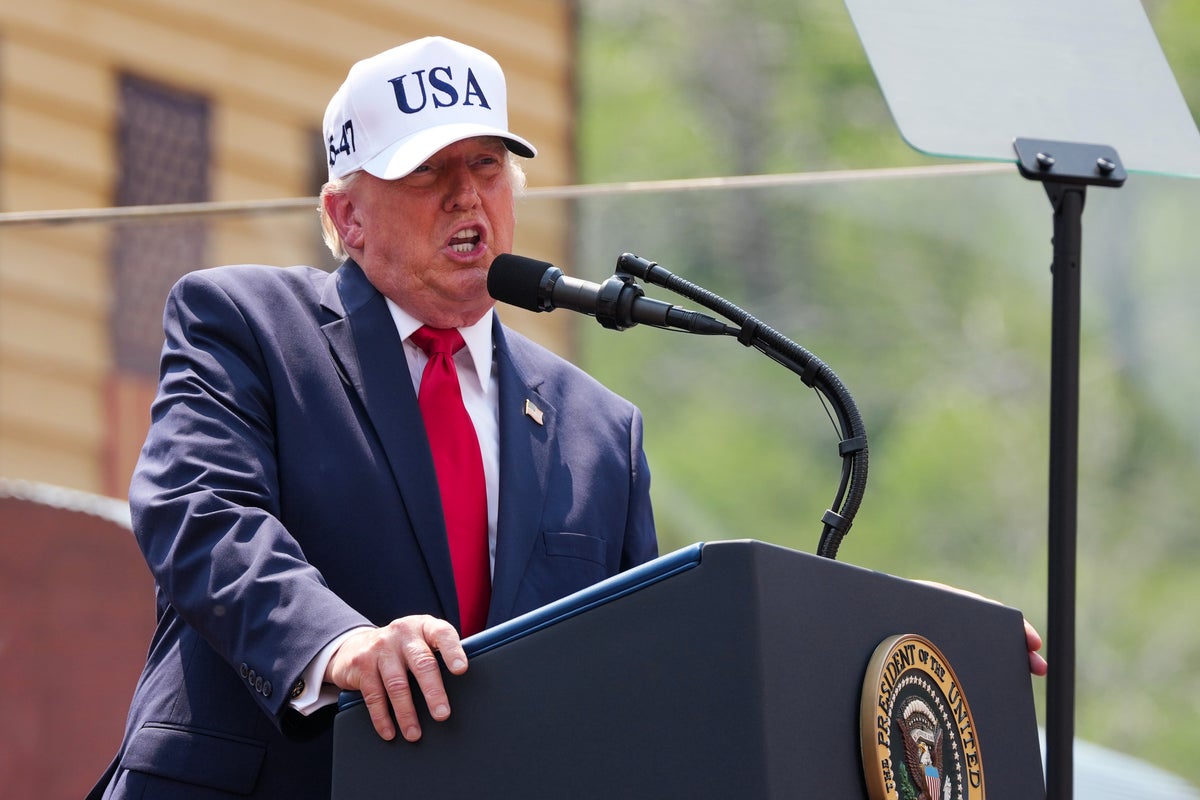
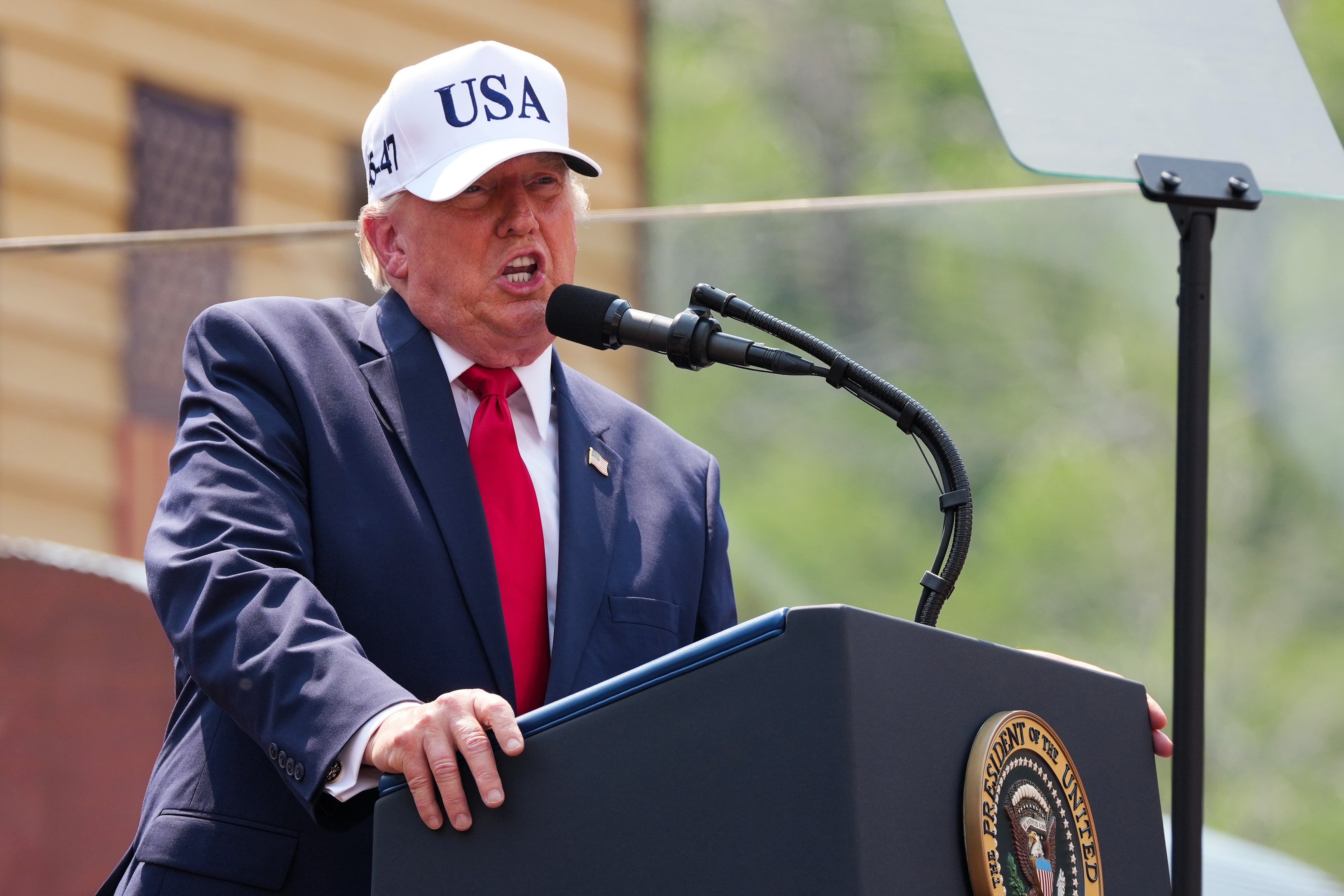
President Donald Trump has celebrated the installation of a statue of Caesar Rodney, a Founding Father and slave owner, near the White House, encouraging Americans to go and see it.
The imposing bronze figure, highlighted by the president ahead of America’s 250th birthday, has been a source of controversy after it was taken down at the height of the Black Lives Matter protests in 2020.
A Delaware delegate to the Continental Congress, Rodney played a crucial role in the fight for independence from Great Britain. On July 1, 1776, he received word that his state’s delegation was deadlocked on whether or not to break free — and that his vote could tip the balance.
“Although he suffered from asthma and facial cancer, Rodney immediately set forth on a 80-mile overnight journey by horseback from Dover, Delaware, to Philadelphia, Pennsylvania,” Trump wrote on Truth Social Thursday evening. “Enduring a raging thunderstorm, he arrived 250 years ago this very day, July 2, 1776, to cast his decisive vote, and secure America’s glorious destiny of Freedom and Independence.”
The president added: “An equestrian statue honoring Rodney’s key contribution now anchors Spirit of 76’ at Freedom Plaza, a new Exhibition in Washington, D.C., honoring the heroes and martyrs of the American Revolution. Go and see!”
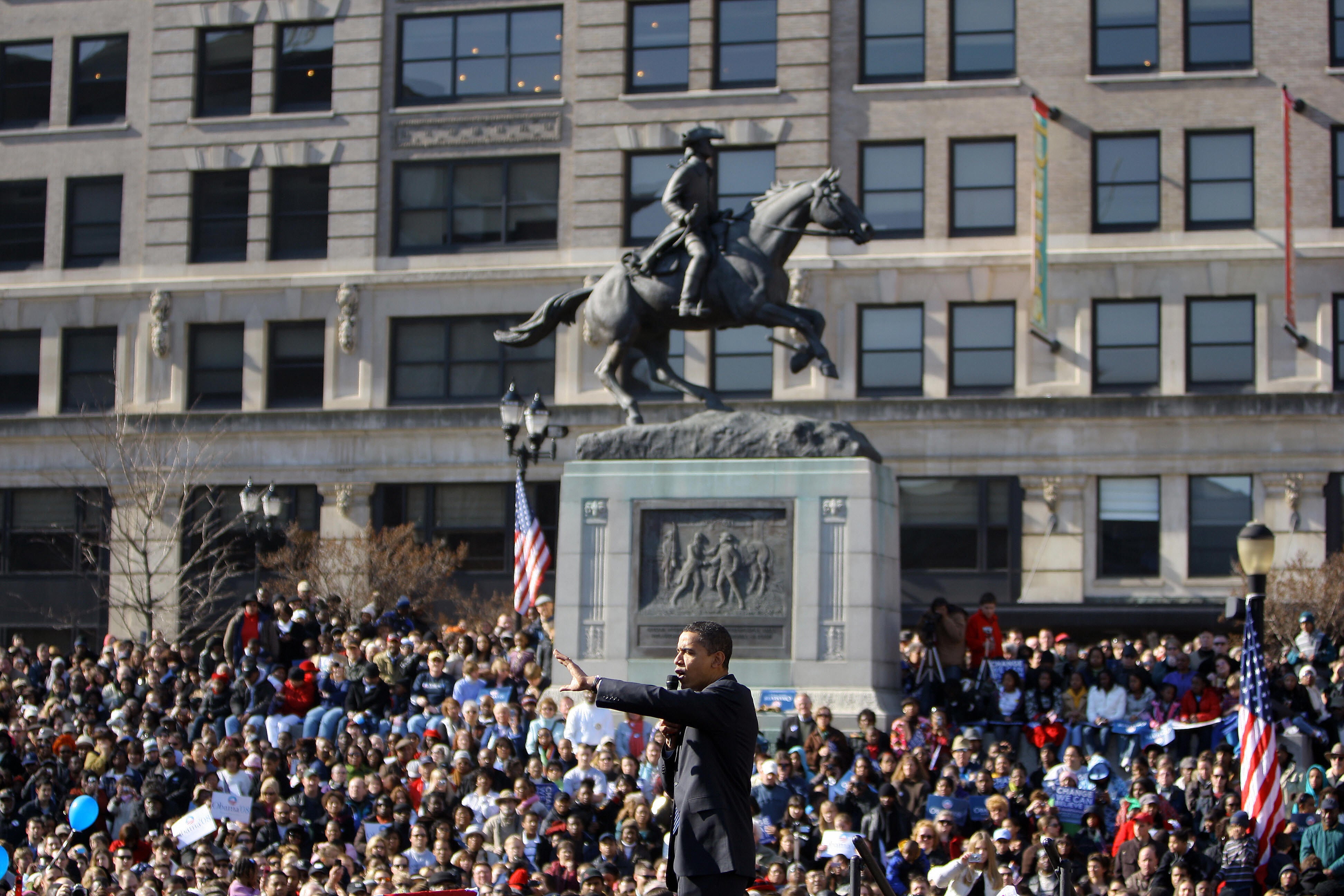
The statue itself dates back more than a century. First erected in downtown Wilmington in 1923, it stood for decades as a tribute to Rodney’s midnight ride. In February 2008, then-Democratic candidate for president Barack Obama hosted a rally in front of the Founding Father’s likeness.
But in 2020, in the aftermath of George Floyd’s killing and as calls for racial justice intensified, city officials ordered it to be taken down.
Mike Purzycki, then mayor of Wilmington, announced in June 2020 that the statue was “removed and stored so there can be an overdue discussion about the public display of historical figures and events.”
The controversy stems from Rodney’s history as a slave owner — he once owned as many as 200 people after inheriting his father’s plantation, according to The New York Times. There is evidence that he harbored objections to slavery, having once introduced legislation to prohibit the importation of slaves into Delaware.
Multiple prominent Founding Fathers and past presidents — including George Washington and Thomas Jefferson — owned slaves.
Soon after the statue of Rodney was removed, Trump issued a proclamation calling it part of a “radical purge” and the result of “extreme anti-American historical revisionism.”
“If Caesar Rodney cannot be defended, then there is no principle by which the other signers of the Declaration can be shielded from similar eradication,” the president wrote.
After returning to office last year, Trump moved to reshape the presentation of American history, calling for a return to what he described as “truth and sanity.”
He has signed several executive orders to advance that effort, including one directing the Interior Department to remove “corrosive” content from government-run institutions. Among the items that have been slated for removal are quotes about slavery and immigration at Bunker Hill Monument in Massachusetts. Signs addressing Native American history and climate change at national parks have also been targeted.
Supporters who oppose “woke” policies have applauded the move, while critics argue it amounts to whitewashing.
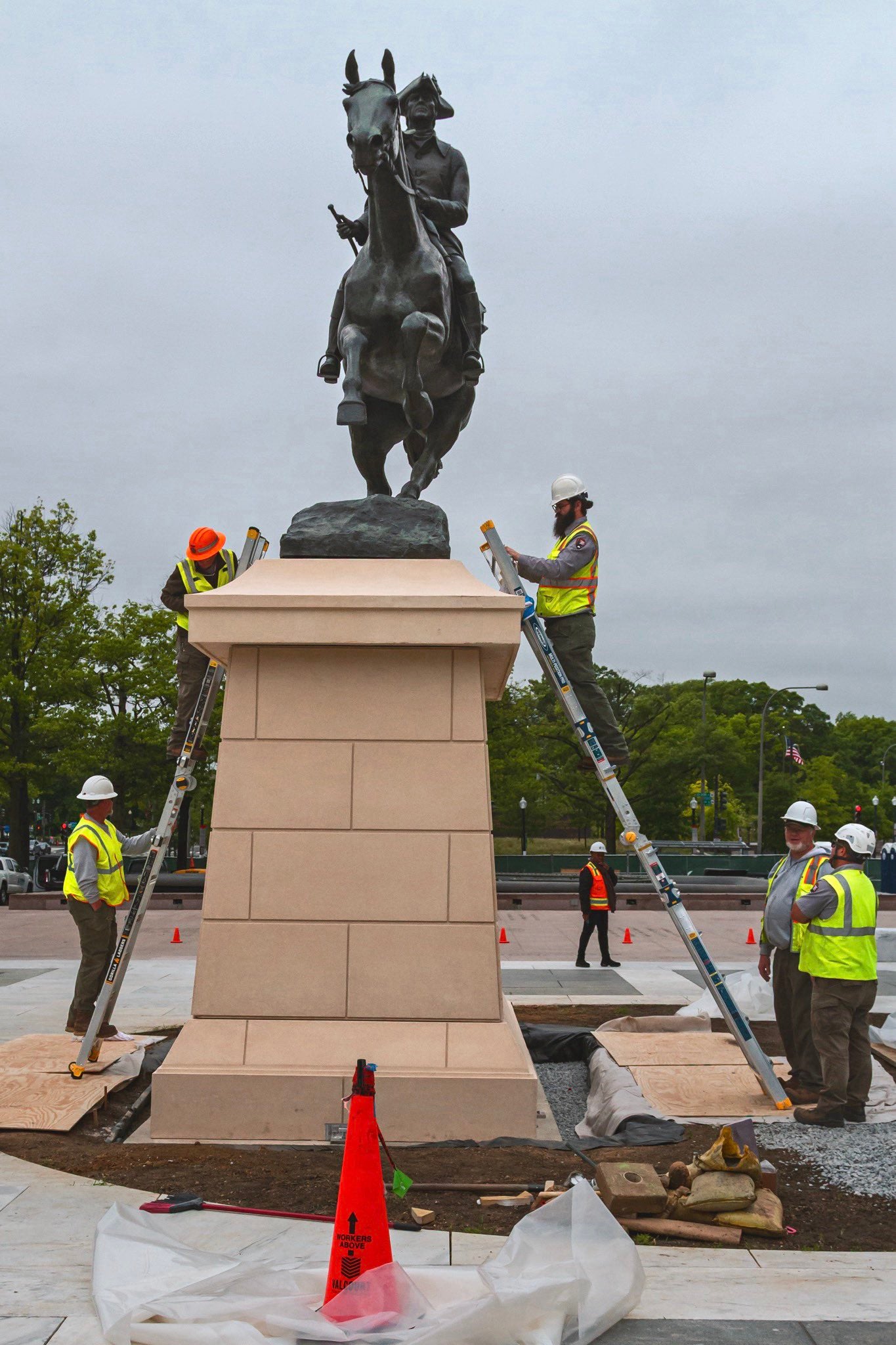
In April, the Trump administration restored the statue of Rodney to public display, granting it a prominent spot in Freedom Plaza, just a block from the White House.
The National Park Service reportedly spending at least $527,226 on the project, which was carried out under an expedited no-bid contract.
The century-old equestrian statue now sits within a broader installation that includes a tableau of 12 Revolutionary War soldiers and a 23-foot sculpture known as the “Spirit of Liberty.”