
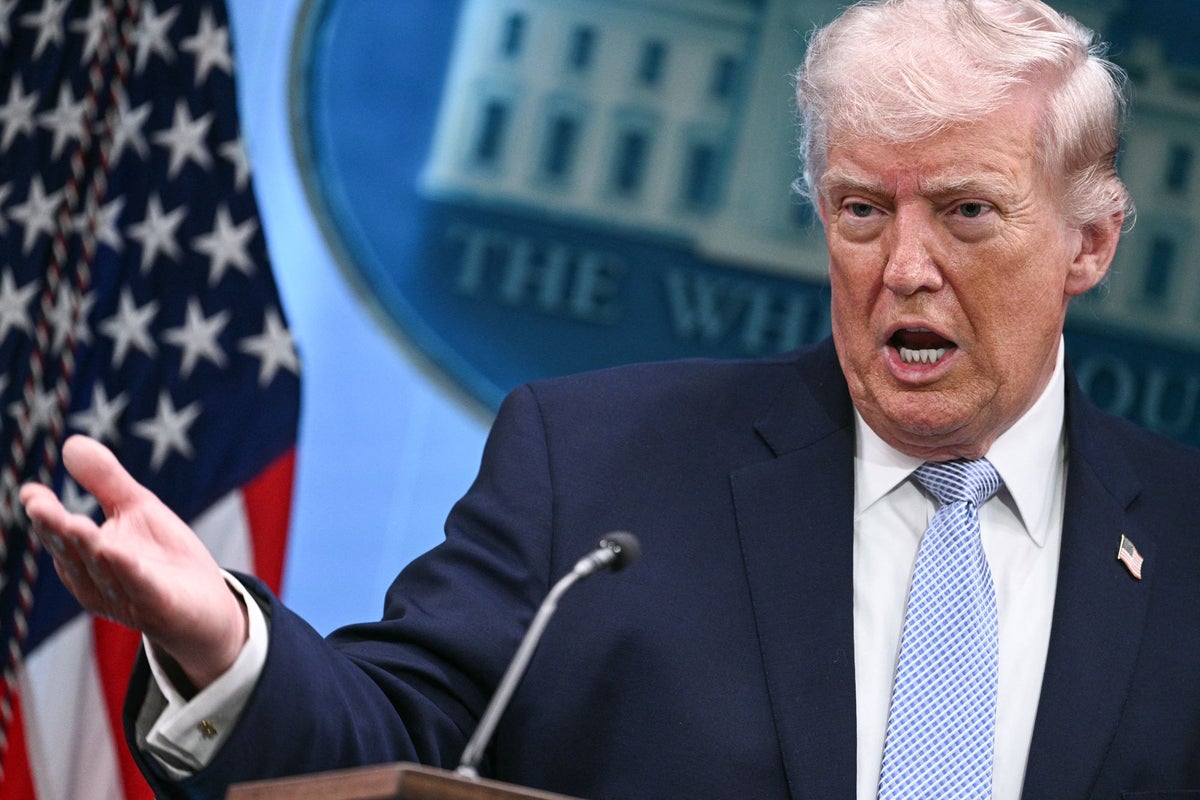
With most of Washington and much of the country awaiting his next move, Donald Trump backed off his threat to unleash devastation across Iran on Tuesday evening.
The president wrote on Truth Social that U.S. forces would pause plans for a massive, final military assault against Iran for two weeks while negotiations continued between the two countries, mediated by Pakistan.
He also claimed that a complete re-opening of the Strait of Hormuz would be part of the arrangement around a temporary pause in his plans.
“Based on conversations with Prime Minister Shehbaz Sharif and Field Marshal Asim Munir, of Pakistan, and wherein they requested that I hold off the destructive force being sent tonight to Iran, and subject to the Islamic Republic of Iran agreeing to the COMPLETE, IMMEDIATE, and SAFE OPENING of the Strait of Hormuz, I agree to suspend the bombing and attack of Iran for a period of two weeks,” said the president.
“This will be a double sided CEASEFIRE! The reason for doing so is that we have already met and exceeded all Military objectives, and are very far along with a definitive Agreement concerning Longterm PEACE with Iran, and PEACE in the Middle East,” he added.
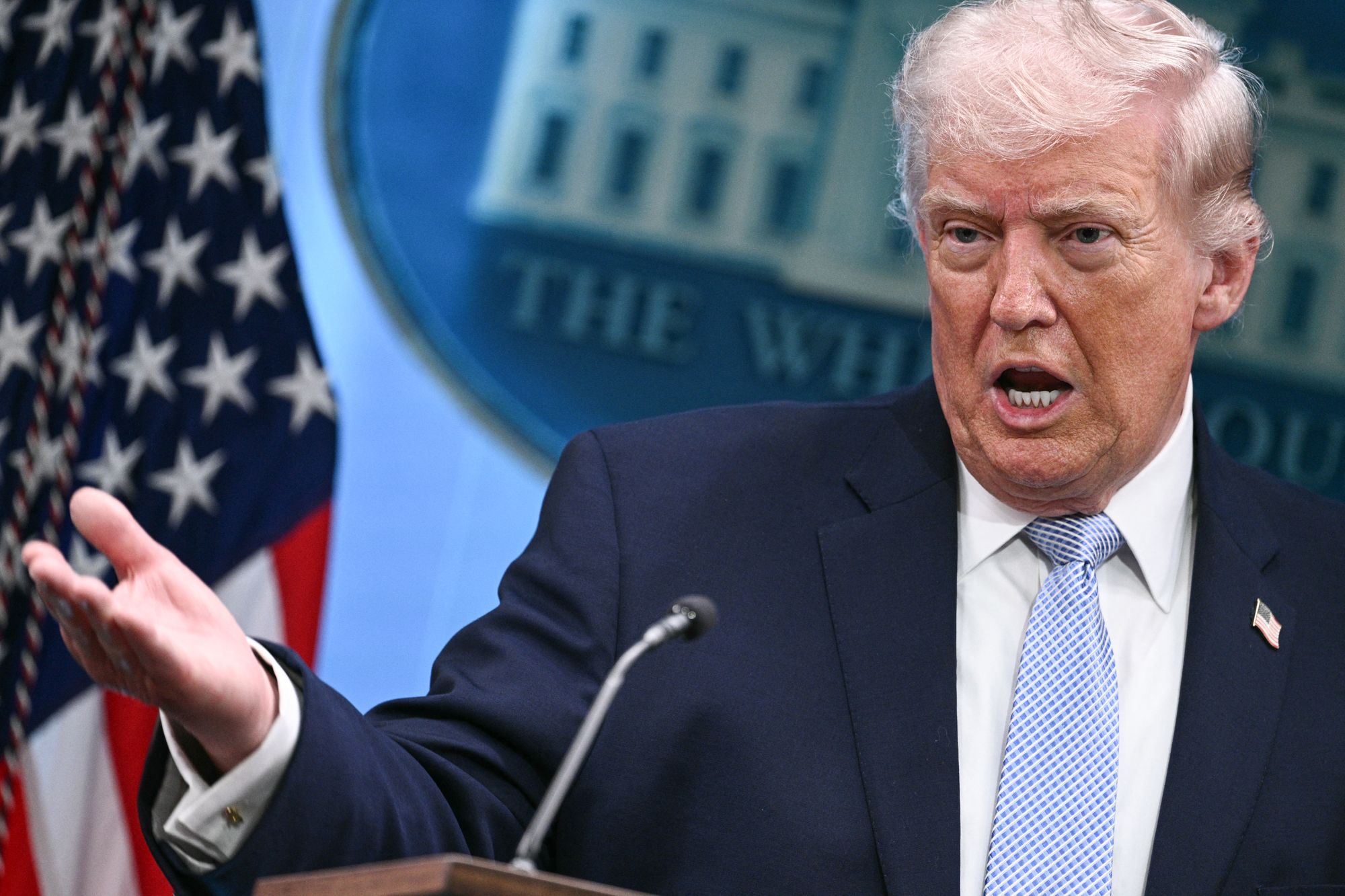
Shortly afterwards, Iran’s foreign minister Abbas Araghchi confirmed the news. He said in an X post that shipping traffic would be allowed through the Strait of Hormuz for two weeks, adding that Iran would cease “defensive” operations until that time.
Tuesday evening’s announcement followed a particularly dire 12 hours in Washington. The day began with the president issuing a vow to unleash catostrophic military force upon Iran’s civil infrastructure, including bridges and power plants, if the Iranian government did not comply with his demand for the Strait of Hormuz to be re-opened. The closure of the strait caused a spike in global oil prices that has shown no signs of alleviating as long as the waterway, through which about a fifth of the world’s oil and gas supplies travel, remains largely blocked by Iranian mines and other forces.
“A whole civilization will die tonight, never to be brought back again. I don’t want that to happen, but it probably will. However, now that we have Complete and Total Regime Change, where different, smarter, and less radicalized minds prevail, maybe something revolutionarily wonderful can happen, WHO KNOWS?,” Trump wrote on Truth Social Tuesday morning.
That post from the president drew shocked reactions around the world and on Capitol Hill, where despite lawmakers being out for Easter recess, many Democrats reacted with public calls for Vice President JD Vance to instigate the removal of the president via the 25th Amendment, which is designed to guide the transfer of power when the president is incapacitated or unable to serve the duties of office. Others called for impeachment by the Republican-held House and Senate.
“These are not the words of a sane person, nor one who is fit to serve as president of the most powerful nation in the world,” wrote Illinois Rep. Shri Thanedar in a letter addressed to Vance and top administration officials.
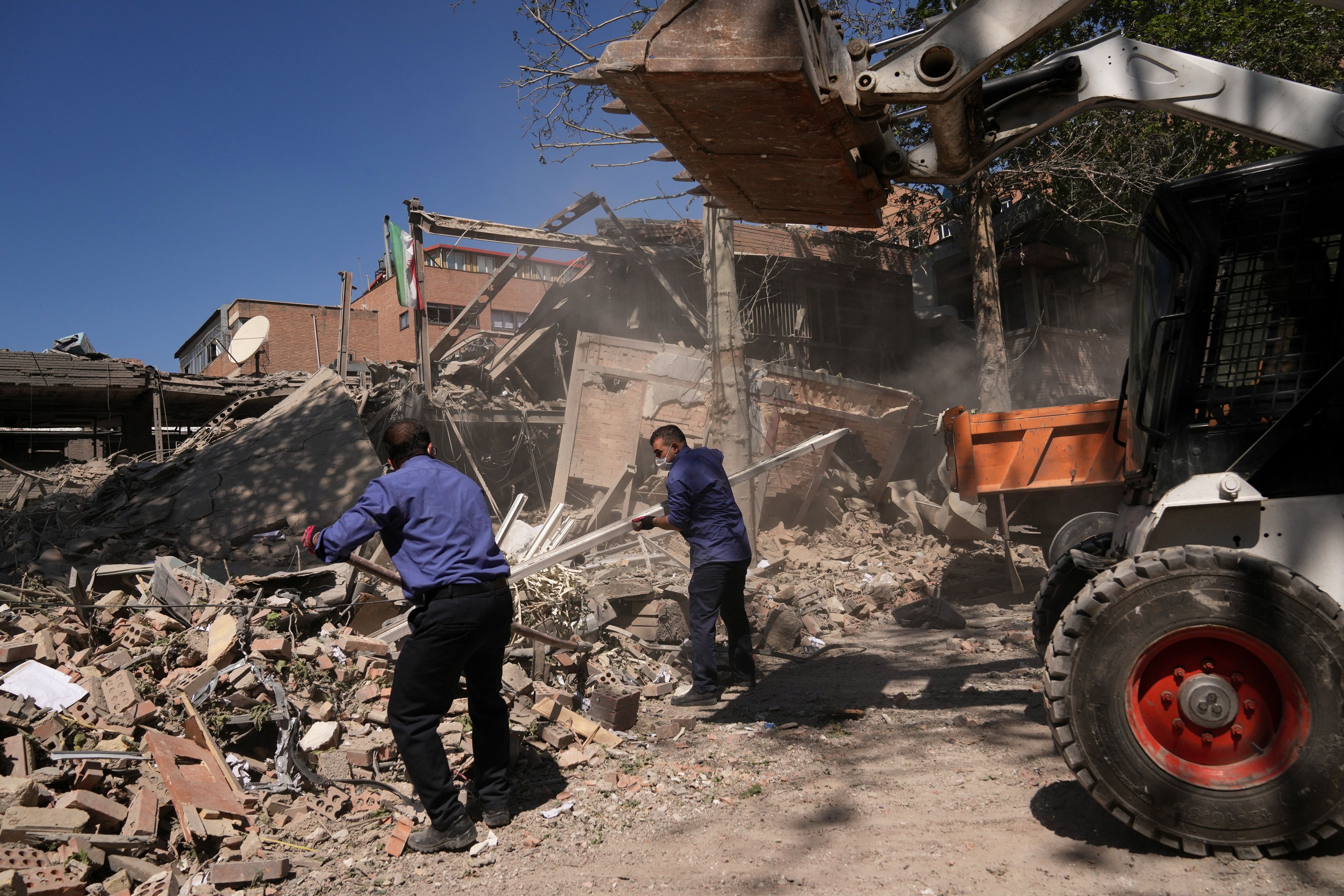
Experts in military warfare and international law agree that targeting Iran’s civil infrastructure could likely not be done without causing significant civilian casualties. The non-military designation of the targets would likely constitute a war crime unless the targets were actively being used for military purposes.
U.S. forces have sought for weeks to de-mine the Strait of Hormuz and make safe the waterway for global shipping traffic, without avail. Trump’s efforts to convince European allies to intervene and assist in the endeavor has also largely ended in failure, a result of his frequent and toxic personal attacks aimed at European and Nato leadership.
His U-turn Tuesday evening is likely to be used by the president’s critics as evidence that Trump was bluffing once again. The 8 p.m. deadline Trump claimed was still in effect to Fox’s Bret Baier just hours earlier was just the latest iteration of a deadline that the White House repeatedly extended, even as Iranian officials publicly rejected temporary ceasefire overtures. His first 48-hour “deadline” concerning the Strait of Hormuz was issued more than two weeks ago.
It wasn’t immediately clear from Trump’s words on Tuesday evening whether the temporary ceasefire would include Israel’s military, which is also a party in the conflict, but in Tel Aviv an alert went out warning residents of incoming rockets just minutes after Trump’s message was posted, according to Fox News.
For the Trump administration, the Iran war has become a murky morass as the president finds himself unable to tell Americans when it will be over or why the White House keeps threatening to escalate the conflict if U.S. objectives have supposedly been achieved and Iran’s military is really “devastated”, as officials claim. The closure of the Strait of Hormuz has also caused a massive spike in U.S. fuel prices, further souring public sentiment against the war.
At a press conference on Monday, Trump couldn’t tell a reporter whether the conflict was escalating or drawing down when asked directly.
“Somebody said, ‘Oh, he doesn’t have a plan.’ I have the best plan of all, but I’m not going to tell you what my plan is,” the president also insisted Monday.