
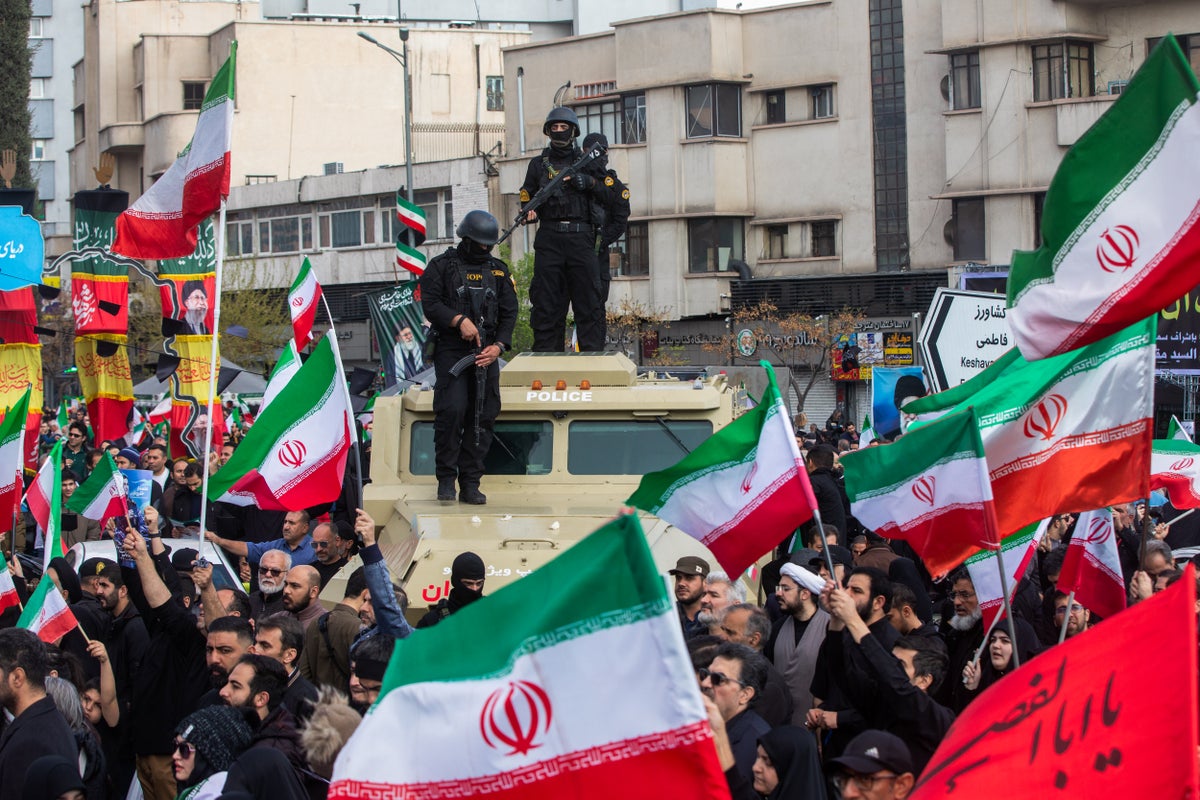
The US and Israel’s killing of several of the Islamic Republic’s senior leadership figures has enabled the Islamic Revolutionary Guard Corps to fill the political vacuum that has been left in their wake, experts have warned.
As Tehran and the US issue mixed messages about the state of peace talks, there are growing questions about the structure of Iran’s decision making as the new supreme leader Mojtaba Khamenei is yet to be seen in public.
Shifting power structures within the Iranian government mean that anti-America hawks could now be setting the agenda for negotiations, according to experts.
This “tight-knit circle” are reportedly passing messages by word of mouth, avoiding detection by electronic means, and ensuring new leadership figures are not assassinated.
US-Israeli strikes on Iran have also increased sympathy for their cause, fomenting nationalism among the regime’s younger supporters.
The situation has created a hostile climate for more liberal and moderate elements within the discussions, who have been sidelined as a result, analysts say.
Who are the Islamic Revolutionary Guard Corps?
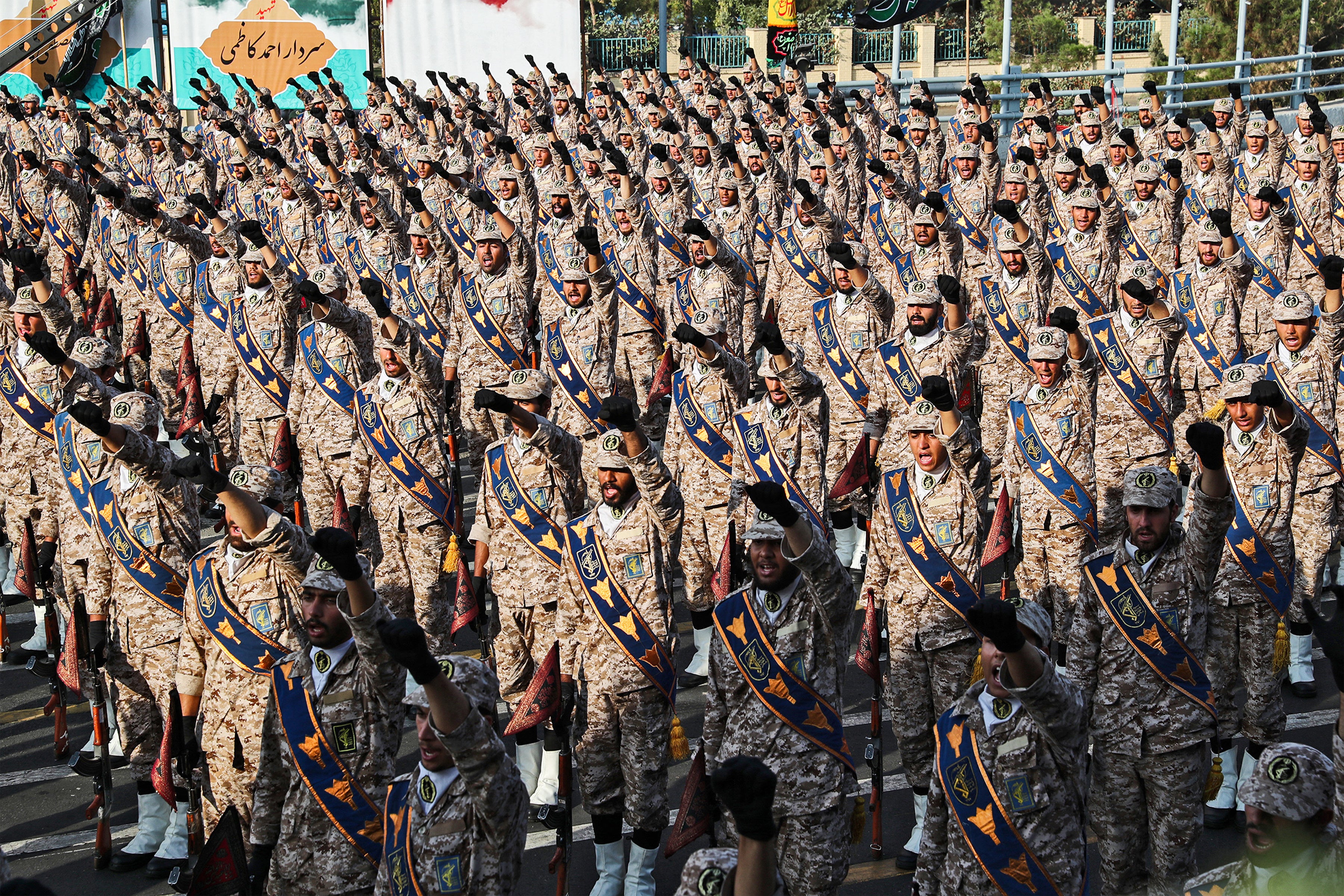
The IRGC was set up in the immediate aftermath of the Iranian Revolution in 1979, which saw the monarch Reza Shah Pahlavi deposed. Since then, the group has gone on to become a formidable military force within Iran.
It is reported to have around 124,000 members, comprising ground, navy and air forces.
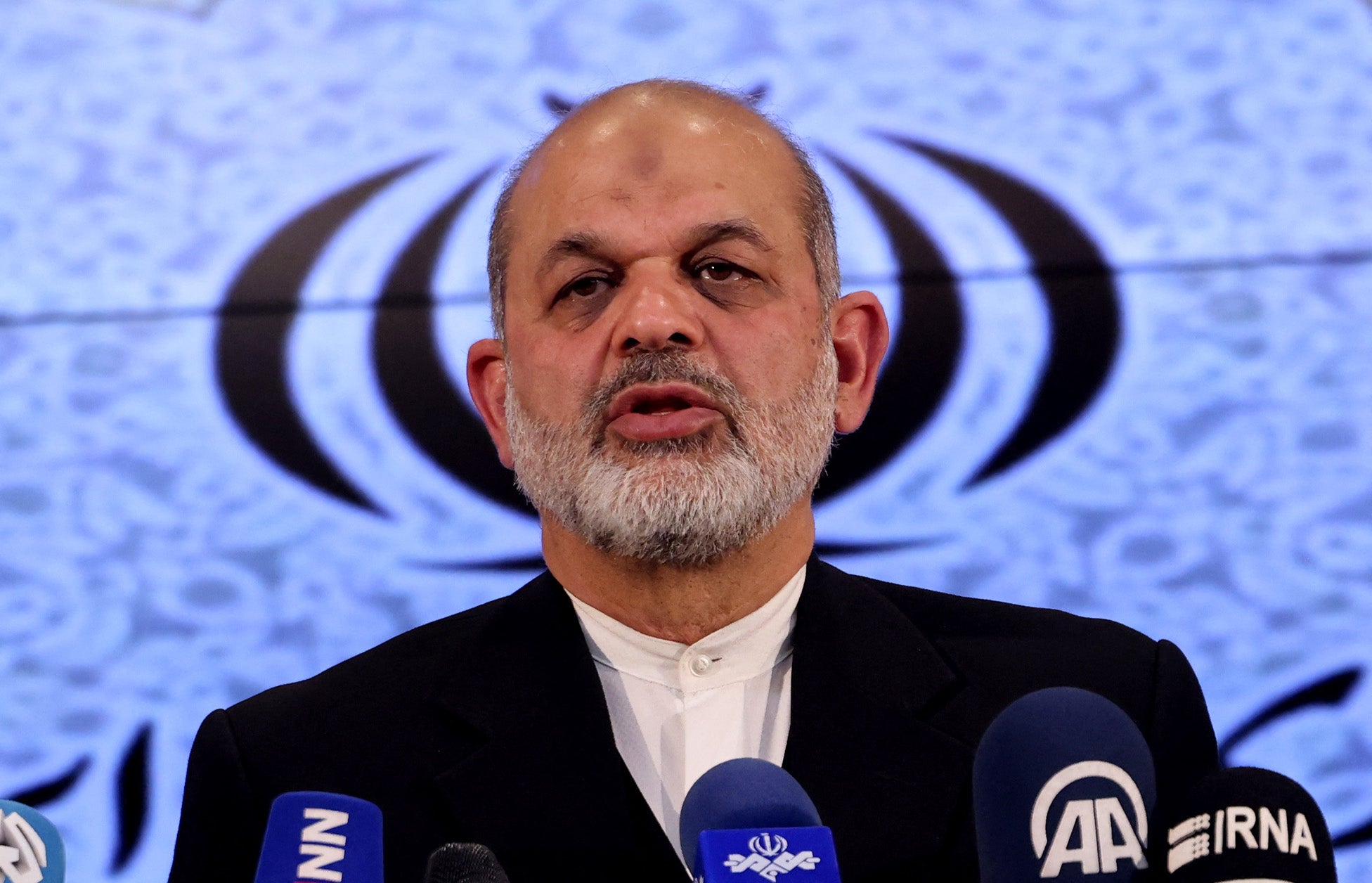
The commander of the IRGC, Ahmad Vahidi, assumed office after his predecessor Mohammad Pakpour was killed in a US-Israeli attack at the outset of the war on 1 March.
Vahidi is considered to be deeply embedded within the Iranian establishment and served as defence minister under former president Mahmoud Ahmadinejad between 2009 and 2013.
He is a trusted figure who is reported to be in touch with the supreme leader on a regular basis and conveys his wishes to the rest of the command, according to reports.
Since 2022, the IRGC has been linked to at least 20 credible threats in the UK.
Rifts emerge in Iran
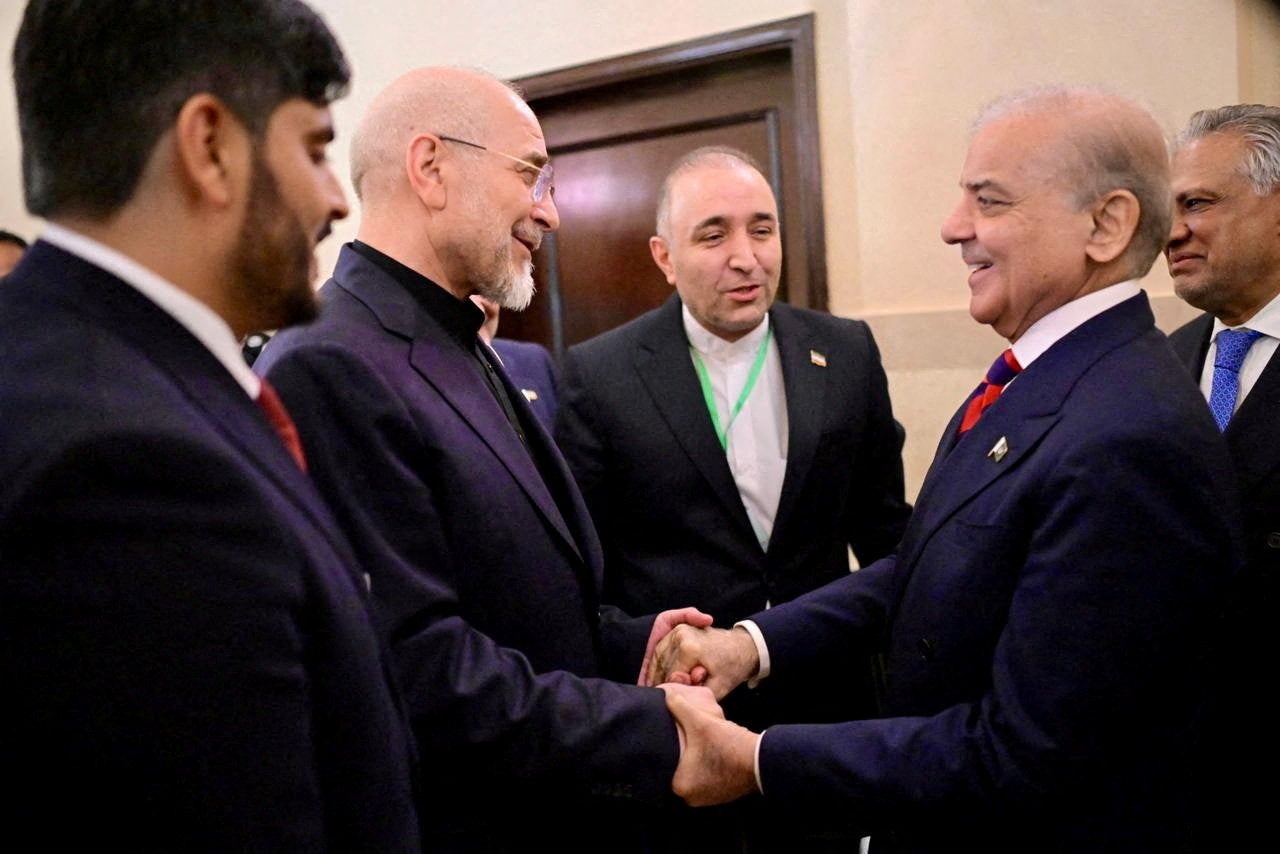
While much of the focus has been on Trump’s flip flopping between different positions on Iran, analysts say that Tehran’s own position in negotiations is also fluid.
The Institute for the Study of War said earlier this week that the secretary of Iran’s supreme national security council, Mohammad Bagher Zolghadr, had complained to senior IRGC leaders “including Vahidi” that foreign minister Abbas Araghchi had “surpassed his mandate” in negotiations.
He is said to have caused concern by suggesting Tehran’s support for Hezbollah and the Axis of Resistance was flexible, according to the New York Post.
Araghchi had originally agreed to open the Strait of Hormuz in a concession to Washington, but the IRGC insisted it remain shut due to the US blockade.
“Zolghadr’s anger caused senior leaders in Tehran, including former IRGC Intelligence Organization Chief and long-time member of Mojtaba’s inner circle, Hossein Taeb, to call the negotiating delegation back to Tehran,” ISW said.
A career diplomat, Araghchi has a long history of negotiating and was integral to securing the Joint Comprehensive Plan of Action (JCPOA), a nuclear agreement that saw Iran regularly supervised by the International Atomic Energy Agency.
‘Risk-averse’ Khamenei replaced by IRGC nationalists
Ayatollah Ali Khamenei’s killing on 28 February has led to a less tolerant approach to the West, according to Dr Andreas Böhm, a lecturer in international law and international affairs at the University of St Gallen in Switzerland.
In previous conflicts, Böhm says that Iran would tend to react “symbolically” by sending missiles to Israel and US bases hosted by Gulf countries or firing rockets at Israel in a show of strength.
“This new leadership is rather more straightforward,” he tells The Independent. “They say, for any escalation of the Americans, we will escalate further.
“They’re more committed to seeing this through than under Khamenei who would have dealt with this differently. He was rather risk-averse and was against going all-out. That hurt him strategically. We’ve had a regime transformation and that has led to a more hardline position.”
The theocratic component within the country has weakened while the national security element has been emboldened, says Vuk Vuksanović, an associate at LSE Ideas and lecturer in foreign policy at King’s College London.
“Years before the ongoing wars, there were talks that the theocratic component of the regime, as personified in the figure of the supreme leader, is going to grow weaker while the national security element, as embodied in the IRGC, is going to gain strength,” he tells The Independent.
“Today, that is exactly what is happening. The assassinated supreme leader has been succeeded by his son, which was a way to signal continuity with the spirit of the Iranian revolution and as a sign of defiance directed at the US claim that the regime’s days are over.”
Due to their role in the war, he says the IRGC has gone from being “a power centre within the Iranian state to being even more firmly embedded with the Iranian state itself on all levels.”
“Consequently, the regime organised around the national security apparatus will be much harder-line, much more nationalist, and much less willing to compromise.”
He adds: “The IRGC is going to emerge as the primary power centre of the Iranian political system as a result of this war. In times of breakdown, especially war, it is the micromanagers and those best at organised violence who come to the top.”
Who is running Iran right now?
Experts believe that Mojtaba Khamenei is still issuing orders about the direction of Iran’s policy with the US and Israel, despite claims by US secretary of war Pete Hegseth that the son of Ali Khamenei has been “disfigured”.
Böhm says his absence from public life will not be unusual for the Iranian public and may even add to the perception of his strength. Shia mythology valorises the spiritual figure of the Twelfth Imam, who they believe operates from beyond the shadows.
Furthermore, the Iranian establishment will be cautious of elevating a figure too much after the assassination of other senior figures, including the head of Iran’s security council Ali Larijani. In his absence several public figures have emerged but the true decision-making structure is largely invisible.
Mohammed Bagher Ghalibaf is largely a public figurehead and pragmatist but he owes power to his proximity to the IRGC, which he joined as a teenager. He was reportedly considered a “hot option” to lead Iran in reports by Politico last month.
Driven by the pressures of war, Iran has also reportedly granted its military commanders greater autonomy over militias in Iraq, allowing some groups to carry out operations without Tehran’s approval, three militia members and two other officials told The Associated Press.
“Many of the moderates and pragmatists who could have cut a deal with the US, including Ali Larijani, have been killed in air strikes, primarily the Israeli air strikes,” says Vuksanović.
“The IRGC, as the main locus of hardliners, can rein in any remaining pragmatists and moderates by pointing out that previous attempts to negotiate with the US failed and that the US cannot be trusted.”