

Earlier today, I booked a rail ticket from Derby to Nottingham, price £9.50. As I am currently in London, I had no intention of taking the trip. And after I had made the imaginary half-hour journey, I cashed in the ticket – claiming the fare back less a refund fee of £5.
“We’re refunding your booking,” East Midlands Railway promptly told me. “Sit back and wait for the money to arrive.”
At last, we can talk about ticket fraud on the railways.
There are facets of the travel realm, from border and airport security to fare dodging on the railway, that I cannot write about for fear that unscrupulous people might exploit them.
Until now, I have remained silent about the completely bonkers opportunity for fraud presented by rail ticket refund rules. At last, the loophole will be removed on Wednesday next week. I know I can trust you not to take advantage in the remaining days. So I shall explain.
Under the current system, anyone who buys a flexible “anytime” or off-peak ticket can claim a refund if they do not use it. The money-back window extends to four weeks after the day of (non-) travel.
How do you demonstrate that a ticket is not used? By showing that it has not been clipped or stamped by rail staff, or if – for digital tickets – it remains unscanned at ticket gates and on the train.
Fraudsters can enter at an “open” (barrier-free) station or find a way through the gateline such as “tailgating” someone. If there is no ticket check on board the train, and they manage to exit the arrival platform without a check, they then have the best part of the month to put in a claim for an allegedly unused ticket.
The standard refund fee is £5. But if a traveller is making a £20 journey, that represents a 75 per cent discount. Even for my 16-mile non-journey, I “saved” nearly half the fare.
Unlike travelling without a ticket, practitioners see no possible risk. The worst that can happen is that their ticket is checked and they cannot claim a refund; they just pay the correct fare for the journey.
These miscreants have been costing the railways – and therefore honest passengers and taxpayers – an estimated £40m a year. From 1 April, though, this gaping loophole will be closed, allowing refunds only up to midnight the day before the journey.
Don’t worry: there is an exception for on-the-day disruption. If you cannot make a journey, or you would end up unacceptably late, you will still be able to claim back the full amount of the ticket. You might also be able to demonstrate that “exceptional circumstances” prevented you from making the journey.
But the rule changes finally bring Britain into line with the railways of other countries, where refunds are not routinely available once a ticket is valid for use.
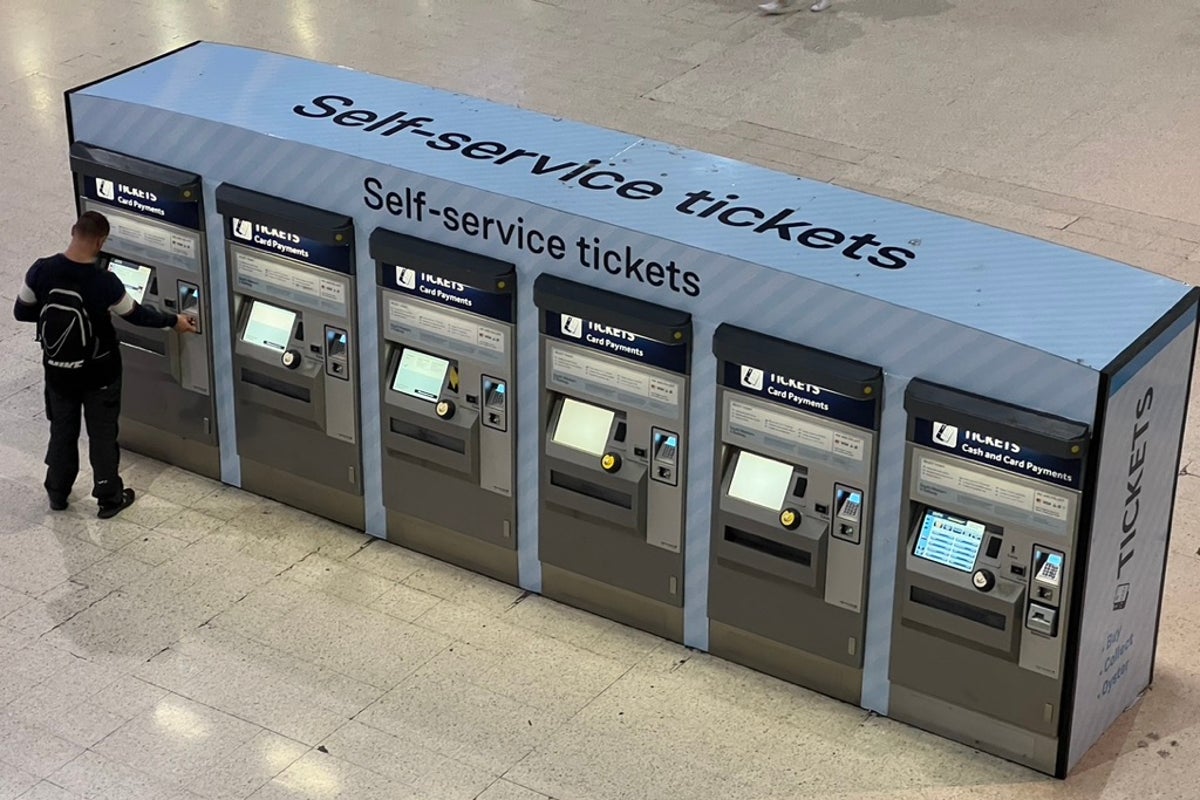
The move comes at a time when buying tickets at a booking office or a station machine looks increasingly like a minority sport. Only one in 10 rail tickets is bought from a human; one in 12 from a vending machine. With such low uptake, you can expect the debate about closing ticket offices to reopen soon.
Over a quarter of journeys, mainly in the London area, are made using the “pay as you go” system – passing through gates using contactless bank cards or stored-value products such as Oyster. (Contactless is a blessing for travellers worldwide: earlier this month, I was able to travel from Chengdu airport to the city centre using a UK credit card, later debited for the princely sum of £1.10 for 30 miles.)
The majority of tickets, though, are bought online: 53 per cent at the last measure.
There is, though, another option that takes ticketing properly into the 21st century. Rather than buying a ticket, passengers on some lines in the Midlands and North of England can use an app on their mobile phone that tracks their travel. At the start of a journey, you tap to signal that you are about to travel. The rail journey is tracked by GPS. You tap out at the end of the trip.
Passengers are provided with a barcode to let them in and out of the gateline at stations, but these entries and exits are not used for tracking. The fare is calculated at the end of the day, when the system works out the lowest charge applicable to the journeys made.
I happen to have tested the system between Nottingham and Derby, on a real rather than imaginary rail trip. Technically, it worked well, and passengers are even given access to special low fares. In my case, the trip cost £5 – the same as I paid for my non-journey through the East Midlands.
Read more: The inside story on fare dodging