


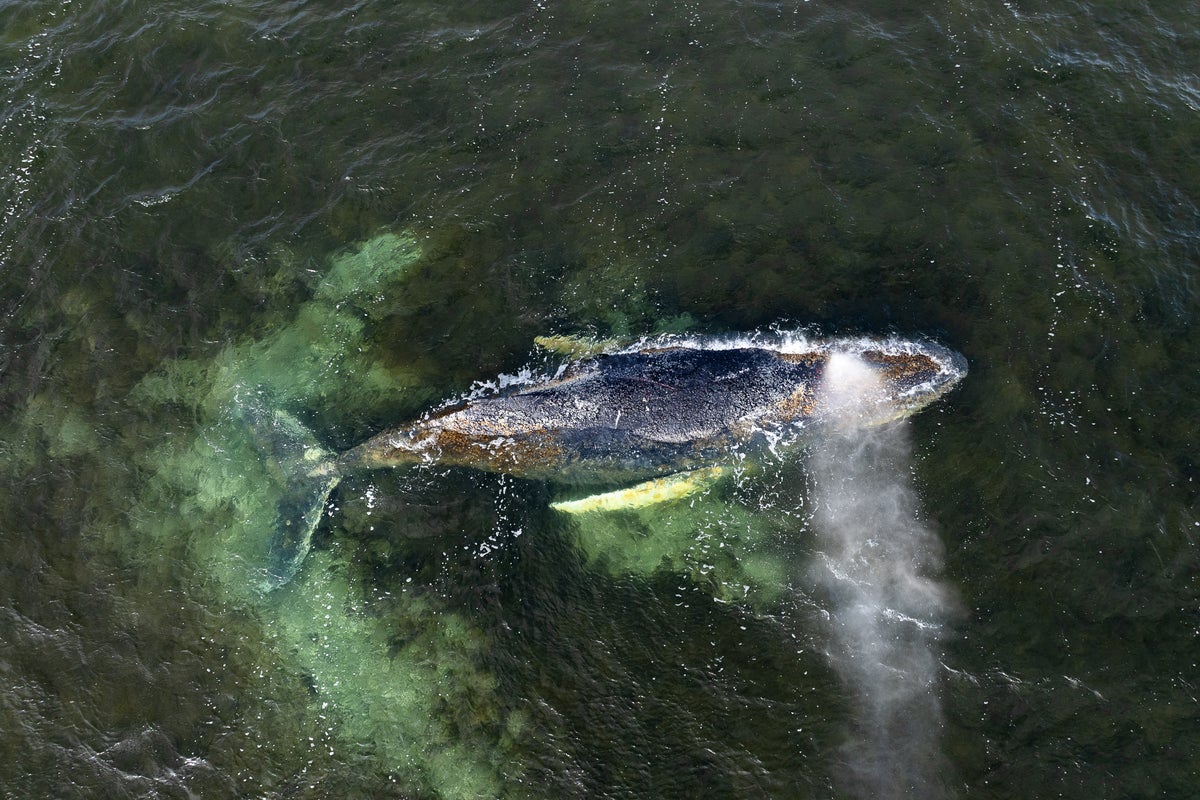
The carcass of a humpback whale, whose life and death captivated the public for months, was finally brought ashore on a Danish beach on Saturday.
It came after his carcass languished in shallow waters for two weeks.
A necropsy to determine the cause of the whale’s death is scheduled for this week.
Affectionately dubbed ‘Timmy’, the juvenile male’s health had been closely monitored by German media since his first sighting off the German coast on 3 March.
He was found dead and stranded off the small Danish island of Anholt in the Kattegat, the strait linking the Baltic and North Seas, on 14 May.
His death concluded months of a contentious rescue effort, culminating on 2 May with his transport by barge towards the North Sea in a final bid to return it to its natural Atlantic habitat.
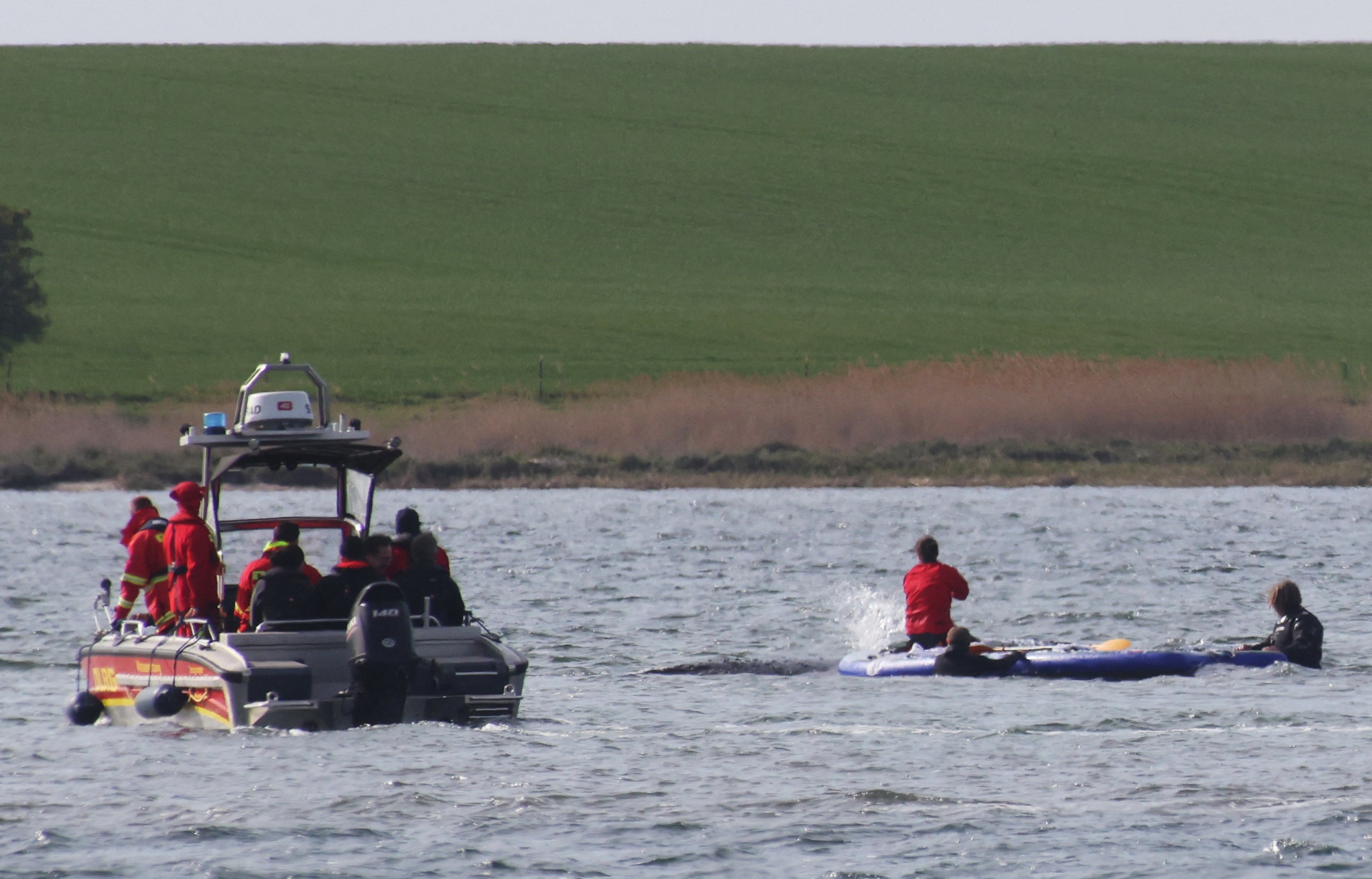
Before the release, a GPS transmitter was reportedly attached to track the whale’s future location, according to dpa.
The Danish Environmental Protection Agency will examine the carcass next week to determine the cause of death.
Danish news outlet News5 on Saturday published a livestream of the carcass being dragged onto the shoreline by a cable attached to a truck on the beach.
It is not clear why Timmy swam into the Baltic Sea, which is far from his habitat and he was not suited to.
However, some experts said he may have lost its way while swimming after a shoal of herring or during migration.
Since then, the mammal became repeatedly stranded in shallow waters. He was in clear distress, breathing irregularly and often barely moving for days.
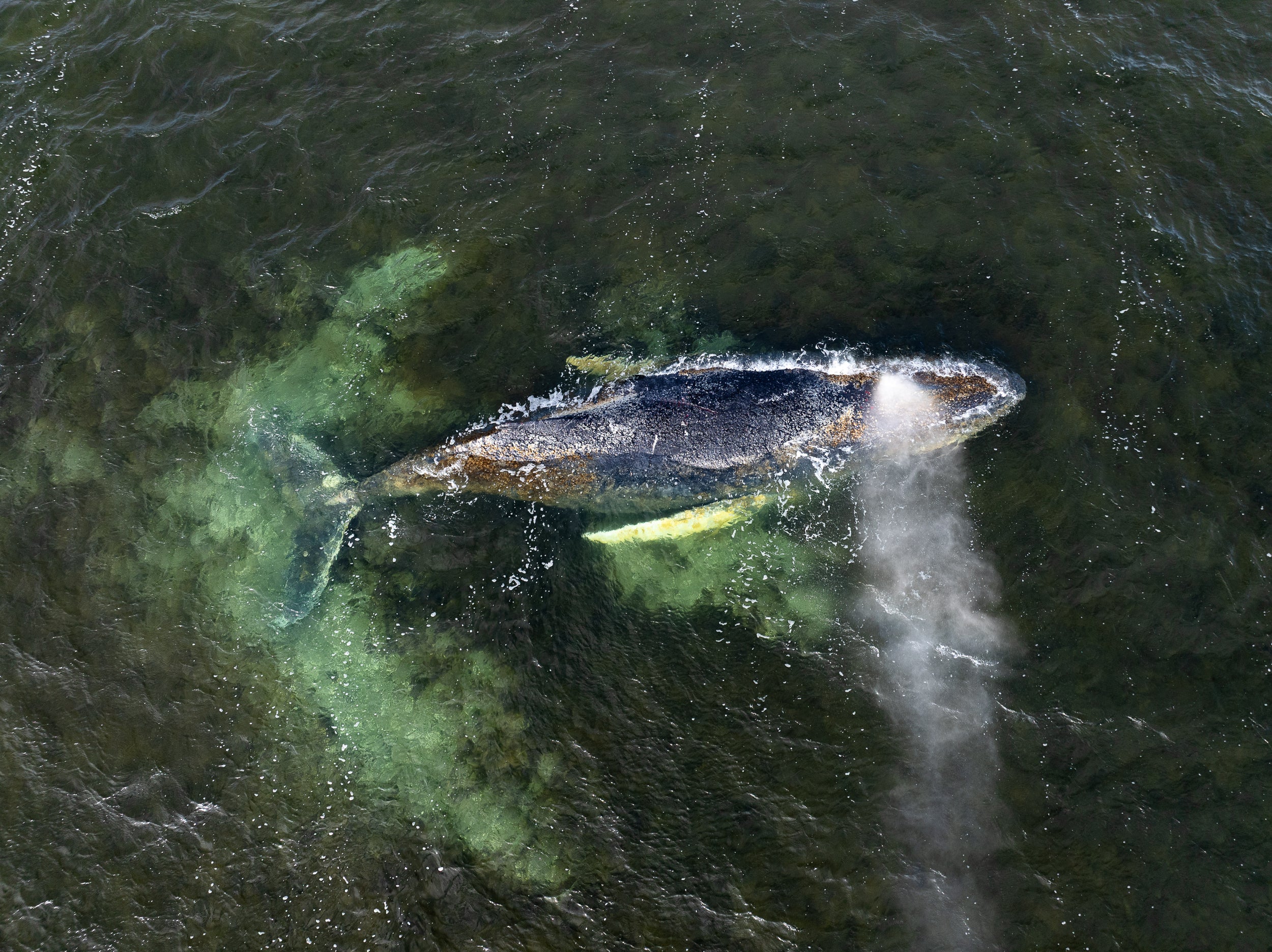
Timmy also suffered from a bad skin condition, related to the Baltic Sea’s low salt content, and rescuers applied pounds of zinc ointment.
During the weeks-long rescue effort, a debate emerged about whether to let the whale die in peace or try to assist his return to the Atlantic.
Specialists at the German Oceanographic Museum voiced concerns that the whale would not be fit enough to return to the open seas after the rescue attempt.
“The chances of a successful rescue are very slim due to the animal’s poor state of health and the generally poor prognosis,” the museum said in a statement.
The rescue attempt was financed by two millionaires, including Karin Walter-Mommert.