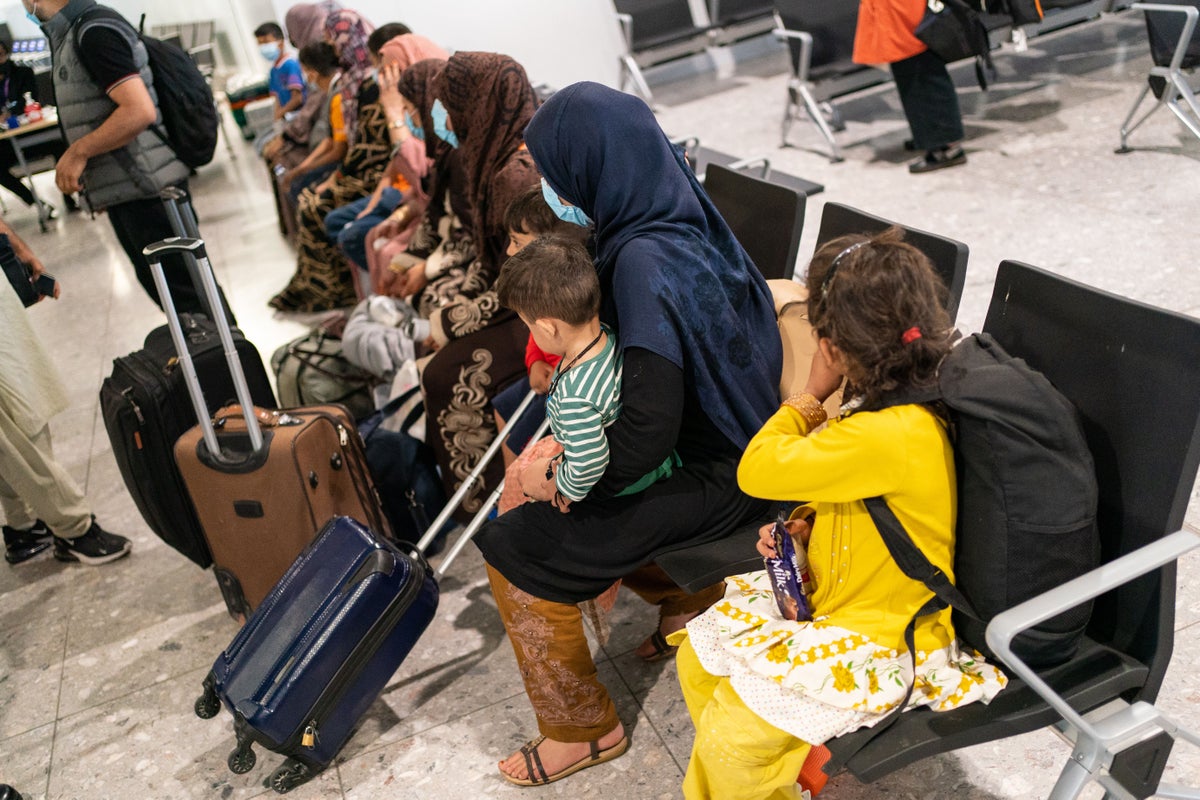
Tens of thousands of Afghans are still waiting to find out if they will be given sanctuary in the UK five years after the fall of Kabul, with a warning that “urgent intervention” is needed to relocate all families as planned by March 2029.
The National Audit Office (NAO) found that 37,950 people had arrived in the UK under various Afghan resettlement schemes by the end of 2025 – with nearly half of these people evacuated in 2021 in the fallout from the Taliban takeover.
However, some 29,655 people are still waiting to learn whether they will be allowed to resettle in Britain under the schemes, which will cost the UK £5.7bn in total. The schemes closed to new applicants in July last year, just before it was revealed that the Ministry of Defence (MoD) had been responsible for a vast data leak of applicants’ details that put thousands of lives at risk.
The government is working to relocate families eligible to come to Britain due to their previous support of the UK forces in Afghanistan, or due to their data being breached.
Ministers have committed to bringing all eligible Afghans to the UK by March 2029 under the new combined scheme, the Afghan Resettlement Programme. However, the officer in charge of the programme believes they will be unable to meet this target unless there is “urgent intervention”, the NAO report revealed.
Problems with the evacuation scheme include a lack of resources to handle the thousands of cases, the deportation of Afghans from Pakistan to Afghanistan before they can be moved to the UK, and a lack of available places to house them in Britain, resulting in greater than anticipated levels of homelessness.
The government has so far spent £3.1bn on the schemes, which leaves a further £2.6bn to be spent before 2033, the report said.
The report said that officials estimate around 9,741 more people who are already in the resettlement system will be relocated to the UK by 2029.
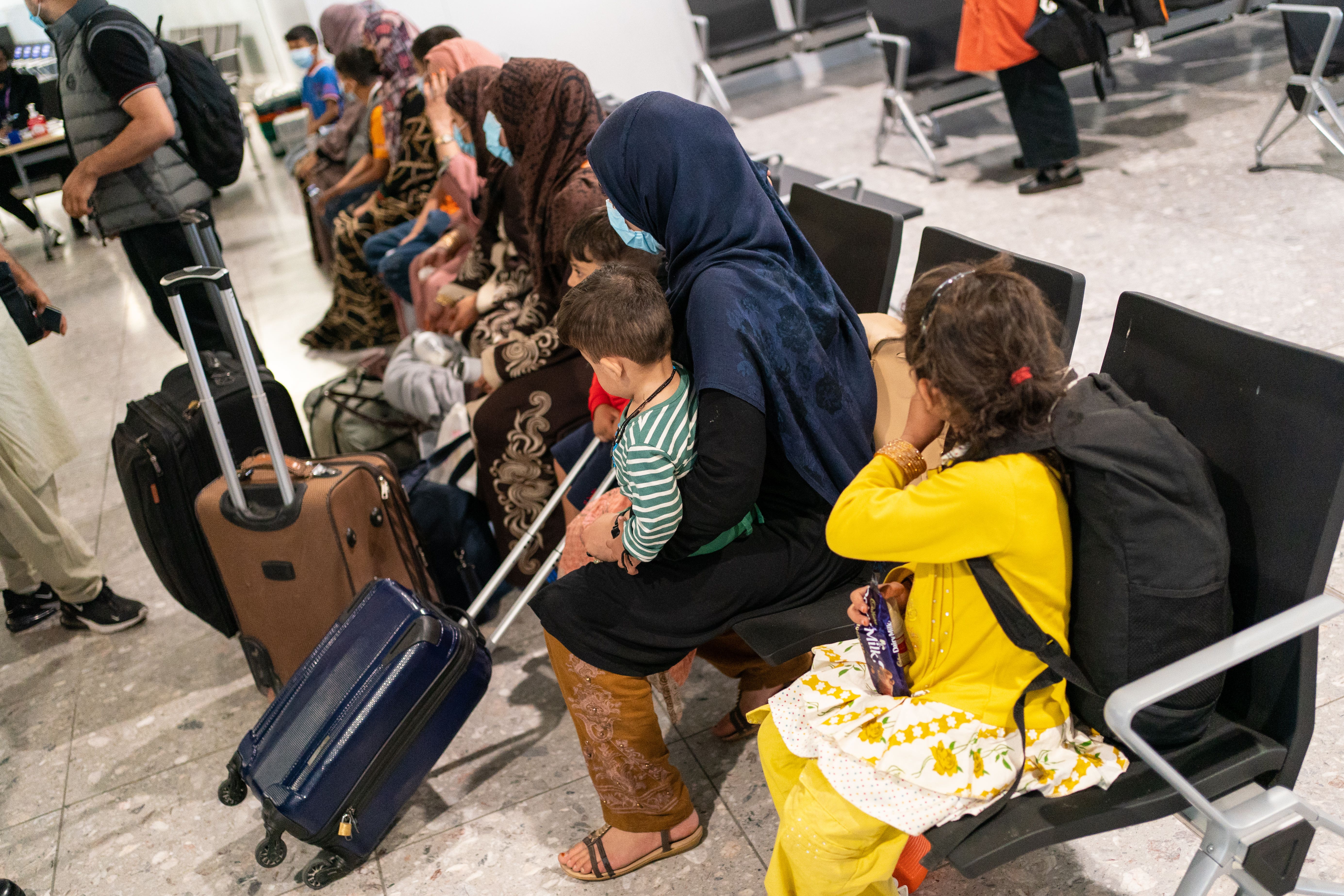
Government officials also told the watchdog that the MoD superinjunction – a gagging order in place for almost two years to cover up the data leak and the resettlement of Afghans due to the data breach – impeded their ability to work together across departments.
Gareth Davies, the head of the NAO, said government departments had “worked together in challenging conditions to resettle thousands of Afghan citizens” at risk of reprisals, but still had “more to do to successfully resettle the affected people in the UK”.
Sir Geoffrey Clifton-Brown, chairman of the influential Commons Public Accounts Committee, said the NAO had “provided some much-needed transparency on the costly figures, chaotic arrangements and the inefficient decisions made by the government”.
He added: “The merger of schemes into the Afghan Resettlement Programme has led to some progress, but many risks, such as poor data and lack of affordable housing, still remain.
“There is clearly a need for more to be done to prevent resettled citizens experiencing poor outcomes and minimise the risk of homelessness.”
The Independent has reported on the difficulties facing Afghan families when they do arrive in the UK. One former Afghan special forces soldier told of his struggle to find suitable housing for himself and his family, despite the large sums given to councils to support such families.
A government spokesperson said:”The report clearly sets out the scale and complexity of Afghan resettlement, and recognises the progress that has been made, with around 38,000 Afghans already settled in the UK, and we remain committed to our target of completing Afghan resettlement by the end of this parliament.
“The Afghan Resettlement Programme, introduced by this government, brings all schemes into a single pathway to deliver better outcomes for eligible Afghans and stronger value for money, with work continuing across government to ensure the programme is delivered as efficiently and effectively as possible.
“We have also recently introduced new key performance indicators to improve case handling times and provide greater transparency for applicants and their supporters – alongside an online ARAP eligibility self-checker.”