.jpg?trim=0,0,0,0&width=1200&height=800&crop=1200:800 "Kelly Osbourne hits out at critics for ‘kicking me while I’m down’ after insults over her appearance – UK Times")

-meeting-in-Davos-mx4lzj25.jpeg?width=1200&height=800&crop=1200:800 "The World Cup faces a crisis as the US attacks Iran — how will Fifa respond? – UK Times")
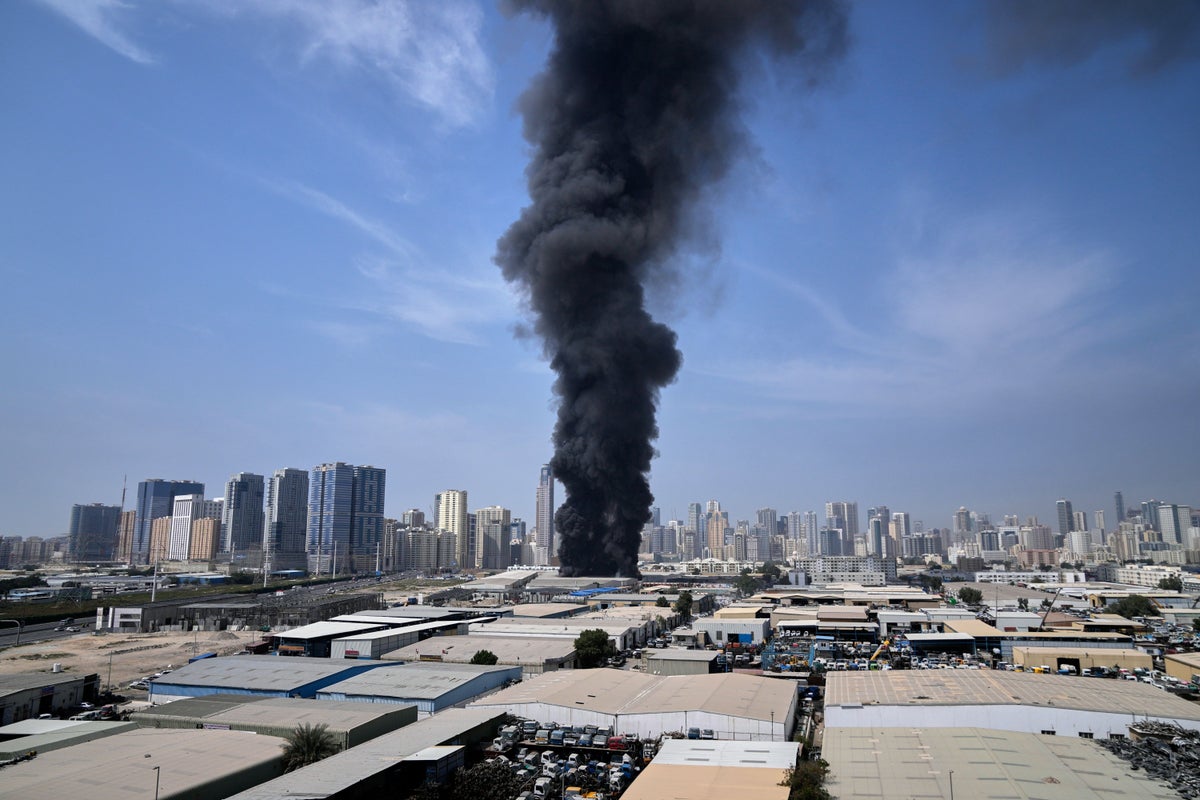
Even amid grave geopolitical developments, modern football offered a sense of the absurd. As drones and missiles continued to be launched around the Gulf, and headlines began to relay the reported death of Iran’s supreme leader Ayatollah Khamenei, Fifa’s hierarchy were desperate for details given the potential ramifications for the 2026 World Cup.
There was an issue, though. They had to sit through the formalities at Hensol Castle after the 140th Annual General Meeting of the International Football Association Board.
There were most of the Fifa leadership, stern faces glued to their phones, as a Welsh opera singer continued his performance. It must have been quite the soundtrack to scrolling for news about the unprecedented crisis of a World Cup host bombing one of the qualified teams, and that with just four months to go. Iran’s very participation is now subject to question.
Fifa, meanwhile, had to just sit there.
A symbolism could be drawn in how it showed a hierarchy stuck, unable to move even on one of the most serious challenges they have ever faced.
Those latter words have actually been said a lot over the past year, pretty much all in relation to the 2026 World Cup.
There’s maybe a similar symbolism in how Fifa expanded the tournament to 48 teams, as president Gianni Infantino actively decided to play an involved statesman, precisely at the moment that the world fractures to a more severe degree than at any moment in decades. The global governing body have willingly opened themselves up to problem after problem after problem.
That’s pretty much how to describe the entire build-up to the 2026 World Cup, much as Infantino beams about ticket sales.
So much of it has been utterly unprecedented. Just list the main issues so far.
Qualification had barely begun when Donald Trump was threatening a trade war against co-hosts Mexico and Canada. That very campaign then brought increasing pressure to ban Israel, mostly due to Gaza, but specifically on the issue of contravening Fifa’s own statutes about clubs playing games on occupied land.
In between, there was the relatively trivial but still important sporting integrity controversy over the decision to suspend two games of Cristiano Ronaldo’s ban so he can play in the World Cup, all before everything significantly escalated this year.

January forced European countries to discuss a potential boycott plan over Donald Trump’s position on Greenland, and that after the US had been responsible for the military operation in Venezuela and just the third ever act of aggression by a host after being awarded the World Cup. This is now the fourth.
February brought narco-violence in a host city, in Guadalajara, just four months before the tournament.
And now March may have to bring a decision on what they’re going to have to do about one of the 48 teams being bombed by the hosts, with the de facto head of state being killed.
The last week alone, from Mexico to Iran, has offered challenges never before seen by any World Cup.
While there might usually be sympathy for sporting bodies in such situations – given that they are constantly subject to geopolitics – the specific issue with Fifa is the problems they have made for themselves in navigating such complexities.
For one, the prospect of this military campaign had been known for weeks. You might even say there’s yet another layer in how Infantino makes himself out as so close to Trump.
As with all of these previous issues, though, Infantino’s Fifa does not offer the necessary forum for rigorous debate on any of it.
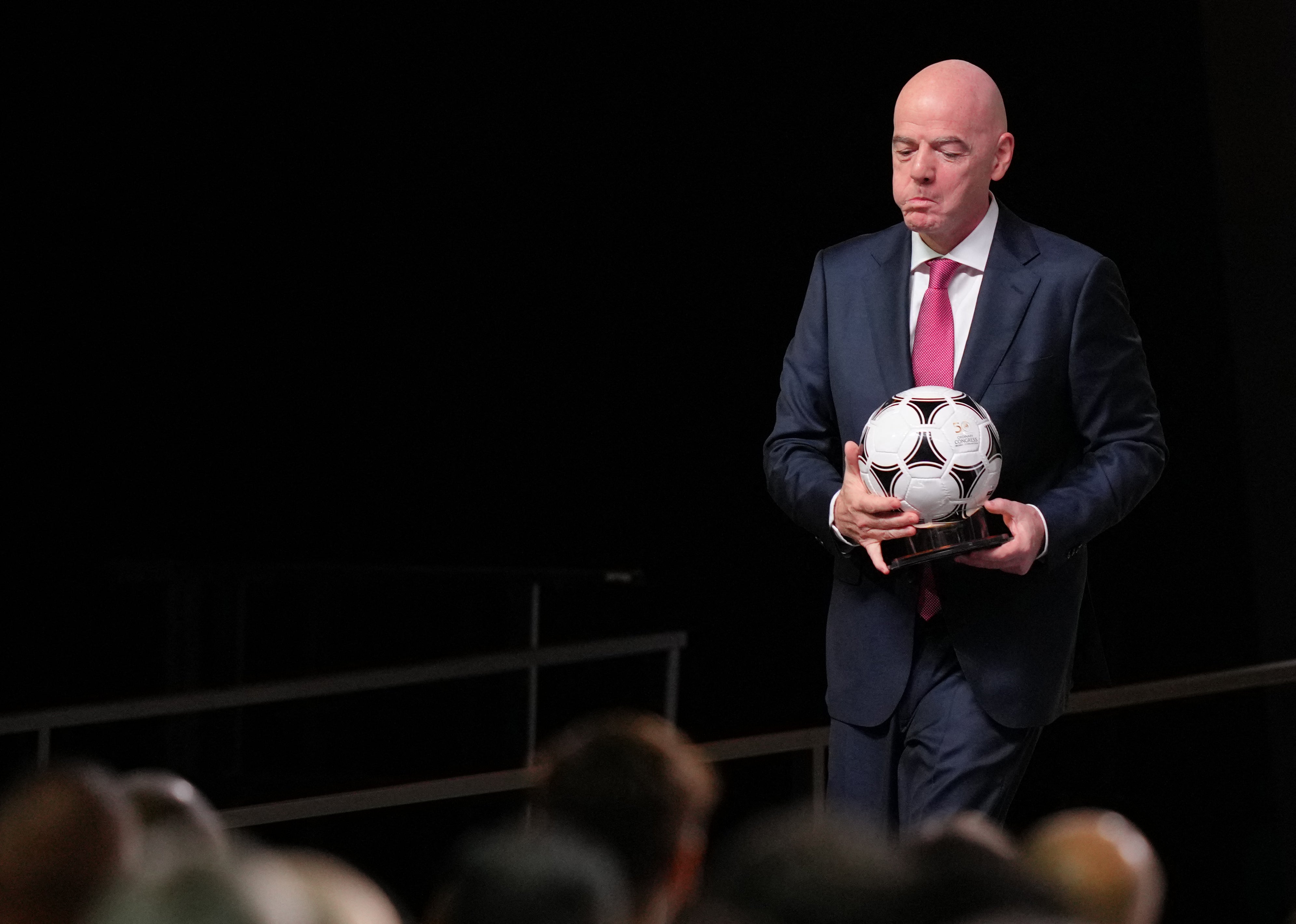
Fifa figures would say that forum is the Council, but then numerous sources insist the Council has been completely sidelined. One senior member even told the Independent that, as of Sunday afternoon, the Council had been given no indication on what next. This may have to go to the Fifa bureau of the council: the president and the six federation heads.
Of course, any eventual Fifa decision is entirely subject to events in a situation as grave as this, but that only makes the creation of various contingency plans all the more important.
As one senior source said, though, “there are no fixed rules” for replacing a team at a World Cup.
The only official comment so far has been from Fifa general secretary Mattias Grafstrom, who said in Wales they “will monitor” the situation in comments that were as open-ended as possible.
“I read the news the same way you did this morning. We had a meeting today and it would be premature to comment on that in detail,” he said. “But of course we will monitor the developments around all issues around the world.”
Requests to Fifa for any details on what next were merely met with a gesture to Grafstrom’s comment. It was similar with Mexico last week.
“It’s far too early to say on any of this,” one other source added. But that doesn’t mean it isn’t too early to start thinking, especially about something that is going to require clear thinking and a roadmap.
There weren’t even elaborations on what the process might be if a team needed to be replaced – now a live possibility. Reports coming out of Iran suggested the state may end up withdrawing the national team from the World Cup themselves.
There’s even the question of whether the squad would be allowed in, amid the high potential for escalation.
Andrew Giuliani, the head of the White House World Cup taskforce, posted on Saturday “we’ll deal with soccer games tomorrow – tonight, we celebrate their opportunity for freedom”.
Again, the World Cup has never had to deal with this before.
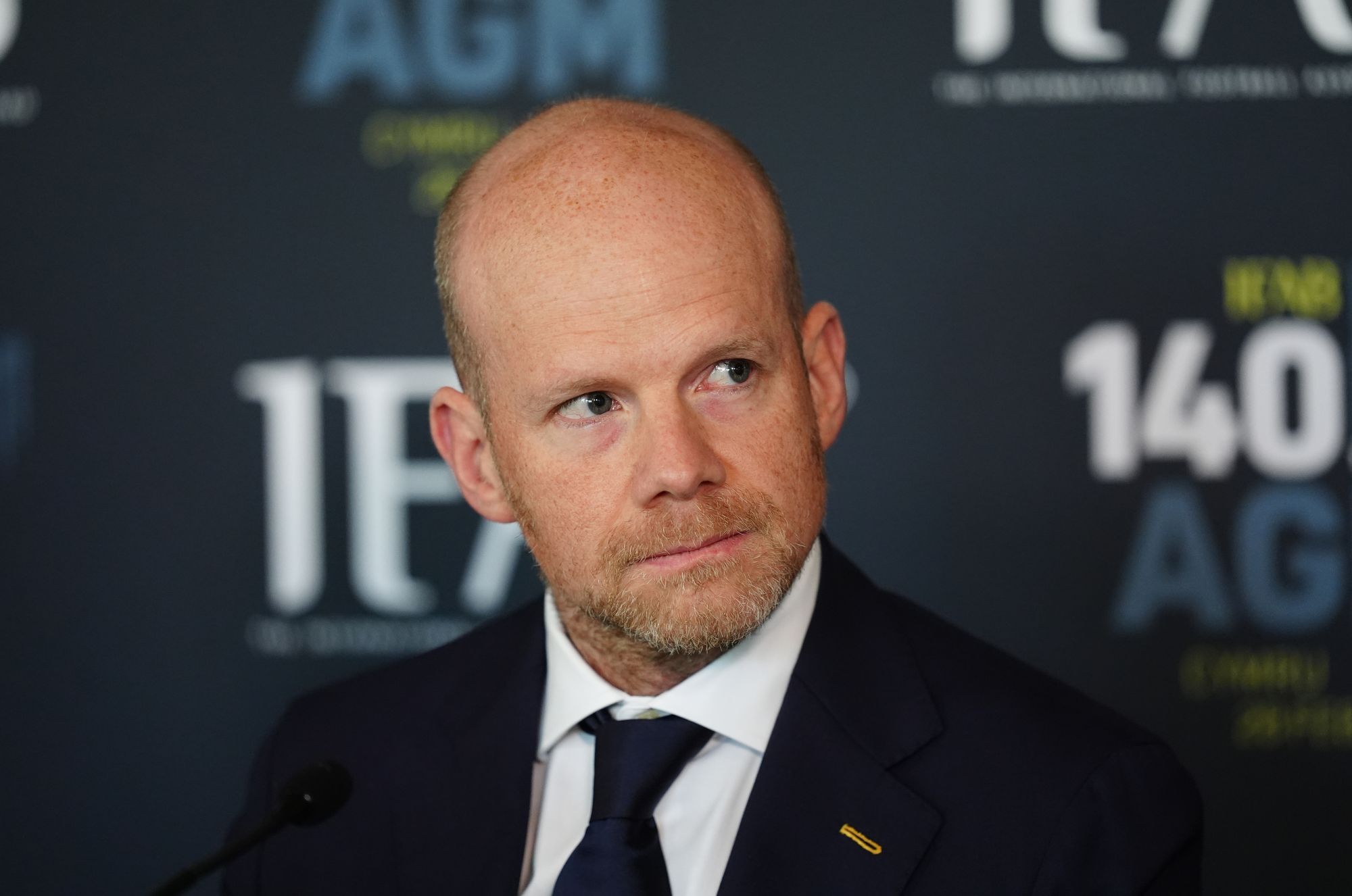
It could be said that Fifa’s refusal to speak on any of this points to necessary discretion amid a diplomatically difficult story – especially one ultimately involving Trump – but the question persists about whether they have the wherewithal to navigate this.
This World Cup has felt like it’s skirting very close to something going wrong for quite some time, and that’s with more money than ever – as well as Infantino’s very authority – on the line. Again, the Fifa Peace Prize just becomes a bad punchline.
The feeling from many is that Fifa will just take the approach it has customarily done on these controversies, and see what evolves.
If Iran do end up withdrawing, the United Arab Emirates – themselves facing drone attacks from Iran – would seem an obvious choice of replacement given they were the next team down in the qualification group.
Another element in this story is that football is genuinely a huge unifying force in Iran, and the Iranian/Persian diaspora vote may even prove influential there.
There may also be regime change, but these are considerable stakes.
The World Cup, along with the world, faces hugely uncertain times.
Fifa cannot be faulted for that, even allowing for Infantino’s geopolitical pretensions. They can be faulted, however, for they respond.
Right now, there’s just a vacuum. There aren’t even details on what happens if a team withdraws. That’s the level of the crisis. That, so far, is the level of the response.