

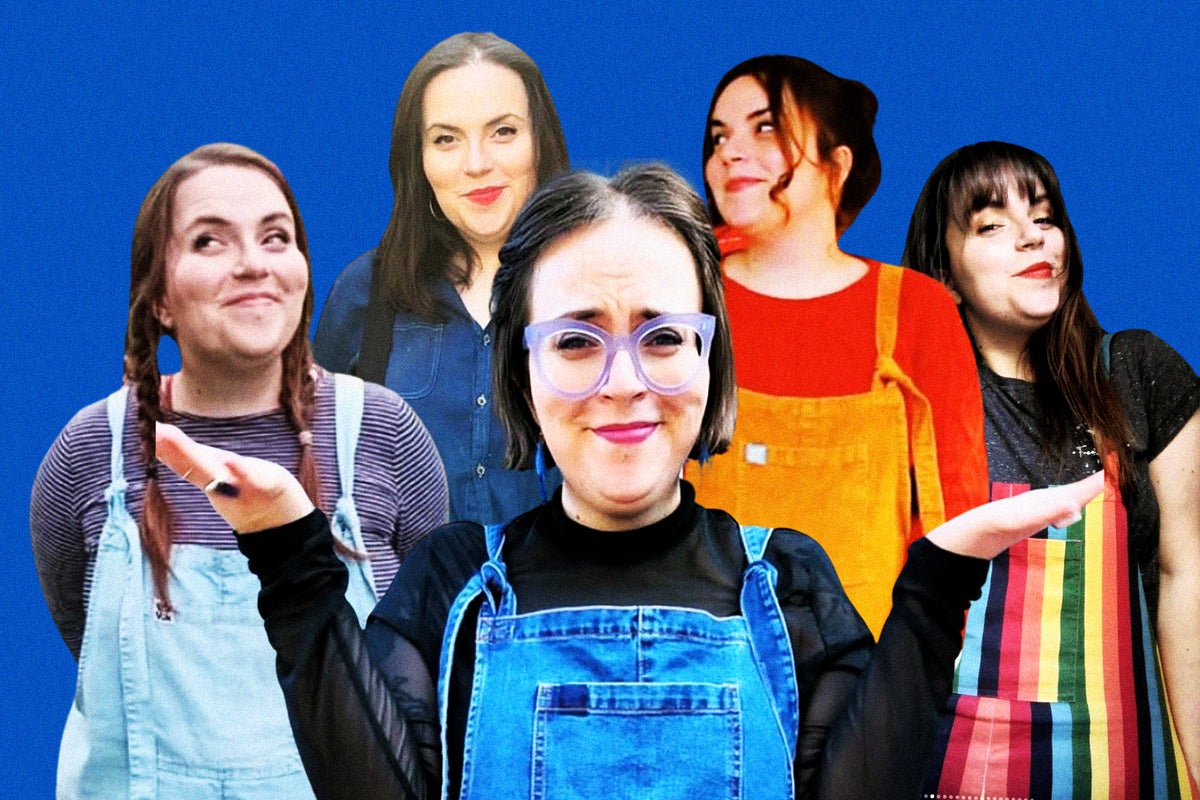
I am a Caucasian woman in her late thirties who works in media and resides in a creative seaside town. That’s probably all the information you need to glean that I have at least two pairs of Lucy & Yak dungarees. (And three pairs of their trousers. And two floor-length skirts. And a boiler suit.)
I’m not alone; the vast majority of the women and non-binary people I know have similar collections in the brand’s distinctive colour palette and range of bold prints.
Lucy & Yak is a legitimate success story – an initially small, British company that became an almost overnight sensation after launching in 2017. It was founded by Lucy Greenwood and Chris Renwick, two northerners who dreamt up the idea of manufacturing simple, high-quality dungarees made by people who really cared about the product. They took a trip to India, held a bunch of meetings and had almost lost hope when they met a man called Ismail in a rural village in Rajasthan. A tailor by trade, he shared their ethos of treating workers with respect and paying them fairly.
The trio made the first 30 pairs together and sold out within minutes of listing them on Depop. That initial explosion of popularity continued – middle-class, millennial women with a slightly artistic bent were champing at the bit to order their very own pair of Lucy & Yaks, beguiled by the sustainable principles, comfy and fun designs, quality, durable fabric and inclusive sizing. Nine years on, Ismail employs over 100 people in a factory he built from scratch and the brand’s rapid growth has seen bricks and mortar shops open in 13 locations around the UK. A whole range of garments are stocked on top of the signature overalls, from patterned fleeces to underwear.
But trouble is brewing in paradise: rumblings of discontent have been stirring alongside whispers that perhaps such rapid growth has led to a decline in quality. Customers noticed that items started being delivered wrapped in plastic, where they’d previously come swaddled in quirky, recycled sari fabric bags as a more unique and eco-friendly alternative. Having once been held up as a pioneer in inclusivity and body positivity thanks to its use of diverse models and sizes up to a UK 32, the brand caused uproar when it recently announced that it was phasing out its biggest sizes from spring/summer.
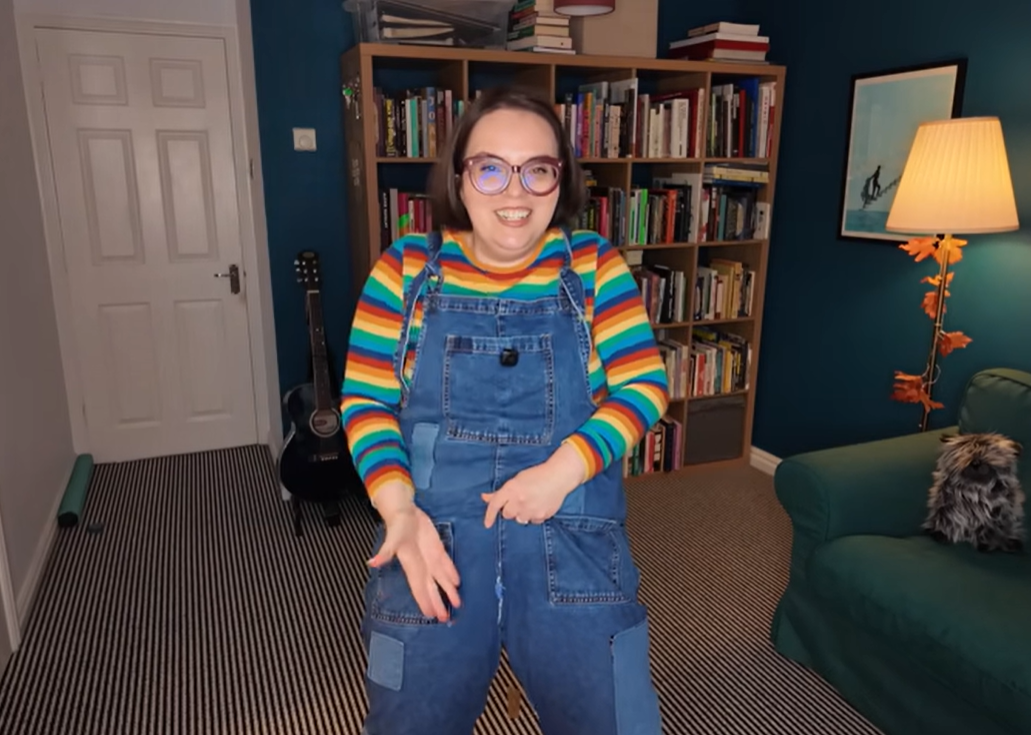
The Yaklash was swift and merciless, with former fans calling the move “disappointing but completely unsurprising”. Plus-size influencer fatpheebs wrote on Instagram: “What a lovely way to thank the plus-size community, who are one of the core reasons your business became so successful. What happened to sustainable inclusion?”
The latest nail in the coffin came courtesy of Leena Norms, a British poet, vlogger and presenter with more than 60,000 Instagram followers, who posted a thorough takedown of Lucy & Yak on social media entitled “Why I quit Lucy & Yak as a customer and influencer”, plus a 53-minute deep dive YouTube video reviewing all of the brand’s clothes that she owns.
Norms had previously partnered with Lucy & Yak. She’d been a supporter of the brand since its inception, loving the durability of the fabric and the fit. “My thighs, which usually wore holes in my jeans within the year, were no match for their denim twill fabric, which seemed indestructible,” she wrote. “I admired how size inclusive they were, even as a small brand without huge profits, including different bodies in their pictures as well as their listings.”
When Lucy & Yak approached her to work together, she jumped at the chance. But as time went on, she claims, she started noticing issues: jeans with thin, badly finished pockets that tore easily; tops that bobbled after one cold wash and started sagging within a couple of wears; more restrictive, less size-flexible designs; jeans that ripped along the seam despite being brand new and in the correct size. “As I sat naked on a public toilet repairing my Lucy & Yak gifted item, I started to question whether I had backed the wrong horse… or if the horse I had bet on was now a different beast entirely,” she added.
Then there were what Norms called “aggressive” discounts and three-for-two deals, designed to convince customers to buy more. “Clothes that were built to fail, wrapped in plastic with the constant encouragement to overconsume – where had I heard that before?” she observed, in a damning comparison to the fast-fashion practices Lucy & Yak purported to oppose. “I knew I had to accept that the company I had supported with my own money all those years ago wasn’t the same radical place.”
The post gained a huge amount of attention, attracting more than 80,000 likes and thousands of comments. The floodgates had opened: hundreds of other former stans shared their own disappointing experiences of allegedly poorer quality materials and tailoring, plus inconsistent sizing. “The pair of jeans I bought from them over the last year completely ripped open in the crotch after just a few washes,” commented climate justice activist and author Mikaela Loach. “Quality has definitely gone down big time, and yes feels just like fast fashion now.”
“I was a loyal L&Y customer for years until I got overwhelmed with their constant drops and emails after they claimed to be a sustainable brand,” replied user Courtney Doom. “So disappointing that they’ve lost all of their integrity.”
There were other murmurings about manufacturing expansion, with multiple other factories being used on top of the original one to pump out more stock. At the same time, commenters pointed out that prices have climbed even as quality allegedly appears to have deteriorated. Out of interest, I went back and looked at the first pair of Lucy & Yaks I bought – a pair of maroon dungarees purchased in 2019 that I still happily wear on a weekly basis. They cost me the princely sum of £40, which I considered a good deal for an ethically made item of clothing that I assumed (correctly) would be worn for years to come.
The same item would cost me almost 50 per cent more today, priced at £59.
When I mention the topic of this article with friends, those who’ve bought from the brand in recent months all seem to have their very own “Lucy & Yuck” stories. “I got some of their trousers in the sale and wore a hole in the crotch within a couple of outings,” one tells me. “I just have the thighs of a normal, 40-something woman. It’s not my thighs that are the problem – it’s their trousers!”
The reason customers seem so disappointed is because one feels they should be better. Rather than selling out to a faceless corporation, in 2025, Greenwood and Renwick handed the business over to their employees. The transition to an Employee Ownership Trust started in August; the trust holds a controlling stake in the business on behalf of all employees, who will become beneficiaries.
Meanwhile, the company’s “Re:Yak” sustainability programme sees the brand embrace circular fashion – keeping as much out of landfill as possible – by allowing customers to return items in any condition for a money-off voucher, and reselling second-hand and upcycled garments via a special “pre-loved” collection. The company’s “marketplace” allows people to swap or sell Lucy & Yak products online; there’s even a dedicated seamstress working out of a Barnsley studio, repairing and upcycling products into one-of-a-kind pieces. According to the website, more than 39,000 items have been “Re:Yakked” in total since 2023.
And there is, potentially, hope on the horizon. Shortly after Norms published her take-down, Lucy & Yak shared an open letter from the managing director, Lydia Coley, on social media (previously planned or a kneejerk bit of damage control? Impossible to say for sure). “Lucy & Yak is entering a new chapter,” read the post. “Lucy & Yak has always been more than a clothing brand; it is a space rooted in acceptance, creativity and belonging.” Coley went on to share some U-turns that addressed the very gripes raised by Norms and other critics: reversing the size reduction changes and reinstating size 32 on some of the most popular styles from next autumn; bringing back the beloved sari bags instead of using plastic packaging.
“Our loyal customers and early supporters are the foundation of this brand, and you deserve openness, clarity, and a genuine voice in where we go next,” the post continued. “I am committed to investing the time to listen carefully and understand how we can improve.”
The hundreds of comments were a mixed bag – some thanked the company for listening to the community and making changes, others remained sceptical and implored for a return to smaller collections of a higher quality instead of frequent drops and a bombardment of email marketing. Time will tell if these voices are listened to.
“I still think some items are worth it, but ‘sustainable’ means built to last, not built to rot,” Norms finished her Instagram post. “L&Y grew into a huge company because of the goodwill and money of a climate-conscious, size-inclusive customer base. I really hope they can reverse their trajectory away from the fast fashion route and back to us, but until then, I’m no longer a customer or a partner.”
When we approached Lucy & Yak for comment they sent an additional quote from Lydia Coley. “Quality and responsible sourcing are at the core of our brand. We use organic and recycled materials that are independently certified to recognised environmental and social standards, and we choose our manufacturing partners carefully, with a focus on skill and ethics. We’ve received valuable customer feedback and are using it to further refine our fabrics and fits. We continue to work closely with our product team to prioritise durability and long-term wear.”