




Nearly a decade ago, Interview magazine mourned the loss of the “sassy cool girl” in American cinema: the kind of teenager who could be mean and withering, who’d read Sylvia Plath but also find her whiny, and who’d pine for an adulthood free of mainstream idiocy. Interview mentioned Nineties classics like The Craft, and Jawbreaker, and 10 Things I Hate About You, paradigms of strutting, mouthy alt-teen cool. But they could have saved time by simply mourning the loss of Thora Birch. Between American Beauty and Ghost World, her two showcases of spiky, adolescent malaise, no actor better encapsulated fresh-faced contempt at the turn of the millennium. And then, practically in a flash, Birch seemed to vanish.
In 2001’s Ghost World she was Enid, an insecure outsider who nonetheless projected outrageous amounts of self-confidence; who was rude, and bitchy, and just so deliciously above it all. I was Enid, too. Or at least, I wanted to be. Twenty-five years later, I tell Birch this over Zoom. Surely everyone who watches Ghost World feels the same? “I would hope,” Birch says, quickly. “And I’d halfway assume it’s still pretty emotionally relevant for a certain age group…” She nods. “Maybe even more so with, you know, isolation due to social media. All that.” She stares. “Blah-blah-blah.” She giggles.
Birch is now 43, but there’s more than a little of the 18-year-old Enid to her, in the roll of her eyes, her dramatic sighs, and the push-and-pull dynamic she has with her own filter. She has a tendency to race up to an unvarnished truth about something, then skitter back if I try to gently prod at it. She admits to being even trickier when she was a teenager. “It was hard to leave Enid behind for a while,” she says, speaking from her home in Los Angeles. “I found the results of that to be personally…” She pauses. “Not destructive, but impeding to my own development.”
Then again, who wouldn’t be a little arrogant in her shoes? Birch was one of the most in-demand child actors of her generation, lending cute and plucky preteen insolence to classics like the Halloween favourite Hocus Pocus and the coming-of-age tale Now and Then, as well as not-so-classics like Monkey Trouble. (The poster, featuring a wide-eyed 11-year-old Birch standing next to a simian in a baseball cap, sort of says everything.) She was, she laughs, “a young and borderline egotistical actor who was overly confident about her own abilities”.
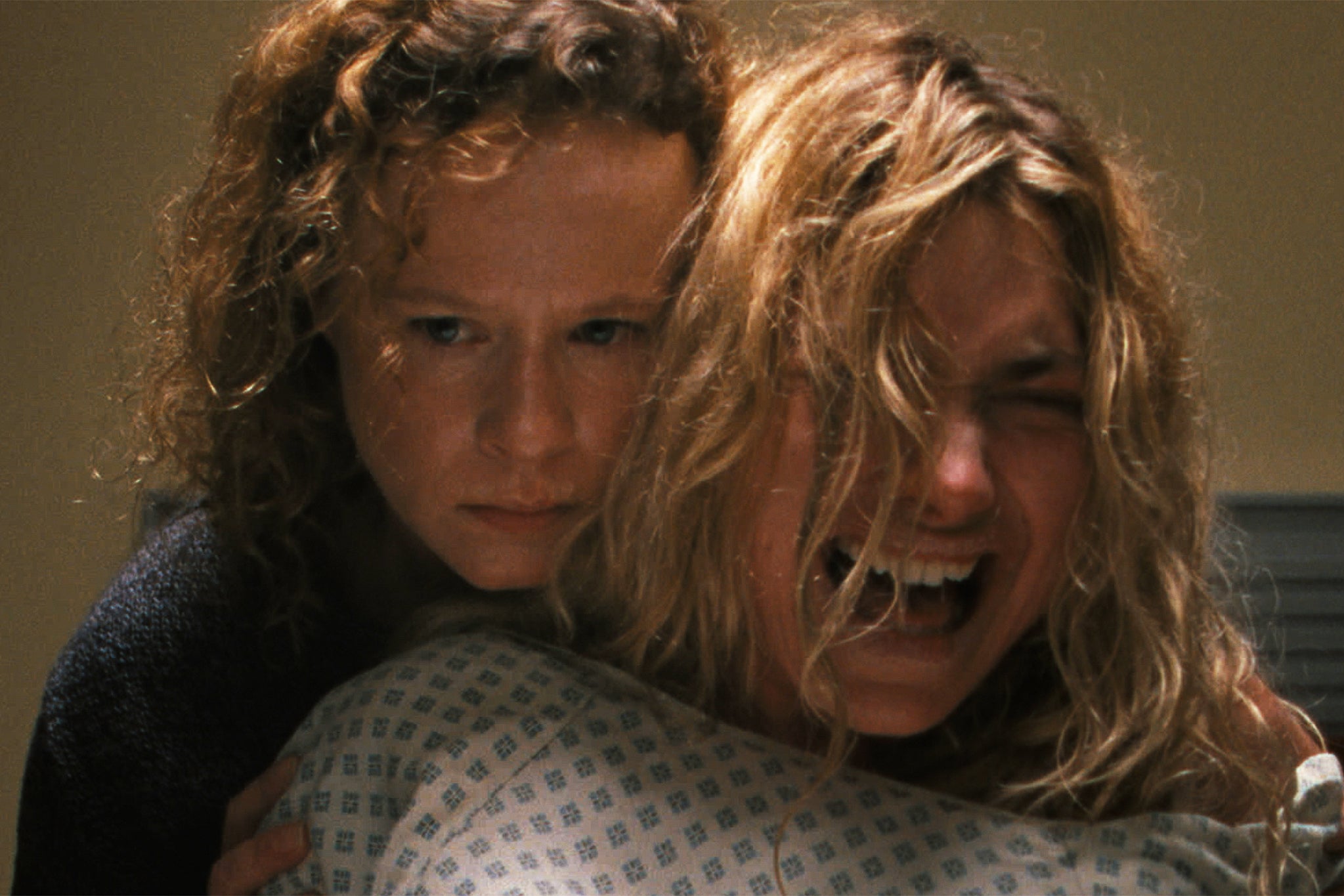
I’m talking to Birch because she’s appearing this week in her most high-profile role in years. In Kristen Stewart’s directorial debut The Chronology of Water, Birch floats in and out of view as the older sister of Imogen Poots’s Lidia, a woman traumatised by a life of sexual abuse and addiction. The movie itself is a bit like an impressionistic Tumblr page of waves and poetry and feeling, as if Stewart’s splayed out all of her insides on 35mm film. She’s spoken, somewhat admirably, about the fact that people will either love it or hate it. But you’ll absolutely be taken by Birch, who, despite minimal dialogue, conveys an incredible emotional weight whenever she’s on screen, all with a crumpled gaze, or a flicker of pained recognition towards her sibling. You’ll leave wanting to see her back in everything again.
There’s also an interesting frisson to Stewart’s decision to cast Birch, as if it’s a gesture of thanks to one of her acting forebears. Stewart, famously, clawed her way out of very populist fame into a prickly cycle of European indies and arthouse experimentation – she’s more or less had the kind of career Birch once strived for, though struggled to achieve within the confines of her era. “Kristen’s a bit of an anomaly,” Birch says. “Her trajectory was similar to mine, if on a much larger scale. I imagine she’s been through a lot, just based on the way the media has treated her. But she’s always stayed true to herself.”
Birch speaks opaquely about her early career – she is proud of the films she made, but also open about being slightly bruised by the mishegoss that surrounded them. She says she experienced “a lot of growing pains”. She’d spend months on end filming movies like Paradise with Melanie Griffith, or two of Harrison Ford’s Jack Ryan thrillers, then go back to school, and then go back on the road again. There was loneliness, insecurity, anger – basically all the things you’re meant to feel as a teenager, only maximised because you’re also famous. “You can’t develop friendships, or a core group of friends that stay with you,” she says. “So they were these amazing experiences, and opportunities to work with people that I had photos of on my bedroom walls, but…” She trails off. “Would I trade it? No. But it has a heavy price.”
She was a quiet child, she recalls, with her parents at first worrying that she was too quiet. They’d named her after the Norse god Thor (her brother, believe it or not, is named Bolt), and it took a while for it to fit her. “There’s a theory that a child hearing their name repeated over and over means that their personality starts to take on the traits of that name,” she says. “And in my own mind, this ability I have to withstand – to put it mildly – very stressful situations does take a fortitude that requires the strength of thunder and lightning at times.” She laughs, nervously. “So maybe there’s a little bit of that in there.”
The young Birch could take direction well, so she found work quickly and easily. Her father acted as her manager, and was fiercely protective of her safety on sets. “I wasn’t sexualised at all,” she says. “And it was popular, and widely accepted at the time, to portray yourself, or portray your children, in those ways, and that was never our gig.” This wasn’t an issue when she was in kids’ movies, but by the late Nineties she noticed that work opportunities had begun to dry up. “I was in an awkward phase, and to basically get ahead, you had to be one of the girls from American Pie, you know? This was the era of teen comedies and, like, ‘You’re on spring break in this movie, and then you’re gonna go on a road trip in this movie, and then go on spring break again in this movie.’” She cringes. “And I was like… ‘Um, I’m actually still a virgin, so…’”

Watch Apple TV+ free for 7 day
New subscribers only. £9.99/mo. after free trial. Plan auto-renews until cancelled.
Try for free
ADVERTISEMENT. If you sign up to this service we will earn commission. This revenue helps to fund journalism across The Independent.
Watch Apple TV+ free for 7 day
New subscribers only. £9.99/mo. after free trial. Plan auto-renews until cancelled.
Try for free
ADVERTISEMENT. If you sign up to this service we will earn commission. This revenue helps to fund journalism across The Independent.
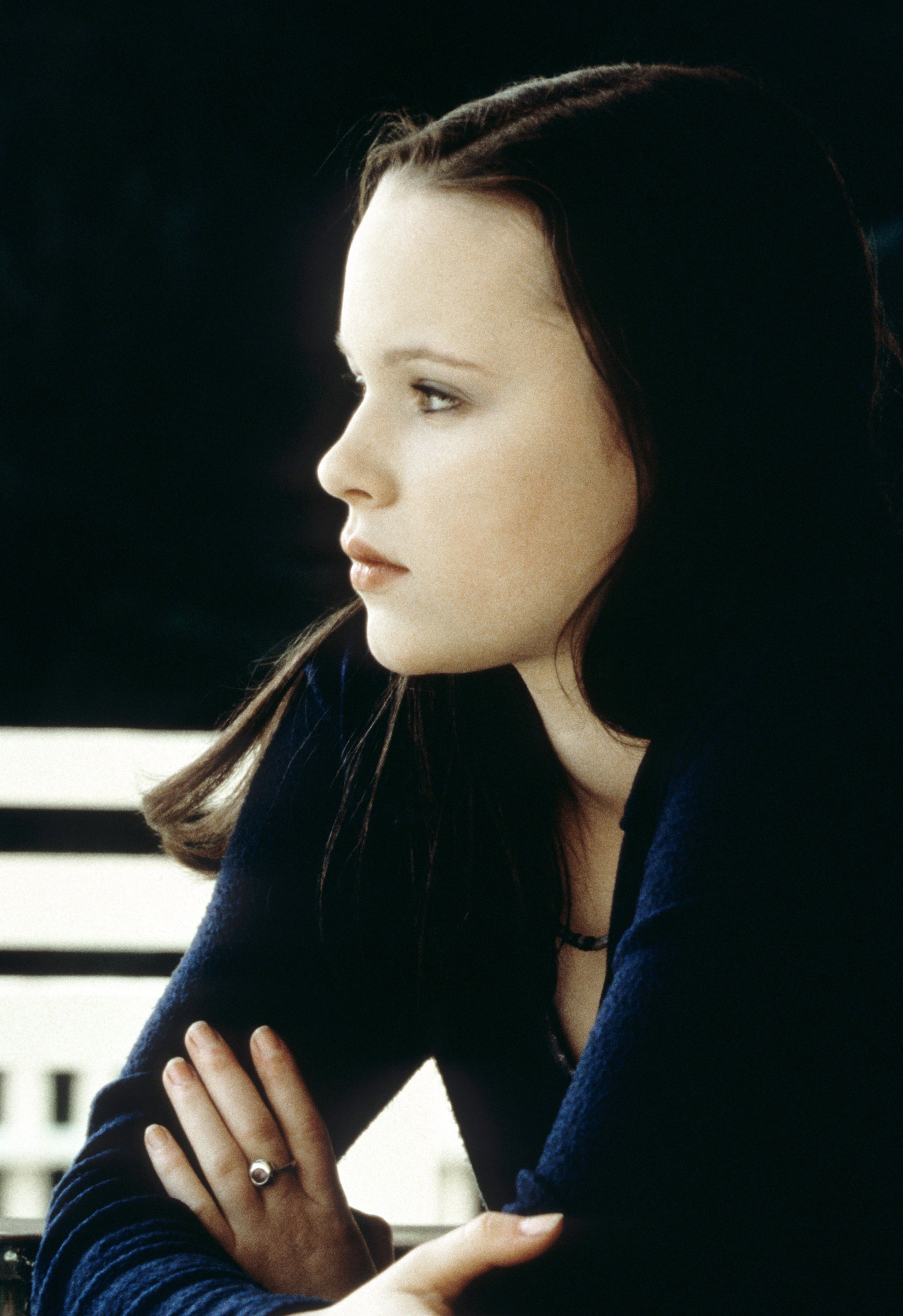
Then, back to back, came American Beauty and Ghost World. Birch fell in love with them on the page, and saw in Enid and American Beauty’s misfit daughter Jane the kind of angsty, smart authenticity she craved. Her agents didn’t want her to do Ghost World, though, while they were insistent she audition for the role of Angela in American Beauty, the rose-petal-covered object of fixation of Kevin Spacey’s suburban dad. “They really thought I made the wrong choice on that one, but then were thrilled with the results,” she says, rolling her eyes. “You don’t even want to know their thoughts on Ghost World, but again, everyone was really happy once it came out. It was successful in the DVD market especially, and I remember being like… ‘Oh, so it did make money? Thanks for pretending it didn’t!’”

I suggest it must have been difficult to be an artistically savvy teenager surrounded by adults who didn’t seem to be on the same page as you. “Yeah, well I was really up my own butt at the time,” she cackles. What did she want from her career back then? “To become Frances McDormand,” she replies, instantly. “I was like, ‘Make me that now!’ But then people were like, ‘Um… have you seen your Interview cover?’” I Google it later – there is Birch, aged 20, in a leopard-print Tom Ford swimsuit slashed down to her navel. “Grrrrrr! Thora Birch” goes the strapline.
That was 2002, a year after the release of Ghost World, and one of her last years of major visibility. The jobs got smaller after that, or at least less-seen, and the industry buzz she had seemed to dissipate. She wanted a particular kind of career, her agents wanted another, and she started to earn a reputation. “You come off as somebody with a major attitude problem,” she says. “And guess what? That’s because you have a major attitude problem! But then you realise that the anger and frustration isn’t really going to help you.” So she peaced out, enrolled in university, got a degree in pre-law, and began writing and producing. “It was a time where I was like… ‘Wait a minute, how does the world actually work?’”
We talk a little about Birch’s peers who didn’t make it – Ghost World’s Brad Renfro, who died of a heroin overdose at the age of 25; Brittany Murphy, her co-star in a 2009 thriller called Deadline, whose final years were marked by an abundance of prescription pills and personal difficulty. When Birch looks back at the fate of some of her peers, does she feel as if she survived something? She thinks for a moment.
“Well, on a physical level I did,” she says. “You can see the toll it takes to go through that transition from child star to working adult. It’s tough, and everybody reacts to it differently.” She wraps her hair in a headband. “What helped me was maintaining a sense of humour. That was key, and also dabbling in other mediums, taking a break, getting my education, living a life outside of any sort of bubble that has a camera pointed at it. And I think getting knocked down a few times helped, as it always does. You need a few sunburns before you toughen your skin up.”
She says she’s not averse to the nostalgia many have for her early work, and that she’s still fond of American Beauty, despite its reputation souring a little in recent years – partly because of its skeezy plot, and partly because of Spacey’s shifting image in the public eye. “I think filmmakers and true cinephiles like it just as much as they did,” she says. “And then there are people who probably haven’t even seen it, or just have some idea about it because of something that has nothing to do with anybody else on that set.”
More than anything, though, she says she’s doing well. She’s been married since 2018, to a manager and producer named Michael Benton Adler; she’s working again (she appeared in The Walking Dead and the indie hit The Last Black Man in San Francisco, and is keen to do more comedies); and she’s now earning career-best reviews. Writing about The Chronology of Water last year, Variety’s Clayton Davis described Birch’s performance as “a turn that hopefully will result in a triumphant new act … serving not just as a comeback, but as a new beginning”.
“I’m in a good place in my life,” Birch says, proudly. “I’m happy. I’ll put it that way. And that’s a great accomplishment, I think.”
‘The Chronology of Water’ is in cinemas

