

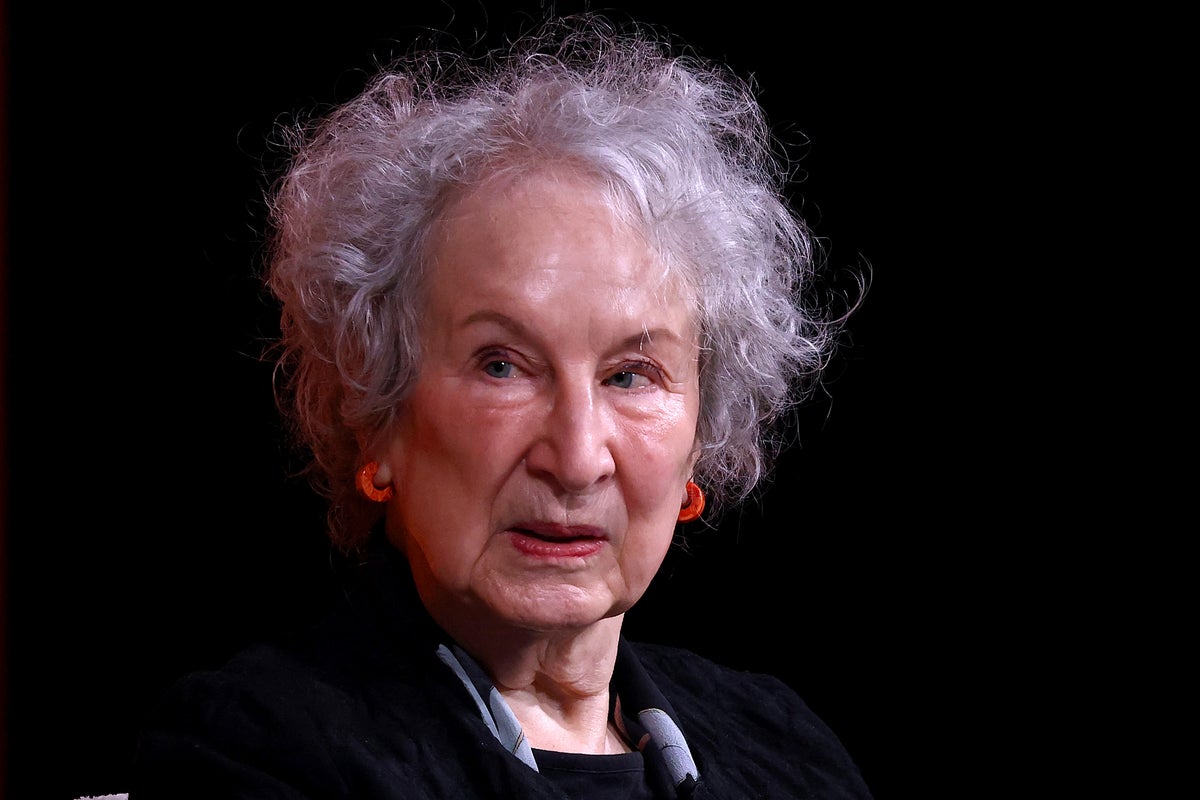
Award-winning author Margaret Atwood has stated that the dystopian future depicted in her seminal novel, The Handmaid’s Tale, is becoming “more and more plausible” in the contemporary world.
The Canadian writer, 86, whose 1985 book and its 2019 Booker Prize-winning sequel, The Testaments, inspired the acclaimed television series, shared her evolving perspective on the story’s relevance.
The Handmaid’s Tale envisions a United States transformed into the Republic of Gilead, a totalitarian, theocratic regime where women are subjugated, with many forced into roles as “handmaids” – natal slaves tasked with repopulating a world grappling with widespread infertility.
Atwood revealed that when she first conceived the plot, she considered it “bonkers,” recalling a time when “America was the beacon of light.”
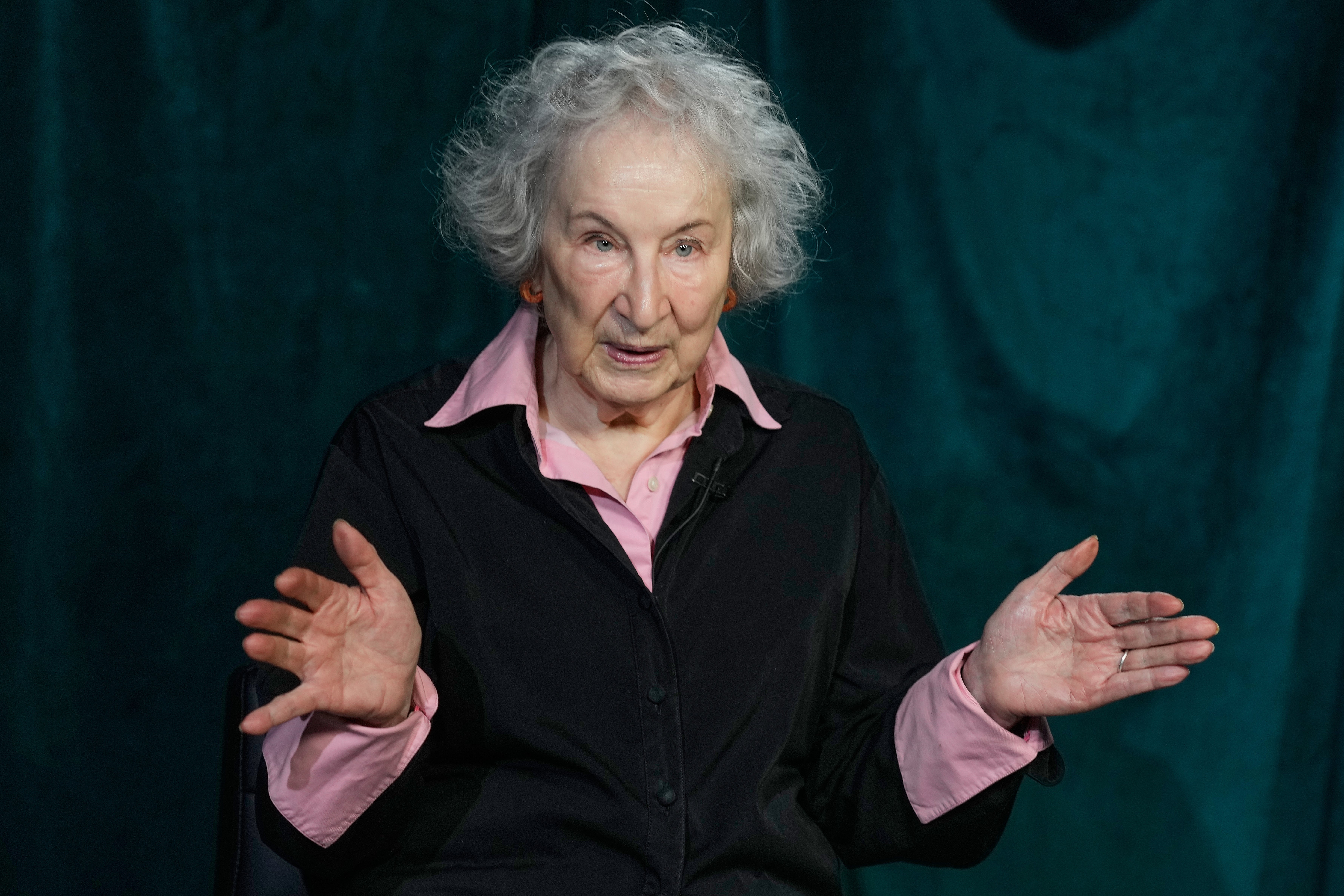
Speaking on BBC Radio 4’s Desert Island Discs, she elaborated: “It was the democratic ideal. It was the land of freedom… and people in Europe just didn’t believe that it could ever go like that.”
She noted that initial reactions to the novel were “split,” with many asserting, “that would never happen here.” However, Atwood maintained her own conviction: “I’ve always been somebody who has never believed it can’t happen here. It can happen anywhere, given the circumstances.”
Reflecting on the book’s enduring impact, Atwood observed a significant shift in recent years.
“Well, it’s (what happens in the book) a perennial possibility, right? Then in 2016, everything changed again, and we are now in that period where The Handmaid’s Tale has become much closer. Not the outfits. I don’t think we’re going to get the outfits, but the rest of it seems more and more plausible.”
The distinctive red cloaks and white bonnets worn by handmaids in the book have become potent symbols, adopted by women across the US protesting against the administration of US President Donald Trump, particularly concerning abortion rights following the overturning of the Roe v Wade ruling.
Despite the grim parallels, Atwood expressed a degree of optimism regarding the longevity of such oppressive systems. “These kinds of regimes don’t last, partly because they become unsustainable. This particular one seems quite chaotic,” she remarked.

She also highlighted the resilience of the American populace: “Also, let us not count America out. It’s first of all a lot more diverse than it might appear from a distance. Second, Americans are quite ornery. They do not like people telling them all to line up and do what they’re told. They really don’t like that, but they don’t like being bossed around by anybody right or left.”
Atwood, known for her exploration of technology, identity, and totalitarianism, prefers to categorise her works as speculative fiction rather than science fiction.
As she told The Guardian in 2003, “Science fiction has monsters and spaceships; speculative fiction could really happen.”
She reiterated this point on Radio 4, explaining her meticulous research: “I wanted to be able to point to the source of whatever idea they were enacting and say, ‘Don’t say that I just made this up out of my twisted and weird imagination.’ Somebody said on Twitter/ X, ‘How does Margaret Atwood come up with this weird s**t?’ I said, ‘It’s not me that comes up with this weird s**t. It’s the human race.’ It has throughout history. So chapter and verse, it’s all happened.”
A recipient of numerous accolades, Atwood won the Booker Prize in 2000 for The Blind Assassin and again in 2019 for The Testaments. Her extensive bibliography also includes The Edible Woman, the Oryx and Crake trilogy, Alias Grace, and Lady Oracle.
The full interview on Desert Island Discs is available on BBC Sounds.
.jpeg?width=1200&height=800&crop=1200:800 "Scotland’s World Cup fixtures: Confirmed dates, kick-off and venues – UK Times")