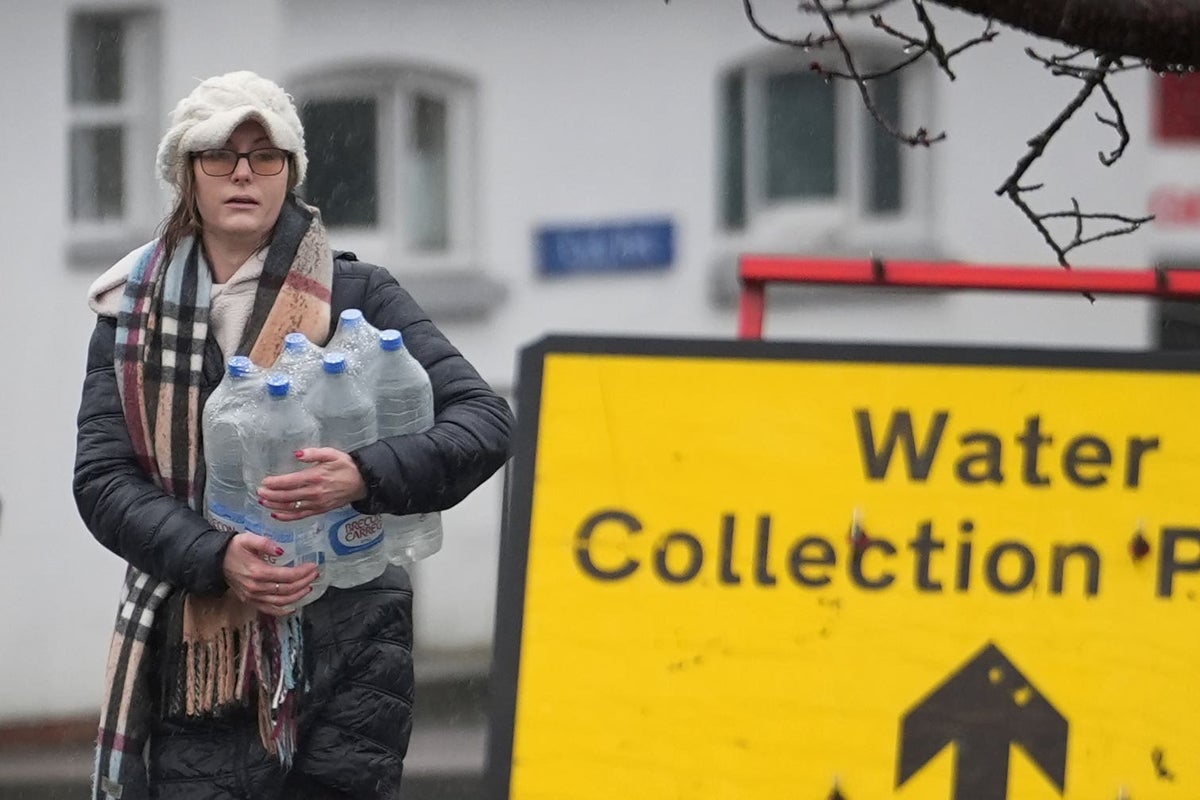


When The Capture hit screens in 2019, it was branded “preposterous”, “implausible” and “utter bobbins”. The BBC drama mined technology for horror, presenting a world in which ordinary footage can be easily manipulated and turned against us at the click of a button. In the show, characters are yanked into interrogation rooms and shown surveillance videos of them going about their day – only to see themselves doing heinous crimes they didn’t actually commit. It all felt like an outlandish proposition; perhaps a problem for another generation. But with AI firmly planting its computerised flag in the sand – and deepfakes now dominating social media – that world is a reality. In seven short years, The Capture has become the most prescient show on television.
“I remember reading some reviews of series one that were like, ‘Oh, this is so ridiculous, we’re so far away from this,’’ lead star Holliday Grainger tells me days before series three premieres on BBC One. “And in just a few years, it’s not just special tech guys in the military that are doing deep fakes, it’s anyone on TikTok. You can literally do it in your front room. The technology has evolved so quickly that the first series is almost passé.”
The Capture follows Grainger’s Rachel Carey, a dogged detective inspector who unearths a conspiracy surrounding deepfake tech, known as Correction. And while some of the show’s early plot twists had been branded unbelievable, creator Ben Chanan found that, while writing follow-up seasons, he had to dream up zanier ideas in an attempt to stay ahead of real life.
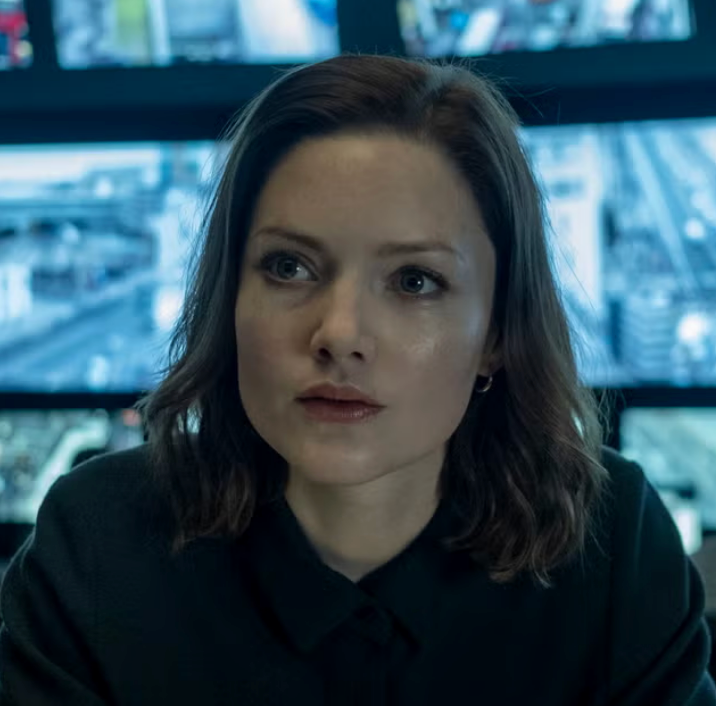
“When I did series one, I thought, ‘People already know there’s a s***-load of CCTV cameras. We just needed something else to make it scary – ie Big Brother’s not just watching you, he’s f***ing with you.’ Now, we’re constantly playing a game of, ‘Are we ahead or are we behind?’”
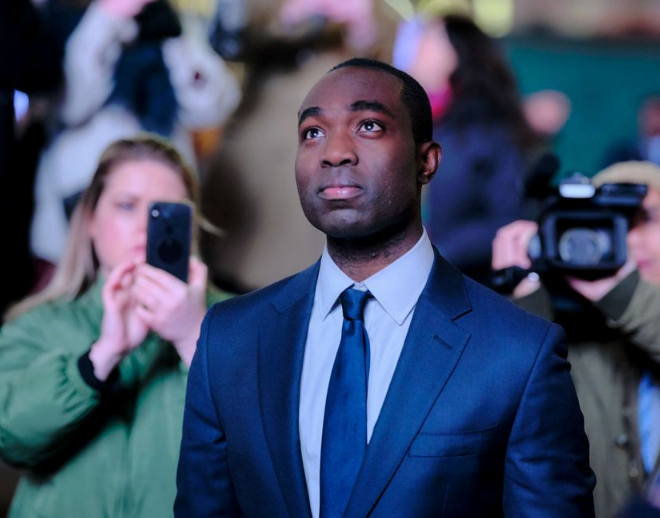
Each series introduces a new figure, footage of whom has been altered to make them guilty of crimes they had nothing to do with: Fantastic Beasts actor – and potential future Bond – Callum Turner played soldier Shaun Emery, accused of kidnapping and assaulting his barrister, in series one; The Lazarus Project’s Paapa Essiedu, recently cast as Professor Snape in HBO’s Harry Potter show, played politician Isaac Turner, who was “seen” colluding with enemy world leaders in series two. But really, this is Grainger’s show – and series three knows it. The new episodes place her at the centre of the latest conspiracy kicked off by a terror attack, the ripples of which run deeper than even Carey can imagine. To utter another word would risk spoiling the opening episode’s surprises.
In Carey, The Capture has a career-driven protagonist for the ages – a straight-shooting detective unafraid of standing up to her superiors (Lia Williams’s inscrutable DSU Gemma Garland) or the shadowy figures lurking in the wings (Hellboy’s Ron Perlman shows up as a ruthless CIA chief named Frank Napier – as if you needed another reason to watch). The show has been a ratings hit – 5.66 million average in year one; 3.81 million in year two – yet has fallen short of becoming a water-cooler success like, say, Line of Duty. More fool us: The Capture matches the thrilling highs of that procedural and boasts more surprising twists than Noughties favourite Spooks. It’s the kind of show that demands your attention and will leave you trailing in the dust if you dare to check WhatsApp for one second.
“You can’t be on your phone in the background because you will miss it,” says Grainger. “It doesn’t purposely repeat or spoon-feed the audience. Obviously, in a cop show, there has to be a lot of exposition, but Ben doesn’t dumb it down. He’s quite unapologetic in his use of jargon.” This is a far cry from a lot of what we see on Netflix, whose shows are claimed to be produced with the expectation that viewers might be watching while scrolling through their phones. According to producer Justine Bateman, showrunners have been given notes that the episodes they’ve written for the streamer “aren’t second-screen enough”.
Hammering home the realism of The Capture is the show’s research team, led by Chanan, as well as an advisor who used to work in counter terrorism. It was this anonymous soul who guided Grainger to a shocking realisation: that the plot wasn’t as impossible as she’d believed. “He’s had his finger in a lot of pies all over the place, and everything he tells us is off the record, so he’s quite open. After just talking to him for five minutes, I realised nothing was far-fetched.”
Deepfake controversies have become depressingly myriad – not to mention chilling – in recent years: altered videos of public figures, including Elon Musk, have been used to con people into investment scams and, in 2023, a mother in Arizona was targeted in a “virtual kidnapping” scam, in which she was demanded to pay a $1m ransom after hearing a doctored version of her daughter’s voice screaming for help. More recently, Musk’s AI chatbot tool, known as Grok, permitted users to create sexualised deepfake images of women, including underage girls. But the best example of real life mirroring The Capture arrived in March 2022, with the storyline of Essideu’s aforementioned MP, who finds himself the victim of a deepfake peddling political misinformation.

Watch Apple TV+ free for 7 day
New subscribers only. £9.99/mo. after free trial. Plan auto-renews until cancelled.
Try for free
ADVERTISEMENT. If you sign up to this service we will earn commission. This revenue helps to fund journalism across The Independent.
Watch Apple TV+ free for 7 day
New subscribers only. £9.99/mo. after free trial. Plan auto-renews until cancelled.
Try for free
ADVERTISEMENT. If you sign up to this service we will earn commission. This revenue helps to fund journalism across The Independent.
“We were making the series at the same time as the war in Ukraine broke out and there was a fake Zelensky video going around, and I was like ‘OK, it’s totally catching us up,’” Chanan recalls. The video, which surfaced on Meta and YouTube, showed a fake version of the Ukrainian president declaring peace with Russian president Vladimir Putin. It was reportedly uploaded to a hacked Ukrainian news website and Meta and YouTube later removed the video for violating misinformation policies.
Things hit a new peak for Grainger during the making of the third series, when she found the lines between reality and fiction had become somewhat blurred in her eyes. Her inner conspiracy theorist was drawn to the fore.
“While we were shooting series three, world events just went crazy,” the British actor says. “Powerful people were making crazy decisions in a way that just felt baffling. I started to read world events in a different way. I was like, ‘Who is behind these decisions and why?’ Because I don’t believe it’s individual governments just trying to run countries for the best.”
Chanan shares Grainger’s doubt: “I still don’t understand how we’re supposed to believe, say, if you’re in court, and someone says, ‘Here’s a video of a guy doing a crime.’ Are they? Probably, if you’re telling me that’s what it is, but how do we know? It’s so easy to fake that – anyone can get an app and do it themselves. So it’s like, what are we gonna do about this? I don’t have the answer!”
If The Capture provides no solutions to this knotty, terrifying issue, it will certainly sort out an equally as prevalent, if far less important problem: what TV show to binge next. The propulsive plot twists and bombshell cliffhanger endings only intensify in the third season, which places Carey – and the viewer – at the heart of the latest Correction conspiracy. Essiedu, Williams and Perlman are all back, alongside Ben Miles as the roguish Commander Danny Hart and Indira Varma as fictional BBC Newsnight presenter Khadija Khan. New additions include Killian Scott and Linus Roache, but you’ll have to tune in to find out how they’re involved in proceedings.
Another returnee for the new series is Carey’s green coat – an item of clothing that has become as synonymous with the character as Luther’s tweed jacket and Vera’s brown trench. Such is the power of the coat – selected by costume designer Hayley Nebauer – that the team sits down regularly to discuss whether or not Carey should wear it in the scene they’re about to film.
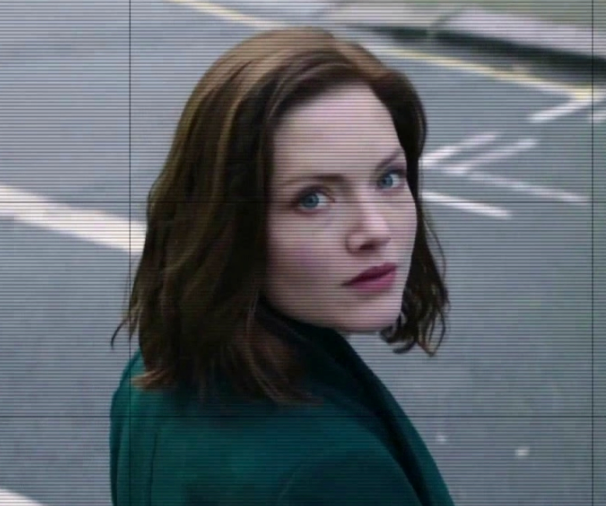
“There’s a strength to the coat!” says Grainger. “It’s my armour. I don’t know whether Carey’s just more baller with the coat or whether it just gives me confidence and I play her more baller when I’ve got the coat on. Where does Carey end and I begin?” (This writer can confirm, from attending a set visit, that the former is true.)
When The Capture ends next month, fans will no doubt be wondering if the show will ever return. Grainger, though, wouldn’t mind if this were the closing chapter of Carey’s story. “I feel like all the best shows are trilogies,” she says. “But who knows? The Capture has the scope to go on – and to go anywhere. So I guess that would depend on Ben’s brain.”
Well?
“Three is a nice number,” Chanan agrees. “A trilogy feels nice. What we do after this, I don’t know. This is maybe it. But at the same time, I feel the whole subject of AI, and how we’re going to live with it, is still evolving, for sure. We’re just at the beginning of it. So there’s plenty of material and inspiration if we want to do another series.”
‘The Capture’ series three starts at 9pm on BBC One