


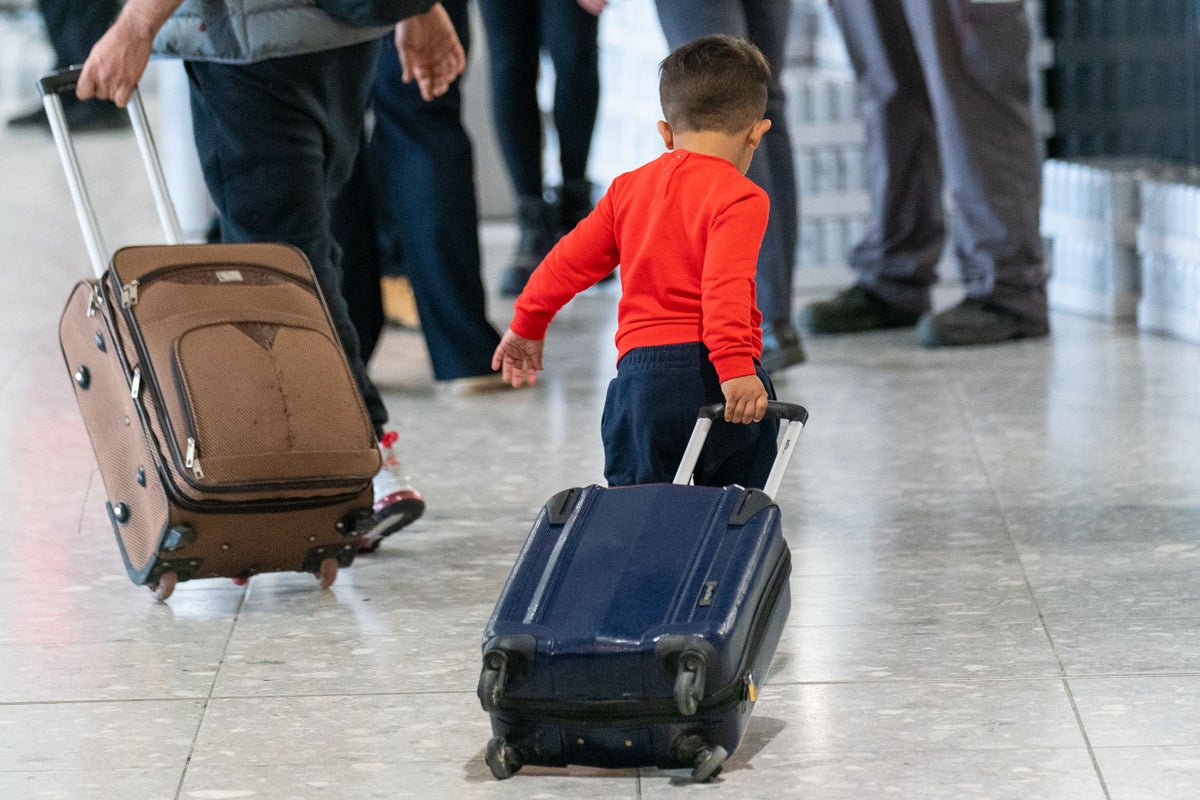
Losing his family members to violence in Afghanistan kept Abdullah* up at nights in the UK.
“My uncle died, somebody killed him… that gives me more stress. Sometimes when I go to sleep, it’s in my brain.
“Back then I couldn’t sleep for a month at all,” Abdullah tells Dr Rebecca Lane, the clinical psychologist who leads a new study highlighting the challenges faced by young Afghan refugees who fled to the UK unaccompanied by a parent or guardian to escape the Taliban in Afghanistan.
“Since I came here, I lost a lot of people… like my cousins, they died there. So these things give you a lot of stress, I am not able to see them,” Abdullah recounts.
Another participant of the study says: “Sometimes I think maybe some of my pains… is because of the stress that I have. And that is translating into physical pain.”
Their stories highlight the years of silent suffering and intergenerational trauma suffered by these young Afghans trying to cope in a foreign land, the authors of the study tell The Independent.
They reflect the mental anguish, agony of separation, and survivors’ guilt since seeking refuge in the UK and for some of them, it has manifested into chronic physical pain.
Researchers from the University of East Anglia (UEA) interviewed 12 such Unaccompanied Refugee Minors (URM) after the fall of Kabul and subsequent takeover by the Taliban group.
The participants were from majority and ethnic minorities – Afghan, Pashtun, Hazara and Tajiki – and said they entered the UK when they were between the ages of 14 to 21 years.
At the time of the research, they were in their early to mid-20s and were residing in the UK for at least two to 11 years, and had experienced violence and threat to life or livelihood, in addition to parental loss or separation.
In August 2021, as the Nato-led government in Kabul collapsed within hours, Afghan mothers were seen desperately raising their children and babies over barbed wires at the airport to send them far away from the Taliban rule.
“The mothers were desperate, they were getting beaten by the Taliban. They shouted, ‘save my baby’ and threw the babies at us. Some of the babies fell on the barbed wire. It was awful what happened. By the end of the night there wasn’t one man among us who was not crying,” a Parachute Regiment officer told The Independent during the hasty and panicky evacuations.
Compared to other Afghan children, who were also forced to flee the war-battered nation but not separated from their parents, those who landed in the UK unaccompanied were more likely to struggle with Post-Traumatic Stress Disorder (PTSD) or depression, experts say.
“Unaccompanied child refugees have lost family, safety and a sense of home, and many have been exposed to traumatic events on their journey,” said Dr Kenny Chiu, clinical lecturer from UEA’s Norwich Medical School.
“Difficulties were often present in a triad of physical or psychosomatic pain, mental health difficulties and relational challenges. This is consistent with qualitative research among Afghan and Kurdish refugees in Australia, which puts forward that rumination in the context of loneliness can rekindle traumatic memories and prolong mental health difficulties long after resettlement,” the study says.
“For example, mental and physical pain often occurred together. Physical pain would stop people leaving the house, exercising or spending time with friends – which then made their mental health and feelings of isolation worse,” Dr Lane says.
The unaccompanied refugees faced deep loneliness, barriers in making new connections due to having their safety and life challenged in the war, and hence now find it difficult to trust people. They were also hyper-vigilant or lacked the social skills to develop friends.
Culturally, the Afghan society did not promote boys and men to express their emotional and vulnerable side and that has now further added to their pile of mental health problems, experts say.
The team found that this emotional “shutdown” often continued as they settled down in the UK, leaving young refugees socially isolated especially during the time they most needed support.
Distraction and avoidance of their fears and worries was the most used coping method, Dr Lane says.
Many turned to activities such as cricket, praying, and having conversations with friends, to ease their anxiety, she says.
“If I’m at home doing nothing, then I just call my friends, we go out to the park and play some sports, like cricket,” says one participant, adding that he has played cricket since he was three or four years old.
“Back home in Afghanistan – there’s no other sports, only cricket,” he said.
Some also resorted to alcohol and medication to numb their pain, Dr Lane says. She adds that a very small minority among the group also used self-harm as a coping mechanism.
But they have now come a fair bit of distance in their emotional and mental health journey, she says.
“Maybe a third or up to 50 per cent of the young people I spoke to were in a wildly different place when they spoke to me than when they were when they entered the UK. And that that transformation was because of social connection and it was because of support services,” she said, speaking from England over a Zoom call.
Quite a few of them say their life is now unrecognisable than what it was before they sought help, according to Dr Lane. Some of them have even been with their families.
“They were feeling very lonely before, but they were reunited with their family now and now things were less difficult so I do think that there are lots of glimmers of hope….”
*Abdullah’s name is changed to protect his identity.
If you are experiencing feelings of distress, or are struggling to cope, you can speak to the Samaritans, in confidence, on 116 123 (UK and ROI), email [email protected], or visit the Samaritans website to find details of your nearest branch
If you are based in the USA, and you or someone you know needs mental health assistance right now, call or text 988, or visit 988lifeline.org to access online chat from the 988 Suicide and Crisis Lifeline. This is a free, confidential crisis hotline that is available to everyone 24 hours a day, seven days a week. If you are in another country, you can go to www.befrienders.org to find a helpline near you